
Metal CNC Machining Services
Precision metal CNC machining services for prototypes and production parts. We support CNC milling, CNC turning, 3-axis, 4-axis, and 5-axis machining for prototypes, low-volume runs, and repeat production. Our machining workflow is built to help engineers, purchasing teams, and product manufacturers reduce risk from RFQ to delivery.
- Fast prototype & low MOQ support
- Tight tolerance up to +0.002mm
- Surface finishing available
- Engineering review before production
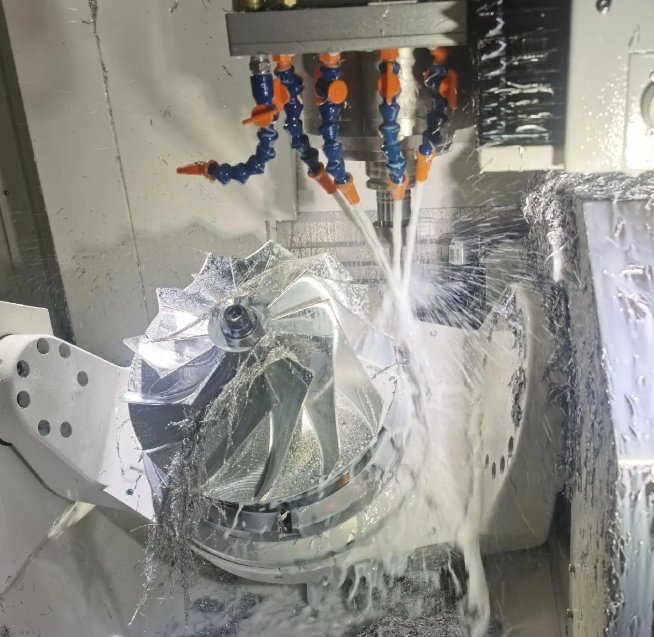
Metal CNC Machining Types
What We Offer
- Custom CNC milling and turning for metal components
- Prototype machining, bridge production, and batch manufacturing
- 3-axis, 4-axis, and 5-axis CNC machining options
- Support for aluminum, stainless steel, carbon steel, brass, copper, titanium, and tool steel
- Typical tolerance support from ±0.05 mm, with tighter tolerances available after drawing review
- Surface finishing options including anodizing, plating, passivation, polishing, bead blasting, and powder coating
- Inspection reports, material certificates, and production documentation available on request
Each type of metal CNC machining serves a distinct manufacturing purpose: CNC milling for complex multi-axis shapes, CNC turning for rotational parts, drilling/boring for precision holes, EDM for hard alloys and delicate contours, grinding for ultra-fine finishing, and mill-turn for integrated one-stop processing. Selecting the right metal CNC machining type based on material, part geometry, tolerance requirement, and production volume is the key to optimizing cost, precision, and delivery efficiency in metal precision manufacturing.
CNC Milling
- Multi-axis milling (3, 4, and 5-axis) for complex geometries.
- Ideal for flat surfaces, pockets, slots, and intricate contours.
- Achieves tight tolerances and excellent surface finishes.
- Materials: Aluminum, titanium, stainless steel, brass.
CNC Turning (Lathe Work)
- Produces cylindrical parts like shafts, rods, and bushings.
- Supports threading, grooving, and facing operations.
- High-speed lathes deliver consistent tolerances for small and large batches.
- Works with steel, aluminum, titanium, and alloy materials.
Swiss CNC Turning
- Precision turning for miniature components (electronics, medical devices).
- Sliding headstock design enables tight tolerances (±0.0002″).
- Reduces material waste and increases production efficiency.
Multi-Axis CNC Machining
- 4-axis and 5-axis simultaneous machining for complex shapes.
- Reduces setups and ensures alignment of critical features.
- Perfect for aerospace, automotive, and high-precision parts.
Micro-Machining
- Produces extremely small components with micron-level features.
- Maintains full material strength with no porosity or layer boundaries.
- Applications: medical implants, micro-electronics, and precision assemblies.
CNC Drilling, Tapping & Boring
- High-precision holes and threads for assemblies.
- Repeatable accuracy ensures perfect fit for mating parts.
- Supports small and large batch production.
Hybrid Processes (CNC + Finishing)
- Metal machining combined with surface treatments like anodizing, plating, or passivation.
- Improves corrosion resistance, aesthetics, and part longevity.
- Customizable finishes for aerospace, medical, and industrial applications.
What Are Metal CNC Machining Services?
Details
We help produce precision parts with controlled dimensions, consistent surface finish, and repeatable quality. Metal CNC machining services encompass a family of computer-numerical-control processes—including CNC milling (3-axis, 4-axis, and 5-axis), CNC turning, Swiss CNC turning, and multi-tasking mill-turn operations—that remove material from solid metal workpieces to produce custom geometries. Unlike additive manufacturing or casting, CNC machining is a subtractive process that starts from bar stock, plate, or forgings. This fundamental characteristic delivers three distinct advantages:
Material integrity
- Parts retain the full mechanical properties of the parent alloy.
- No layer boundaries or porosity issues like those in additive manufacturing or casting.
- Ensures strength, durability, and reliable performance in critical applications.
Tight Tolerances
- Standard CNC milling and turning routinely achieve ±0.005″ (±0.127 mm).
- Precision setups can hold ±0.001″ (±0.025 mm) or tighter on critical features.
- Guarantees consistent fit and function for high-precision assemblies.
Surface Finish Control
- As-machined surface roughness values from Ra 0.8 μm to 3.2 μm are achievable.
- High-quality finishes often require no secondary processing.
- Controlled by tooling, cutting parameters, and machine setup.
Metal CNC machining Cases
Case Study 1: Aerospace Blisk Machining—From 60% to 98% Yield
The Problem: A prime aerospace contractor required high-temperature bladed disks (blisks) machined from a high-temperature alloy. The thin, cantilevered blade geometry with small inter-blade gaps suffered severe vibration and chatter when machined on conventional 3-axis equipment. The result was blade distortion, thinning beyond specification, and an overall part yield of less than 60%—unacceptable for a flight-critical component.The Solution: The manufacturer transitioned to 5-axis simultaneous machining with optimized CAM toolpaths. The strategy employed:Constant tool engagement angles to maintain stable radial cutting forces High-rigidity 5-axis machine platforms with vibration damping Adaptive feeds and speeds tuned for the high-temperature alloyThe Quantified Result Part yield increased from <60% to 98% Blade profile tolerance held constant at ±0.05 mm Total machined cycle time reduced by 20% due to elimination of multiple setupsCase Study 2: Titanium Aerospace Bracket—Cycle Time Reduction
The Problem: An aerospace component supplier needed to produce a complex titanium bracket with compound curves and deep pockets. Traditional 3-axis methods required 10 days of production time due to multiple setups, manual repositioning, and secondary polishing operations.The Solution: 5-axis high-speed CNC machining was implemented, utilizing simultaneous 5-axis motion to maintain optimal cutting angles throughout the entire geometry. The cutting tool approached the workpiece from the most efficient direction continuously, eliminating the need for multiple fixtures.The Quantified Result Production time reduced from 10 days to 5 days (50% cycle time reduction) Surface finish improved sufficiently to eliminate manual polishing Zero rejection rate on the first batch of 50 unitsCase Study 3: Aluminum vs. Titanium Cost-Performance Trade-off
The Problem: A robotics startup initially specified Grade 5 titanium for an indoor servo bracket, assuming maximum durability was required. After a pilot production run, the unit cost and lead time proved unsustainable for the product's market positioning.The Engineering Analysis Titanium Ti-6Al-4V: 1,000 MPa tensile strength, 4.42 g/cm³ density, but 3–6× higher machining cost due to slow cutting speeds (30–60 m/min), high tool wear, and expensive raw material ($20–$50/kg). Aluminum 7075-T6: 572 MPa tensile strength, 2.80 g/cm³ density, machines at 200–500 m/min with standard tooling and minimal wear.The Quantified Result: Switching to high-strength aluminum 7075-T6 with topology-optimized ribbing: Machining time reduced by 40% Unit cost halved Weight increase was negligible due to optimized geometry, while strength remained adequate for the application's load profile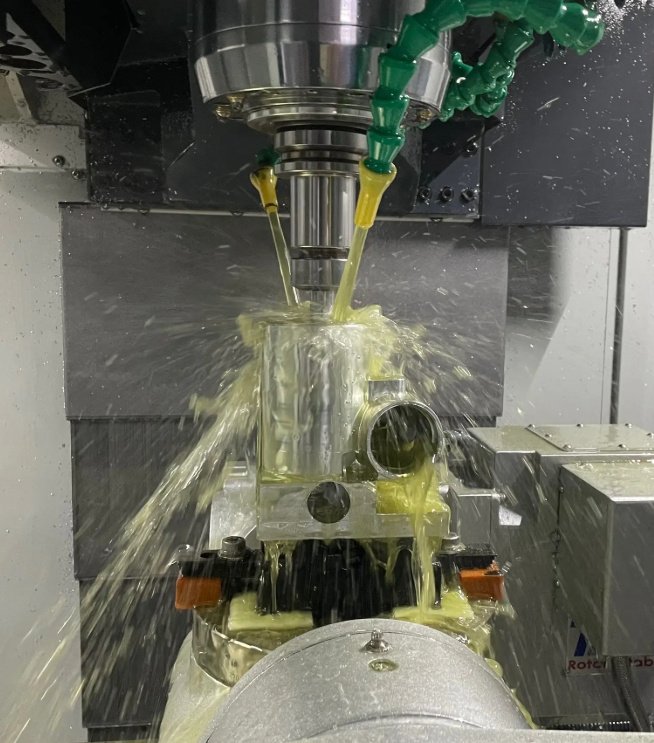
CNC Machining vs. Alternative Metal Processes
1
CNC Machining
- Tolerance Capability: ±0.005″ standard; ±0.001″ precision on critical features.
- Best Use Case: Complex geometries, tight tolerances, and all metal types.
- Relative Cost (1–100 units): Baseline for comparison with other processes.
2
Hybrid Casting + cnc
- Tolerance Capability: ±0.005″ cast; ±0.001″ machined.
- Best Use Case: Suited for high-volume non-ferrous housings.
- Cost: 30–50% lower per unit at 1,000+ volumes.
3
Metal 3D Printing
- Tolerance Capability: ±0.005″–±0.010″.
- Best Use Case: Topology-optimized geometries, internal channels, and designs difficult to achieve with traditional machining.
- Relative Cost: 2–5× higher than CNC for equivalent metals.
Metal CNC Machining Materials
CNC Machining Material Properties Table
Details
| Material / Alloy | Yield Strength (MPa) | Tensile Strength (MPa) | Hardness | Density (g/cm³) | Thermal Conductivity (W/m·K) | AISI Machinability Rating (%) | Relative Raw Material Cost | Typical Tolerance Benchmark |
|---|---|---|---|---|---|---|---|---|
| Aluminum 6061-T6 | 276 | 310 | 95 HB | 2.70 | 170 | 90–95 | $ | ±0.025 mm tight; ±0.1 mm typical |
| Aluminum 7075-T6 | 503 | 572 | 150 HB | 2.80 | 130 | 70–80 | $$ | ±0.025 mm tight; ±0.1 mm typical |
| Carbon Steel 1018 | 370 | 440 | 126 HB | 7.85 | ~50 | 78 | $ | ±0.05 mm typical |
| Alloy Steel 4140 | 417 | 655 | 197 HB | 7.85 | ~42 | 66 | $$ | ±0.05 mm typical |
| Stainless Steel 303 | 241 | 620 | 160 HB | 8.00 | ~16 | 78 | $$$ | ±0.03 mm typical |
| Stainless Steel 304 | 241 | 586 | 160 HB | 8.00 | ~16 | 45 | $$$ | ±0.03 mm typical |
| Stainless Steel 316/L | 290 | 580 | 160 HB | 8.00 | ~16 | 45 | $$$ | ±0.03 mm typical |
| Titanium Grade 2 (CP) | 275–400 | 345–500 | 140–200 HB | 4.51 | ~17 | 35–45 | $$$$ | ±0.05 mm tight; ±0.1 mm typical |
| Titanium Grade 5 (Ti-6Al-4V) | 880–1,100 | 900–1,170 | 330–380 HB | 4.43 | 6.7 | 20–25 | $$$$$ | ±0.05 mm tight; ±0.1 mm typical |
| Brass C360 | 170 | 360 | 78 HRB | 8.50 | 115 | 100+ | $$ | ±0.025 mm tight |
| Copper C110 | 69 | 220 | 45–55 HB | 8.96 | 390 | 20 | $$ | ±0.05 mm typical |
AISI Machinability Rating is relative to 1212 Steel = 100%. Higher values indicate better machinability (faster cutting, lower tool wear). All property values are indicative engineering ranges; exact values depend on supplier, heat treatment, and test method.
Material-Specific Machining Insights
Aluminum Alloys (6061, 7075, 5052)
Aluminum is the default choice for cost-sensitive, weight-critical applications. Its excellent thermal conductivity (170 W/m·K for 6061-T6) dissipates cutting heat efficiently, enabling surface speeds of 200–500 m/min—3 to 5× faster than titanium . This translates to shorter cycle times, lower tool consumption, and superior surface finishes straight from the machine. For an identical bracket design, an aluminum 6061 part typically costs 3–6× less to machine than its titanium equivalent .Stainless Steels (303, 304, 316, 17-4 PH)
Austenitic stainless steels offer excellent corrosion resistance but present machinability challenges. 304 and 316 have AISI ratings of only ~45%, meaning they machine at roughly half the speed of free-machining 303 or aluminum . Work-hardening is the primary concern: if cutting speeds are too low or feed rates insufficient, the material hardens at the surface, accelerating tool wear and compromising dimensional stability. Rigid fixturing, sharp carbide inserts, and optimized coolant delivery are essential for holding tight tolerances.Titanium Alloys (Grade 2, Grade 5 Ti-6Al-4V)
Titanium's combination of high strength-to-weight ratio, fatigue resistance, and corrosion immunity makes it irreplaceable for aerospace engine components, medical implants, and marine hardware. However, its low thermal conductivity (6.7 W/m·K) creates a "heat trap" at the cutting edge, causing rapid tool degradation . Successful titanium CNC machining requires: Conservative cutting speeds: 30–55 m/min for Grade 5 milling; 40–70 m/min for commercially pure grades High-pressure through-spindle coolant (minimum 70 bar) to flush chips and cool the tool directly Sharp, uncoated or TiAlN-coated micro-grain carbide tooling to minimize built-up edge and work-hardening The result is a 3–6× manufacturing cost premium over aluminum, driven by slower cycle times, accelerated tool wear, and higher raw material prices ($20–$50/kg for Ti-6Al-4V vs. $2–$5/kg for aluminum) .Carbon and Alloy Steels (1018, 4140, 4340)
Steel remains the cost leader for high-load, wear-resistant components. While machining speeds are slower than aluminum (typically 120–180 m/min for mild steel), steel's abundance and low raw material cost make it economical for large production volumes. Alloy steels like 4140 require post-machining heat treatment (quench and temper) to achieve full mechanical properties, which must be factored into lead time and dimensional change planning.Cost Drivers in Metal CNC Machining Services
Understanding cost structure enables better design decisions and supplier negotiations. The total cost of a CNC machined metal part is driven by five primary factors :
CNC Machining Cost Factors Comparison
| Cost Factor | Aluminum 6061-T6 | Titanium Ti-6Al-4V | Engineering Implication |
|---|---|---|---|
| Raw Material ($/kg) | $2–$5 | $20–$50 | Titanium material alone can represent 40–60% of part cost |
| Machining Time | Fast (high speeds, low wear) | Slow (heat management, conservative feeds) | Titanium cycle times are 3–5× longer for equivalent geometry |
| Tool Consumption | Low; HSS or standard carbide acceptable | High; requires coated carbide or ceramic; life ~200 min vs. 1,000+ min for aluminum | Tooling cost per part can be 3× higher for titanium |
| Setup & Programming | Standard | Often requires specialized fixtures and adaptive toolpaths | Complex titanium parts need rigid setups to prevent chatter |
| Post-Processing | Anodizing, bead blast (optional) | Passivation, specialized polishing often required | Medical/aerospace titanium frequently requires validated surface treatments |
Volume Economics
Per-unit cost decreases significantly with volume due to amortized programming and setup time. For typical aluminum components (100×100×5 mm), industry data shows :
CNC Machining Volume Economics
| Order Volume | Typical Per-Unit Cost (CNC) | Cost Reduction vs. Prototype |
|---|---|---|
| 1 unit (Prototype) | $300–$500 | Baseline |
| 10 units | $180–$280 | 40–50% reduction |
| 100 units | $80–$120 | 70–75% reduction |
| 500 units | $40–$60 | 85–90% reduction |
Industries Served
Our precision metal CNC machining services support a wide range of industries that require reliable parts, repeatable manufacturing, and responsive engineering communication.
- Aerospace and UAV components
- Automotive and electric vehicle parts
- Medical device and laboratory equipment components
- Robotics and automation parts
- Electronics and semiconductor equipment components
- Industrial machinery and tooling
- Energy, fluid control, and valve components
- Consumer products and hardware
How Our CNC Machining Service Works
- Send Your RFQ: Upload 3D CAD files, 2D drawings, material requirements, quantity, surface finish, and any inspection standards.
- Engineering Review: We check geometry, tolerances, material availability, finish requirements, and possible manufacturing risks.
- Quotation: You receive pricing, estimated lead time, manufacturing notes, and any recommended design adjustments.
- Production: We prepare tooling, fixtures, CNC programs, material, and inspection checkpoints before machining.
- Inspection: Parts are checked against drawings and specifications before finishing and shipment.
- Delivery: Parts are cleaned, packed, labeled, and shipped according to your delivery requirements.
Why Choose Us for Metal CNC Machining
- Manufacturing-focused feedback: We review designs for practical machining risks before production.
- Flexible order quantities: We support prototypes, low-volume batches, and repeat production.
- Material and finish support: We help match alloy, tolerance, and finish to your application.
- Transparent communication: We clarify drawings, tolerances, lead time, and production assumptions early.
- Quality documentation: Inspection reports and certificates can be supplied according to project needs.
- Cost optimization: We identify opportunities to reduce setup time, tool changes, unnecessary tolerances, and complex features.
Prototype vs. Production CNC Machining
| Requirement | Prototype Machining | Production Machining |
|---|---|---|
| Main Goal | Validate fit, function, design, and material choice | Achieve repeatable quality, stable lead time, and controlled cost |
| Typical Quantity | 1 to 50 pieces | Dozens to thousands of pieces |
| Engineering Focus | Fast feedback, DFM review, design iteration | Fixture optimization, process control, inspection planning |
| Cost Driver | Programming, setup, material, complexity | Cycle time, tooling, yield, finishing, packaging |
Frequently Asked Questions
What files do you need for a CNC machining quote?
STEP or STP files are preferred for geometry review. A 2D PDF drawing is recommended when
tolerances, threads, surface roughness, heat treatment, finishing, or inspection requirements
are important.
Can you machine tight-tolerance metal parts?
Yes. Tight tolerances can be supported after reviewing material, geometry, feature location,
wall thickness, and inspection method. We recommend marking only functional dimensions as
tight tolerance to avoid unnecessary cost.
Do you provide finishing after machining?
Yes. Common finishes include anodizing, hard anodizing, passivation, plating, polishing,
bead blasting, powder coating, painting, and heat treatment.
Can you help improve my part design for machining?
Yes. We can provide DFM suggestions such as adjusting internal radii, optimizing hole depth,
selecting more machinable materials, simplifying setups, or clarifying tolerance requirements.
Do you support both prototypes and production orders?
Yes. We support prototype machining, engineering samples, pilot production, and repeat batch
manufacturing.
Quality Control
Quality is not limited to final inspection. It starts with drawing review, material confirmation, process planning, fixture design, in-process checks, and controlled packaging. We can provide inspection documentation based on your project requirements.
Inspection and Documentation
Details
- Dimensional inspection according to 2D drawings and 3D models
- First article inspection for new or critical components
- In-process inspection for key dimensions during machining
- Final inspection before shipment
- CMM inspection available for complex geometry and GD&T requirements
- Material certificates available on request
- Surface finish, thread, hardness, and coating checks available when specified