
Metal Materials
Professional overview of metal materials, including ferrous & non-ferrous metals, alloy grades, mechanical properties, industrial applications, and procurement guidelines for engineering and manufacturing buyers.
- Fast prototype & low MOQ support
- Tight tolerance up to +0.002mm
- Surface finishing available
- Engineering review before production
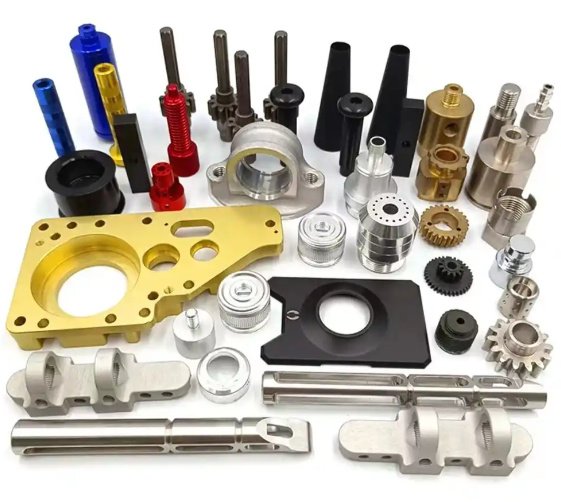
Core Classification of Metal Materials
Details
Metal materials form the foundational substrate of precision engineering, manufacturing, and industrial infrastructure. The classification of metals is not merely an academic exercise—it is a decision-critical framework that determines machinability, corrosion resistance, mechanical performance, and total cost of ownership across the component lifecycle.
This classification follows the engineering-materials paradigm that separates metals by iron content, alloying strategy, and performance thresholds, enabling systematic selection from commodity-grade steels to mission-critical superalloys.
Ferrous Metal Materials
Carbon Steel
Low carbon steel, medium carbon steel and high carbon steel, with low cost and good weldability, used for structural parts, pipelines and conventional mechanical components.Alloy Steel
Add chromium, nickel, molybdenum and other elements to improve strength, wear resistance and high-temperature performance, applied in heavy machinery and pressure vessels.Stainless Steel
304, 316L, 410 and other grades, outstanding oxidation and corrosion resistance, ideal for chemical, marine and food processing equipment.Cast Iron
Gray cast iron, ductile iron, with good shock absorption and casting performance, widely used in pump bodies, valve parts and mechanical bases.Non-Ferrous Metal Materials
Non-ferrous metals refer to all metal materials except iron-based alloys, with lightweight, high thermal conductivity and special corrosion resistance.
Aluminum & Aluminum Alloys
6061, 7075 series, low density, easy machining, mainstream for aerospace, automotive lightweight and precision parts.
Titanium & Titanium Alloys
High strength-to-weight ratio, acid and alkali corrosion resistance, suitable for oilfield downhole tools, aerospace structural parts and medical equipment.
Copper & Copper Alloys
Red copper, brass, bronze, excellent electrical and thermal conductivity, used for electrical components, heat exchangers and bearing parts.
Magnesium Alloys, Nickel Alloys, Tungsten & Molybdenum Refractory Metals
Applied in high-temperature extreme working conditions and high-end precision manufacturing.
High-Performance Special Metal Alloys
Key Physical & Mechanical Properties
Tensile Strength & Yield Strength
Determine load-bearing capacity of structural parts; high-alloy metals can reach tensile strength over 1000MPa.Hardness
Brinell, Rockwell and Vickers hardness, reflecting wear resistance and surface deformation resistance.Thermal & Electrical Conductivity
Critical for heat dissipation parts and electrical conductive components.Corrosion Resistance
Adapt to marine, chemical, acidic and alkaline working environments to reduce component failure rate.Machinability & Weldability
Affect production efficiency of CNC machining, five-axis processing and on-site welding.
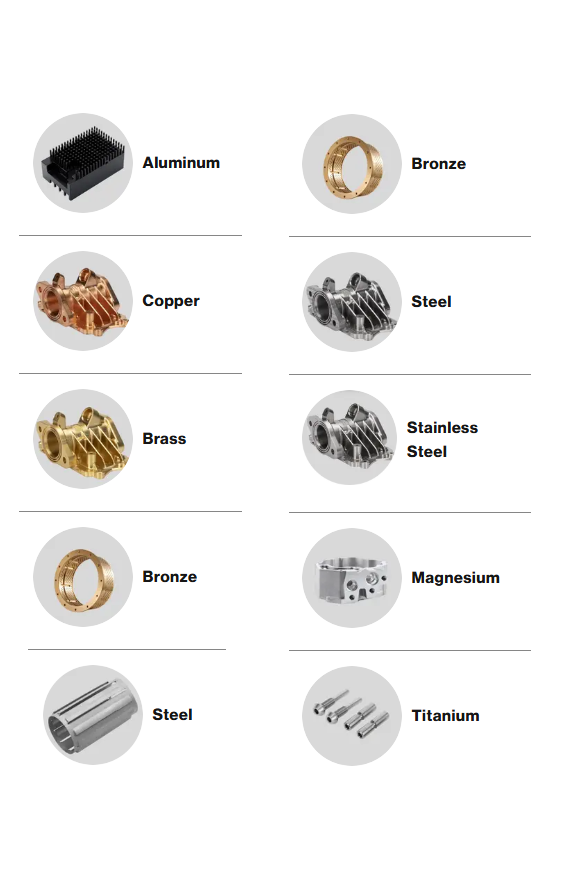
Main Industrial Application Scenarios
1
Oil & Gas Industry
2
Aerospace & Aviation
3
Precision Machinery & CNC Machining
6061/7075 aluminum, 304 stainless steel, alloy steel for custom mechanical parts and auto spare parts.
4
Marine Engineering
Marine-grade stainless steel and aluminum alloy resisting seawater corrosion.
5
Construction & Bridge
Carbon steel section steel, weathering steel for building structural support and bridge engineering.
6
Electronic & Electrical
Copper alloy, aluminum alloy for conductive terminals and heat dissipation modules.
Common Engineering Problems & Optimization Solutions
Problem 1
Problem 2
Problem 3
Procurement Engineer Buyer Perspective – Metal Material Selection Guidelines
From the perspective of procurement and project engineering, selecting metal materials should avoid blind price competition and focus on long-term comprehensive cost and engineering adaptability:
Prioritize temperature, pressure, medium corrosion and load cycle; do not replace high-grade corrosion-resistant metal with ordinary carbon steel to avoid early failure.
Confirm chemical composition report, mechanical property test report and industrial standard compliance (ASTM, GB, API, NACE); reject non-standard recycled metal materials with unstable performance.
For mass CNC processing, prefer metal materials with good machinability to reduce processing loss and production cycle; for high-temperature and high-pressure parts, prioritize alloy performance over raw material cost.
Industrial metal materials require batch stability of chemical composition and mechanical properties; qualified suppliers should provide complete material inspection documents to ensure consistency of follow-up processing and assembly.
Reserve allowance for welding, forging, heat treatment and surface treatment; some high-hardness metal materials are not suitable for conventional welding, which needs to be confirmed in the procurement stage.
Metal materials table
Summary
Metal materials are fundamental industrial raw materials characterized by metallic luster, excellent electrical conductivity, thermal conductivity, malleability and ductility. As core substances in mechanical manufacturing, aerospace, oil & gas, automotive and structural engineering, metal materials cover pure metal elements and metal alloys with customizable physical and chemical properties. Different from non-metallic materials such as plastic, ceramic and composite materials, metal materials feature stable structural strength, high temperature resistance, corrosion resistance and processability, making them irreplaceable in precision machining, casting, forging and welding production. From standard carbon steel to high-performance superalloys, the classification and performance differentiation of metal materials directly determine the service life and safety of engineering components.Metal Materials Parameter Table
| Material / Alloy | Series / Model | Machinability | Relative Raw Material Cost | Typical Tolerance Benchmark | Surface Finishing Methods |
|---|---|---|---|---|---|
| Alloy Steel | 4140, 4340, 8620, 52100 | 55–65% (AISI 1112 = 100%) | Medium-High | ±0.05–0.13 mm (±0.002–0.005 in) | Grinding, Polishing, Black Oxide, Phosphate, Chrome Plating, Nitriding |
| Aluminum | 6061-T6, 7075-T6, 2024-T3, 5052 | 300–400% (Excellent) | Low-Medium | ±0.025–0.075 mm (±0.001–0.003 in) | Anodizing, Hard Anodizing, Chromate Conversion, Powder Coating, Brushing, Polishing, Sandblasting |
| Brass | C36000 (Free-Cutting), C26000, C46400 | 100–350% (Excellent to Good) | Medium | ±0.025–0.075 mm (±0.001–0.003 in) | Polishing, Plating (Nickel, Chrome), Lacquering, Brushing, Patination, Electropolishing |
| Bronze | C93200 (SAE 660), C95400 (Aluminum Bronze), C51000 (Phosphor Bronze) | 30–50% (Fair to Poor) | Medium-High | ±0.05–0.13 mm (±0.002–0.005 in) | Polishing, Brushing, Patination, Lacquering, Plating, Electropolishing |
| Carbon Steel | 1018, 1045, A36, 1095 | 50–80% (Good to Fair) | Low | ±0.05–0.13 mm (±0.002–0.005 in) | Black Oxide, Phosphate, Zinc Plating, Chrome Plating, Painting, Powder Coating, Polishing |
| Cast Irons | Gray Iron (Class 30, 40), Ductile Iron (65-45-12, 80-55-06), White Iron | 60–110% (Good to Excellent for Gray; Poor for White) | Low-Medium | ±0.08–0.25 mm (±0.003–0.010 in) | Shot Blasting, Grinding, Painting, Powder Coating, Phosphate, Black Oxide |
| Cobalt | Co-Cr (Stellite 1, 6, 21), MP35N | 15–25% (Very Poor) | Very High | ±0.05–0.13 mm (±0.002–0.005 in) | Grinding, Polishing, Electropolishing, Passivation, Coating (Ceramic, PVD) |
| Copper | C11000 (ETP), C12200 (DHP), C10100 (OFE) | 20–40% (Poor to Fair; gummy) | Medium-High | ±0.05–0.13 mm (±0.002–0.005 in) | Polishing, Brushing, Plating (Nickel, Silver, Tin), Lacquering, Electropolishing, Passivation |
| Hastelloy | C-276, C-22, B-2, X | 15–25% (Very Poor) | Very High | ±0.05–0.13 mm (±0.002–0.005 in) | Electropolishing, Passivation, Shot Peening, Grinding, Polishing, PVD Coating |
| Haynes | 230, 242, 188, 25 | 15–25% (Very Poor) | Very High | ±0.05–0.13 mm (±0.002–0.005 in) | Grinding, Polishing, Electropolishing, Passivation, Ceramic Coating |
| Inconel | 600, 625, 718, 725, X-750 | 15–25% (Very Poor; work hardens rapidly) | Very High | ±0.05–0.13 mm (±0.002–0.005 in) | Electropolishing, Passivation, Shot Peening, Grinding, Polishing, Ceramic Coating |
| Magnesium | AZ31B, AZ91D, ZK60, WE43 | 500–600% (Excellent; flammable chips) | Medium | ±0.05–0.13 mm (±0.002–0.005 in) | Chemical Conversion Coating (Chromate, Tagnite), Anodizing (HAE, Dow 17), Painting, Powder Coating, Polishing |
| Monel | 400 (UNS N04400), K-500 (UNS N05500) | 20–35% (Poor; work hardens) | High | ±0.05–0.13 mm (±0.002–0.005 in) | Electropolishing, Passivation, Grinding, Polishing, Plating, Shot Peening |
| Nickel | 200, 201, 270 (Electrolytic) | 30–40% (Fair to Poor; gummy) | High | ±0.05–0.13 mm (±0.002–0.005 in) | Electropolishing, Passivation, Plating (Chrome, Gold), Grinding, Polishing, Shot Peening |
| Nimonic | 75, 80A, 90, 105, 115, C-263 | 15–25% (Very Poor) | Very High | ±0.05–0.13 mm (±0.002–0.005 in) | Grinding, Polishing, Electropolishing, Passivation, Ceramic Coating, Shot Peening |
| Rene | 41, 80, 95, 125, N5 (Single Crystal) | 10–20% (Extremely Poor; near-impossible conventional machining) | Extremely High | ±0.025–0.075 mm (±0.001–0.003 in) for precision cast; grinding required | Grinding, Polishing, Electropolishing, Ceramic Coating, PVD/CVD Coating, Shot Peening |
| Stainless Steel | 304, 316, 303 (Free-Machining), 410, 17-4 PH, 2205 (Duplex) | 40–70% (Fair to Good for 303/416; Poor for 304/316) | Medium-High | ±0.05–0.13 mm (±0.002–0.005 in) | Passivation, Electropolishing, Pickling, Bead Blasting, PVD Coating, Black Oxide, Polishing, Grinding |
| Stellite | 1, 3, 6, 6B, 12, 21 | 10–20% (Extremely Poor; cast or ground only) | Very High | ±0.05–0.13 mm (±0.002–0.005 in) as-cast; grinding for tighter | Grinding, Polishing, Electropolishing, Ceramic Coating, Laser Cladding |
| Superalloys | Inconel, Hastelloy, Waspaloy, Rene, CMSX-4, Mar-M-247 | 10–25% (Very Poor to Extremely Poor) | Extremely High | ±0.05–0.13 mm (±0.002–0.005 in); precision casting ±0.025 mm | Grinding, Polishing, Electropolishing, Ceramic Coating, PVD/CVD, Shot Peening, HIP |
| Titanium | Grade 1–4 (Commercially Pure), Grade 5 (Ti-6Al-4V), Grade 23 (Ti-6Al-4V ELI) | 25–35% (Poor; low thermal conductivity causes heat buildup) | High-Very High | ±0.05–0.13 mm (±0.002–0.005 in) | Anodizing (Type 2, 3), PVD Coating, Passivation, Electropolishing, Shot Peening, Polishing, Chemical Milling |
| Tool Steel | A2, D2, O1, S7, H13, M2 (High-Speed Steel), T1 | 40–60% (Fair to Good in annealed state; Poor when hardened) | Medium-High | ±0.025–0.075 mm (±0.001–0.003 in) when ground | Grinding, Polishing, PVD Coating (TiN, TiAlN), Nitriding, Black Oxide, Chrome Plating |
| Tungsten | Pure W, WC-Co (Cemented Carbide), Heavy Alloy (W-Ni-Fe) | 5–15% (Extremely Poor; brittle, abrasive) | Very High-Extremely High | ±0.025–0.075 mm (±0.001–0.003 in) for ground carbide | Grinding (Diamond Wheel), Lapping, Polishing, CVD Coating, Brazing, Electrical Discharge Grinding |
| Waspaloy | UNS N07001, Waspaloy Plus | 15–20% (Very Poor; severe work hardening) | Very High | ±0.05–0.13 mm (±0.002–0.005 in) | Grinding, Polishing, Electropolishing, Ceramic Coating, Shot Peening, Passivation |