
Metal Prototyping Services
Core Metal Prototyping Methods
Metal prototyping involves creating metal parts or assemblies directly from CAD models using various manufacturing technologies. Unlike traditional tooling-based approaches, modern prototyping emphasizes speed, precision, and material fidelity. Metal rapid prototyping is particularly useful for producing functional prototypes that can withstand mechanical stress, thermal cycles, and real-world environmental conditions.
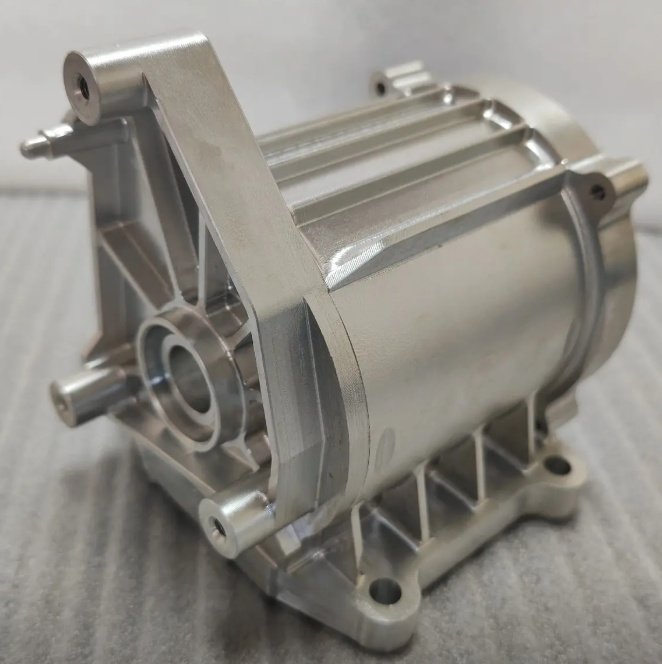
Metal CNC Machining
Remains the benchmark for metal rapid prototyping when dimensional precision and surface integrity are non-negotiable. By removing material from solid billets, this CNC machining method preserves the full metallurgical density of production-grade alloys.
Metal 3D Printing
Sheet Metal Fabrication
Metal Prototyping Benefits
- Faster Development Cycles: Prototypes can be produced in days instead of weeks.
- Functional Testing: Supports mechanical, thermal, and surface finish evaluation.
- Material Representation: Enables testing with actual metals, not just plastic substitutes.
- Cost Efficiency: Reduces waste and tooling costs in early-stage design.
Engineering Challenges and Data-Driven Solutions
1
Thermal Distortion in Additive Manufacturing
2
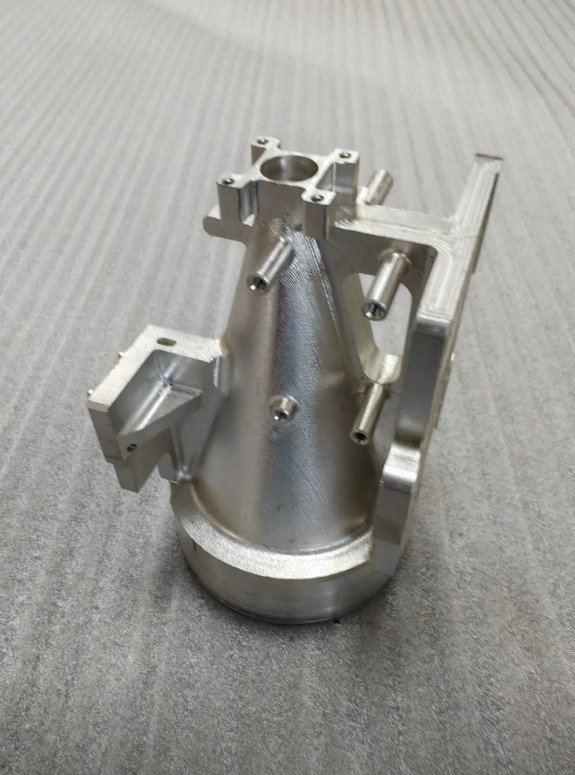
Surface Roughness Impact on Fit
CNC-machined parts often need post-processing to meet assembly tolerances. Surface metrology data can quantify deviations and guide finishing.
3
Material Fatigue Testing
Prototypes undergo cyclic loading to ensure functional reliability. Example: Stainless steel 316L prototypes showed an average fatigue life of 450,000 cycles under 200 MPa load before failure.
Metal Prototyping Materials
The choice of material is crucial in metal prototyping, as it affects mechanical performance, machinability, and thermal stability.
| Alloy / Grade | Prototype Method | Machinability Index | Tensile Strength (MPa) | Density (g/cm³) | Key Properties | Typical Prototype Use |
|---|---|---|---|---|---|---|
| Aluminum 6061-T6 | CNC, Sheet Metal, DMLS | 90 | 310 | 2.70 | High thermal conductivity, excellent anodizing response, cost-efficient | Electronic housings, automotive fixtures, aerospace brackets |
| Aluminum 7075-T6 | CNC, DMLS | 70 | 572 | 2.81 | Highest strength-to-weight ratio in aluminum series; stress corrosion risk | Structural aircraft components, high-load bike parts |
| Stainless Steel 304 | CNC, DMLS, Casting | 45 | 505 | 7.93 | Excellent corrosion resistance; non-magnetic; work-hardens rapidly | Medical trays, food-grade prototypes, marine hardware |
| Stainless Steel 316L | CNC, DMLS | 40 | 485 | 7.98 | Superior chloride corrosion resistance; biocompatible | Surgical instruments, implant prototypes, chemical processing |
| Titanium Grade 5 (Ti-6Al-4V) | CNC, DMLS | 10–20 | 950 | 4.43 | Exceptional strength-to-weight; bio-inert; low thermal conductivity | Aerospace engine mounts, orthopedic implants, racing components |
| Brass C360 (Free-Cutting) | CNC | 150 | 345 | 8.49 | Excellent machinability; natural antimicrobial; aesthetic finish | Electrical connectors, valve prototypes, decorative hardware |
| Copper C110 | CNC, Sheet Metal | 20–30 | 220 | 8.96 | Very high electrical/thermal conductivity; gummy machining | Bus bars, heat sinks, RF waveguides |
| Tool Steel (A2, D2) | CNC | 25 | 1,520 | 7.80 | High wear resistance; heat-treatable to 60+ HRC | Injection mold prototypes, die inserts, cutting tools |
| Inconel 718 | DMLS, Casting | 12 | 1,240 | 8.19 | Oxidation resistance up to 980°C; retains strength at extreme temps | Turbine blades, rocket engine components, high-temp fixtures |
Integration with Production Workflows
Modern metal rapid prototyping seamlessly integrates with full-scale manufacturing. By bridging the gap between concept and manufacturing, metal prototyping ensures that final products meet both performance and cost targets.
Engineers validate CAD models using functional prototypes.
Prototypes can be used to create molds or dies for production.
Certain additive techniques allow small-batch production with near-final material properties.
Metal Prototyping: Selection, Pitfalls and QC
Real-World Process Selection Framework & Decision Logic
| Scenario | Recommended Method | Rationale | Typical Lead Time |
|---|---|---|---|
| 1–10 units, complex internal geometry, weight reduction critical | DMLS/SLM | No tooling; design freedom for topology optimization | 5–7 days |
| 1–100 units, ±0.05 mm precision, production alloy required | 5-Axis CNC | Isotropic properties; exact production material; fast iteration without tooling | 3–7 days |
| 10–1,000 units, thin-walled enclosure, consistent bend radii | Sheet Metal + Laser | Lowest per-unit cost for 2D-derived geometries; rapid nesting reduces scrap | 5–10 days |
| ≥10,000 units, complex 3D shape, HPDC transition planned | Investment Casting (rapid pattern) | Validates production metallurgy and shrink rates before hard tooling commitment | 4–6 weeks |
| Mixed geometry: machined features + welded structure | CNC + Sheet Metal Hybrid | Single-source coordination eliminates stack-up tolerance drift between vendors | 7–12 days |
Common Engineering Pitfalls in Metal Prototyping
- Applying ±0.005 mm globally to a sheet metal bracket increases cost by 40–60% without functional benefit. Reserve tight tolerances for datums, threaded interfaces, and sealing surfaces only.
- Stainless steel and high-strength aluminum exhibit 2–5° springback depending on bend radius and grain direction. Prototype shops must compensate via over-bending or in-process angle measurement.
- Uncontrolled TIG welding on thin-gauge enclosures creates 0.3–0.8 mm distortion. Fixture-controlled welding with staged heat input and post-weld stress relief maintains geometric stability.
- A +20% LME aluminum price move disproportionately impacts CNC prototyping (high billet-to-chip ratio). Sheet metal nesting mitigates this; HPDC becomes economical only above 5,000–10,000 units when tooling cost is amortized.
- SLM parts show 5–10% lower elongation in the Z-build direction. Orient critical load paths in the XY plane, or specify HIP treatment for fatigue-critical prototypes.
Documentation and Quality Assurance
Production-intent metal prototyping requires traceability. Standard deliverables include:- Dimensional inspection report: CMM data on critical features with statistical process control (SPC) where applicable
- Material certificate: Mill test report (MTR) confirming alloy grade, heat number, and mechanical properties
- Surface finish verification: Profilometer readings on specified surfaces
- Finish certification: Coating thickness and adhesion test results for anodize, powder coat, or plating
- First Article Inspection (FAI): AS9102-compliant documentation for aerospace and medical device prototypes