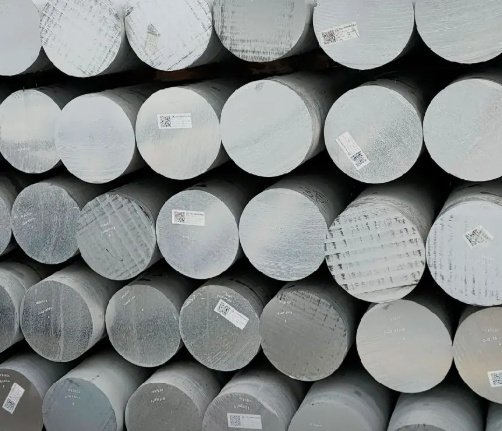
Aluminum F357 is a premium aluminum-silicon-magnesium casting alloy used when engineers need a strong, lightweight, heat-treatable aluminum casting with tighter impurity control than many general-purpose foundry alloys. It is commonly specified for aerospace brackets, housings, pump components, structural castings, defense hardware, robotic parts, and transportation systems where strength-to-weight ratio, castability, dimensional repeatability, and inspection reliability are important.
In practical sourcing language, F357 Aluminum is often discussed alongside A357, A356, 356, 6061 billet machining, and other aluminum casting alloys. The search intent behind “F357 Aluminum” is usually technical: buyers and engineers want to confirm material composition, mechanical properties, heat treatment, casting process suitability, machinability, inspection requirements, and whether Aluminum F357 is the right alloy for a production or replacement part.
What Is F357 Aluminum?
F357 Aluminum is a high-strength, heat-treatable Al-Si-Mg casting alloy. Its silicon content improves castability and fluidity, while magnesium enables precipitation hardening during heat treatment. Compared with many standard aluminum casting alloys, F357 is typically selected for cleaner chemistry, improved mechanical performance, and suitability for critical cast components.
The alloy is most often supplied as castings rather than wrought bar, plate, or extrusion. Common casting routes include investment casting, sand casting, permanent mold casting, low-pressure casting, and other engineered foundry processes. For high-criticality work, F357 castings may also be hot isostatic pressed, solution heat treated, aged, radiographically inspected, and penetrant inspected.
Typical Chemical Composition of Aluminum F357
Exact chemistry limits depend on the governing specification, customer drawing, foundry standard, and aerospace or industrial requirement. The following table gives a practical reference range for F357-type aluminum casting alloy. Always verify against the applicable standard, purchase order, and material test report.
| Element | Typical Function | Common F357-Type Range or Limit |
|---|---|---|
| Aluminum | Base metal | Balance |
| Silicon | Improves castability, fluidity, and feeding | Approximately 6.5% to 7.5% |
| Magnesium | Enables age hardening and strength increase | Approximately 0.45% to 0.70% |
| Iron | Controlled impurity; excessive iron can reduce ductility | Usually tightly limited, often lower than general casting grades |
| Copper, Zinc, Manganese | Usually controlled as impurities for corrosion and ductility | Specification dependent |
| Titanium / Boron | Grain refinement | Specification dependent |
| Beryllium, if specified | Oxidation and melt-control effect in some aerospace specifications | Only where allowed and controlled by applicable regulation |
One reason buyers specify F357 rather than a lower-cost casting alloy is low iron and controlled impurities. Iron-rich intermetallic phases can act as stress raisers, reduce elongation, and increase the risk of brittle fracture in heavily loaded castings.
Mechanical Properties of F357 Aluminum
Mechanical properties vary by casting process, section thickness, heat treatment, test coupon type, hot isostatic pressing, defect level, and inspection class. For engineering comparison, Aluminum F357 in T6 or T61 condition is generally associated with high strength for a cast aluminum alloy.
| Property | Typical Engineering Reference | Notes |
|---|---|---|
| Density | About 2.67 to 2.69 g/cm³ | Useful for lightweight structural design |
| Elastic Modulus | About 70 to 72 GPa | Similar to many aluminum alloys |
| Ultimate Tensile Strength, T6/T61 | Often about 310 to 380 MPa depending on process and quality | Higher values require controlled casting and heat treatment |
| Yield Strength, T6/T61 | Often about 240 to 310 MPa | Design allowables must come from the approved specification |
| Elongation | Commonly 3% to 10% depending on casting integrity | Highly sensitive to porosity, inclusions, and section thickness |
| Thermal Conductivity | Commonly around 150 to 170 W/m·K after heat treatment | Useful for housings and thermal structures |
| Corrosion Resistance | Good for an Al-Si-Mg alloy | Can be improved with anodizing, conversion coating, or paint systems |
For critical design, do not rely only on generic handbook values. Use drawing-specific minimum properties, qualified test bars, separately cast coupons or integrally cast coupons, and inspection acceptance criteria. Fatigue-sensitive applications require particular attention to pore size, oxide films, surface finish, and machining marks.
F357 Aluminum vs A356, A357 and 6061
F357 is often chosen when a design needs better casting performance than a machined billet approach and higher quality control than commodity casting alloys. The comparison below reflects common engineering selection logic.
| Material | Product Form | Strength and Quality Position | Best-Fit Use Case |
|---|---|---|---|
| F357 Aluminum | Castings | Premium Al-Si-Mg casting alloy with controlled chemistry | Aerospace-grade or high-reliability cast structural parts |
| A357 Aluminum | Castings | Similar high-strength Al-Si-Mg family; specification details vary | Structural castings requiring high strength and good ductility |
| A356 Aluminum | Castings | Widely used, good castability, often lower cost | General industrial, automotive, pump, and housing castings |
| 6061 Aluminum | Wrought bar, plate, extrusion, forging | Good machinability and availability, not a casting alloy | Machined parts, frames, fixtures, and lower-volume billet components |
If a component has deep pockets, curved walls, ribs, bosses, or a poor buy-to-fly ratio when machined from 6061 billet, a qualified F357 casting can reduce raw material waste and machining time. If the part requires very tight wrought material allowables, forged grain flow, or very high fracture toughness, a wrought or forged alloy may remain the better choice.
When is F357 a better option than machining from 6061 plate?
F357 may be better when the part geometry is complex, material removal from billet is excessive, machining time dominates cost, or the final component benefits from near-net-shape casting. However, the engineering team must account for tooling cost, casting lead time, inspection cost, and qualification testing.
Casting Processes Used for Aluminum F357
The best casting process depends on annual volume, wall thickness, dimensional tolerance, surface finish, internal soundness, and qualification level. F357 Aluminum can be produced through several methods, but each process creates different economic and metallurgical results.
| Casting Process | Advantages | Engineering Considerations |
|---|---|---|
| Investment Casting | Good surface finish, complex shapes, fine details | Higher part cost; useful for aerospace brackets and intricate housings |
| Sand Casting | Flexible for large parts and low-to-medium volume | Rougher surface, larger machining allowances, careful feeding design needed |
| Permanent Mold Casting | Better dimensional repeatability and cooling control than sand casting | Tooling cost is higher; geometry must suit mold extraction |
| Low-Pressure Casting | Controlled fill, reduced turbulence, suitable for quality aluminum castings | Process qualification and gating design are important |
| HIP After Casting | Can close internal porosity and improve fatigue reliability | Adds cost and must be paired with proper heat treatment and inspection |
For high-integrity castings, T6/T61 temper plus HIP is frequently considered when porosity control, ductility, and fatigue performance are key design requirements. HIP is not a substitute for poor foundry practice, but it can significantly reduce internal void-related risk when applied to a well-designed casting.
Heat Treatment: T6, T61 and Dimensional Control
Aluminum F357 gains much of its strength through heat treatment. A typical sequence includes solution heat treatment, quenching, artificial aging, and sometimes stress relief or straightening operations. Exact temperatures and times must follow the applicable specification and foundry procedure.
- Solution treatment: dissolves strengthening phases and prepares the alloy for aging.
- Quenching: retains solute in solid solution but can introduce distortion in thin walls or asymmetric shapes.
- Artificial aging: develops strength through precipitation hardening.
- Dimensional stabilization: may be required for precision-machined housings, optical structures, or rotating components.
Engineering teams should review datum strategy, wall thickness transitions, rib-to-wall ratios, machining sequence, and post-heat-treatment inspection. Thin ribs and large flat faces may move after quench. Where tolerances are tight, it is common to rough machine, stress relieve or thermally stabilize, and then finish machine.
Why can heat treatment cause distortion in F357 castings?
Distortion occurs because solution treatment and quenching create thermal gradients and residual stress. Complex cast geometries may cool unevenly, especially around thick bosses, thin ribs, and unsupported flat walls. Proper fixture design, quench control, machining allowance, and process trials help reduce this risk.
Machining Aluminum F357
F357 Aluminum machines well after heat treatment, but it should not be treated exactly like wrought 6061. Cast microstructure, silicon particles, porosity risk, skin condition, and hardness variation all affect tool life and surface finish. In production, machining strategy should be developed together with the casting supplier, heat treater, and inspection team.
Recommended Machining Practices
- Machine in T6 or T61 condition when possible for better chip control and dimensional stability.
- Use sharp carbide tools for general work; consider PCD tooling for high-volume production or abrasive silicon-related wear.
- Use polished flutes and high-positive rake geometry to reduce built-up edge.
- Apply flood coolant or minimum-quantity lubrication depending on tolerance, finish, and shop practice.
- Avoid aggressive clamping on thin-wall castings; use soft jaws, conformal fixtures, or vacuum support where appropriate.
- Leave sufficient machining stock to remove casting skin, parting-line mismatch, and local surface discontinuities.
- For threaded holes in loaded areas, evaluate thread engagement length, inserts, or cast-in bosses with adequate wall thickness.
Machining Allowance and Surface Finish
Machining allowance should be based on casting process capability rather than a generic number. Investment cast F357 parts may require less stock than sand cast parts, while large sand castings may need additional allowance for mold shift, draft, and surface variation. For critical sealing surfaces, bearing bores, O-ring grooves, or precision datums, finishing should occur after final heat treatment and dimensional stabilization.
A typical engineering problem is leakage through machined sealing faces when subsurface porosity is opened during finishing. The fix is not simply “machine deeper.” Better solutions include gating redesign, local chills, improved feeding, HIP, impregnation where allowed, or moving the sealing surface away from a high-risk hot spot.
Real Engineering Problems and Data-Based Outcomes
The value of Aluminum F357 is clearest when the alloy is applied to a measurable manufacturing or performance problem. The following examples reflect common industrial outcomes; actual results depend on geometry, supplier capability, inspection class, and production volume.
| Engineering Challenge | F357-Based Solution | Typical Measured Result |
|---|---|---|
| High buy-to-fly ratio from billet machining | Convert complex 6061-style machined bracket to near-net-shape F357 investment casting | Material removal reduced from about 75% to below 35%; CNC cycle time reduced by 40% to 60% in qualified production trials |
| Fatigue scatter caused by internal porosity | Use improved gating, radiographic inspection, and HIP on F357-T6 castings | Reduced reject rate and narrower tensile elongation scatter; fatigue reliability improved when pore size was controlled |
| Distortion after heat treatment | Add quench fixtures, rough machining before final aging, and datum-based finish machining | Flatness and bore-position variation reduced enough to avoid secondary straightening in repeat production |
| Premature tool wear during finishing | Switch from general carbide to optimized carbide or PCD tooling with high-positive geometry | Tool life increased significantly on high-volume F357 castings, especially where silicon-related abrasion was dominant |
These outcomes are strongest when engineering, procurement, and manufacturing teams define tooling, inspection level, heat-treatment qualification, and machining stock before placing a production order. Treating a critical casting as a commodity purchase often leads to avoidable nonconformance.
Inspection, Quality and Specification Requirements
F357 Aluminum castings are frequently used in applications where quality documentation matters as much as price. Buyers should define inspection and certification requirements early, because radiography, penetrant testing, CT scanning, tensile testing, and heat-treatment qualification can materially affect cost and lead time.
- Chemical certification: confirms alloy composition and impurity limits.
- Mechanical testing: verifies tensile strength, yield strength, elongation, and hardness where specified.
- Radiographic inspection: detects internal porosity, shrinkage, inclusions, and other volumetric discontinuities.
- Liquid penetrant inspection: identifies surface-breaking cracks, laps, and defects after casting or machining.
- Dimensional inspection: confirms datums, machined features, casting tolerances, and geometric requirements.
- Heat-treatment records: document furnace cycle, quench method, aging cycle, and load traceability.
- Traceability: links melt lot, heat lot, casting batch, inspection results, and final shipped part.
Commonly referenced standards may include ASTM aluminum casting standards, aerospace material specifications, customer-controlled drawings, NADCAP-related process requirements, ASTM E155 for aluminum casting radiographs, ASTM E1417 for penetrant inspection, and internal OEM acceptance criteria. The exact standard must be listed on the drawing or purchase order.
What documents should a buyer request for Aluminum F357 castings?
Typical documentation includes material test reports, chemistry certification, heat-treatment records, mechanical test results, inspection reports, dimensional reports, nonconformance records if applicable, and full lot traceability. For aerospace work, the approved supplier list and special-process approvals are also critical.
Design Guidelines for F357 Aluminum Cast Parts
Good F357 performance starts with casting-aware design. The alloy is capable, but it cannot overcome poor geometry, sharp thermal transitions, inaccessible inspection areas, or unrealistic tolerances. The most common design risks are porosity, hot tearing, and heat-treatment distortion.
Geometry Recommendations
- Use uniform wall thickness where possible to reduce hot spots and shrinkage risk.
- Add generous radii at rib intersections, bosses, pockets, and load-transfer features.
- Avoid isolated heavy sections unless feeding, chills, or local process controls are planned.
- Place machined sealing surfaces away from high-risk shrinkage zones where possible.
- Design inspection access for radiography, CT, penetrant inspection, and dimensional checks.
- Define casting datums and machining datums so that both foundry and CNC processes are aligned.
- Confirm draft, parting line, gating vestige removal, and machining stock before tooling release.
Corrosion Protection and Surface Treatment
Aluminum F357 has good natural corrosion resistance for many industrial environments, but surface protection is often used in aerospace, marine, defense, and outdoor equipment. Typical options include chemical conversion coating, anodizing, primer and paint, powder coating, and specialty sealants. For fatigue-critical parts, the effect of anodizing thickness, surface roughness, and post-machining edge condition should be reviewed.
Procurement Guidance for Engineers and Buyers
Purchasing F357 Aluminum castings is different from buying standard aluminum plate. The lowest quoted casting price may not be the lowest program cost if it produces high scrap, excessive machining variation, or late inspection failures. Material test reports, qualified heat treatment, foundry process control, and clear acceptance criteria are essential for repeatable supply.
| Buyer Question | Why It Matters |
|---|---|
| Which specification controls the Aluminum F357 chemistry and mechanical properties? | Prevents confusion between similar alloys such as A356, A357, and F357. |
| Are test coupons separately cast or integrally cast? | Coupon location affects how well test results represent the actual part. |
| Is HIP required? | HIP can improve internal soundness but adds cost and lead time. |
| What inspection class applies? | Radiographic and penetrant acceptance levels strongly affect manufacturability and price. |
| Who owns machining stock and datum strategy? | Unclear datum planning can create mismatches between casting and machining operations. |
| Is the supplier qualified for aerospace or customer-specific special processes? | Qualification gaps can stop shipment even if the casting is physically acceptable. |
For production programs, the best practice is to review the drawing, 3D model, tolerance stack, inspection plan, and machining plan before tooling approval. Early manufacturability review can reduce scrap, shorten qualification cycles, and prevent late redesign.
When to Specify Aluminum F357
Specify Aluminum F357 when the part requires a cast aluminum geometry, high strength-to-weight ratio, controlled chemistry, heat-treatable performance, and reliable inspection capability. It is especially relevant for complex structural castings, aerospace hardware, lightweight mechanical systems, and components where machining from billet creates too much waste or cost.
Consider another alloy or process if the design requires wrought-specific allowables, very low tooling cost for a one-off prototype, extreme ductility, weld-dominated fabrication, or tolerances that cannot be achieved after casting and heat treatment. The right decision depends on total cost, qualification burden, mechanical performance, and production repeatability rather than alloy name alone.
Key Takeaways
- F357 Aluminum is a premium Al-Si-Mg casting alloy used for strong, lightweight, heat-treatable aluminum castings.
- Its value comes from controlled chemistry, good castability, heat-treatment response, and suitability for high-integrity inspection.
- Machining Aluminum F357 requires attention to casting skin, silicon-related tool wear, porosity risk, fixturing, and final heat-treatment distortion.
- HIP, radiography, penetrant inspection, and qualified heat treatment can improve reliability but must be specified early.
- For buyers, the most important documents are chemistry certification, mechanical test results, heat-treatment records, inspection reports, and lot traceability.
- The best results come from aligning foundry design, machining strategy, inspection acceptance, and procurement requirements before production tooling is released.