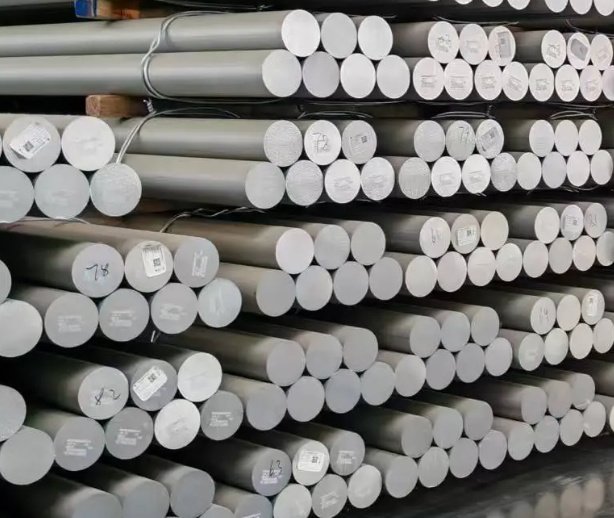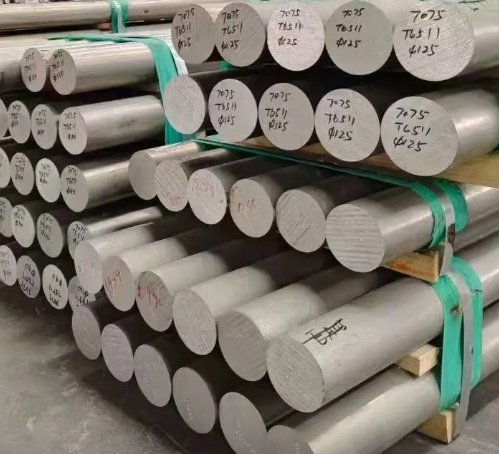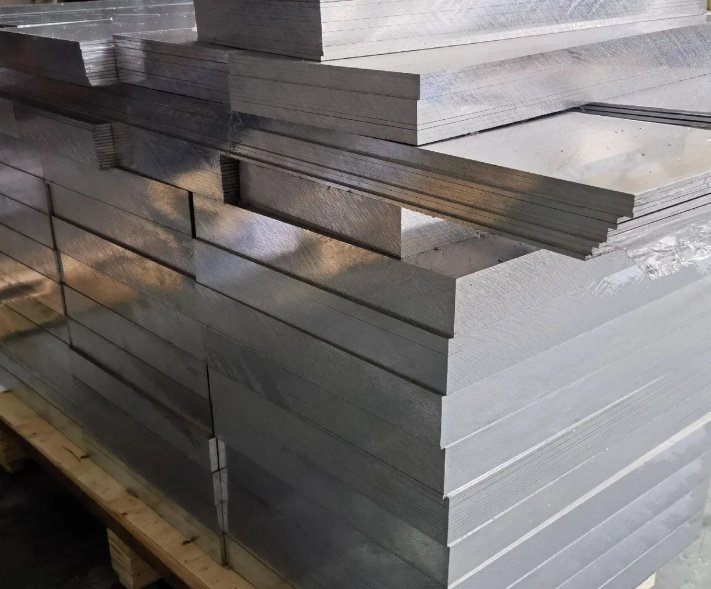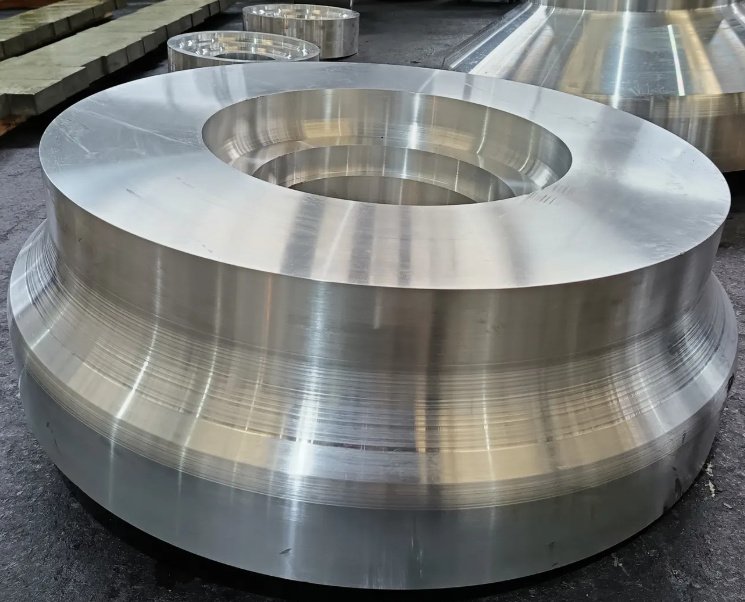
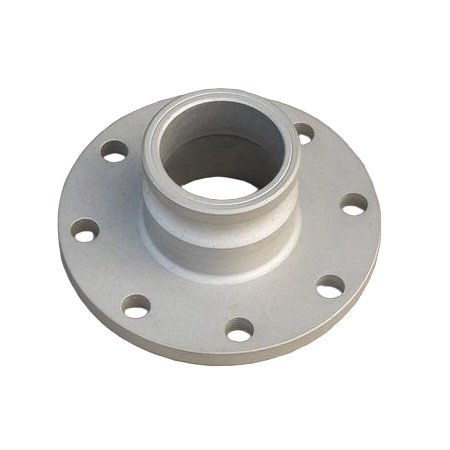
Aluminum Flange components are used where a bolted connection must be lightweight, corrosion-resistant and easy to machine. Compared with carbon steel or stainless steel flanges, aluminum offers a high strength-to-weight ratio, excellent machinability and good surface treatment compatibility, making it suitable for piping systems, vacuum equipment, marine assemblies, automation machinery, heat exchangers and custom structural interfaces.
We manufacture standard and custom Aluminum Flanges from 6061-T6, 6082-T6, 5083, 5052, 7075 and other aluminum alloys. Available designs include flat face flanges, blind flanges, slip-on flanges, threaded flanges, weld flanges, adapter flanges, split flanges and precision CNC-machined special flanges based on drawings, samples or operating conditions.
Aluminum Flanges for Lightweight and Corrosion-Resistant Connections
Aluminum flanges are commonly selected when engineers need to reduce assembly weight without sacrificing dimensional accuracy. The density of aluminum is approximately 2.70 g/cm³, while carbon steel is typically around 7.85 g/cm³. For the same flange geometry, this can reduce component weight by about 60% to 66%, depending on alloy, surface finish and machining allowance.
In equipment frames, marine piping, pneumatic systems and robotic tooling, this weight reduction can lower handling costs, reduce vibration load and simplify installation. Aluminum also forms a natural oxide layer, and additional anodizing, hard anodizing or chemical conversion coating can further improve corrosion resistance and surface durability.
Common Types of Aluminum Flanges
The correct flange type depends on pressure level, sealing method, installation space, pipe connection and maintenance requirements. Below are common options for industrial and OEM applications.
| Type | Typical Design Features | Common Applications |
|---|---|---|
| Flat Face Aluminum Flange | Flat sealing surface, simple bolt-hole pattern, easy flange machining | Low-pressure piping, equipment covers, ducting, tanks |
| Aluminum Blind Flange | Solid plate design used to close pipe or vessel openings | Inspection ports, pipe end caps, pressure test closures |
| Aluminum Slip-On Flange | Pipe slips through the bore and is welded or fixed in position | Light-duty pipe systems, HVAC, water treatment equipment |
| Threaded Aluminum Flange | Internal thread connection, no welding required | Pneumatic systems, instrumentation, modular equipment |
| Aluminum Weld Flange | Designed for TIG/MIG welding with compatible filler metal | Marine structures, tanks, custom aluminum pipework |
| Aluminum Adapter Flange | Connects different bolt circles, bores or interface standards | Retrofit projects, pumps, motors, gearboxes, automation fixtures |
| Aluminum Split Flange | Two-piece clamping structure for easy installation around shafts or tubes | Hydraulic lines, shaft supports, machine guarding |
| Vacuum Aluminum Flange | Precision sealing face for O-ring, KF, ISO or custom vacuum sealing | Vacuum chambers, semiconductor equipment, laboratory systems |
When should an aluminum flange replace a steel flange?
Aluminum is a practical replacement when weight, corrosion resistance, machinability or thermal conductivity is more important than very high pressure capacity. For high-temperature, high-pressure, steam or aggressive chemical services, steel, stainless steel or specialized alloys may still be required. Final selection should consider pressure, temperature, gasket type, bolt preload, galvanic corrosion and applicable codes.
Material Grades and Alloy Selection
Different aluminum alloys provide different strength, corrosion resistance, weldability and machinability. For most machined flange applications, 6061-T6 aluminum is the preferred balance of strength, availability, surface finish and cost. For marine environments, 5083 or 5052 may be preferred due to better saltwater corrosion resistance.
| Alloy | Key Properties | Best-Fit Flange Applications |
|---|---|---|
| 6061-T6 | Good strength, excellent machinability, good anodizing response | General CNC flanges, pipe flanges, equipment mounting flanges |
| 6082-T6 | Higher strength than many 6000-series alloys, good aluminum machining stability | Structural flanges, European machinery projects, load-bearing interfaces |
| 5083 | Excellent marine corrosion resistance, good weldability | Marine piping, tanks, offshore equipment, welded aluminum assemblies |
| 5052 | Good corrosion resistance and formability, moderate strength | Light-duty flanges, covers, ducting, fabricated parts |
| 7075-T6 | High strength, lower corrosion resistance than 6000/5000 series | Aerospace fixtures, high-strength mechanical adapters, non-welded flanges |
| 2024 | High fatigue resistance, limited corrosion resistance | Special mechanical interfaces where fatigue strength is critical |
Technical Specifications
Standard or custom aluminum flanges can be produced based on drawings, 3D models, pipe schedules, existing samples or interface dimensions. Critical parameters include outside diameter, bore diameter, bolt circle diameter, number of holes, hole diameter, flange thickness, sealing face, surface finish and tolerance requirements.
| Product Name | Aluminum Flange / Aluminum Flanges |
|---|---|
| Available Materials | 6061-T6, 6082-T6, 5083, 5052, 7075-T6, 2024 and custom aluminum alloys |
| Manufacturing Process | CNC turning, CNC milling, drilling, tapping, boring, countersinking, chamfering, deburring |
| Outer Diameter Range | Typically 20 mm to 1200 mm; larger sizes available by fabrication or ring machining |
| Thickness Range | Typically 3 mm to 120 mm, depending on load, gasket compression and bolt preload |
| Tolerance Capability | General machining ±0.10 mm; precision features down to ±0.02 mm depending on size and geometry |
| Surface Roughness | Ra 3.2 µm standard; Ra 1.6 µm or better available for sealing faces |
| Surface Treatment | Clear anodizing, black anodizing, hard anodizing, chemical conversion coating, powder coating, polishing |
| Drawing Formats | PDF, DWG, DXF, STEP, STP, IGES, SolidWorks files |
| Inspection Options | Dimensional report, material certificate, surface finish report, CMM inspection, pressure or leak testing by request |
Important dimensions to provide for a custom aluminum flange
Please define OD, ID or bore size, flange thickness, bolt circle diameter, number of bolt holes, hole size, thread type, sealing face type, gasket groove dimensions, surface finish, alloy grade, treatment and operating conditions. For rotating or alignment-critical parts, specify concentricity, flatness and perpendicularity.
CNC Machining and Manufacturing Capabilities
Aluminum flanges are well suited to CNC machining because aluminum alloys cut cleanly, maintain good dimensional accuracy and support efficient production from prototypes to medium-volume batches. Manufacturing can start from aluminum plate, bar, forged ring, extrusion or casting, depending on strength, grain structure, material utilization and cost requirements.
CNC Turning
CNC turning is used for circular features such as outside diameter, bore, hub, raised face, gasket step and chamfer. For flange sealing performance, controlled tool paths help maintain flatness and surface roughness on mating faces.
CNC Milling and Drilling
CNC milling creates bolt-hole patterns, slots, pockets, anti-rotation features, counterbores and adapter profiles. Multi-axis machining is available for complex flanges with angled ports, non-symmetric bolt patterns or integrated mounting features.
Threading, Tapping and Inserts
Threaded holes can be produced according to metric, UNC, UNF, BSP, NPT or custom thread standards. For applications requiring repeated assembly, stainless steel thread inserts can be installed to improve wear resistance and prevent thread stripping.
Deburring and Edge Conditioning
All machined edges can be deburred, chamfered or rounded according to handling and assembly needs. This is important for gasket protection, operator safety and anodizing consistency.
Surface Treatments for Aluminum Flanges
Surface treatment improves corrosion resistance, wear resistance, appearance and electrical behavior. The best finish depends on the operating environment and whether the flange requires sealing, electrical conductivity or abrasion resistance.
| Finish | Main Benefit | Engineering Notes |
|---|---|---|
| Clear Anodizing | Improves corrosion resistance while keeping a natural aluminum appearance | Common for machinery, automation and clean equipment |
| Black Anodizing | Corrosion protection with a uniform black appearance | Popular for optical, robotic and electronic equipment |
| Hard Anodizing | Higher surface hardness and wear resistance | Useful for sliding contact, frequent assembly or abrasive environments |
| Chemical Conversion Coating | Corrosion resistance with better electrical conductivity than anodizing | Used in electrical grounding and aerospace-style applications |
| Powder Coating | Durable colored finish and additional environmental protection | Suitable for visible equipment and outdoor installations |
| Polishing | Smooth appearance and reduced surface contamination | Often used for decorative or cleanroom-related components |
Engineering Considerations Before Selection
Aluminum flange design should not be selected only by size. Engineers and buyers should evaluate sealing method, bolt load, working pressure, temperature, corrosion risk, vibration and compatibility with connected components. Aluminum has a lower modulus of elasticity than steel, so flange thickness, bolt spacing and gasket compression require proper verification.
Pressure and Temperature
Aluminum flanges are commonly used in low-pressure to moderate-pressure systems, pneumatic lines, coolant lines, vacuum systems and non-critical fluid transfer. For pressure-bound systems, design must follow applicable standards and engineering calculations rather than material name alone.
Galvanic Corrosion
When aluminum is connected to stainless steel, carbon steel, brass or copper alloys in the presence of moisture or electrolytes, galvanic corrosion can occur. Recommended solutions include isolation washers, compatible gaskets, anodizing, sealants or controlled material pairing.
Flatness and Gasket Sealing
For O-ring grooves, vacuum sealing and thin gasket interfaces, flange flatness is a critical quality characteristic. Machining sequence, stress relief, clamping method and final inspection all affect sealing reliability.
Example engineering result: weight reduction in a machine connection
In a custom automation fixture, replacing a steel adapter flange with a 6061-T6 aluminum flange reduced part weight from approximately 4.8 kg to 1.7 kg while maintaining the same bolt circle and mounting interface. The lower mass improved manual handling, reduced cantilever load on the support bracket and shortened CNC cycle time due to easier machining. Final performance depends on load case, bolt preload and flange geometry.
Standards, Interfaces and Custom Compatibility
Aluminum flanges can be manufactured to match common flange systems or custom OEM interfaces. While aluminum flanges are not always a direct substitute for steel pressure-rated flanges, they can be designed around recognized dimensions when the operating conditions permit.
| Interface Category | Typical Reference | Application Notes |
|---|---|---|
| Pipe Flange Dimensions | ANSI/ASME-style, DIN-style, JIS-style or custom bolt patterns | Used where dimensional compatibility is needed; pressure rating must be verified |
| Vacuum Flanges | KF, ISO, custom O-ring groove designs | Requires controlled sealing face roughness and groove geometry |
| Hydraulic and Split Flanges | SAE-style or custom clamp interfaces | Often requires high-accuracy bolt spacing and surface contact control |
| Motor and Gearbox Flanges | OEM-specific pilot diameter, bolt circle and shaft clearance | Concentricity and perpendicularity are usually critical |
| Instrumentation Flanges | Small threaded or precision-machined interfaces | Common in test equipment, sensors, pneumatic devices and laboratories |
Quality Control and Inspection
Quality control for aluminum flanges focuses on dimensional accuracy, sealing surface finish, thread quality, flatness, hole position and material traceability. For precision assemblies, inspection can include CMM measurement, height gauge measurement, plug gauge inspection, thread gauge verification and surface roughness testing.
Critical inspection items include bolt circle diameter accuracy, bore concentricity, sealing face flatness, hole-to-hole location, countersink depth, O-ring groove width and anodizing thickness. For production batches, first article inspection and batch sampling help maintain consistency.
| Inspection Item | Purpose | Typical Method |
|---|---|---|
| Material Verification | Confirms alloy and temper | Material certificate, PMI by request |
| OD, ID and Thickness | Ensures correct fit and assembly stack height | Caliper, micrometer, CMM |
| Bolt Hole Position | Prevents assembly misalignment | CMM, optical measurement, fixture gauge |
| Thread Quality | Ensures safe fastening and repeatable assembly | Go/no-go thread gauge |
| Surface Roughness | Improves sealing and appearance | Roughness tester |
| Flatness | Supports gasket or O-ring sealing | Surface plate, dial indicator, CMM |
Applications of Aluminum Flanges
Aluminum flanges are used across industries that require lightweight connection parts, corrosion-resistant mounting interfaces or precision-machined adapter components.
- Marine piping, boat hardware and seawater-adjacent equipment
- Vacuum chambers, laboratory equipment and semiconductor support systems
- Automation machinery, robotic tooling and lightweight fixtures
- Pneumatic systems, air handling equipment and low-pressure fluid lines
- Heat exchangers, cooling plates, coolant manifolds and thermal equipment
- Electric motor mounts, gearbox adapters and rotary equipment interfaces
- Water treatment equipment, tanks, covers and inspection ports
- Automotive, motorsport and aerospace ground support components
- Optical instruments, camera rigs and measurement equipment
Buyer and Engineer Checklist
A clear specification reduces quotation time, avoids redesign and improves production accuracy. Before ordering aluminum flanges, confirm the following details.
- Required alloy and temper, such as 6061-T6, 5083 or 7075-T6
- Outside diameter, inside diameter, thickness and hub dimensions
- Bolt circle diameter, number of holes, hole diameter and thread details
- Sealing method: flat gasket, O-ring groove, raised face, recessed face or custom profile
- Operating pressure, temperature, fluid type and environmental exposure
- Required surface finish, anodizing color or coating specification
- Flatness, concentricity, perpendicularity and other geometric tolerances
- Quantity, prototype requirements and expected annual demand
- Inspection documentation, material certificate or special packaging requirements
For procurement teams, the most cost-effective aluminum flange design is often achieved by balancing tolerance, surface treatment and raw material form. For example, a non-critical mounting flange may not require the same flatness and surface roughness as a vacuum sealing flange. Matching the specification to the function helps reduce cost while maintaining performance.
Packaging and Delivery Considerations
Aluminum is softer than steel, so finished flange surfaces must be protected during handling and shipment. Precision sealing faces, anodized surfaces and threaded holes can be protected with foam separators, plastic caps, anti-scratch wrapping, carton packaging or wooden cases for heavy flanges.
For export orders, parts can be labeled by drawing number, material grade, batch number and inspection status. This helps receiving teams identify components quickly and supports traceability in assembly or maintenance operations.