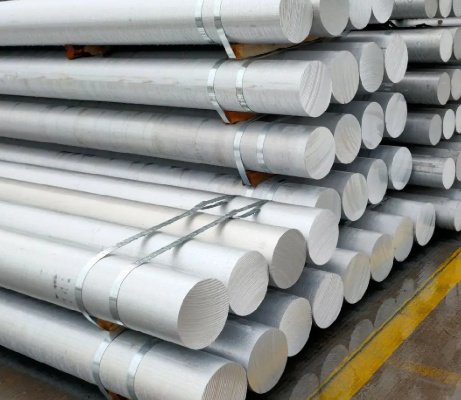
B390 Aluminum, also searched as Aluminum B390, is a high-silicon aluminum casting alloy used where sliding wear, dimensional stability, and thermal performance are more important than ductility. It is commonly specified for automotive powertrain components, compressor parts, pump housings, wear plates, and other castings exposed to friction and elevated temperatures.
In engineering terms, B390 is a hypereutectic aluminum-silicon casting alloy. Its high silicon content forms hard primary silicon particles that improve wear resistance and reduce thermal expansion. The same silicon particles also make the alloy more abrasive to cutting tools, so machining strategy is a major part of successful part production.
What Is B390 Aluminum?
B390 Aluminum is a cast aluminum alloy in the 3xx.x family, generally associated with high silicon, copper, magnesium, and controlled minor elements. It is designed for cast components requiring wear resistance, low thermal expansion, and hot strength. Compared with general-purpose cast aluminum alloys such as A356 or 319, B390 is less ductile but much better suited for sliding or scuffing conditions.
The alloy is often considered for components that interact with pistons, rings, seals, shafts, vanes, or rotating elements. In many applications, its value is not only the base metal strength but also the ability to maintain bore geometry and surface integrity under thermal cycling.
Typical Chemical Composition of Aluminum B390
Exact limits depend on the applicable standard, producer, and casting route. The following table shows commonly referenced composition ranges for B390-type hypereutectic aluminum-silicon casting alloys. Buyers should always confirm the certified chemistry on the mill test report or foundry certificate.
| Element | Typical Range by Weight | Engineering Function |
|---|---|---|
| Silicon, Si | 16.0% - 18.0% | Improves wear resistance, lowers thermal expansion, increases tool abrasiveness |
| Copper, Cu | 4.0% - 5.0% | Improves strength and heat-treatment response |
| Magnesium, Mg | 0.45% - 0.65% | Supports precipitation hardening and strength |
| Iron, Fe | Controlled, often below about 1.0% | Affects die soldering, intermetallics, toughness, and machinability |
| Manganese, Mn | Low to controlled addition | Helps modify iron-bearing phases in some casting systems |
| Nickel, Ni | May be controlled depending on specification | Can contribute to elevated-temperature stability |
| Aluminum, Al | Balance | Base metal matrix |
For purchasing and quality control, chemical certification and casting process capability matter more than nominal grade name. Two castings labeled B390 can perform differently if melt treatment, silicon particle size, porosity level, heat treatment, and machining allowance are not controlled.
Key Properties and Performance Data
The values below are typical engineering ranges for cast and heat-treated B390-type aluminum parts. They should be used for preliminary material selection only; final design values should come from the foundry, heat treater, or approved material specification.
| Property | Typical Value or Range | Design Meaning |
|---|---|---|
| Density | About 2.70 - 2.75 g/cm³ | Lightweight alternative to cast iron for wear components |
| Ultimate tensile strength | About 250 - 350 MPa depending on temper and casting quality | Good strength for cast aluminum, but not a substitute for wrought alloys in tensile-critical designs |
| Yield strength | About 180 - 300 MPa depending on temper | Useful for thermally loaded housings and structural castings with moderate ductility demand |
| Elongation | Often below 1% - 2% | Low ductility; avoid high-impact or deformation-controlled designs |
| Hardness | Approximately 100 - 140 HB | Supports wear resistance but increases machining difficulty |
| Coefficient of thermal expansion | About 17 - 19 µm/m·K | Lower than many conventional aluminum castings; useful for bore stability |
| Thermal conductivity | Often about 120 - 150 W/m·K | Good heat transfer for engine and compressor components |
| Wear resistance | High versus standard Al-Si casting alloys | Primary reason for selecting Aluminum B390 |
Engineering note: why silicon particle control matters
B390 obtains much of its wear performance from primary silicon particles. However, excessively coarse or unevenly distributed silicon can reduce fatigue strength, damage cutting edges, and create inconsistent surface finish. Foundries often manage this through melt temperature, phosphorus modification, cooling rate, filtration, and process controls that limit segregation.
B390 Aluminum vs A390, A356, 319, and 4032 Aluminum
Material selection usually involves trade-offs. B390 Aluminum is not the best aluminum alloy for every cast component; it is best when wear behavior and thermal stability justify the added machining cost and reduced ductility.
| Alloy | General Type | Strengths | Limitations Compared with B390 | Best-Fit Applications |
|---|---|---|---|---|
| B390 Aluminum | Hypereutectic Al-Si-Cu-Mg casting alloy | Excellent wear resistance, low expansion, good hot strength | Low ductility, abrasive machining, limited weldability | Engine blocks, cylinder bores, compressor rotors, pump parts |
| A390 Aluminum | Closely related hypereutectic Al-Si alloy | Similar wear and thermal behavior; widely used in automotive castings | Specification details may differ by producer and standard | Powertrain and wear-resistant castings |
| A356 Aluminum | Al-Si-Mg casting alloy | Better ductility, good castability, heat treatable | Lower wear resistance and higher thermal expansion than B390 | Structural castings, wheels, brackets, aerospace-style cast parts |
| 319 Aluminum | Al-Si-Cu casting alloy | Good castability, strength, and cost balance | Not as wear-resistant as B390 in sliding bore applications | Engine blocks, heads, housings, general automotive castings |
| 4032 Aluminum | Wrought high-silicon aluminum alloy | Lower expansion than many wrought alloys, good piston material | Not a direct casting substitute for B390; different product form and processing | Forged pistons, precision machined components |
If the part needs impact toughness, high elongation, or extensive welding, A356 or another ductile aluminum casting alloy may be more appropriate. If the part needs a wear-resistant aluminum bore with reduced thermal growth, Aluminum B390 is often the stronger candidate.
Casting, Heat Treatment, and Quality Control
B390 Aluminum can be produced by processes such as die casting, permanent mold casting, or specialized foundry routes depending on part geometry and required properties. The process affects porosity, silicon morphology, dimensional control, and subsequent machining allowance.
Casting Considerations
- Fluidity: High silicon improves fluidity, helping complex shapes fill more reliably.
- Porosity control: Gas and shrinkage porosity can reduce pressure tightness and fatigue life.
- Primary silicon distribution: Uniform silicon improves bore finish and consistent wear behavior.
- Thermal management: Cooling rate affects microstructure, hardness, and final mechanical properties.
- Machining stock: Additional stock may be needed where surface integrity or bore geometry is critical.
Heat Treatment Options
B390 may be supplied in as-cast, T5, T6, or other controlled conditions depending on the supplier and part requirements. Heat treatment can improve strength and hardness but must be balanced against distortion risk, porosity expansion, and final machining tolerances.
Practical heat-treatment risk for precision parts
For thin-wall housings or engine components with multiple bores, heat treatment can shift geometry enough to affect line boring, sealing lands, and bearing alignment. A common engineering approach is to cast, stress relieve or heat treat, rough machine, stabilize if required, and then finish machine critical datums and bores.
Machining Aluminum B390: Tooling, Cutting Data, and Surface Finish
Machining is one of the most important cost drivers for B390 Aluminum. The high silicon phase is abrasive, so conventional uncoated carbide tools may wear quickly, especially in boring, milling, and continuous finishing operations. For stable production, many shops rely on PCD tooling, controlled primary silicon size, and stable heat treatment.
Recommended Machining Practices
- Tool material: PCD tools are commonly preferred for high-volume finishing; CVD diamond-coated carbide may be used in selected operations.
- Tool geometry: Sharp positive rake geometry helps reduce cutting force, but edge strength must be sufficient for silicon abrasion.
- Coolant: Flood coolant or minimum-quantity lubrication can help control chip evacuation and thermal stability.
- Finishing strategy: Light finishing passes reduce tool load and improve bore roundness.
- Inspection: Monitor tool wear by diameter drift, surface roughness, and silicon pull-out rather than tool life alone.
| Operation | Typical Production Approach | Expected Result When Controlled |
|---|---|---|
| Face milling | PCD inserts, rigid fixturing, balanced cutter | Stable flatness and low burr formation on sealing faces |
| Boring | PCD boring bar, small finishing allowance, controlled runout | Round, dimensionally stable bores with reduced tool wear |
| Reaming | Diamond tooling or fine-grain carbide for limited volume | Consistent hole size if chips are evacuated effectively |
| Honing | Diamond abrasives with plateau finish where sliding contact exists | Improved oil retention and controlled surface texture |
| Threading | Forming is usually avoided; cutting taps or thread milling preferred | Lower risk of cracking or poor thread quality |
In real production environments, switching from carbide to PCD on hypereutectic aluminum can often increase finishing tool life by several multiples, particularly in high-speed boring and milling. Surface roughness targets such as Ra 0.4 - 0.8 µm are achievable on controlled finishing operations, but results depend heavily on casting porosity, silicon distribution, tool runout, and coolant cleanliness.
Applications of B390 Aluminum
Aluminum B390 is usually selected when a component must combine lightweight construction with high wear resistance. It is especially valuable in systems where cast iron would provide wear performance but add excessive mass.
- Automotive engine blocks: Cylinder bore areas, linerless or wear-critical aluminum designs, and thermally stable powertrain castings.
- Pistons and related powertrain parts: Components requiring low expansion and thermal stability.
- Compressor components: Scrolls, rotors, vanes, and housings where sliding contact and heat are present.
- Pump parts: Wear-resistant housings, plates, and rotating components in controlled service environments.
- Hydraulic and pneumatic parts: Dimensional stability under cycling and moderate temperature exposure.
- Industrial machinery: Lightweight wear components where cast iron replacement is desired.
When B390 is not the right alloy
Engineers should avoid Aluminum B390 when ductility, welding, or heavy forming are primary design requirements. The alloy is also not ideal when the component has severe impact loading, highly variable casting section thickness without quality controls, or very low-volume machining where PCD tooling cost cannot be justified.
Buyer and Engineer Checklist for Specifying Aluminum B390
A clear specification reduces scrap, machining delays, and disputes between the buyer, foundry, heat treater, and machine shop. For critical castings, it is better to define measurable outcomes than to rely only on the alloy name.
Items to Confirm Before Purchase
- Applicable material standard and alloy designation, including whether B390, A390, or another equivalent is acceptable.
- Chemical composition limits and certificate requirements.
- Casting process, expected porosity class, and pressure-tightness requirements.
- Temper or heat-treatment condition, including distortion-control expectations.
- Mechanical property requirements and test location on casting or separately cast specimens.
- Critical machined datums, machining allowance, and surface roughness targets.
- Primary silicon particle control if bore finish, wear, or tool life is critical.
- Non-destructive testing requirements such as X-ray, dye penetrant, CT scanning, or leak testing.
- Dimensional inspection plan, especially after heat treatment and final machining.
For procurement teams, the lowest casting price may not produce the lowest finished-part cost. A slightly higher-quality B390 casting with better porosity control and silicon distribution can reduce tool consumption, lower scrap, and improve final inspection yield.
Summary: Why Choose B390 Aluminum?
B390 Aluminum is a specialized high-silicon casting alloy for wear-resistant, thermally stable aluminum components. Its main advantages are low thermal expansion, good hot strength, strong sliding-wear performance, and useful castability for complex parts. Its main limitations are low ductility, challenging machining, limited weldability, and the need for strong foundry process control.
For engineering and purchasing success, specify B390 by standard, temper, inspection method, and performance target. When the casting process, heat treatment, and machining strategy are aligned, Aluminum B390 can deliver a high-performance lightweight alternative to heavier wear-resistant materials in engines, compressors, pumps, and precision industrial equipment.