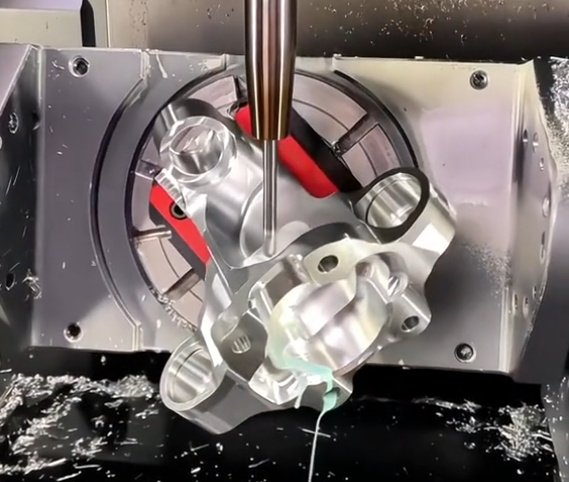
What Are Metal Machining Services?
Metal machining is a subtractive manufacturing process that removes material from a metal workpiece to achieve a specified
geometry. A machining supplier may start with bar stock, plate, billet, casting, forging or extrusion, then use controlled
cutting tools, abrasives, electrical discharge or other processes to manufacture parts according to 2D drawings, 3D CAD models
and inspection requirements.
In procurement and engineering contexts, the phrase comprehensive metal machining services usually includes
more than cutting metal. It often covers DFM review, material sourcing, fixture design, CNC programming, in-process inspection,
heat treatment coordination, surface finishing, traceability documentation and packaging for delivery.
Core Metal Machining Capabilities
A complete machining program usually combines multiple processes. The right mix depends on part geometry, tolerance, material,
annual volume, surface finish, lead time and cost target.
| Machining Process | Meilleure utilisation pour | Typical Engineering Advantages | Common Industries |
|---|---|---|---|
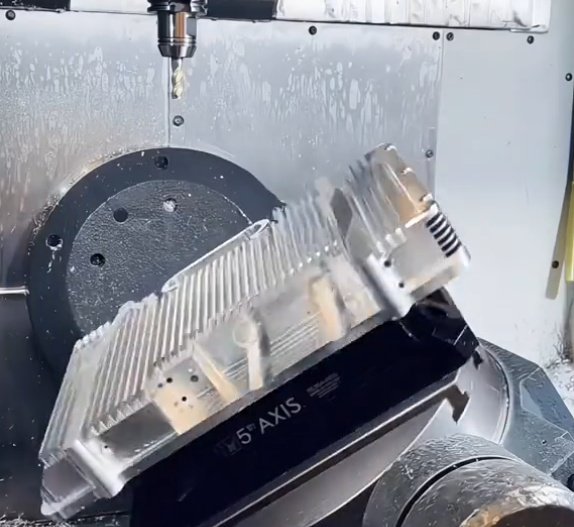
| Fraisage CNC | Prismatic parts, pockets, slots, profiles, brackets, housings, plates | High geometric flexibility, 3-axis to 5-axis capability, accurate features on multiple faces | Aerospace, robotics, automation, medical devices, electronics |
| Tournage CNC | Shafts, bushings, fittings, pins, threaded parts, round components | Efficient concentricity control, fast cycle times, good surface finish on cylindrical features | Automotive, hydraulics, energy, industrial machinery |
| Swiss Machining | Small, long, slender, high-volume precision parts | Excellent dimensional stability for micro components and tight-diameter tolerances | Medical, electronics, aerospace fasteners, precision instruments |
| Wire EDM | Hard metals, sharp internal corners, thin walls, tool steels, dies | No cutting force, excellent accuracy, suitable for hardened materials | Tooling, aerospace, medical implants, mold components |
| Sinker EDM | Blind cavities, complex internal forms, mold features | Machines intricate shapes that are difficult to reach with rotating cutters | Mold making, die manufacturing, aerospace tooling |
| Surface Grinding | Flatness-critical parts, plates, precision spacers, hardened steel components | Tight flatness, parallelism and fine surface finish | Tooling, semiconductor equipment, industrial machinery |
| Centerless Grinding | High-volume cylindrical parts, pins, rods, shafts | Consistent diameter control and high throughput | Automotive, medical, fluid control, bearings |
| Drilling, Reaming and Tapping | Holes, threaded interfaces, dowel locations, fluid passages | Reliable assembly interfaces and controlled fit with mating components | All major manufacturing sectors |
Industries That Depend on Precision Metal Machining
Different industries require different combinations of accuracy, documentation, material certification and regulatory control.
A machining strategy that works for a consumer electronics enclosure may not be adequate for a flight-critical aerospace bracket
or an implantable medical device component.
Aerospace and Space
Aerospace machining focuses on lightweight, high-strength materials such as aluminum 7075, titanium Ti-6Al-4V, Inconel and
stainless steels. Common parts include brackets, structural fittings, actuator components, housings, manifolds and flight hardware.
Key requirements often include AS9100-aligned quality systems, AS9102 first article inspection, lot traceability,
controlled special processes and documented revision control.
Medical Devices and Surgical Instruments
Medical machining requires biocompatible materials, burr control, clean surfaces and tight dimensional repeatability.
Stainless steel 316L, 17-4PH, titanium grades and cobalt-chromium alloys are frequently used for surgical tools,
diagnostic equipment, orthopedic components and device housings. For regulated applications, suppliers may need ISO 13485
quality management practices, validated cleaning processes and strict material traceability.
Automotive and Electric Vehicles
Automotive machining supports engine parts, transmission components, suspension hardware, battery housings, cooling plates,
connectors and test fixtures. EV programs often prioritize aluminum machining for lightweight thermal management parts.
Production success depends on cycle time reduction, fixture repeatability, statistical process control and cost-effective
manufacturing at volume.
Energy, Oil and Gas
Energy-sector and oil/gas field parts may face high pressure, corrosive fluids, thermal cycling and abrasive environments. Machined components
include valve bodies, pump shafts, flanges, compressor parts, downhole tool components, heat exchanger parts and turbine-related
hardware. Material choices commonly include stainless steels, duplex stainless steel, Inconel, Monel and hardened alloy steels.
Electronics and Semiconductor Equipment
Electronics and semiconductor machining often requires precision aluminum housings, heat sinks, vacuum chamber components,
RF enclosures, mounting plates and precision frames. Critical factors include flatness, surface finish, cleanliness, anodizing
compatibility and dimensional stability after machining.
Robotics, Automation and Industrial Equipment
Robotics and automation systems rely on machined frames, end-effectors, gearbox components, motor mounts, linear motion plates,
sensor brackets and tooling nests. These parts often require excellent positional accuracy, repeatable assembly datums and
predictable wear performance.
Material Selection for Metal Machined Parts
Material selection affects machinability, cost, strength, corrosion resistance, weight, thermal performance and post-processing.
Procurement engineers should confirm not only the alloy designation but also the temper, hardness, specification, country of origin
requirements and certification needs.
| Famille de matériaux | Notes communes | Machining Characteristics | Applications typiques | Buyer Notes |
|---|---|---|---|---|
| Aluminium | 6061-T6, 6082, 7075-T6, 2024 | Excellent machinability, high cutting speeds, good strength-to-weight ratio | Housings, brackets, plates, heat sinks, aerospace structures | Check anodizing requirements, flatness after material removal and temper certification. |
| Acier inoxydable | 303, 304, 316L, 410, 416, 17-4PH | More difficult than aluminum; work hardening and tool wear must be controlled | Medical parts, food equipment, valves, shafts, corrosion-resistant hardware | Specify passivation, hardness condition and surface finish requirements clearly. |
| Carbon and Alloy Steel | 1018, 1045, 4140, 4340, 8620 | Good strength and cost efficiency; heat treatment may be required | Gears, shafts, tooling, machine components, structural hardware | Account for distortion after heat treatment and grinding allowance if needed. |
| Titane | Grade 2, Grade 5 Ti-6Al-4V | Low thermal conductivity, high tool wear risk, requires controlled feeds and coolant | Aerospace parts, medical implants, lightweight high-strength components | Expect higher machining cost; verify certification and contamination controls. |
| Copper and Brass | C110, C101, C360, naval brass | Copper can be gummy; brass machines very well | Electrical contacts, bus bars, fittings, RF parts, thermal components | Confirm conductivity, plating, RoHS requirements and deburring expectations. |
| Nickel Alloys | Inconel 625, Inconel 718, Monel 400 | Difficult machining, high heat generation, strong work hardening tendency | Turbine parts, chemical processing, oil and gas, high-temperature hardware | Plan longer lead times, premium tooling and robust inspection strategy. |
| Acier à outils | A2, D2, H13, S7, M2 | Machinable before hardening; often ground or EDM-cut after heat treatment | Dies, punches, molds, wear plates, cutting tools | Define hardness range, heat treatment sequence and final grinding tolerance. |
| Magnésium | AZ31B, AZ91D | Lightweight and machinable but requires fire-risk controls | Aerospace, portable electronics, lightweight frames | Confirm supplier experience, chip handling, coating and corrosion protection. |
Typical Tolerances and Surface Finish Expectations
Precision machining is not defined by one universal tolerance. A realistic tolerance plan balances function, manufacturability,
inspection cost and production yield. Overly tight tolerances can increase cost significantly without improving part performance.
| Feature Type | Typical Commercial Tolerance | Precision Machining Range | Critical Notes |
|---|---|---|---|
| General milled dimensions | ±0.005 in / ±0.13 mm | ±0.001 in / ±0.025 mm or better with process control | Depends on part size, material stability, tool access and inspection method. |
| Turned diameters | ±0.003 in / ±0.08 mm | ±0.0005 in / ±0.013 mm with finishing passes or grinding | Concentricity and runout should be specified separately when functional. |
| Reamed holes | ±0.0015 in / ±0.038 mm | ±0.0005 in / ±0.013 mm depending on diameter and material | Fit class, plating thickness and gage method should be defined. |
| Ground surfaces | ±0.001 in / ±0.025 mm | ±0.0002 in / ±0.005 mm in specialized applications | Flatness, parallelism and finish can be controlled more tightly by grinding. |
| Finition de la surface | Ra 63-125 µin / 1.6-3.2 µm | Ra 16-32 µin / 0.4-0.8 µm or finer with secondary finishing | Surface finish affects sealing, fatigue, friction, coating adhesion and appearance. |
Design for Manufacturability in Metal Machining
A design may be technically machinable but commercially inefficient. Early DFM review can reduce lead time, improve yield and
prevent late-stage drawing revisions. For purchasing engineers, the best suppliers are not just quoting parts; they are identifying
manufacturing risks before the purchase order is released.
- Minimize deep pockets: Deep narrow pockets require long tools, slower feeds and increased vibration risk.
- Use standard hole sizes: Standard drill, reamer and tap sizes reduce tooling cost and inspection complexity.
- Specify functional tolerances only: Tighten only features that affect fit, motion, sealing or safety.
- Allow practical internal radii: Sharp internal corners usually require EDM or special tools; a larger radius improves machinability.
- Plan for workholding: Parts need stable clamping surfaces or sacrificial stock for accurate machining.
- Consider finishing buildup: Anodizing, plating, coating and passivation can change dimensions or affect threads.
- Control burr-sensitive edges: Use edge-break notes and define critical no-burr areas for fluid, medical or electrical applications.
From Prototype to Production: How a Machining Project Is Executed
A professional metal machining workflow typically moves through engineering review, planning, machining, inspection and documentation.
The process should be transparent enough for a buyer to understand risk, cost drivers and delivery constraints.
Résumé
- RFQ and technical review: Supplier reviews CAD files, drawings, material specifications, tolerance stack-ups,
finishes, annual volume and inspection requirements. - DFM feedback: Machinists and manufacturing engineers identify hard-to-machine features, ambiguous drawing notes,
high-cost tolerances and material availability concerns. - Process planning: The team selects machines, fixtures, cutting tools, inspection equipment and operation sequence.
- CNC programming: CAM software generates toolpaths for milling, turning, drilling, threading, finishing and deburring operations.
- First article production: Initial parts are machined and inspected to confirm program, fixture and setup reliability.
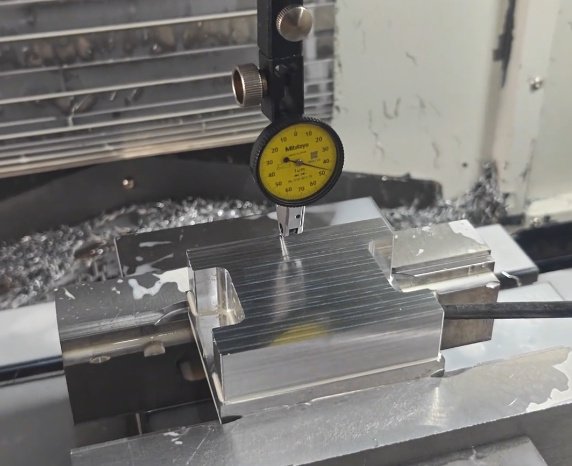
- In-process control: Critical dimensions are checked during production to prevent drift from tool wear, heat or fixture movement.
- Opérations secondaires : Heat treatment, grinding, EDM, plating, anodizing, passivation, polishing, laser marking or assembly may follow machining.
- Final inspection and documentation: CMM reports, dimensional inspection, material certificates, coating certificates and first article reports are prepared as required.
Quality Control and Inspection Methods
Machined metal parts are often used in assemblies where one dimensional error can cause leakage, vibration, premature wear or failed installation.
Quality control should be built into the process rather than added only at final inspection.
| Inspection Method | What It Verifies | When It Is Most Useful |
|---|---|---|
| CMM Inspection | GD&T, true position, flatness, profile, perpendicularity, complex geometry | Aerospace, medical, high-precision industrial components |
| Optical Comparator | Profiles, radii, angles, small part features | Stamped-machined hybrid parts, small precision components |
| Thread Gages | Internal and external thread fit | Fasteners, fittings, hydraulic components, assembly hardware |
| Surface Roughness Tester | Ra, Rz and other surface texture values | Sealing faces, bearing surfaces, medical tools, sliding interfaces |
| Hardness Testing | Heat treatment condition and material performance | Tool steel, alloy steel, wear parts, shafts, gears |
| Material Certification Review | Alloy, heat number, specification, chemistry and mechanical properties | Aerospace, energy, medical and safety-critical parts |
| SPC Data Collection | Process stability, Cp, Cpk and production drift | High-volume automotive, electronics and industrial production |
Surface Finishing and Post-Processing Options
The machined surface is rarely the final requirement for functional metal parts. Finishing can improve corrosion resistance,
wear resistance, appearance, conductivity, hardness, lubricity or cleanability.
Résumé
- Anodizing: Common for aluminum parts; improves corrosion resistance and can add color or hardcoat wear protection.
- Passivation: Removes free iron from stainless steel surfaces to improve corrosion resistance.
- Electroless nickel plating: Provides uniform thickness, corrosion protection and wear resistance.
- Zinc plating: Cost-effective corrosion protection for steel components.
- Black oxide: Provides mild corrosion resistance and reduced glare for steel parts.
- Revêtement en poudre : Durable decorative and protective coating for industrial and consumer-facing components.
- Traitement thermique : Improves hardness, strength or wear resistance, often followed by finish machining or grinding.
- Deburring and edge finishing: Essential for safety, assembly fit, fluid flow and contamination control.
- Laser marking: Adds part numbers, serial numbers, logos, revision codes and traceability marks.
Real Engineering Problems and Measurable Results
The value of comprehensive machining services is often proven when a supplier solves a manufacturability or performance problem,
not simply when it cuts material to a drawing. The following examples reflect common industrial scenarios and measurable outcomes.
Case Example 1: Reducing Distortion in a Thin-Wall Aluminum Housing
A robotics customer required a 6061-T6 aluminum housing with thin walls, bearing bores and a flat gasket surface. The first design
removed more than 80% of the starting billet, causing part movement after rough machining. The solution included roughing both sides,
stress-relief holding time, balanced stock removal, soft-jaw fixturing and a final light finishing pass.
Result: Flatness improved from 0.18 mm to 0.04 mm across the sealing surface, and bearing bore alignment stayed within
0.025 mm true position. Scrap related to distortion was reduced by approximately 60% during pilot production.
Case Example 2: Improving Tool Life in Stainless Steel Valve Components
A fluid-control manufacturer experienced rapid tool wear while machining 316 stainless steel valve bodies. The process was revised
with optimized carbide grades, high-pressure coolant, reduced tool overhang and a modified roughing strategy to avoid work hardening.
Result: Average tool life increased by 45%, cycle time decreased by 18%, and thread rework was reduced through better
chip evacuation and controlled tapping parameters.
Case Example 3: Converting a Multi-Part Assembly into a Machined Monolithic Component
An aerospace test fixture originally used five bolted steel parts. Alignment issues caused repeatability errors during calibration.
By redesigning the fixture as a single 4140 pre-hard machined component with ground datum surfaces, accumulated tolerance stack-up
was reduced.
Result: Assembly time dropped by 35%, calibration repeatability improved from ±0.07 mm to ±0.015 mm, and the number
of purchased line items was reduced from five to one.
Buyer’s Perspective: How Procurement Engineers Evaluate Machining Suppliers
For procurement engineers, the lowest quoted unit price is not always the lowest total cost. A strong supplier reduces schedule risk,
prevents nonconforming parts, provides usable documentation and communicates engineering concerns early.
| Evaluation Area | Pourquoi c'est important | Questions Buyers Should Ask |
|---|---|---|
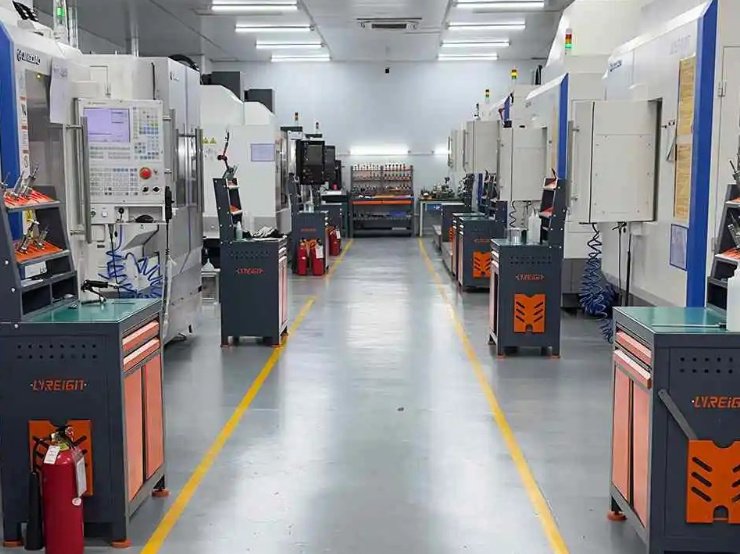
| Technical Capability | Determines whether the supplier can hold geometry, tolerance and finish repeatedly | What machines, axis capabilities, inspection tools and process controls are available? |
| Material Experience | Prevents delays, tool failure and poor surface quality in difficult alloys | Has the supplier machined titanium, Inconel, stainless steel or hardened steel for similar parts? |
| Quality System | Supports traceability, inspection discipline and corrective action | Can the supplier provide inspection reports, material certificates and first article documentation? |
| DFM Support | Reduces cost and improves manufacturability before production | Will the supplier flag tolerance conflicts, difficult features and finishing risks before quoting final production? |
| Capacity and Lead Time | Affects production continuity and launch schedules | Can the supplier support prototypes, ramp-up quantities and repeat production without process changes? |
| Cost Transparency | Helps engineering and purchasing make informed trade-offs | Which features drive cost: tolerance, material, setup, finishing, inspection or tooling? |
| Communication | Prevents revision mistakes and shipment surprises | How are drawing revisions, deviations, nonconformances and engineering questions managed? |
Cost Drivers in Metal Machining Services
Machining cost is influenced by the interaction of material, geometry, process time, tolerance and documentation. Understanding
these drivers helps engineering teams make practical decisions before releasing drawings.
Résumé
- Material cost and availability: Aerospace-grade titanium or Inconel may cost several times more than aluminum 6061.
- Buy-to-fly or buy-to-finished ratio: Removing 70-90% of billet material increases machine time and scrap value considerations.
- Setup complexity: Multi-sided machining, custom fixtures and tight datum relationships add setup hours.
- Tooling consumption: Hard metals and abrasive alloys require more cutting tools and slower parameters.
- Tolerance requirements: A ±0.01 mm feature may require slower finishing cuts, controlled temperature and advanced inspection.
- Surface finish and coatings: Plating, anodizing, passivation, polishing and masking can add lead time and quality checks.
- Inspection and documentation: Full dimensional reports, CMM programming, FAI packages and material traceability affect cost.
- Production volume: Higher volume can justify dedicated fixtures, optimized tooling and automated inspection plans.
Machining Services for Prototypes, Low Volume and Production
Not all machining projects have the same objective. Prototype machining emphasizes speed and learning. Low-volume production emphasizes
flexibility and controlled repeatability. Full production emphasizes cycle time, process capability and supply continuity.
| Production Stage | Primary Goal | Recommended Machining Approach | Key Buyer Concern |
|---|---|---|---|
| Prototype | Validate design, fit and function quickly | Flexible CNC milling and turning with rapid programming and practical tolerances | Speed, engineering feedback and revision flexibility |
| Engineering Validation | Confirm performance using production-intent material | Controlled process, documented dimensions, representative finishing | Material equivalence, dimensional accuracy and test reliability |
| Production de faibles volumes | Supply repeatable parts without high tooling investment | Reusable fixtures, defined inspection plan, stable CNC programs | Consistency, lead time and manageable unit cost |
| High-Volume Production | Optimize cost, throughput and process capability | Dedicated fixtures, automation, SPC, tool life monitoring and process validation | Cp/Cpk, capacity, supply continuity and total landed cost |
GD&T and Drawing Requirements for Precision Machined Parts
Clear drawings reduce quoting delays and manufacturing disputes. A complete machined-part drawing should define datums,
critical dimensions, general tolerances, thread specifications, material grade, finish, heat treatment, coating, edge break,
inspection requirements and revision level.
Geometric Dimensioning and Tolerancing is especially important when function depends on relationships between
features rather than simple plus-minus dimensions. True position, flatness, parallelism, perpendicularity, concentricity,
profile and runout should be used where they clarify assembly or performance requirements.
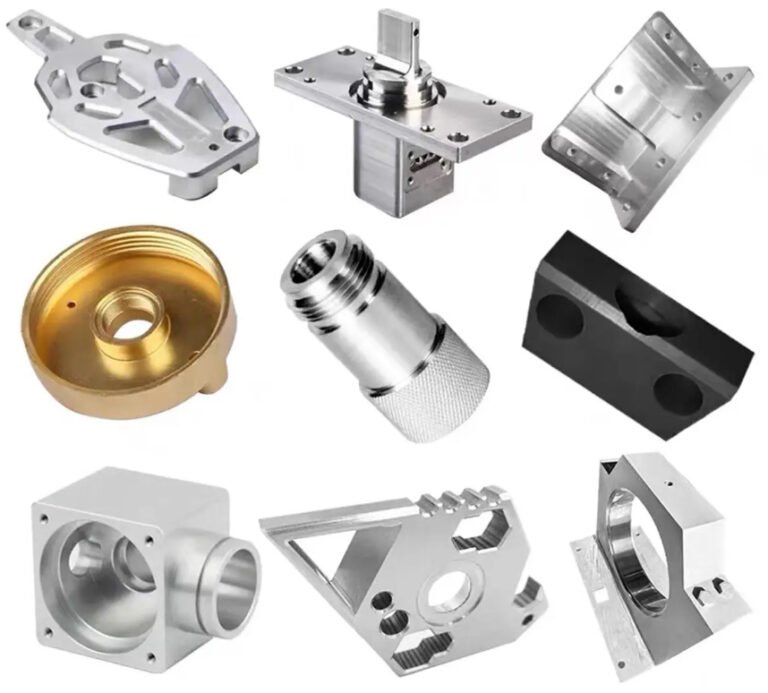
Common Machined Metal Parts
Comprehensive metal machining services cover a wide range of part types, including:
Résumé
- Aluminum enclosures, electronic housings and RF shields
- Aerospace brackets, structural fittings and actuator components
- Medical instrument handles, implant trial components and surgical fixtures
- Hydraulic manifolds, valve bodies, pump components and fittings
- Precision shafts, pins, bushings, spacers and threaded inserts
- Robotic end-effectors, automation plates, grippers and sensor mounts
- Heat sinks, cold plates and thermal management components
- Tooling plates, jigs, fixtures, nests and inspection gauges
- Energy-sector flanges, couplings, compressor parts and downhole components
- Semiconductor vacuum components, frames and precision mounting hardware
How to Prepare an RFQ for Metal Machining Services
A complete RFQ package helps suppliers quote accurately and reduces assumptions. Missing information may lead to conservative pricing,
delayed engineering questions or mismatched expectations.
Résumé
- 3D CAD model in STEP, Parasolid or native format
- 2D PDF drawing with dimensions, tolerances and GD&T
- Material grade, temper, hardness and applicable specification
- Annual volume, initial order quantity and expected release schedule
- Required finish, coating, heat treatment or cleaning process
- Inspection requirements, including CMM report, FAI, PPAP or certificate of conformance
- Critical-to-function features and mating part information when available
- Packaging, labeling, traceability and serialization requirements
- Target lead time and any supply chain restrictions
Why Comprehensive Metal Machining Matters Across Industries
Industries use different materials and specifications, but they share the same core need: machined components must fit, perform and
arrive with the right documentation. Comprehensive machining services reduce friction between design engineering, purchasing,
quality assurance and production operations.
For aerospace, the priority may be traceability and weight reduction. For medical devices, it may be surface quality and biocompatible
material control. For automotive, it may be cycle time and statistical consistency. For robotics, it may be precision alignment and
fast design iteration. A capable machining partner understands these differences and adapts the process plan accordingly.
Principaux enseignements
- Metal machining services include CNC milling, turning, Swiss machining, EDM, grinding, drilling, tapping, finishing and inspection.
- Material selection directly affects machinability, lead time, cost, surface finish and part performance.
- Realistic tolerances improve production yield and reduce unnecessary machining cost.
- DFM review can prevent distortion, tool access problems, burr issues and finishing conflicts.
- Procurement engineers should evaluate machining suppliers based on technical capability, quality systems, documentation and communication, not unit price alone.
- Comprehensive machining is valuable across aerospace, medical, automotive, energy, electronics, robotics and industrial manufacturing because it connects engineering intent with repeatable production.