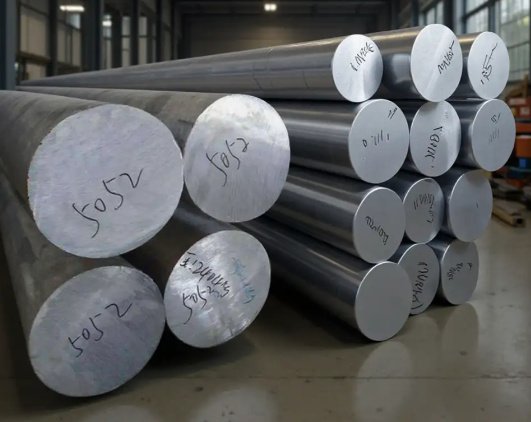
Selecting the best aluminum for machining is not only about choosing the strongest alloy. The right grade depends on machinability, dimensional stability, corrosion resistance, surface finish, heat treatment, tolerance requirements, and total part cost. For CNC shops, product engineers, and procurement teams, the best choice is usually the alloy that delivers stable cutting, predictable tolerances, low scrap rate, and acceptable mechanical performance.
In most commercial CNC applications, 6061-T6 is the best general-purpose machining aluminum. For high-strength aerospace or structural parts, 7075-T6 is often preferred. For maximum machinability, 2011 and 2007 are excellent choices. For welded or marine-grade components, 5083, 5052, or 6082 may be more suitable.
Quick Answer: What Is the Best Aluminum for Machining?
The best all-around machinable aluminum is 6061-T6 because it balances cost, availability, machinability, strength, corrosion resistance, and anodizing performance. It is widely used for CNC milled parts, turned parts, brackets, housings, fixtures, automation components, and prototype-to-production manufacturing.
However, the “best” alloy changes by application:
| Machining Goal | Recommended Aluminum Grade | Why It Works |
|---|---|---|
| Best overall CNC machining | 6061-T6 | Good machinability, good strength, low cost, excellent availability |
| Highest strength | 7075-T6 | Very high strength-to-weight ratio, aerospace-grade performance |
| Fastest cutting and best chip breaking | 2011-T3 or 2007 | Excellent machinability and productivity for turned parts |
| Best corrosion resistance | 5052, 5083, 6061 | Good performance in outdoor, marine, or chemical environments |
| Best for anodized appearance | 6061, 6082, 6063 | Consistent surface finish and decorative anodizing quality |
| Best for welded machined parts | 6061, 6082, 5083 | Better weldability than 2xxx and 7xxx series alloys |
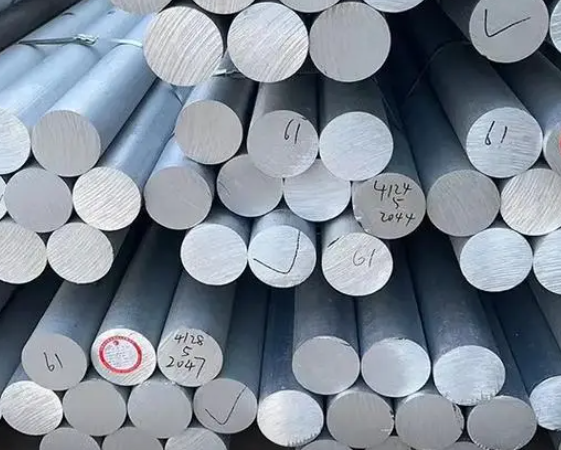
Top Aluminum Grades for CNC Machining
The following alloys are among the most common choices for CNC milling, CNC turning, drilling, boring, tapping, reaming, and high-speed machining. Each grade has a different balance of strength, chip control, tool life, finish quality, and cost.
6061-T6 Aluminum: Best General-Purpose Machining Aluminum
6061-T6 is the most commonly specified CNC aluminum alloy for industrial components. It machines well, has moderate-to-high strength, resists corrosion, and accepts anodizing, powder coating, chromate conversion coating, and bead blasting.
- Typical tensile strength: approximately 290 MPa
- Typical yield strength: approximately 240 MPa
- Density: about 2.70 g/cm³
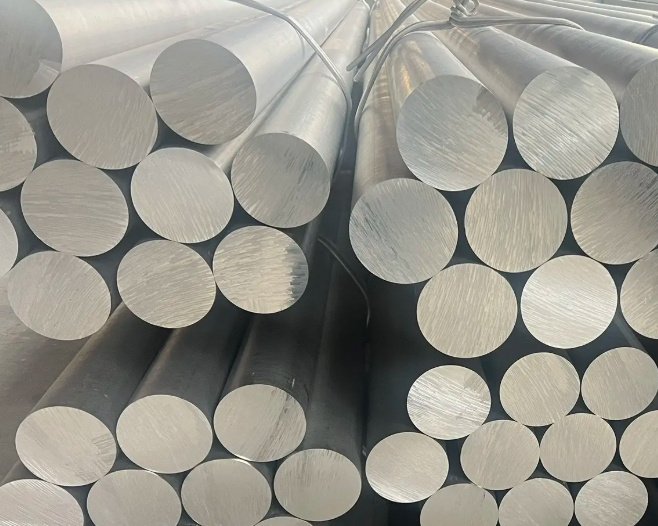
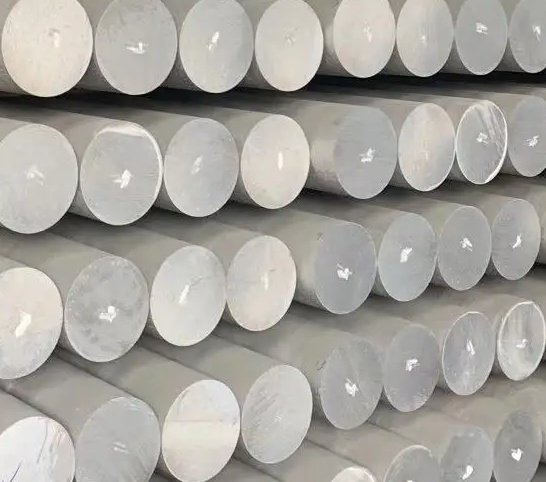
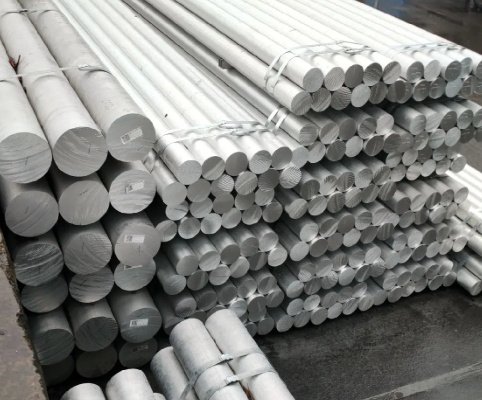
- Common forms: plate, bar, extrusion, tube, sheet, billet
- Typical applications: machine frames, housings, brackets, jigs, fixtures, manifolds, robotic parts
For buyers who need a reliable machinable aluminum with stable supply and competitive pricing, 6061-T6 is usually the safest starting point.
7075-T6 Aluminum: Best for High-Strength Machined Parts
7075-T6 is selected when strength is more important than corrosion resistance or low material cost. It is widely used in aerospace, defense, motorsport, high-performance robotics, drone frames, structural plates, and load-bearing components.
- Typical tensile strength: approximately 510–570 MPa
- Typical yield strength: approximately 430–505 MPa
- Excellent strength-to-weight ratio
- Good machinability, but higher tool load than 6061
- Poorer weldability and corrosion resistance than 6061
7075 can produce excellent precision parts, but it requires careful control of toolpath strategy, fixturing, coolant, and stress relief when tight flatness or thin-wall tolerances are required.
2011-T3 Aluminum: Best for High-Speed Turning and Automatic Machining
2011 aluminum is one of the most free-machining aluminum alloys. It is often used for screw machine parts, precision turned components, bushings, fittings, fasteners, and small mechanical parts requiring high productivity.
- Excellent chip breaking
- High cutting speed capability
- Very good surface finish on turned parts
- Lower corrosion resistance than 6xxx series aluminum
- Not ideal for welding
If cycle time and chip control are the main concerns, 2011 is often better than 6061. However, it may not be the best option for outdoor parts, anodized cosmetic parts, or welded assemblies.
2024-T3 Aluminum: Best for Fatigue-Resistant Structural Parts
2024 aluminum is known for high strength and good fatigue resistance. It is common in aircraft structures, precision plates, gears, shafts, and mechanical links. It machines well but has lower corrosion resistance than 6061 and often requires protective finishing.
- High strength and fatigue resistance
- Good machinability
- Often supplied as plate, sheet, and bar
- Usually needs anodizing, plating, or painting for corrosion protection
6082-T6 Aluminum: Best 6061 Alternative in Europe and Structural CNC Parts
6082-T6 is widely used in Europe and is often considered a structural alternative to 6061. It offers good machinability, better strength than many 6xxx alloys, and good corrosion resistance.
- Good for structural components and machined frames
- Suitable for welding and anodizing
- Common in transportation, automation, and industrial equipment
- Often preferred when 6061 is less available in regional supply chains
5052 and 5083 Aluminum: Best for Corrosion-Resistant Machined Parts
5052 and 5083 are non-heat-treatable aluminum-magnesium alloys. They are valued for corrosion resistance, especially in marine, outdoor, and chemical environments. They are not usually the first choice for high-speed precision machining, but they are useful when corrosion performance is critical.
- Excellent corrosion resistance
- Good weldability
- Lower strength than 7075 and many 2xxx alloys
- Can be gummy during machining if tooling and feeds are not optimized
Machinability Comparison of Common Aluminum Alloys
Machinability describes how easily a material can be cut while maintaining tool life, chip control, surface finish, dimensional accuracy, and productivity. In practical CNC production, machinability is affected by alloy chemistry, temper, hardness, internal stress, tool geometry, coolant, chip evacuation, and machine rigidity.
| Aluminum Alloy | Usinabilité | Strength | Résistance à la corrosion | Anodizing Result | Utilisation typique |
|---|---|---|---|---|---|
| 6061-T6 | Bon | Medium-high | Bon | Bon | General CNC parts |
| 7075-T6 | Bon | Very high | Modéré | Fair to good | Aerospace and high-load parts |
| 2011-T3 | Excellent | Moyen | Faible à modéré | Fair | High-volume turned parts |
| 2024-T3 | Bon | Haut | Moderate to low | Fair | Fatigue-resistant components |
| 6082-T6 | Bon | Medium-high | Bon | Bon | Structural machined parts |
| 5052 | Fair | Moyen | Excellent | Bon | Marine and formed parts |
| 5083 | Fair | Medium-high | Excellent | Bon | Marine and welded structures |
Why 6061-T6 is often specified first
6061-T6 is commonly selected because it reduces sourcing risk. It is available in many stock sizes, machines predictably, finishes well, and meets the requirements of many mechanical designs without the higher price or corrosion limitations of 7075 and 2024.
How to Choose Aluminum for Machining by Application
The right material should be selected according to function, tolerance, finish, volume, environment, and cost. Engineers should avoid choosing aluminum only by tensile strength because a stronger alloy may increase machining cost, finishing difficulty, or distortion risk.
For Prototype CNC Machining
6061-T6 is usually the best prototype alloy because it is affordable, widely stocked, and easy to finish. If the prototype must represent final aerospace strength, use 7075-T6 or 2024-T3. If the prototype is only for fit, form, and basic function, 6061 is usually sufficient.
For Production CNC Milling
For repeat production, 6061-T6 and 6082-T6 offer a strong balance of machinability and cost. If cycle time is the priority and part geometry allows bar-fed turning, 2011 or 2007 can reduce machining time significantly due to improved chip control.
For Thin-Wall Parts
Thin-wall aluminum parts can distort after roughing due to residual stress. Plate quality, stress-relieved material, symmetric machining, step-down roughing, and intermediate stress relief may matter more than alloy strength.
For High-Load Components
7075-T6 is the common choice when high static strength is required. For fatigue-loaded parts, 2024-T3 may also be considered. Designers should check load direction, notch sensitivity, surface finish, and corrosion protection.
For Outdoor or Marine Parts
5052, 5083, 6061, and 6082 are preferred where corrosion resistance matters. For saltwater exposure, 5083 is commonly used. For general outdoor machined components, 6061 with anodizing is often economical and reliable.
Engineering Factors That Affect Aluminum Machining Results
Even the best alloy can produce poor results if machining parameters are wrong. For usinage de l'aluminium, the most important process factors include cutter geometry, spindle speed, feed per tooth, chip evacuation, coolant strategy, workholding rigidity, and tool coating.
Cutting Tools
Polished carbide end mills with high rake angles are commonly used for aluminum. Two-flute and three-flute tools are popular for slotting and pocketing because they provide chip clearance. For high-speed finishing, three-flute tools can improve stability and surface quality.
Coolant and Chip Evacuation
Aluminum chips can weld to the cutting edge if heat and evacuation are not controlled. Flood coolant, mist coolant, air blast, and minimum quantity lubrication can all work depending on part geometry and machine setup.
Feeds and Speeds
Aluminum often supports high spindle speeds and aggressive material removal rates. However, small tools, deep pockets, thin walls, and poor fixturing require conservative settings. The goal is to maintain chip thickness rather than rubbing the material.
Workholding and Distortion
Flatness and parallelism problems are common in large aluminum plates. Machining too much material from one side can release stress and cause bowing. For precision parts, use stress-relieved plate, balanced roughing, light finishing passes, and controlled clamping pressure.
Real engineering example: reducing distortion in a 6061-T6 plate
A 420 mm × 260 mm × 18 mm 6061-T6 electronics baseplate required 0.05 mm flatness after machining. The first process removed most stock from one side and produced 0.18 mm bow. After switching to stress-relieved plate, roughing both sides symmetrically, leaving 0.5 mm finishing stock, and adding a rest period before final finishing, measured flatness improved to 0.04 mm. The material grade did not change, but the process did.
Aluminum Can Machine: Understanding the Search Intent
The phrase aluminum can machine is often used by buyers in two different ways. Some searchers are asking whether aluminum can be machined by CNC equipment. Others are looking for machines that process aluminum cans, such as can-making machinery, trimming machines, necking machines, or recycling equipment.
In the context of CNC manufacturing, aluminum can be machined very efficiently. It has low density, high thermal conductivity, relatively low cutting resistance, and good compatibility with milling, turning, drilling, tapping, sawing, grinding, and surface finishing.
If the intent is aluminum can manufacturing, the material is usually thin sheet aluminum, commonly from 3xxx or 5xxx series alloys, processed by forming rather than Usinage CNC. If the intent is precision parts, the focus should be on CNC-grade alloys such as 6061, 7075, 2024, 6082, and 2011.
Buyer’s Checklist for Selecting Machinable Aluminum
For procurement teams and engineering buyers, material selection should be tied to performance requirements and production risk. Before placing an order, confirm the alloy, temper, stock form, certificate requirements, surface finish, dimensional tolerances, and post-processing steps.
- Confirm alloy and temper: 6061-T6 is not the same as 6061-O or 6061-T651.
- Check stock form: Plate, bar, extrusion, and casting can behave differently during machining.
- Request material certification: Use mill test reports when mechanical properties or compliance matter.
- Consider finishing early: Anodizing, hardcoat anodizing, alodine, plating, and painting may affect tolerances.
- Control burr requirements: Aluminum can form burrs around slots, drilled holes, and thin edges.
- Review tolerance stack-up: Tight tolerances increase cost, especially on thin-wall or large flat parts.
- Match alloy to environment: Outdoor, marine, high-temperature, and chemical exposure may require special selection.
For most industrial buyers, the best purchasing strategy is to start with 6061-T6 unless the part clearly requires higher strength, better corrosion resistance, free-machining performance, or a specific aerospace specification.
When not to choose 6061-T6
Avoid 6061-T6 when the part requires the highest possible strength, in which case 7075-T6 may be better. Avoid it when screw-machine productivity is the top priority, where 2011 may be more efficient. Avoid it for severe marine exposure if 5083 is a better corrosion-resistant choice.
Common Mistakes When Specifying Aluminum for Machining
Material mistakes can lead to delayed production, unstable tolerances, poor finish, and unnecessary cost. The most common issue is over-specifying a premium alloy when a standard grade would meet the requirement.
- Choosing 7075 for simple brackets where 6061 would be strong enough
- Choosing 5052 for tight-tolerance CNC milling without considering gummy cutting behavior
- Ignoring temper and ordering a softer condition than intended
- Specifying cosmetic anodizing without testing color consistency across batches
- Designing deep pockets without enough tool access or corner radius
- Requesting very tight flatness on thin plates without stress-relieved material
- Using sharp internal corners instead of machinable radii
A small design change can produce measurable cost savings. For example, increasing an internal corner radius from 1 mm to 3 mm may allow a larger end mill, reduce cycle time, improve tool stiffness, and improve surface finish.
Best Aluminum for Machining by Final Recommendation
If you need one default choice, use 6061-T6. It is the best general-purpose aluminum for CNC machining because it offers a proven balance of machinability, strength, corrosion resistance, surface finish, material availability, and cost.
Choose 7075-T6 for high-strength applications, 2011-T3 for high-speed turning, 2024-T3 for fatigue-resistant structural parts, 6082-T6 for structural machining and European supply chains, and 5052 or 5083 for corrosion-resistant welded or marine components.
The most successful material decisions combine alloy selection with manufacturability. A well-chosen machinable aluminum grade should support the required mechanical performance while reducing cycle time, scrap risk, tool wear, finishing problems, and procurement uncertainty.