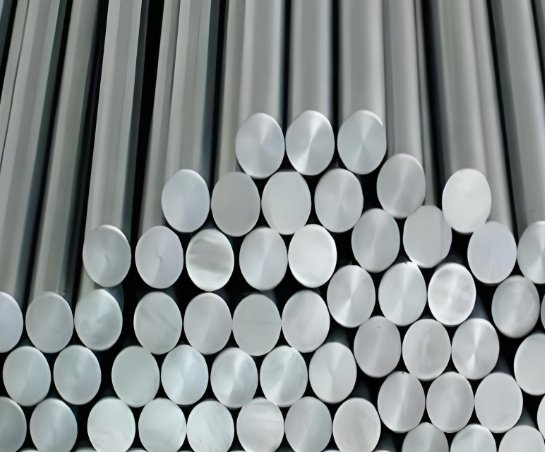
1145 Aluminum is a high-purity wrought aluminum alloy valued for excellent electrical conductivity, thermal conductivity, corrosion resistance and foil-forming capability. It is frequently specified for aluminum foil, transformer winding, cable shielding, insulation jacketing, heat-transfer components and chemical-process applications where formability and purity matter more than high structural strength.
For engineers, buyers and manufacturers, the key question is not simply “What is 1145 Aluminum?” but whether it provides the right balance of conductivity, ductility, surface quality, gauge control and cost for a specific production environment. This guide explains its composition, mechanical behavior, processing considerations, common tempers, applications and purchasing checkpoints.
What Is 1145 Aluminum?
1145 Aluminium is a commercially pure aluminum alloy in the 1xxx series, with a minimum aluminum content of approximately 99.45%. It is generally supplied as foil, sheet, strip and coil. Compared with structural alloys such as 5052 or 6061, 1145 is softer and weaker, but it offers superior workability, high reflectivity, good corrosion resistance and strong electrical and thermal performance.
The alloy is commonly referenced as Aluminum Association alloy 1145 and UNS A91145. In procurement documents, it may appear as aluminum 1145 foil, 1145-O aluminum strip, 1145-H18 coil, high-purity aluminum foil or electrical-grade aluminum strip, depending on form and temper.
1145 Aluminum Chemical Composition
The performance of 1145 is strongly linked to its high aluminum purity. Lower alloying additions help maintain conductivity, corrosion resistance and soft-forming behavior. Exact limits should always be confirmed against the purchase standard and mill certificate.
| Élément | Typical Limit or Requirement | Pertinence de l'ingénierie |
|---|---|---|
| Aluminium | 99.45% minimum | Supports high conductivity, corrosion resistance and ductility |
| Silicon + Iron | 0.55% maximum | Affects strength, formability and foil surface behavior |
| Cuivre | 0.05% maximum | Excess copper may reduce corrosion resistance |
| Manganèse | 0.05% maximum | Controlled to preserve purity and ductility |
| Magnésium | 0.05% maximum | Limited to maintain electrical and thermal performance |
| Zinc | 0.05% maximum | Controlled for corrosion and purity requirements |
| Titane | 0.03% maximum | May influence grain structure in small quantities |
| Other elements | Typically controlled individually and in total | Important for certificate review and end-use compliance |
For critical electrical, capacitor, heat-transfer or packaging applications, buyers should request actual chemical analysis rather than relying only on nominal alloy designation.
Key Physical and Mechanical Properties
1145 is not selected for high load-bearing structures. Its value is in its purity-driven characteristics: conductivity, corrosion resistance, reflectivity, foil rolling behavior and compatibility with deep drawing or wrapping processes.
| Propriété | Valeur ou plage typique | Notes |
|---|---|---|
| Densité | About 2.70 g/cm³ | Lightweight compared with copper and steel |
| Plage de fusion | Approximately 643–657°C | Varies slightly with impurity levels |
| Electrical conductivity | Often around 58–61% IACS in suitable tempers | Useful for shielding, winding and conductive foil |
| Conductivité thermique | Approximately 220 W/m·K | Beneficial for heat spreaders and heat-exchange fins |
| Module d'élasticité | About 69 GPa | Similar to most aluminum alloys |
| Résistance ultime à la traction | Temper dependent, commonly about 55–170 MPa | Soft O temper is much lower than hard H tempers |
| Résistance à la corrosion | Excellent in many atmospheric environments | Improved by natural oxide film |
| Formability | Excellent, especially in O temper | Suitable for rolling, drawing, wrapping and embossing |
Property values are condition-dependent, especially for thin foil and hard-rolled strip. Thickness, temper, rolling reduction, annealing cycle and surface finish can significantly affect tensile strength, elongation, pinhole level and winding performance.
Common Tempers: O, H12, H14, H18 and H19
The temper of 1145 Aluminum determines its strength, ductility, flatness and ability to withstand downstream processing. The most common choices are annealed O temper and strain-hardened H tempers.
| Tempérer | General Condition | Utilisation typique |
|---|---|---|
| O | Annealed, soft and highly ductile | Deep forming, wrapping, laminating, flexible foil |
| H12 | Quarter-hard | Moderate strength with good formability |
| H14 | Half-hard | Sheet and strip requiring better handling strength |
| H18 | Full-hard | Foil, fins, shielding and components needing stiffness |
| H19 | Extra-hard | Very thin foil where maximum rolled strength is required |
For transformer foil and cable shielding, the decision often comes down to a trade-off between conductivity, edge quality, tensile strength and winding behavior. For packaging or insulation applications, surface cleanliness, pinholes and laminate compatibility may be more important.
Typical Applications of 1145 Aluminum
Because it combines high purity with excellent manufacturability, 1145 is used in both industrial and consumer-facing products. Its applications usually involve thin-gauge material where surface quality, conductivity or barrier performance is critical.
Electrical and Electronic Uses
- Transformer winding foil where conductivity and consistent thickness are required
- Cable shielding and wrapping tapes for electromagnetic interference protection
- Capacitor foil and electronic foil applications where purity is tightly controlled
- Battery-related foils in selected non-structural or current-distribution components, subject to application validation
Thermal and Insulation Uses
- Heat exchanger fins and light-duty heat-transfer surfaces
- Reflective insulation foil and building insulation laminates
- HVAC foil tapes and thermal barriers
- Radiant heat shielding where low weight and reflectivity are beneficial
Packaging and Chemical-Process Uses
- Flexible packaging foil after lamination, coating or conversion
- Food-contact and pharmaceutical foil structures when produced to applicable hygiene and regulatory requirements
- Chemical containers, liners and seals in environments compatible with aluminum
- Decorative foil, labels and embossed products
The best-fit applications are those that benefit from high aluminum purity, easy rolling, good barrier characteristics and stable surface performance rather than structural load capacity.
Processing and Fabrication Guidance
1145 Aluminum is generally easy to process, but thin foil and precision strip require disciplined control of rolling, slitting, annealing, handling and packaging. Minor process instability can create major quality problems such as wrinkles, edge cracks, telescoping coils, pinholes or poor adhesion after lamination.
Rolling and Gauge Control
For foil applications, uniform thickness is essential. Gauge variation affects electrical resistance, heat-transfer efficiency, roll tension and laminate behavior. In transformer winding, even small thickness inconsistencies can change coil build and thermal performance.
- Specify nominal thickness, tolerance and measurement method.
- Define acceptable camber, flatness and edge condition.
- For foil, include pinhole requirements and maximum defect size if the application needs barrier performance.
- Request coil weight, inner diameter, outer diameter and winding direction to match converting equipment.
Slitting, Edge Quality and Burr Control
Slitting quality is critical for electrical strip, cable wrap and high-speed converting. Burrs can damage insulation layers, trigger arcing risks in electrical equipment or cause web breaks during production. A practical specification may include burr height limits, edge wave tolerance and coil telescoping limits.
Annealing and Surface Cleanliness
Annealed O temper provides maximum softness, but residual rolling oil, stains or uneven annealing can reduce adhesive bonding and visual quality. For lamination and coating lines, surface tension and cleanliness should be verified before production. Buyers often request dyne level, oil residue limits or trial-roll approval for high-value converting work.
Processing issue example: foil wrinkling during lamination
A converter using 1145-O foil for insulation laminate experienced cross-web wrinkles at line speeds above 180 m/min. Investigation found that incoming coil tension variation and slight edge wave caused unstable web tracking. After narrowing flatness tolerance, specifying tighter coil winding tension and reducing splice frequency, usable yield improved from about 92% to 97% over three production lots. The result was not due to alloy change, but to better control of coil geometry and handling conditions.
1145 Aluminum vs 1100, 1050 and 1235 Aluminum
Many buyers compare 1145 with other 1xxx-series alloys. These alloys may look similar, but purity level, impurity control, availability and end-use qualification can differ.
| Alliage | Nominal Aluminum Purity | Typical Strength | Common Selection Reason |
|---|---|---|---|
| 1050 | About 99.50% minimum | Faible | High formability, good conductivity, common in sheet and strip |
| 1100 | About 99.00% minimum | Low to moderate for pure aluminum | General-purpose commercially pure aluminum with broad availability |
| 1145 | About 99.45% minimum | Low, temper dependent | Foil, electrical, insulation and high-purity applications |
| 1235 | About 99.35% minimum | Low, temper dependent | Flexible packaging foil and household foil applications |
Substitution should be validated with performance testing, especially when the product depends on conductivity, lamination quality, pinhole control, corrosion behavior or regulatory compliance. A lower-cost alloy may pass mechanical requirements but fail in electrical resistance, surface cleanliness or converting yield.
Applicable Standards and Specification References
1145 Aluminum products may be ordered under several standards depending on region, product form and application. Common references include ASTM, Aluminum Association designations and customer-specific mill specifications.
- ASTM B209: aluminum and aluminum-alloy sheet and plate
- ASTM B479: annealed aluminum and aluminum-alloy foil for flexible barrier, food contact and other applications, where applicable
- ASTM B373: aluminum foil for capacitors, where applicable to capacitor-grade requirements
- EN and ISO specifications for aluminum strip, sheet or foil depending on market and contract requirements
- Customer drawings covering thickness tolerance, temper, surface finish, coil size, pinholes and packaging
When ordering, do not rely only on the alloy number. A complete specification should include alloy, temper, thickness, width, tolerance, coil dimensions, surface condition, edge type, testing requirements, certificate type and packaging method.
Suggested purchase description format
Example: Aluminum alloy 1145, temper O, foil coil, 0.030 mm thickness by 500 mm width, thickness tolerance ±5%, slit edge, maximum coil OD 650 mm, ID 76 mm, dry surface, suitable for lamination, mill test certificate required, moisture-resistant export packaging.
Engineering Selection Factors
Choosing 1145 Aluminum is often a systems decision. A material that looks acceptable on a datasheet can still underperform if the manufacturing process requires tighter surface, coil or edge control than the purchase order describes.
Electrical Performance
For transformer, shielding and conductive foil uses, confirm conductivity, resistivity and thickness uniformity. Electrical resistance is directly affected by cross-sectional area; therefore, thickness tolerance can matter as much as alloy selection.
Thermal Performance
Heat-transfer applications benefit from the alloy’s high thermal conductivity. However, fin efficiency also depends on foil thickness, surface condition, contact pressure, coating thickness and cleanliness after forming.
Corrosion and Environment
1145 has excellent atmospheric corrosion resistance because aluminum forms a stable oxide film. It is not automatically suitable for every chemical environment. Strong alkalis, certain acidic conditions and galvanic contact with dissimilar metals can accelerate corrosion.
Forming and Converting Yield
For high-volume converting, yield loss may be more expensive than the material price difference between alloys. Flatness, wetting behavior, coil alignment and defect mapping can directly influence scrap rate and line speed.
From a buyer’s perspective, the most important commercial metric is often cost per usable square meter, not only cost per kilogram. A slightly more expensive coil with fewer breaks, better flatness and consistent surface cleanliness may reduce total manufacturing cost.
Quality Inspection Checklist for Buyers
Procurement teams should define measurable acceptance criteria before purchase. This reduces disputes and improves repeatability between trial orders and mass production.
- Confirm alloy designation and actual chemical composition on the mill test certificate.
- Verify temper and mechanical properties against the agreed standard.
- Measure thickness and width at multiple locations across the coil.
- Inspect surface for oil stains, oxidation marks, scratches, roll marks and black spots.
- Check edge condition for burrs, cracks, waves and slitting debris.
- Review coil build for telescoping, loose wraps, dents and moisture damage.
- For foil, test pinholes, wettability and adhesion compatibility if the material will be laminated or coated.
- For electrical use, confirm conductivity or resistivity if required by the design.
Common nonconformities to specify clearly
Typical disputes involve thickness tolerance, surface oil residue, pinholes, edge burr, coil telescoping, water staining and inconsistent temper. These should be quantified in the purchase agreement whenever they affect production or final product performance.
Advantages and Limitations
1145 Aluminum offers strong advantages in purity-driven applications, but it should not be treated as a universal aluminum solution.
| Avantages | Limites |
|---|---|
| High electrical and thermal conductivity | Low mechanical strength compared with heat-treatable alloys |
| Excellent corrosion resistance in many environments | Not ideal for high-load structural components |
| Very good ductility and foil rolling capability | Thin foil is sensitive to handling damage and wrinkling |
| Good reflectivity and surface appearance when properly processed | Surface defects can affect lamination, coating and barrier performance |
| Compatible with many laminating, coating and converting processes | Requires precise specification for demanding electrical or packaging uses |
Conclusion
1145 Aluminum is a high-purity aluminum alloy best suited to foil, strip and sheet applications that require conductivity, corrosion resistance, formability and reliable surface behavior. It is widely used in electrical equipment, cable shielding, insulation, heat-transfer products, flexible packaging and specialty converting.
To achieve consistent results, engineers and buyers should specify more than the alloy name. Temper, thickness tolerance, surface cleanliness, edge quality, coil geometry, pinhole control, certificate requirements and packaging all influence real production performance. When these factors are controlled, 1145 Aluminum can deliver a dependable balance of technical performance and manufacturing efficiency.