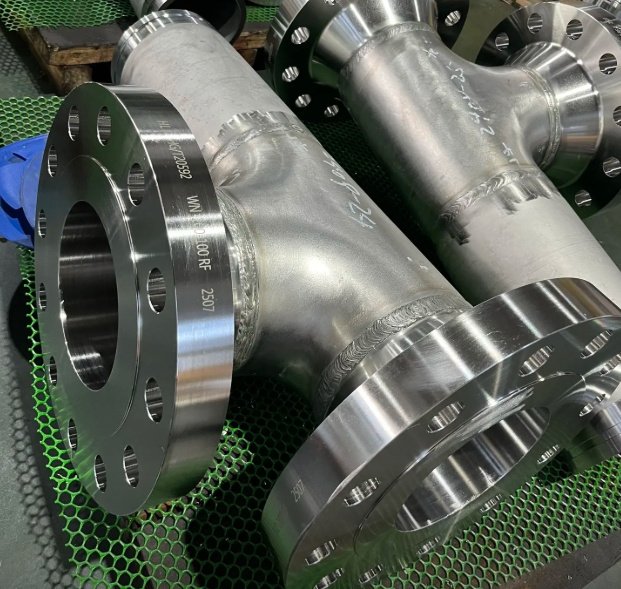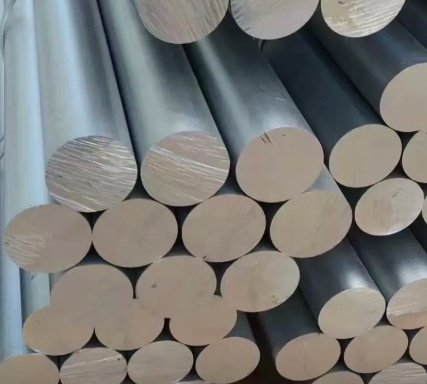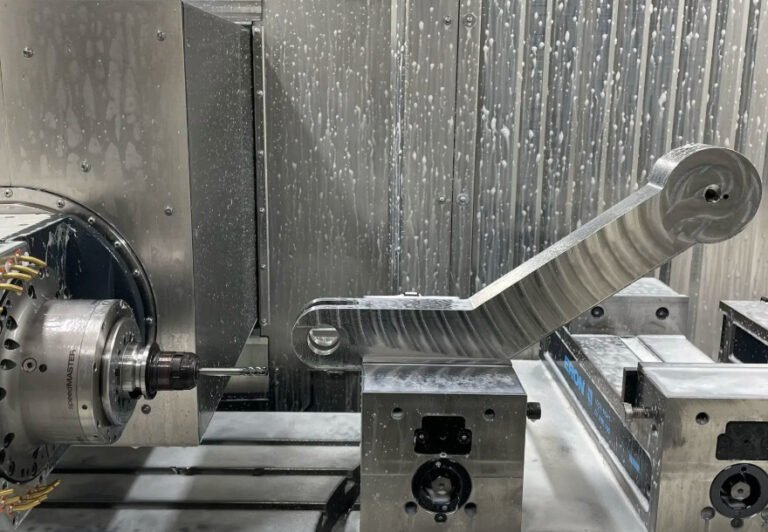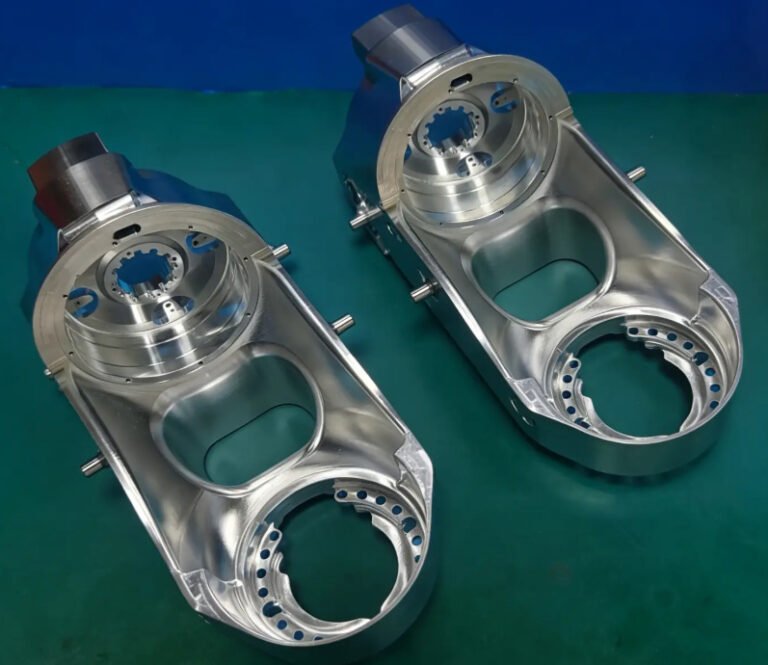
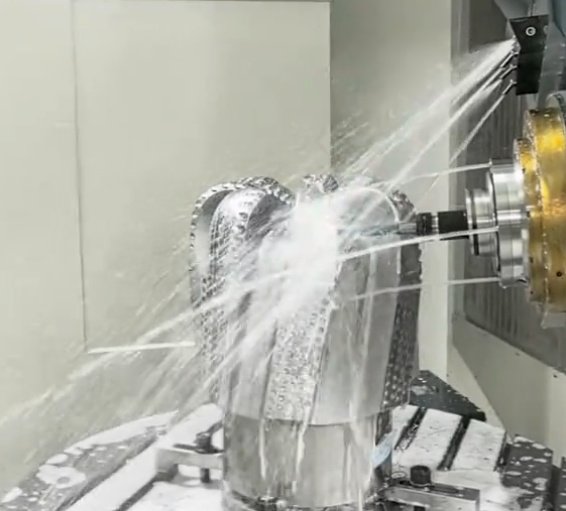
Metal machining for oil and gas equipment is a precision manufacturing discipline used to produce components that must survive high pressure, corrosive fluids, cyclic loads, vibration, elevated temperature and abrasive drilling environments. Typical machined parts include valve bodies, flanges, manifolds, downhole tool components, pump parts, connectors, seal housings, wellhead components, compressor parts, subsea fittings and high-pressure threaded connections.
Unlike general industrial machining, oilfield machining requires close coordination between design engineers, procurement teams, machinists, welding specialists, coating suppliers and inspection personnel. A small deviation in thread form, surface finish, concentricity or material traceability can lead to leakage, premature fatigue, galling, seal failure or rejection during customer inspection.
This guide explains the key processes, materials, tolerances, standards and engineering decisions involved in metal machining for oil and gas equipment, with a practical focus on manufacturability, reliability and purchasing risk reduction.
Why Oil and Gas Machining Is Different from Standard Metal Machining
Oil and gas equipment often operates in conditions that combine mechanical stress with chemical attack. Components may be exposed to sour gas, carbon dioxide, chlorides, drilling mud, sand, scale, thermal cycling and high-pressure impulse loading. This means machining is not only about achieving the drawing dimension; it is also about preserving material integrity and ensuring that critical surfaces function as designed.
In standard CNC machining, a minor tool mark or slightly inconsistent surface may be acceptable if the part still fits. In oilfield applications, that same condition may become a stress riser, a leak path or the starting point of corrosion fatigue. For this reason, specifications often include requirements for material certificates, heat treatment records, hardness limits, API or ASME dimensional control, non-destructive testing and full inspection documentation.
Common risk areas include:
- Premium threads with strict lead, taper, pitch diameter and surface finish requirements
- Seal grooves requiring controlled corner radii and fine surface finishes
- Deep bores with straightness, concentricity and chatter limitations
- High-nickel alloys that work-harden during cutting
- Large forged or cast components with inconsistent machining allowance
- Parts requiring welding, cladding, heat treatment or coating after machining
Common Oil and Gas Equipment Components Made by CNC Machining
CNC machining is used across upstream, midstream and downstream equipment. The table below summarizes common components and their machining concerns.
| Equipment Category | Typical Machined Components | Critical Machining Requirements |
|---|---|---|
| Wellhead and Christmas tree equipment | Flanges, hangers, adapters, bonnet parts, valve bodies | Pressure sealing faces, bolt patterns, API dimensions, material traceability |
| Downhole tools | Mandrels, subs, sleeves, couplings, stabilizer parts | Long turning, premium threads, concentric bores, wear-resistant surfaces |
| Valves and manifolds | Ball valve bodies, gate valve parts, choke bodies, blocks | Seat pockets, stem bores, intersecting holes, pressure-retaining geometry |
| Pumps and compressors | Shafts, impellers, pistons, liners, housings | Dynamic balance, roundness, surface finish, wear and corrosion resistance |
| Pipeline and subsea systems | Connectors, hubs, clamp bodies, seal rings | High-pressure sealing, corrosion-resistant alloys, tight geometric tolerances |
Key CNC Machining Processes for Oilfield Components
Oil and gas machining usually combines multiple processes rather than relying on a single operation. The route may include sawing, rough turning, heat treatment, stress relief, semi-finish machining, milling, gun drilling, threading, finish machining, grinding, coating, final inspection and preservation.
CNC Turning and Boring
CNC turning is widely used for tubular parts, shafts, couplings, mandrels, plugs, sleeves and pressure-containing cylindrical components. Oilfield turning often involves long length-to-diameter ratios, interrupted cuts, hard materials and internal bores. Boring operations must control taper, chatter and concentricity, especially when bores support seals, pistons or flow-control components.
CNC Milling and Multi-Axis Machining
Milling is used for valve blocks, manifold plates, pockets, slots, flats, bolt circles, cross holes and complex bodies. Four-axis and five-axis machining can reduce setups, improve true position accuracy and maintain alignment between intersecting features. For pressure-control parts, setup reduction is especially valuable because accumulated error between operations may affect sealing or assembly.
Threading for Oil and Gas Connections
Threading is one of the most critical operations in oil and gas industry machining. Components may require API buttress threads, line pipe threads, rotary shoulder connections, premium proprietary threads, ACME threads or custom high-pressure connector threads. Thread form, flank angle, taper, pitch diameter, lead, crest/root condition and surface finish must be controlled.
API thread machining and premium connection machining typically require dedicated gauges, verified inserts, stable machines and documented inspection procedures. Thread damage, tool wear or incorrect compound angle can result in leakage, galling or field rejection.
Deep Hole Drilling and Gun Drilling
Deep hole drilling is common in hydraulic manifolds, tool bodies, flow paths and instrumentation ports. The primary challenges are hole straightness, chip evacuation, coolant pressure and maintaining surface finish. In high-pressure equipment, drilled holes often intersect, requiring burr control and careful deburring without damaging internal sealing transitions.
Grinding, Honing and Lapping
Grinding, honing and lapping are used when turning or milling cannot achieve the required surface finish, cylindricity or sealing performance. Seal bores, shafts, sleeves and valve seats may require fine finishes to reduce leakage and wear. Honed bores may be specified for hydraulic components where oil retention and controlled surface texture are necessary.
Typical machining capability ranges for oil and gas parts
Actual capability depends on machine size, material, feature geometry and inspection method. As a practical reference, precision CNC machining for oilfield components may target tolerances around ±0.005 in for general machined features, ±0.001 in or tighter for critical fits, surface finishes from 125 microinch Ra for general surfaces to 16 microinch Ra or better for sealing areas, and thread inspection using working gauges, optical methods or CMM-supported verification when applicable.
Materials Used in Metal Machining for Oil and Gas Equipment
Material selection depends on pressure rating, temperature, corrosion environment, mechanical load, sour service requirements and cost. Machining strategy changes significantly depending on whether the material is carbon steel, stainless steel, duplex stainless steel, nickel alloy or titanium.
| Material Group | Common Grades | Typical Applications | Machining Considerations |
|---|---|---|---|
| Carbon and low-alloy steel | AISI 4130, 4140, 4330V, 8630, F22 | Wellhead parts, subs, flanges, structural pressure parts | Good machinability after proper heat treatment; hardness control is important |
| Stainless steel | 316, 410, 17-4PH, 13Cr | Valve parts, pump shafts, corrosion-resistant components | Work hardening and tool wear must be managed with correct feeds and coolant |
| Duplex and super duplex | 2205, 2507 | Subsea equipment, sour and chloride service | High strength and low thermal conductivity require rigid setups and sharp tooling |
| Nickel alloys | Inconel 625, Inconel 718, Monel 400, Hastelloy C276 | Severe corrosion, high-temperature and sour gas environments | Difficult machining due to work hardening, heat generation and low chip control |
| Titanium alloys | Ti-6Al-4V | Specialty downhole, offshore and weight-sensitive components | Requires heat control, sharp tools and careful fire-risk management |
For sour service, material hardness and chemistry may need to comply with NACE MR0175 / ISO 15156 or project-specific requirements. Machining suppliers must understand that post-machining operations such as heat treatment, welding, cladding or coating can affect final dimensions and must be planned before cutting begins.
Engineering Tolerances, Surface Finish and GD&T
Tolerances for oil and gas machined components are driven by pressure containment, sealing, fatigue resistance and assembly compatibility. A drawing may include linear dimensions, geometric dimensioning and tolerancing, surface roughness, hardness limits and inspection notes. Machinists must understand which dimensions are functional and which are non-critical to avoid over-processing low-risk features or under-controlling important ones.
Critical-to-function features often include seal grooves, metal-to-metal sealing faces, bearing fits, thread profiles, pressure bores, valve seat pockets, dowel locations and flange faces. These features may require CMM measurement, surface roughness testing, thread gauges, bore gauges, air gauging or custom fixtures.
Common tolerance and finish requirements include:
- Seal grooves: controlled width, depth, radius and finish to prevent extrusion or leakage
- Threaded connections: controlled pitch diameter, taper, lead and thread surface condition
- Flange faces: flatness and finish compatible with gasket sealing
- Long bores: straightness, cylindricity and concentricity control
- Rotating components: roundness, runout and balancing requirements
- High-pressure ports: burr-free intersections and smooth flow transitions
Engineering example: seal groove machining issue
In one common production scenario, an elastomer seal groove may pass basic width and depth checks but still fail pressure testing because the corner radius is too sharp or the surface finish is too rough. A rough surface can create micro-leak paths, while a sharp edge may cut the seal during installation. Corrective actions normally include using a form tool or qualified interpolation path, adding in-process radius inspection and verifying surface roughness before coating or assembly.
Quality Control and Inspection Requirements
Quality control in oilfield machining is documentation-driven as well as dimension-driven. The buyer often needs evidence that the component was produced from the specified material, machined to drawing, inspected with calibrated instruments and preserved correctly before shipment.
Inspection and documentation may include:
- Material test reports with heat number traceability
- Dimensional inspection reports and first article inspection
- CMM reports for complex geometry and true position
- Thread gauge records for API or premium threads
- Surface roughness measurements for sealing areas
- Hardness testing after heat treatment or machining
- Non-destructive testing such as MPI, LPI, UT or radiography
- Pressure testing, hydrostatic testing or functional testing when required
- Coating, plating or cladding certificates
- Final preservation, packaging and marking records
Traceability is essential for pressure-containing and safety-critical equipment. If heat numbers, inspection records or certificates are missing, the part may be rejected even when the physical dimensions are correct.
Applicable Standards and Specifications
Oil and gas machining projects often reference international standards, customer specifications and proprietary technical requirements. The exact standard depends on the product type and application, but engineers and suppliers commonly encounter the following:
| Standard or Specification | Relevance to Machining |
|---|---|
| API 6A | Wellhead and Christmas tree equipment; pressure-containing parts, materials and quality requirements |
| API 5CT | Casing and tubing products; thread and connection-related requirements |
| API 7-1 | Rotary drill stem elements and drilling equipment components |
| ASME B31.3 | Process piping systems; relevant to machined fittings and piping components |
| ASME Section VIII | Pressure vessel requirements affecting machined pressure-retaining parts |
| NACE MR0175 / ISO 15156 | Materials for sour service environments containing hydrogen sulfide |
| ISO 9001 | Quality management system expectations for controlled manufacturing |
Standards do not replace the part drawing. They define baseline requirements, while the drawing, purchase order, inspection test plan and project specification determine the final acceptance criteria.
Manufacturing Challenges and Practical Solutions
Oil and gas parts are frequently large, heavy, tough and expensive. Scrap cost can be high because the raw material may be forged, heat-treated, tested and certified before machining begins. A robust manufacturing plan reduces the probability of dimensional nonconformance and late-stage rejection.
Challenge: Machining High-Nickel Alloys
Inconel 625, Inconel 718 and Hastelloy alloys resist corrosion and heat, but they are difficult to machine. They generate high cutting forces, retain heat near the cutting edge and work-harden if the tool rubs instead of cuts. Recommended practices include rigid fixturing, positive rake tools, controlled depth of cut, high-pressure coolant and avoiding dwell marks.
Challenge: Maintaining Alignment in Large Valve Bodies
Valve bodies and manifold blocks often require intersecting bores, seat pockets and bolt patterns that must align across multiple faces. Multi-axis machining, precision probing and datum-controlled setups can reduce accumulated error. For large castings or forgings, rough machining followed by stress relief may improve dimensional stability.
Challenge: Preventing Burrs in Cross Holes
Internal burrs can break loose during operation, damage seals or restrict flow. Cross-hole deburring may require specialized tools, abrasive flow machining, borescope inspection or manual finishing by trained technicians. Deburring must remove loose material without rounding functional sealing edges beyond tolerance.
Measured production improvement example
A typical improvement project for a stainless steel hydraulic manifold may reduce rework by changing from three separate setups to a four-axis machining process with in-machine probing. In a representative batch, true position deviations on cross-drilled ports can be reduced from approximately 0.20 mm variation to below 0.05 mm, while inspection time decreases because datum consistency is improved. Actual results vary by machine condition, fixture design and part geometry.
Procurement Considerations for Buyers and Engineers
Buyers evaluating suppliers for oil and gas machining should look beyond unit price. The lowest machining quote may become expensive if the supplier lacks material knowledge, thread inspection capability, documentation discipline or experience with pressure equipment.
A qualified oilfield machining supplier should be able to review drawings for manufacturability, identify tolerance conflicts, maintain material traceability, control special processes and provide inspection documentation aligned with the purchase order.
Useful procurement questions include:
- Can the supplier machine the specified material grade and hardness condition?
- Does the supplier have experience with API, NACE, ASME or customer-specific requirements?
- Are thread gauges, CMMs, bore gauges and surface roughness testers available and calibrated?
- Can the supplier provide full material traceability and inspection reports?
- How are special processes such as heat treatment, NDT, coating and pressure testing controlled?
- Does the supplier perform manufacturability review before production?
- How are nonconformances documented, segregated and resolved?
- What packaging methods are used to protect threads, seal faces and machined surfaces?
Cost Drivers in Oil and Gas Metal Machining
The cost of machined oil and gas equipment is influenced by material price, machining time, setup complexity, inspection requirements and special processes. Nickel alloys, duplex stainless steels and large forgings can increase both raw material and cutting costs. Tight tolerances may require slower machining, additional finishing passes and more inspection.
Major cost drivers include:
- Material grade, size, certification level and availability
- Part weight and raw stock machining allowance
- Number of setups and datum transfer complexity
- Deep holes, intersecting bores and internal deburring
- Premium threads or custom connection profiles
- Surface finish requirements on sealing features
- NDT, pressure testing, coating, cladding or heat treatment
- Documentation requirements and third-party inspection
- Batch size and repeatability of production
Engineers can reduce cost without compromising safety by distinguishing critical features from non-critical features, avoiding unnecessarily tight tolerances, specifying realistic surface finishes and involving manufacturing experts before final drawing release.
Best Practices for Reliable Oilfield Machined Parts
Successful metal machining for oil and gas equipment depends on early planning and disciplined execution. The best results occur when engineering, procurement and manufacturing teams align on requirements before production starts.
- Confirm the operating environment, including pressure, temperature, fluids and sour service conditions.
- Select material grades that meet mechanical, corrosion and compliance requirements.
- Review drawings for datum strategy, tolerance stack-up and manufacturability.
- Define inspection methods before machining critical features.
- Plan heat treatment, stress relief, coating and NDT in the correct sequence.
- Protect threads, seal faces and finished surfaces during handling and shipment.
- Maintain complete traceability from raw material to final inspection.
Reliable oil and gas machining is achieved through controlled processes, not final inspection alone. When materials, tooling, workholding, machining strategy and documentation are managed together, machined components are more likely to meet performance expectations in demanding field conditions.
Conclusion
Metal machining for oil and gas equipment requires precision, material expertise and strict quality control. Components such as downhole tools, valve bodies, flanges, connectors, manifolds and pump parts must meet demanding requirements for strength, sealing, corrosion resistance and traceability. CNC turning, milling, threading, boring, deep hole drilling, grinding and finishing operations all play important roles in producing reliable oilfield hardware.
For engineers and buyers, the most important factors are not only price and lead time, but also the supplier's ability to control critical dimensions, machine difficult alloys, inspect functional features, document compliance and understand the consequences of failure in oil and gas service. A well-planned machining process helps reduce rework, prevent field failures and ensure that pressure-containing and mission-critical equipment performs as intended.