Choosing the right industrial metal affects equipment life, safety factor, corrosion performance, manufacturing cost, lead time, and maintenance intervals. This guide compares the most widely used metal materials in industrial applications, with engineering-oriented data, typical standards, and practical buying considerations.
Industrial buyers and engineers usually search for metal materials because they need to solve a specific problem: a frame must carry higher loads, a pressure vessel must resist corrosion, a conveyor part must reduce wear, or a heat exchanger must transfer heat efficiently. The best material is rarely the strongest one on paper; it is the material that delivers the required mechanical, chemical, thermal, and fabrication performance at an acceptable lifecycle cost.
Quick Comparison of Common Industrial Metals
The table below summarizes common metals used in fabrication, machinery, energy, chemical processing, transportation, and plant maintenance. Values are typical ranges and vary by alloy grade, heat treatment, product form, and governing standard.
| Metal Material | Typical Yield Strength | Density | Key Advantages | Common Industrial Uses |
|---|---|---|---|---|
| Carbon Steel | 250–550 MPa | 7.85 g/cm³ | Low cost, high availability, good weldability | Structural frames, tanks, machinery bases, piping supports |
| Stainless Steel | 200–900 MPa | 7.7–8.0 g/cm³ | Corrosion resistance, hygiene, temperature stability | Food equipment, chemical tanks, valves, pumps, marine parts |
| Alloy Steel | 400–1,200 MPa | 7.85 g/cm³ | High strength, fatigue resistance, heat treatability | Gears, shafts, pressure components, heavy machinery |
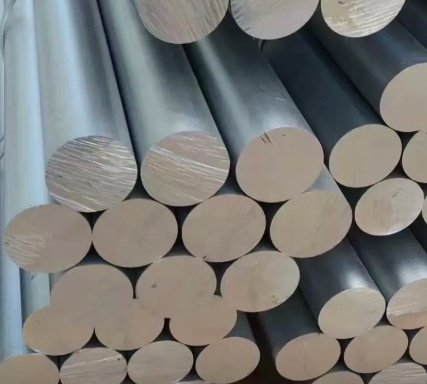
| Aluminum Alloys | 100–550 MPa | 2.70 g/cm³ | Lightweight, corrosion resistance, high machinability | Automation frames, transport equipment, enclosures, heat sinks |
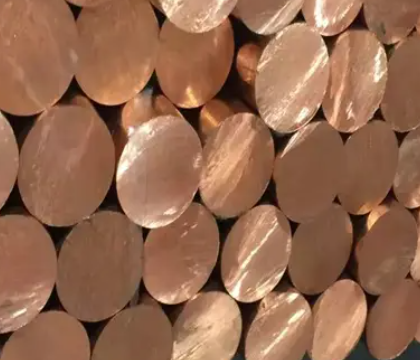
| Copper Alloys | 70–700 MPa | 8.4–8.9 g/cm³ | Electrical and thermal conductivity, bearing properties | Busbars, heat exchangers, bearings, bushings, terminals |
| Nickel Alloys | 240–1,100 MPa | 8.2–8.9 g/cm³ | High-temperature strength, chemical corrosion resistance | Reactors, furnaces, turbine parts, sour gas equipment |
| Titanium Alloys | 275–1,100 MPa | 4.51 g/cm³ | High strength-to-weight ratio, seawater resistance | Aerospace, desalination, medical, offshore, chemical processing |
| Cast Iron | 130–450 MPa | 7.1–7.3 g/cm³ | Vibration damping, castability, compressive strength | Machine bases, pump housings, pipes, engine blocks |
| Tool Steel | Varies by grade and hardness | 7.7–8.1 g/cm³ | Wear resistance, hardness, hot-work performance | Dies, molds, cutting tools, punches, forming tools |
1. Carbon Steel: Best General-Purpose Industrial Metal
Carbon steel remains one of the most important industrial materials because it offers a strong balance of mechanical performance, weldability, availability, and cost. It is widely used in structural steelwork, pressure-retaining parts, machine frames, tanks, base plates, brackets, and general fabrication.
Why carbon steel is widely used
- Cost efficiency: Often the lowest-cost engineering metal per unit strength.
- Good weldability: Low-carbon grades such as ASTM A36, A516, and A106 are commonly welded with standard procedures.
- High availability: Plates, bars, tubes, pipes, beams, and sheets are available globally.
- Surface protection options: Galvanizing, painting, powder coating, and epoxy lining can extend service life.
Engineering considerations
Carbon steel is not inherently corrosion resistant. In humid, marine, acidic, or chemical environments, unprotected carbon steel can rust quickly. Engineers usually specify coating systems, corrosion allowance, cathodic protection, or alternative alloys when corrosion risk is high.
For example, replacing a painted carbon steel support structure with hot-dip galvanized steel can significantly improve outdoor durability. Zinc coating thicknesses around 85 micrometers are common for structural galvanizing and may provide decades of service in moderate atmospheric exposure, depending on local corrosion category.
Typical carbon steel grades used in industry
Common grades include ASTM A36 for structural shapes and plates, ASTM A516 Grade 70 for pressure vessels, ASTM A106 Grade B for high-temperature seamless pipe, EN S235/S355 for structural applications, and SAE 1018/1045 for machined components. Grade selection should consider strength, impact toughness, weldability, thickness, and applicable code requirements.
2. Stainless Steel: Best for Corrosion Resistance and Hygiene
Stainless steel is selected when corrosion resistance, cleanability, appearance, and temperature stability are more important than low initial material cost. Stainless steels contain chromium, usually at least about 10.5%, which forms a passive oxide layer that protects the surface from many corrosive environments.
Main stainless steel families
- Austenitic stainless steel: Grades such as 304 and 316 offer excellent corrosion resistance and formability. 316 contains molybdenum for improved chloride resistance.
- Ferritic stainless steel: Grades such as 430 offer moderate corrosion resistance and lower cost, but limited toughness and weldability compared with austenitic grades.
- Martensitic stainless steel: Grades such as 410 and 420 can be hardened and are used for wear-resistant components.
- Duplex stainless steel: Grades such as 2205 combine high strength with resistance to chloride stress corrosion cracking.
Where stainless steel performs best
Stainless steel is common in food and beverage equipment, pharmaceutical processing, water treatment, chemical piping, pumps, valves, heat exchangers, offshore platforms, and architectural industrial components. For chloride-rich service, such as seawater splash zones or brine systems, 316 stainless may still pit; duplex stainless or higher-alloy grades may be required.
A practical engineering rule is to avoid specifying “stainless steel” generically. A purchase order should identify the exact grade, product form, finish, standard, and certification requirement. For regulated applications, buyers often request EN 10204 3.1 material certificates or mill test reports showing chemical composition and mechanical properties.
3. Alloy Steel: Best for High Strength, Fatigue, and Heat Treatment
Alloy steel contains added elements such as chromium, molybdenum, nickel, vanadium, or manganese to improve hardenability, strength, toughness, fatigue resistance, and performance at elevated temperatures. It is a preferred choice for shafts, gears, axles, fasteners, pressure components, and heavily loaded machine parts.
Common alloy steel applications
- 4140 and 42CrMo4 for shafts, tooling, couplings, and high-strength machined parts.
- 4340 for aerospace, heavy-duty gears, and high-fatigue components.
- Cr-Mo steels such as ASTM A335 P11, P22, and P91 for high-temperature power plant piping.
- Case-hardening steels for gears requiring a hard wear surface and tough core.
Engineering considerations
Alloy steels often require heat treatment, such as quenching and tempering, normalizing, carburizing, or induction hardening. Heat treatment can greatly improve performance, but it also introduces quality risks such as distortion, decarburization, residual stress, and hardness variation.
For critical rotating equipment, engineers should consider not only tensile strength but also fatigue strength, notch sensitivity, cleanliness, inclusion control, and ultrasonic testing requirements. A shaft failure caused by fatigue may occur below the static yield strength if stress concentration, poor surface finish, or misalignment is present.
Example: why alloy steel can reduce shaft diameter
If a carbon steel shaft with a yield strength of 350 MPa is replaced by a quenched-and-tempered alloy steel with a yield strength of 800 MPa, the required section modulus can be reduced for the same static load. However, the final design must still check fatigue, deflection, keyway stress concentration, bearing fit, heat-treatment distortion, and safety factor. Material substitution should be validated by calculation, not by strength ratio alone.
4. Aluminum Alloys: Best Lightweight Metal for Industrial Equipment
Aluminum alloys are widely used when weight reduction, corrosion resistance, thermal conductivity, and machinability are priorities. With a density of about 2.70 g/cm³, aluminum is roughly one-third the weight of steel, making it valuable for transport equipment, automation systems, robotics, packaging machinery, and modular frames.
Popular aluminum grades
- 6061: General-purpose structural aluminum with good machinability, weldability, and corrosion resistance.
- 6063: Common for extrusions, frames, profiles, and architectural components.
- 5052: Good marine corrosion resistance and formability for sheet metal parts.
- 5083: Strong marine-grade aluminum used in vessels, tanks, and cryogenic applications.
- 7075: High-strength aluminum used in aerospace and high-performance mechanical parts, but with lower corrosion resistance and poorer weldability than 6061.
Design and manufacturing notes
Aluminum has a lower modulus of elasticity than steel, about 69 GPa compared with approximately 200 GPa for carbon steel. This means an aluminum component may deflect about three times more than a steel component with the same geometry and load. Engineers often increase section size or use optimized extrusions to maintain stiffness.
Aluminum is also sensitive to galvanic corrosion when connected to stainless steel, copper, or carbon steel in wet environments. Isolation washers, coatings, sealants, and proper drainage can reduce galvanic corrosion risk.
5. Copper and Copper Alloys: Best for Conductivity and Bearing Performance
Copper and copper alloys are selected for electrical conductivity, thermal conductivity, corrosion resistance, and low-friction bearing behavior. Pure copper is widely used for busbars, conductors, grounding systems, heat exchangers, and electrical contacts. Bronze and brass are used for bushings, valve components, fittings, gears, and marine hardware.
Important copper alloy categories
- Pure copper: Excellent electrical and thermal conductivity, but relatively low strength.
- Brass: Copper-zinc alloy used for fittings, valves, terminals, and decorative industrial parts.
- Bronze: Copper-tin or copper-aluminum alloy with good wear and corrosion resistance.
- Beryllium copper: High strength, fatigue resistance, and non-sparking properties, used in springs and specialized tools.
- Cu-Ni alloys: Excellent seawater corrosion resistance, used in marine piping and heat exchangers.
Buyer and compliance considerations
Copper alloy prices are more volatile than carbon steel because they are closely linked to global commodity markets. Buyers should confirm alloy designation, temper, lead content, RoHS and REACH compliance where applicable, and whether the part requires dezincification-resistant brass for potable water service.
For sliding components, bronze may outperform hardened steel in applications where conformability, embedability, and emergency running behavior matter. However, lubrication regime, shaft hardness, surface roughness, and operating temperature must be considered together.
6. Nickel Alloys: Best for Extreme Corrosion and High Temperature
Nickel alloys are premium industrial metals used when stainless steel and carbon steel cannot survive the environment. They offer excellent resistance to high-temperature oxidation, carburization, chloride stress corrosion cracking, acids, alkalis, sour gas, and seawater, depending on the alloy family.
Common nickel alloy families
- Inconel-type alloys: Used for high-temperature strength, oxidation resistance, and gas turbine or furnace components.
- Hastelloy-type alloys: Used for severe chemical processing, acids, and mixed corrosive media.
- Monel-type alloys: Used for seawater, hydrofluoric acid, and marine service.
- Nickel-copper and nickel-chromium-molybdenum alloys: Used in offshore, chemical, and oil and gas equipment.
Engineering value despite high cost
Nickel alloys can cost many times more than carbon steel, but they can prevent unplanned shutdowns, leaks, contamination, and safety incidents. In chemical processing, a material that extends equipment life from 2 years to 10 years may reduce total lifecycle cost even if the initial purchase price is substantially higher.
Welding nickel alloys requires qualified procedures, matching filler metals, controlled heat input, and skilled fabrication. Buyers should review welding procedure specifications, non-destructive examination requirements, and corrosion testing where service conditions are severe.
7. Titanium Alloys: Best Strength-to-Weight Ratio and Seawater Resistance
Titanium alloys combine low density, high specific strength, excellent seawater corrosion resistance, and good performance in many oxidizing chemical environments. Titanium Grade 2 is commercially pure and often used for corrosion resistance, while Grade 5, also known as Ti-6Al-4V, is a high-strength aerospace and industrial alloy.
Industrial uses of titanium
- Heat exchanger tubes and plates in seawater and desalination systems.
- Chemical processing equipment exposed to chlorides and oxidizing acids.
- Offshore components where weight reduction and corrosion resistance are valuable.
- Aerospace structures, fasteners, compressor parts, and high-performance assemblies.
- Medical implants and equipment due to biocompatibility.
Limitations to consider
Titanium is not always easy to machine or weld. It has low thermal conductivity, can gall during sliding contact, and is sensitive to contamination during welding. Titanium welding typically requires excellent shielding with argon to prevent oxygen, nitrogen, or hydrogen pickup that can embrittle the weld area.
Procurement teams should expect higher material cost and longer lead times than common steels or aluminum. For critical titanium components, traceability, certified chemistry, mechanical testing, and approved source control are especially important.
8. Cast Iron: Best for Vibration Damping and Cast Components
Cast iron is a family of iron-carbon alloys known for excellent castability, compressive strength, machinability, and vibration damping. It is widely used for machine tool beds, pump housings, valve bodies, pipes, gear housings, brake components, and engine blocks.
Common types of cast iron
- Gray cast iron: Excellent damping and machinability, but relatively brittle in tension.
- Ductile iron: Higher toughness and tensile strength due to spheroidal graphite structure.
- White cast iron: Very hard and wear resistant, but brittle; used for liners and grinding applications.
- Compacted graphite iron: Offers properties between gray iron and ductile iron, often used in engine components.
Why cast iron is still competitive
For machine bases, cast iron can reduce vibration and improve dimensional stability compared with welded steel fabrications. In pumps and valves, casting allows complex internal flow passages that may be difficult or expensive to fabricate by welding or machining from solid metal.
Designers must account for lower tensile ductility, casting defects, wall thickness transitions, and quality inspection. For critical pressure or safety-related components, casting quality level, radiographic testing, pressure testing, and applicable standards should be specified clearly.
9. Tool Steel: Best for Wear, Cutting, and Forming Applications
Tool steels are engineered for hardness, wear resistance, toughness, and hot-work performance. They are essential for dies, molds, cutting tools, punches, extrusion tooling, shear blades, forming rolls, and high-wear industrial components.
Major tool steel groups
- Cold-work tool steel: Grades such as D2 and O1 for cutting, blanking, and forming at lower temperatures.
- Hot-work tool steel: Grades such as H13 for die casting, forging dies, and extrusion tooling.
- High-speed steel: M2 and similar grades for cutting tools that must retain hardness at elevated temperature.
- Plastic mold steel: P20 and related grades for injection molds and tooling inserts.
Heat treatment and service life
Tool steel performance depends heavily on heat treatment, hardness target, tempering temperature, surface finish, and coating selection. Nitriding, PVD coatings, and cryogenic treatment may be used to improve wear performance, but they should be matched to the failure mode: abrasive wear, adhesive wear, thermal fatigue, chipping, or plastic deformation.
In stamping operations, a tooling upgrade from a general-purpose steel to a properly heat-treated D2 or powder metallurgy tool steel can reduce downtime and extend production runs. However, higher hardness can reduce toughness, so impact loading and edge geometry must be evaluated.
How to Select the Best Metal for an Industrial Application
The best industrial metal is selected through a combination of engineering analysis, service environment review, manufacturing feasibility, and lifecycle cost evaluation. A low-cost alloy can become expensive if it causes downtime, corrosion failure, scrap, or excessive maintenance.
Key selection criteria
- Mechanical properties: Yield strength, tensile strength, hardness, toughness, fatigue strength, and creep resistance.
- Corrosion resistance: Atmospheric exposure, chemicals, seawater, pH, chlorides, galvanic coupling, and temperature.
- Temperature capability: Strength retention, oxidation resistance, thermal expansion, and thermal shock resistance.
- Fabrication: Weldability, machinability, formability, castability, heat treatment response, and surface finishing.
- Availability: Plate, bar, tube, sheet, casting, forging, extrusion, lead time, minimum order quantity, and local stock.
- Compliance: ASTM, ASME, EN, ISO, NACE, PED, API, AWS, RoHS, REACH, or industry-specific standards.
- Total cost: Raw material, machining time, welding consumables, inspection, coating, maintenance, failure risk, and downtime.
What engineers should include in a metal material specification
A clear specification should include alloy grade, standard, product form, dimensions and tolerances, heat treatment condition, surface finish, testing requirements, certification level, traceability, inspection method, and any special restrictions such as low-temperature impact testing, hardness range, corrosion testing, or country-of-origin requirements.
Real Engineering Problems and Material Choices
Industrial material selection becomes easier when it is tied to failure modes and measurable outcomes. The following examples show how different metals solve specific engineering problems.
Problem 1: Outdoor structural frame corrosion
A painted carbon steel frame installed outdoors may require frequent repainting if exposed to moisture, UV radiation, and mechanical damage. Switching to hot-dip galvanized carbon steel or weathering steel can reduce maintenance. In more corrosive coastal service, stainless steel or duplex stainless steel may be more reliable, although the upfront cost is higher.
Problem 2: Conveyor roller shaft fatigue
A low-carbon steel shaft may bend or fail by fatigue under repeated loading. A heat-treated 4140 alloy steel shaft can provide higher yield strength and fatigue resistance. However, the improvement depends on surface finish, fillet radius, keyway design, alignment, and bearing support spacing.
Problem 3: Chemical tank pitting
304 stainless steel can suffer pitting in chloride-containing solutions. Upgrading to 316L, duplex 2205, or a nickel alloy may solve the issue depending on chloride concentration, temperature, pH, aeration, and cleaning chemicals. A corrosion coupon test or laboratory immersion test is often justified before committing to large tanks or reactors.
Problem 4: Weight reduction in automation equipment
Replacing steel guards, panels, or non-critical moving parts with aluminum can reduce mass by 50% or more after accounting for thicker sections needed for stiffness. Lower moving mass can reduce actuator size, energy use, and cycle time, but vibration and deflection must be checked.
Procurement Checklist for Industrial Metal Buyers
For buyers, the cheapest quotation is not always the lowest-risk option. Industrial metals must be purchased with the correct grade, documentation, and quality controls to avoid costly rework or non-compliance.
- Confirm the exact alloy grade and equivalent standards instead of relying on informal names.
- Request mill test reports or EN 10204 3.1 certificates when traceability is required.
- Check chemical composition, mechanical properties, heat number, heat treatment condition, and product form.
- Verify dimensional tolerances, flatness, straightness, surface finish, and packaging requirements.
- Ask whether substitutions are allowed and who must approve them.
- Consider lead time, minimum order quantity, cutting loss, machining allowance, and logistics cost.
- For welded assemblies, verify compatibility between base metal, filler metal, welding procedure, and post-weld heat treatment.
- For safety-critical parts, specify non-destructive testing such as ultrasonic testing, radiography, dye penetrant testing, or magnetic particle inspection where appropriate.
Common Industrial Metal Standards
Material standards help engineers and buyers define minimum requirements for chemical composition, mechanical properties, testing, dimensions, and delivery conditions. The most relevant standards depend on geography, industry, and equipment type.
| Standard Organization | Common Use | Examples |
|---|---|---|
| ASTM International | Material specifications and test methods | ASTM A36, A240, A516, B209, B381 |
| ASME | Pressure vessels, boilers, piping, nuclear components | ASME BPVC, ASME B31.3 |
| EN Standards | European material and product specifications | EN 10025, EN 10088, EN 10204 |
| ISO | International quality, testing, and material standards | ISO 9001, ISO 6892, ISO 6507 |
| API | Oil and gas equipment | API 5L, API 6A, API 650 |
| NACE / AMPP | Corrosion control and sour service | NACE MR0175 / ISO 15156 |
| AWS | Welding procedures and filler metals | AWS D1.1, AWS A5 filler metal specifications |
Final Material Selection Summary
For most industrial applications, carbon steel is the best starting point for cost-effective strength, stainless steel is preferred for corrosion and hygiene, alloy steel is chosen for high loads and fatigue, aluminum is ideal for lightweight equipment, copper alloys are best for conductivity and bearing service, nickel alloys handle severe corrosion and heat, titanium provides premium strength-to-weight and seawater resistance, cast iron excels in damping and cast shapes, and tool steel is essential for wear and forming applications.
The most reliable selection process begins with the service environment and failure mode, then confirms mechanical properties, fabrication route, standards, inspection requirements, and lifecycle cost. A well-specified metal material reduces technical risk, improves procurement accuracy, and increases the service life of industrial equipment.