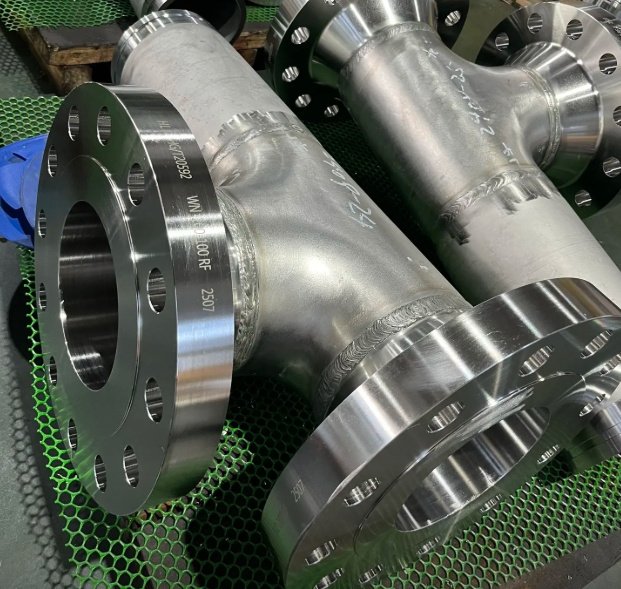
Marine Oil & Gas Flanges are engineered pipe connection components used in seawater cooling, fuel oil, cargo oil, gas treatment, produced water, firewater, hydraulic, ballast and process piping systems. A qualified Marine Oil & Gas Flange must provide pressure containment, corrosion resistance, accurate gasket compression and reliable bolting performance under vibration, salt spray, thermal cycling and offshore maintenance constraints.
This product range covers forged and machined flanges for vessels, offshore platforms, FPSO/FSO units, LNG-related equipment, refineries, petrochemical terminals and subsea topside modules. Products can be supplied to ASME, EN, DIN, JIS, MSS, API and marine classification requirements, with material traceability and inspection documents prepared for procurement, engineering and quality teams.
Product Scope and Typical Applications
Marine and offshore piping systems operate in environments where ordinary industrial flanges may fail prematurely because of chloride corrosion, cyclic loading, sour gas exposure or insufficient surface protection. Marine Oil & Gas Flanges are selected according to fluid, pressure class, temperature, pipe schedule, gasket type, corrosion allowance and class approval.
| Application Area | Common Service Media | Typical Flange Requirements |
|---|---|---|
| Shipbuilding and marine engine room | Fuel oil, lube oil, cooling water, compressed air, steam condensate | Compact dimensions, anti-corrosion coating, JIS/EN/ASME compatibility |
| FPSO, FSO and offshore topside modules | Crude oil, produced water, gas, chemicals, seawater injection | Class-rated pressure design, material certification, NDT and PMI |
| Offshore platform firewater system | Seawater, foam solution, deluge water | Duplex stainless or coated carbon steel, raised face or flat face as specified |
| Gas processing and LNG auxiliary systems | Natural gas, nitrogen, low-temperature service fluids | Low-temperature toughness, RTJ sealing, controlled flange machining tolerances |
| Terminal, refinery and petrochemical piping | Hydrocarbon, steam, wastewater, chemical additives | ASME pressure rating, heat treatment, bolting and gasket compatibility |
Available Marine Oil & Gas Flange Types
Flange type selection is normally defined by pressure rating, piping layout, welding method, inspection access and maintenance strategy. The following types are commonly used in marine and oil gas projects.
Weld Neck Flanges
Weld neck flanges are preferred for high-pressure, high-temperature and cyclic loading applications. The tapered hub improves stress distribution from the flange to the pipe, making this design suitable for process piping, gas lines, crude oil systems and offshore modules where fatigue resistance is critical.
Slip-On Flanges
Slip-on flanges are used for lower to moderate pressure service where installation speed and alignment flexibility are important. They are common in utility piping, seawater systems, ballast lines and non-critical oil service, subject to project specifications.
Blind Flanges
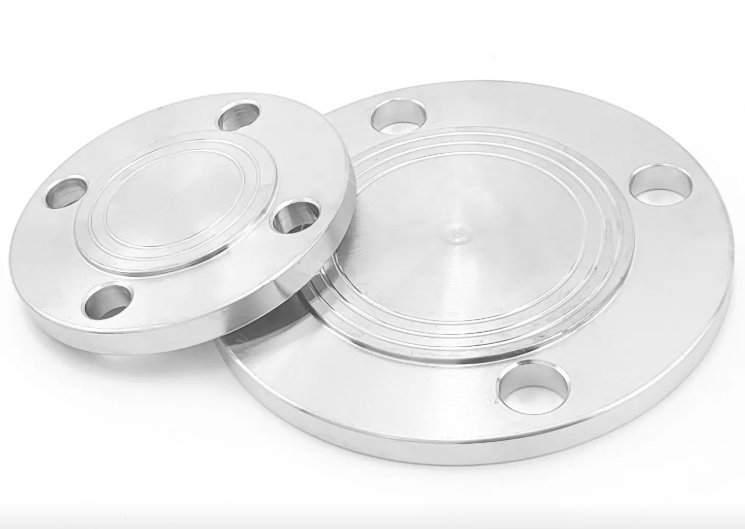
Blind flanges close pipe ends, pressure vessel nozzles and inspection openings. In marine oil and gas service, blind flanges are often required for hydrostatic testing, isolation points, spare nozzles and future expansion connections.
Socket Weld and Threaded Flanges
Socket weld and threaded flanges are used on small-bore piping, instrumentation lines, hydraulic systems and compressed air service. Socket weld designs provide improved leakage resistance compared with threaded connections, while threaded flanges are used where welding is restricted.
Lap Joint Flanges
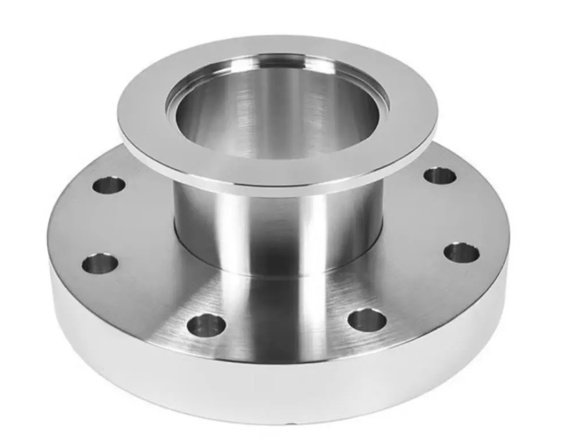
Lap joint flanges are used with stub ends, especially where frequent dismantling, alignment rotation or high-alloy pipe cost control is required. They are useful in stainless steel, duplex and nickel alloy piping systems.
Ring Type Joint Flanges
RTJ flanges use a machined ring groove and metallic gasket to achieve reliable sealing under high pressure. They are commonly specified for high-pressure gas, sour service, API-related connections and critical hydrocarbon systems.
Standards, Ratings and Dimensional Options
Marine Oil & Gas Flanges can be manufactured according to internationally recognized standards and project-specific drawings. Dimensional verification is important because even minor deviations in bolt circle, facing height or gasket seating width can cause leakage, uneven gasket compression or installation delays offshore.
| Standard | Typical Coverage | Common Ratings |
|---|---|---|
| ASME B16.5 | NPS 1/2 to NPS 24 pipe flanges and flanged fittings | Class 150, 300, 400, 600, 900, 1500, 2500 |
| ASME B16.47 Series A/B | Large diameter steel flanges | Class 75 to Class 900 |
| EN 1092-1 | European circular steel flanges | PN 6 to PN 400 depending on size and type |
| JIS B2220 | Japanese steel pipe flanges widely used in shipbuilding | 5K, 10K, 16K, 20K, 30K |
| MSS SP-44 | Steel pipeline flanges | Class 150 to Class 900 |
| API-related specifications | Oilfield, wellhead and high-pressure service connections | Project-specific pressure classes |
Common flange facings include raised face, flat face, ring type joint, male-female and tongue-groove. Standard end connections include butt weld, socket weld, threaded and loose backing flange arrangements.
Materials for Marine and Offshore Corrosion Control
Material selection has a direct effect on service life, leakage risk and maintenance cost. In Marine Oil & Gas environments, the correct balance between strength, weldability, chloride resistance and sour service performance must be verified before purchase.
| Material Group | Typical Grades | Best-Fit Service |
|---|---|---|
| Carbon steel | ASTM A105, A350 LF2, A694 F52/F60/F65 | Fuel oil, general hydrocarbon, low-temperature carbon steel piping, coated seawater-adjacent systems |
| Stainless steel | ASTM A182 F304/304L, F316/316L, F321, F347 | Corrosive fluids, chemical dosing, clean service, moderate chloride exposure |
| Duplex stainless steel | ASTM A182 F51, F60 | Seawater, produced water, firewater, chloride-rich offshore applications |
| Super duplex stainless steel | ASTM A182 F53, F55 | High-chloride seawater, high-strength offshore piping, aggressive produced water |
| Nickel alloy | Inconel 625, Incoloy 825, Monel 400, Hastelloy grades | Sour gas, severe corrosion, seawater, acid gas and high-value critical service |
| Low alloy steel | ASTM A182 F11, F22, F91 | High-temperature steam and refinery process systems |
For sour oil and gas service, materials can be selected and documented according to NACE MR0175 / ISO 15156 requirements. For low-temperature service, impact testing and heat treatment records should be reviewed against the project design temperature.
Material selection note for seawater and firewater service
Carbon steel flanges may be used with suitable coating and cathodic protection, but duplex or super duplex stainless steel is often selected for long-life seawater service. In chloride-rich firewater systems, poor material selection can lead to crevice corrosion around gasket seating areas and bolt holes, especially where stagnant seawater remains after testing.
Manufacturing and Machining Capability
Each flange starts with controlled raw material procurement, forging, heat treatment, rough machining, finish machining and inspection. For high-integrity marine oil and gas projects, machining accuracy is not only a dimensional issue; it directly affects gasket load distribution, bolt stress and leakage resistance.
Forging and Heat Treatment
Forged flanges provide improved grain flow and mechanical strength compared with flame-cut plate components in demanding service. Heat treatment processes may include normalizing, quenching and tempering, solution annealing, stress relieving or precipitation control depending on the alloy and specification.
CNC Machining and Facing
CNC turning, boring, drilling and facing are used to control critical dimensions such as bore diameter, hub profile, bolt hole position, flange thickness, raised face height and RTJ groove geometry. Serrated gasket surfaces can be machined to comply with ASME or customer surface finish requirements.
Surface Protection
Surface treatments include anti-rust oil, zinc phosphate primer, epoxy coating, hot-dip galvanizing where suitable, PTFE-related coating systems and project-specified offshore paint systems. Coating selection should consider operating temperature, seawater splash zone, UV exposure and compatibility with gasket sealing areas.
Machining records, inspection reports and material certificates can be matched by heat number, flange size, pressure class and purchase order item to support traceability during shipyard installation or module handover.
Quality Control, Testing and Documentation
Marine and offshore projects usually require more documentation than standard commercial piping supply. A complete inspection and test plan can reduce rework during shipyard installation, class survey or offshore commissioning.
| Inspection Item | Purpose | Common Method |
|---|---|---|
| Dimensional inspection | Confirms bolt circle, bore, thickness, facing and tolerance compliance | Caliper, micrometer, height gauge, coordinate measurement where required |
| Material traceability | Links finished flanges to heat number and material certificate | EN 10204 3.1 or 3.2 certificate, mill test report review |
| PMI testing | Verifies alloy chemistry and prevents material mix-up | XRF or optical emission spectroscopy |
| Mechanical testing | Confirms strength, elongation, hardness and impact performance | Tensile test, Charpy impact test, hardness test |
| Nondestructive testing | Detects surface or internal discontinuities | UT, MT, PT, RT depending on material and project specification |
| Pressure-related verification | Supports service integrity and system hydrotest preparation | Standard compliance review, optional hydrostatic or leakage testing for assemblies |
Common document package for procurement and class review
A typical document package may include material test certificates, dimensional inspection reports, heat treatment charts, NDT reports, PMI reports, coating reports, packing list, certificate of conformity and third-party inspection release note. For classed marine projects, documentation can be prepared for ABS, DNV, LR, BV, CCS, KR or other classification society review when required by the purchase specification.
Engineering Problems Solved by Correct Flange Specification
In marine oil and gas systems, flange failures are often caused by a combination of environment, vibration, installation limitations and incorrect material or gasket selection. Early engineering review helps prevent leakage and unplanned maintenance.
Leakage Under Vibration
Offshore pumps, compressors and marine engines generate cyclic vibration that can reduce bolt preload over time. Weld neck flanges, correct bolting grade, controlled gasket selection and torque procedures help maintain gasket stress. For high-vibration lines, engineering teams often review pipe support spacing, flange orientation and bolt lubrication conditions together.
Crevice Corrosion at the Gasket Area
Saltwater trapped between the gasket and flange face can accelerate localized corrosion. Duplex or super duplex stainless steel, correct surface finish and compatible gasket materials can reduce this risk. Coated carbon steel should be inspected carefully because coating damage at sealing surfaces may become a corrosion initiation point.
Material Mix-Up in Modular Construction
Large offshore modules may include carbon steel, stainless steel, duplex and nickel alloy flanges in the same spool package. Positive material identification and heat-number traceability reduce the risk of installing a wrong alloy in sour gas, seawater or low-temperature service.
Offshore Installation Delay
Bolt hole mismatch, wrong facing type or incorrect pressure class can delay hook-up work. Accurate dimensional control and pre-shipment verification reduce rework in shipyards and offshore sites where labor, lifting equipment and shutdown windows are expensive.
In project reviews, dimensional nonconformity in bolt holes, facing height or gasket seating area is one of the most common causes of flange replacement before installation. A controlled flange manufacturing route with final inspection can materially reduce field modification.
Buyer and Engineer Specification Guide
To purchase the correct Marine Oil & Gas Flange, buyers and engineers should define technical requirements clearly before production. A complete specification reduces clarification cycles and helps manufacturers align material, machining, inspection and packing with the intended service.
| Specification Item | Information to Provide | Why It Matters |
|---|---|---|
| Standard and size | ASME, EN, JIS or custom drawing; NPS/DN; pipe schedule | Determines dimensions, bore and installation compatibility |
| Pressure rating | Class, PN or K rating; design pressure and test pressure | Ensures pressure containment and correct flange thickness |
| Material grade | A105, LF2, F316L, F51, F53, nickel alloy or project grade | Controls strength, corrosion resistance and temperature performance |
| Facing and gasket | RF, FF, RTJ, serration finish, gasket type | Prevents sealing mismatch and leakage |
| Service condition | Fluid, temperature, chloride level, sour gas, firewater, seawater | Supports corrosion and sour service selection |
| Inspection requirement | NDT, PMI, impact test, hardness, third-party inspection | Aligns quality documentation with project approval |
| Surface protection | Painting system, galvanizing, marking, preservation, packing | Protects flanges during sea freight, storage and offshore installation |
Practical purchasing note
For mixed flange packages, separate line items by material grade, pressure class, facing type and inspection level. Combining different grades or ratings under one ambiguous item can increase the risk of wrong marking, incorrect documentation or warehouse sorting errors.
Classification, Compliance and Project Adaptability
Marine Oil & Gas Flanges can be supplied for projects requiring compliance with shipbuilding rules, offshore platform standards and oil gas piping codes. Depending on the contract, products may be reviewed against requirements from classification societies and engineering contractors.
Common compliance references include ASME B31.3 process piping, ASME B31.1 power piping, ASME B16.5, ASME B16.47, EN 1092-1, JIS B2220, MSS SP-44, ASTM material standards, NACE MR0175 / ISO 15156 and project-specific offshore specifications. For marine class projects, documentation may reference ABS, DNV, Lloyd’s Register, Bureau Veritas, CCS, RINA or Korean Register requirements where applicable.
The most reliable specification approach is to match the flange design code with the piping code, material standard, gasket standard, bolting standard and class requirement. This prevents conflicts such as selecting an acceptable material grade but an incompatible flange facing or pressure-temperature rating.
Packaging, Marking and Delivery Protection
Flanges for marine and offshore projects are often stored for months before installation. Proper preservation helps prevent rust, thread damage, sealing face scratches and certificate mismatch.
- Permanent or low-stress marking for size, rating, material, heat number and standard.
- Protective caps or covers for raised face, RTJ groove and machined bore surfaces.
- Anti-rust oil, VCI bag, desiccant or sealed packaging for sea freight when required.
- Wooden case, pallet or steel frame packing according to flange weight and destination.
- Document matching by packing list, heat number and purchase order item.
For offshore logistics, clear marking and durable packaging can reduce handling errors during warehouse receiving, module assembly and final piping hook-up.