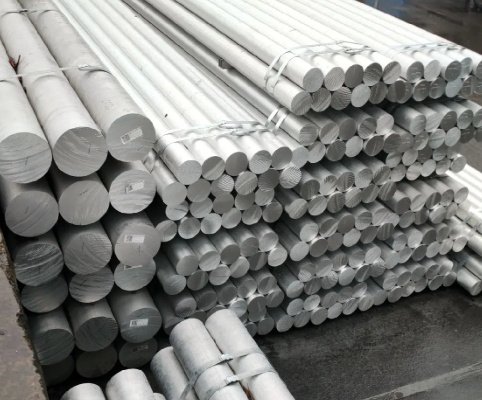
Aluminum A383, also written as A383.0 or 383 aluminum alloy, is a high-silicon aluminum die casting alloy used when excellent fluidity, pressure tightness and hot-cracking resistance are more important than maximum ductility. It is commonly specified for complex thin-wall castings, electrical housings, pump components, brackets, automotive parts and consumer product bodies produced by high-pressure die casting.
Searchers comparing A383 aluminum usually want to know one practical question: should they choose A383 instead of A380, ADC12, A360 or another die casting alloy? The answer depends on part geometry, leak requirements, corrosion exposure, machining needs, surface finish and cost targets. This article explains the engineering trade-offs with data useful for buyers, design engineers and sourcing teams.
What Is A383 Aluminum?
A383 aluminum is an aluminum-silicon-copper die casting alloy designed for castability. Its relatively high silicon content improves molten metal flow into thin sections, small ribs, bosses and complex die cavities. Compared with general-purpose A380, A383 usually offers better resistance to hot cracking and better die filling, especially where the casting has abrupt wall transitions or long flow paths.
In procurement documents, A383 may appear as A383.0-F for as-cast condition, or as a die casting alloy under specifications such as ASTM B85. It is not typically chosen for parts requiring high elongation, severe anodizing quality, or post-casting heat treatment. For those cases, alloys such as A356, A360 or 6061 may be evaluated depending on the manufacturing route.
A383 Aluminum Chemical Composition
The composition below reflects common specification ranges used for A383 die casting alloy. Exact limits should always be confirmed against the purchase standard, customer drawing and foundry material certificate.
| Element | Typical Range or Maximum | Engineering Effect |
|---|---|---|
| Aluminum, Al | Balance | Base metal; provides low density and castability. |
| Silicon, Si | 9.5% - 11.5% | Improves fluidity, die filling and wear resistance; reduces shrinkage tendency. |
| Copper, Cu | 2.0% - 3.0% | Improves strength and machinability but can reduce corrosion resistance. |
| Iron, Fe | 1.3% max | Reduces die soldering; excessive iron can reduce ductility. |
| Zinc, Zn | 3.0% max | Common impurity/tolerance element; high levels may affect corrosion behavior. |
| Manganese, Mn | 0.5% max | Helps modify iron phases and can improve die casting performance. |
| Magnesium, Mg | 0.10% max | Kept low in many die casting specifications to maintain castability. |
| Nickel, Ni | 0.3% max | May improve elevated-temperature strength in small amounts. |
| Tin, Sn | 0.15% max | Impurity controlled because it can affect mechanical performance. |
Why high silicon matters in A383
Silicon lowers the melting range and improves flow length in pressure die casting. For thin-wall housings, heat-sink frames and parts with fine ribs, this can reduce cold shuts, misruns and incomplete fill. The trade-off is that higher silicon alloys may be less ductile than wrought aluminum grades and may require appropriate tooling, gating and machining strategies.
Mechanical and Physical Properties of A383 Aluminum
Mechanical properties of die cast aluminum depend on wall thickness, porosity, die temperature, gate design, vacuum level, shot speed and post-casting operations. The following values are typical reference ranges for design screening, not guaranteed values for every casting.
| Property | Typical Value | Design Relevance |
|---|---|---|
| Density | About 2.74 g/cm³ | Useful for lightweight housings and brackets. |
| Ultimate tensile strength | Approximately 290 - 330 MPa | Suitable for many structural and enclosure applications. |
| Yield strength | Approximately 140 - 170 MPa | Important for load-bearing bosses and mounting points. |
| Elongation | About 1% - 3.5% | Lower than many wrought alloys; avoid severe deformation after casting. |
| Hardness | About 75 - 90 HB | Supports good wear behavior and machinability. |
| Thermal conductivity | About 90 - 110 W/m·K | Relevant for electronic enclosures and heat-dissipating castings. |
| Melting range | About 516 - 582°C | Supports efficient pressure die casting process control. |
For critical parts, buyers should request tensile test data, chemical analysis, porosity acceptance criteria and dimensional inspection reports from the casting supplier. A single alloy designation does not guarantee performance unless the process window is controlled.
A383 Aluminum vs A380: Key Differences
A380 is the most widely used aluminum die casting alloy in many markets because it balances cost, strength, castability and availability. A383 is usually selected when the casting is more difficult to fill or when hot tearing is a major risk. The following comparison summarizes the practical differences.
| Criteria | A383 Aluminum | A380 Aluminum | Selection Note |
|---|---|---|---|
| Silicon content | Higher, typically 9.5% - 11.5% | Typically 7.5% - 9.5% | A383 generally fills thin and complex features more easily. |
| Copper content | Typically lower than A380 | Typically higher, around 3.0% - 4.0% | A380 may offer slightly stronger general mechanical performance in some castings. |
| Fluidity | Excellent | Very good | A383 is often better for long flow paths and thin walls. |
| Hot-cracking resistance | Very good | Good | A383 can reduce cracking risk in difficult geometries. |
| Machinability | Good | Good to very good | Both machine well, but silicon content affects tool wear. |
| Corrosion resistance | Moderate | Moderate | Copper-bearing die casting alloys are not the first choice for severe corrosion exposure. |
| Typical cost and availability | Available, sometimes less common than A380 | Highly available | A380 may be easier to source globally; A383 can reduce scrap on difficult castings. |
Choose A383 over A380 when the part has thin walls, fine ribs, deep pockets, long fill distances or a history of cold shuts and hot cracks. Choose A380 when the geometry is conventional, global material availability is the top priority, and the casting supplier already has a stable A380 process.
Is A383 stronger than A380?
Not necessarily. In many datasheets, A380 and A383 have overlapping tensile strength ranges. A383 is normally valued for castability rather than a large strength advantage. Actual strength is often controlled more by porosity, wall thickness and casting process quality than by the small alloy difference alone.
A383 vs ADC12, A360 and A356
International sourcing often requires comparing A383 with regional or alternative alloys. ADC12 is common in Asian supply chains and is broadly comparable to A383/A380-type die casting alloys, but exact chemical limits differ by standard. A360 offers better corrosion resistance and pressure tightness potential, while A356 is usually gravity cast, sand cast or permanent mold cast rather than high-pressure die cast in the same way.
| Alloy | Best Fit | Limitations |
|---|---|---|
| A383 | Complex high-pressure die castings with excellent fluidity requirements. | Moderate corrosion resistance; limited ductility. |
| A380 | General-purpose die castings with strong supplier availability. | May be less forgiving than A383 for severe thin-wall filling. |
| ADC12 | Cost-effective die castings in many Asia-based manufacturing programs. | Not an automatic one-to-one replacement; confirm chemistry and properties. |
| A360 | Castings needing improved corrosion resistance and pressure tightness. | Can be less common and may require tighter process control. |
| A356 | Higher ductility cast parts, heat-treatable castings and structural components. | Different casting process route; not usually used as a direct HPDC substitute. |
Die Casting Performance and Real Engineering Problems
The strongest reason to specify A383 aluminum is manufacturability. In high-pressure die casting, defects are frequently caused by poor fill, trapped gas, early solidification, die temperature imbalance, shrinkage concentration or ejection stress. A383 helps with some of these issues, but it does not replace proper tooling and process engineering.
Thin-wall filling
For castings with wall thickness around 1.5 - 2.5 mm, A383 can improve fill reliability compared with lower-silicon alloys. In a representative electronics enclosure program, changing from a standard A380 process to an A383 process, together with optimized gate velocity and die temperature, reduced cold-shut related scrap from 6.8% to 2.1% over a 20,000-piece production run. The result should be interpreted as process-specific, but it illustrates why alloy fluidity matters.
Leakage and pressure tightness
A383 is used for pump bodies, pneumatic housings and covers where leak control is important. However, pressure tightness depends heavily on porosity control. Vacuum-assisted die casting, correct overflow placement, balanced shot profile and impregnation may be required when leak rates are tightly specified.
Hot cracking around bosses and ribs
Hot tearing resistance is one of the practical advantages of A383. Parts with thick-to-thin transitions, tall bosses or intersecting ribs can crack during solidification if the metal cannot feed or contract uniformly. Design changes such as generous radii, uniform wall thickness and reduced isolated mass are still recommended.
Common A383 casting defects and likely causes
- Cold shuts: insufficient metal temperature, poor gate design, slow fill or excessive flow length.
- Gas porosity: trapped air, poor venting, high lubricant gas generation or unstable shot profile.
- Shrinkage porosity: isolated heavy sections, inadequate feeding or poor thermal balance.
- Die soldering: excessive metal temperature, poor die coating or uncontrolled iron level.
- Dimensional variation: die temperature drift, ejection distortion or inconsistent cooling time.
Machining A383 Aluminum
A383 aluminum is considered machinable, but it behaves differently from wrought aluminum such as 6061-T6. Its silicon particles improve wear resistance but can increase abrasive tool wear. For production CNC machining, tool material, chip evacuation and fixture rigidity are more important than simply increasing spindle speed.
Machining A383 aluminum is common for drilled holes, tapped bosses, bearing seats, sealing faces, counterbores and datum surfaces after die casting. Precision machining should be planned with the casting datum scheme, expected porosity zones and draft angles in mind.
| Operation | Recommendation | Reason |
|---|---|---|
| Milling | Use sharp carbide tools with polished flutes and stable workholding. | Reduces built-up edge and improves surface finish. |
| Drilling | Use through-coolant drills where possible and avoid drilling into high-porosity zones. | Improves hole consistency and reduces chip packing. |
| Tapping | Use roll forming taps only after confirming material and hole quality; cutting taps are often safer for porous castings. | Porosity and silicon particles can affect thread quality. |
| Sealing faces | Specify surface roughness and flatness together, not roughness alone. | Leak performance depends on geometry as well as finish. |
| Deburring | Control burrs around drilled and milled edges, especially near gasket grooves. | Burrs can damage seals or interfere with assembly. |
For buyers, the most common machining-related mistake is specifying tight tolerances on as-cast surfaces and machined surfaces without defining datums. A good drawing should identify machining stock, datum targets, critical-to-function dimensions and inspection method.
Surface Finishing, Corrosion and Coating Options
A383 can be finished by shot blasting, vibratory deburring, powder coating, wet painting, e-coating, chromate conversion coating and plating processes when the supplier has qualified pretreatment. Decorative anodizing is usually not recommended because high silicon and copper can produce a darker, less uniform appearance than wrought aluminum.
Corrosion resistance is moderate because A383 contains copper. For indoor enclosures, brackets and mechanical housings, this is often acceptable. For salt spray, outdoor electronics, marine service or chemical exposure, the coating system and sealing design are as important as the alloy.
| Finish | Typical Purpose | Important Notes |
|---|---|---|
| Shot blasting | Uniform matte appearance and minor surface cleanup. | May expose subsurface porosity if blasting is aggressive. |
| Powder coating | Durable color finish for housings and covers. | Requires clean casting surface and controlled outgassing. |
| Conversion coating | Corrosion protection and paint adhesion. | Common for electrical housings and industrial components. |
| Plating | Wear, conductivity or appearance improvement. | Porosity can affect plating quality; process qualification is needed. |
| Anodizing | Limited functional use. | Decorative consistency is usually poor compared with 6061 or 6063. |
Design and Procurement Checklist for A383 Aluminum Parts
A383 is often selected to solve a manufacturing problem, so the alloy should be specified together with process and quality requirements. A buyer should not evaluate suppliers only by casting price per kilogram; tooling design, process control and machining capability can determine the final landed cost.
- Confirm the standard: reference ASTM B85, customer material specification or equivalent standard required by the drawing.
- Define critical areas: identify sealing surfaces, pressure zones, threaded holes and cosmetic surfaces.
- Control porosity: specify X-ray, sectioning, leak testing or acceptance criteria where function requires it.
- Review wall thickness: keep walls uniform where possible and avoid isolated heavy masses.
- Plan machining stock: add enough stock for cleanup without cutting into porosity-prone regions.
- Specify finish requirements: define coating thickness, salt spray requirement, color, masking and adhesion tests.
- Ask for PPAP or first article data: include dimensional reports, material certificates and process capability for key features.
From a sourcing perspective, A383 can be cost-effective even if the raw alloy or sourcing route is slightly less common than A380, because reducing scrap, rework and leak failures may lower total production cost. The best decision is based on total yield, tooling life, machining time, finishing reject rate and field performance.
When Should You Specify Aluminum A383?
Specify Aluminum A383 when the product requires high-pressure die casting with excellent fluidity, complex geometry and improved resistance to hot cracking. It is a strong candidate for thin-wall housings, covers, motor components, pump parts, control modules, consumer appliance components and industrial brackets.
Do not choose A383 only because it is available or familiar. If the part requires high ductility, premium decorative anodizing, severe corrosion resistance or extensive heat treatment, another alloy or manufacturing process may be more suitable. For most die casting projects, A383 is best understood as a castability-focused alloy that helps difficult parts fill correctly and consistently.
The most reliable specification combines the alloy designation with measurable requirements: chemical composition, mechanical properties when needed, leak rate, porosity limits, dimensional tolerances, machining datums, finish standard and inspection method. That approach allows engineers and buyers to capture the real benefit of A383 aluminum while avoiding ambiguity during production.