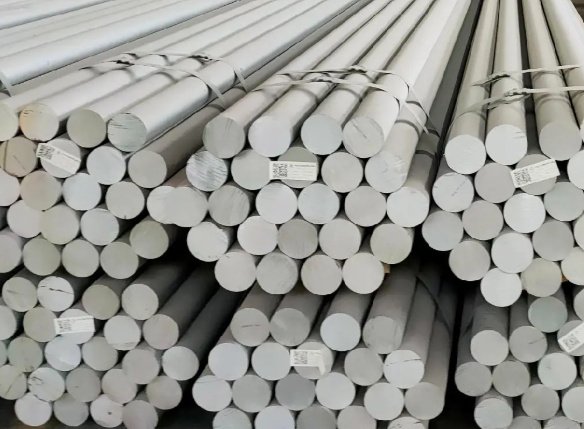
Aluminum A384 is a high-silicon aluminum die casting alloy used when excellent fluidity, thin-wall filling, and dependable castability are more important than maximum ductility or corrosion resistance. It belongs to the aluminum-silicon-copper alloy family and is commonly considered when engineers need a die casting alloy with better flow characteristics than A380 and competitive strength in as-cast condition.
For buyers, casting engineers, and product designers, Aluminum A384 is often evaluated for housings, brackets, covers, motor components, pump parts, electronic enclosures, appliance parts, and automotive die castings where dimensional repeatability and production efficiency matter. Its higher silicon content improves mold filling and reduces hot cracking risk, while copper contributes to strength and hardness.
What Is Aluminum A384?
Aluminum A384, also written as A384.0 in cast alloy designation, is an aluminum casting alloy developed primarily for high-pressure die casting. It is not normally selected for wrought processing, extrusion, or heavy forming. Instead, it is optimized for casting complex shapes at high production volumes.
The alloy is closely related to A380 and A383 but usually contains a higher silicon range. This gives A384 strong die-filling capability, making it useful for parts with thin ribs, deep cavities, bosses, heat-dissipation features, and complex geometry that may be difficult to cast with lower-fluidity alloys.
Typical Chemical Composition of Aluminum A384
The exact chemical limits depend on the specification, foundry practice, and applicable standard. The following values are typical ranges used for engineering comparison and supplier discussions.
| Element | Typical Range or Limit | Engineering Function |
|---|---|---|
| Aluminum | Balance | Base metal, low density, castability |
| Silicon | 10.5% - 12.0% | Improves fluidity, mold filling, wear resistance, and hot cracking resistance |
| Copper | 3.0% - 4.5% | Increases strength and hardness, reduces corrosion resistance |
| Iron | Up to about 1.3% | Reduces die soldering, but excessive iron may reduce ductility |
| Zinc | Up to about 3.0% | May improve strength but can affect corrosion behavior |
| Manganese | Up to about 0.5% | Helps control iron-containing phases and die soldering behavior |
| Magnesium | Usually low | Can influence strength, aging response, and casting behavior |
| Nickel, Tin, Others | Controlled residuals | Affect strength, machinability, and quality consistency |
In procurement documents, composition should be tied to a recognized standard or an approved material specification. This is important because small changes in iron, copper, zinc, and magnesium can change machinability, porosity tendency, corrosion behavior, and surface finishing results.
Mechanical and Physical Properties
Aluminum A384 is generally supplied in the as-cast condition for die cast components. Mechanical properties vary with wall thickness, die temperature, gate design, porosity level, melt quality, and testing location. The numbers below are typical reference values, not guaranteed minimums.
| Property | Typical Value | Design Relevance |
|---|---|---|
| Density | About 2.7 - 2.8 g/cm³ | Lightweight alternative to zinc, iron, and steel castings |
| Ultimate tensile strength | About 290 - 330 MPa | Useful for structural housings and brackets with moderate loads |
| Yield strength | About 150 - 180 MPa | Important for bolt bosses, ribs, and load-bearing features |
| Elongation | Typically 1% - 3% | Lower ductility than many wrought aluminum alloys |
| Hardness | About 75 - 90 HB | Supports wear resistance and stable machining |
| Thermal conductivity | Roughly 90 - 110 W/m·K | Relevant for heat sinks, covers, and electronic housings |
| Melting range | Approximately 515 - 580°C | Useful for casting process control |
Design implication: A384 should be treated as a cast aluminum alloy with good strength-to-weight performance but limited elongation. It is suitable for stiff, ribbed, near-net-shape castings, but it is not the best choice for components requiring severe impact resistance, extensive post-casting forming, or high corrosion exposure without protective finishing.
Aluminum A384 vs A380, A383, and A413
Many buyers search for Aluminum A384 because they are comparing it with more common die casting alloys. The right selection depends on casting complexity, mechanical requirements, surface treatment, cost, and availability.
| Alloy | General Character | Advantages | Limitations | Typical Selection Reason |
|---|---|---|---|---|
| A384 | High-silicon Al-Si-Cu die casting alloy | Excellent fluidity, good strength, strong die filling | Moderate corrosion resistance, limited ductility | Complex thin-wall die castings needing better flow than A380 |
| A380 | Widely used general-purpose die casting alloy | Good balance of cost, strength, castability, availability | May not fill very thin or complex sections as easily as A384 | Default choice for many commercial die cast parts |
| A383 | Modified high-fluidity alternative to A380 | Better die filling than A380, good castability | Often slightly lower availability than A380 | Thin-wall castings where A380 flow is marginal |
| A413 | High-silicon alloy with lower copper | Excellent pressure tightness and corrosion behavior compared with Cu-rich alloys | Lower strength than some copper-containing alloys | Pump bodies, hydraulic components, leak-critical castings |
When A384 Is Better Than A380
A384 can be the better choice when the casting includes thin walls, long flow paths, deep ribs, small details, or difficult cavity geometry. The higher silicon level supports smoother filling and may reduce cold shuts or misruns when the die design is already optimized.
When A380 May Be the Better Choice
A380 is often more available and may be easier to source globally. If the part geometry is not extremely demanding, A380 can provide a practical balance of cost, strength, and production familiarity. For high-volume programs, availability and foundry experience can be decisive.
When A413 May Be the Better Choice
If the component must hold pressure, resist leakage, or operate in a more corrosion-sensitive environment, A413 may be considered. Its chemistry generally supports better pressure tightness and corrosion resistance than copper-rich alloys, although strength and hardness may differ.
Die Casting Performance and Real Engineering Considerations
Aluminum A384 is commonly selected for high-pressure die casting because it supports rapid cavity filling and consistent reproduction of fine details. In real production, however, alloy choice alone does not guarantee good parts. Gate velocity, vacuum assistance, shot profile, die temperature, venting, overflow design, lubricant control, and melt cleanliness all affect final quality.
Typical engineering problem: a thin-wall electronic housing with 1.5 - 2.0 mm walls may show cold shuts when cast in a lower-fluidity alloy under the same tooling concept. Switching to A384 can improve fill behavior, but the best result usually comes from combining alloy selection with optimized gate design, higher die thermal balance, and improved venting.
In production trials, foundries often measure scrap rate, X-ray porosity level, leak rate, dimensional capability, and machining yield. For example, a die casting program may compare A380 and A384 using the same part geometry and track cold shut defects per 1,000 shots. If A384 reduces incomplete-fill defects but increases machining tool wear due to higher silicon, the final decision should be based on total cost per accepted part, not only alloy price.
Practical die casting checks before approving A384
- Confirm wall thickness and flow length are suitable for high-pressure die casting.
- Review expected porosity limits, especially near machined sealing surfaces.
- Specify whether X-ray, CT scanning, pressure testing, or section analysis is required.
- Control melt temperature, die temperature, and shot speed during process validation.
- Define cosmetic acceptance criteria before production tooling is finalized.
Machining Aluminum A384
Aluminum A384 can be machined successfully, but its high silicon content requires proper cutting tools and process control. Silicon improves wear resistance in the casting but can also increase abrasive wear on cutting edges. For Aluminum production machining, carbide tools, polished flutes, sharp cutting geometry, and stable workholding are usually preferred.
Common machining operations include drilling, tapping, boring, milling, reaming, spot-facing, and thread forming or thread cutting. Machined features often include mounting holes, bearing seats, gasket surfaces, electrical grounding pads, and precision datum surfaces.
| Machining Factor | Recommendation for A384 | Reason |
|---|---|---|
| Tool material | Carbide or coated carbide | Handles abrasive silicon particles better than general HSS tools |
| Cutting edge | Sharp, polished geometry | Reduces built-up edge and improves surface finish |
| Coolant | Flood coolant or mist depending on operation | Controls heat, chip evacuation, and dimensional stability |
| Workholding | Support thin walls and avoid over-clamping | Prevents distortion and inconsistent tolerances |
| Porosity control | Keep critical machined surfaces away from heavy porosity zones | Improves sealing, appearance, and fatigue performance |
Machining risk to manage: hidden porosity may appear after material is removed from a die cast surface. Engineers should avoid placing sealing grooves, O-ring seats, and pressure boundaries in locations where air entrapment or shrinkage porosity is likely. If the part is leak-critical, machining allowances, gate locations, vacuum die casting, and impregnation requirements should be reviewed early.
Machining notes for buyers and manufacturing engineers
- Request sample parts from production tooling, not only prototype tooling, before approving cycle time and tool life.
- Measure surface roughness after machining if gasket sealing or coating adhesion is important.
- Define thread requirements clearly, including thread depth, insert use, and torque validation.
- Ask the supplier whether porosity is controlled by process design, inspection, impregnation, or all three.
Surface Finishing, Coating, and Corrosion Behavior
Because A384 contains significant copper, it is not usually chosen as the best aluminum casting alloy for severe corrosion environments. It can still perform well in many indoor, automotive, appliance, and equipment applications when the surface finish is appropriate.
Common finishing options include shot blasting, vibratory deburring, conversion coating, powder coating, wet painting, e-coating, and selective metal machining. Decorative anodizing is generally more difficult on high-silicon die casting alloys because the surface can appear gray, uneven, or inconsistent compared with wrought aluminum alloys.
If the part will be exposed to road salt, cleaning chemicals, marine air, or galvanic contact with stainless steel or copper alloys, corrosion testing should be specified. Neutral salt spray, cyclic corrosion testing, humidity testing, and coating adhesion testing may be relevant depending on the end-use environment.
Applications of Aluminum A384
Aluminum A384 is suitable for complex castings where high productivity, good dimensional repeatability, and strong mold filling are required. Typical applications include:
- Automotive brackets, housings, covers, and support components
- Electric motor housings and small powertrain-related components
- Electronic and communication equipment enclosures
- Appliance frames, covers, and mechanical supports
- Lighting housings and thermal-management components
- Industrial machine covers, pump-related parts, and tool housings
- Consumer product components with complex ribs and bosses
Aluminum A384 is especially attractive when the casting has thin sections and the supplier needs a material that flows well through narrow gates and complex cavities. For thick, highly loaded, or impact-critical structures, engineers should compare A384 with alternative cast aluminum alloys, heat-treated casting alloys, wrought aluminum, magnesium, zinc, or steel.
Buyer and Engineer Selection Guide
Selecting Aluminum A384 should involve both engineering validation and supply-chain review. The alloy may solve a casting-fill problem, but it must also meet requirements for machining yield, surface finish, corrosion resistance, inspection cost, and long-term availability.
| Decision Area | What to Confirm | Why It Matters |
|---|---|---|
| Material standard | Approved A384.0 chemistry and certificate requirements | Prevents alloy substitution and inconsistent performance |
| Mechanical properties | Test method, sample location, and acceptance criteria | Die cast properties vary by wall thickness and porosity |
| Tooling design | Gate, runner, overflow, venting, and thermal balance | Determines fill quality and porosity distribution |
| Machined features | Datum strategy, machining allowance, thread quality, and sealing surfaces | Controls assembly performance and scrap rate |
| Surface finish | Coating type, corrosion test, appearance limit, and adhesion test | High-silicon die cast aluminum may finish differently than wrought aluminum |
| Inspection plan | Dimensional inspection, X-ray, leak test, hardness, and visual standards | Aligns supplier quality control with application risk |
Procurement insight: the lowest casting quote may not produce the lowest final cost. A384 parts with poor porosity control can create expensive losses during CNC machining, leak testing, coating, or final assembly. Buyers should compare suppliers by approved-part yield, tool maintenance capability, process control data, and corrective-action speed.
Suggested drawing and RFQ notes for Aluminum A384 parts
- State the alloy clearly as Aluminum A384 or A384.0 according to the applicable standard.
- Identify critical-to-function dimensions, sealing surfaces, and datum features.
- Define allowable porosity for machined and pressure-retaining areas.
- Specify coating, corrosion testing, and cosmetic requirements if appearance matters.
- Request material certificates and production control plans for high-volume programs.
Limitations and Alternatives
Aluminum A384 is not ideal for every project. Its main limitations include moderate corrosion resistance due to copper content, relatively low ductility compared with wrought aluminum, and possible tool wear during machining because of high silicon. These limitations are manageable in many applications, but they should be considered before tooling investment.
If the part needs better corrosion resistance or pressure tightness, A413 may be evaluated. If the project needs a common, economical, and widely available die casting alloy, A380 may be preferred. If the component requires high ductility, fatigue performance, or heat treatment response, other casting processes or alloys such as A356-T6 may be more appropriate.
Conclusion: Is Aluminum A384 the Right Alloy?
Aluminum A384 is a strong candidate for complex high-pressure die cast parts that require excellent fluidity, good as-cast strength, and reliable reproduction of thin-wall features. Compared with A380, it can offer improved filling behavior; compared with A413, it may offer higher strength but less corrosion advantage; compared with A383, it is often evaluated for even more demanding flow requirements.
The best use of Aluminum A384 is in applications where casting performance, dimensional consistency, and production yield justify the alloy choice. For engineering approval, decision-makers should evaluate chemistry, mechanical properties, die casting process capability, machining results, coating performance, and total cost per accepted component.