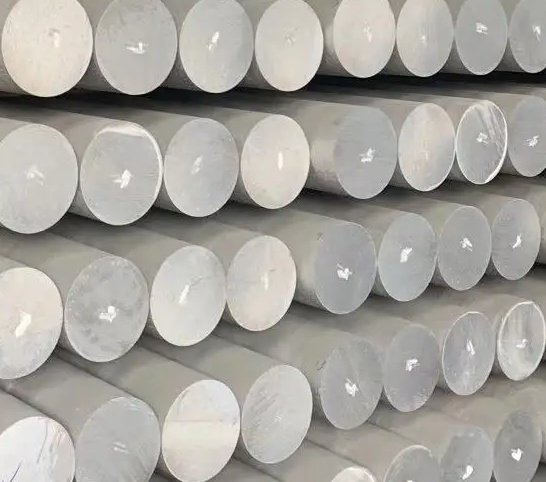
Aluminum A206 is a premium aluminum-copper casting alloy selected when a cast component needs higher tensile strength, yield strength and fatigue capability than many common aluminum-silicon casting alloys can provide. It is often considered for aerospace brackets, defense hardware, high-load housings, suspension-related castings, hydraulic parts and precision structural components where weight reduction must be balanced with mechanical reliability.
Unlike general-purpose casting alloys such as A356 or 319, A206 is not usually chosen because it is the easiest alloy to cast. It is chosen because, when the foundry process, heat treatment and inspection plan are controlled correctly, it can deliver strength levels closer to wrought aluminum expectations while still allowing near-net-shape casting.
What Is Aluminum A206?
Aluminum A206 is a heat-treatable Al-Cu-Mg-based casting alloy. In industry, it may appear as A206.0 for castings and can be supplied in heat-treated tempers such as T4, T6 or T7 depending on the required balance of strength, ductility, dimensional stability and resistance to stress-related service issues.
The alloy’s strength comes primarily from copper-containing precipitates formed during solution heat treatment, quenching and artificial aging. Compared with Al-Si casting alloys, A206 typically offers superior static strength, but it requires tighter control of melt cleanliness, solidification rate, grain refinement and heat treatment.
| Attribute | Typical Engineering Meaning |
|---|---|
| Alloy family | Heat-treatable aluminum-copper casting alloy |
| Main alloying elements | Copper, magnesium, manganese and titanium, with tight impurity limits |
| Primary value | High strength-to-weight ratio in cast geometry |
| Main manufacturing challenge | Hot tearing sensitivity and process control requirements |
| Common product forms | Sand castings, investment castings, permanent mold castings and engineered prototypes |
Typical Mechanical Properties and Performance Expectations
Actual Aluminum A206 properties depend on casting method, section thickness, heat treatment, porosity level and test coupon location. Values from separately cast test bars are often higher than values cut from heavy or geometrically complex production castings. For engineering use, the most reliable numbers are those validated by production-representative castings and the applicable material specification.
| Condition or Reference | Typical Tensile Strength | Typical Yield Strength | Typical Elongation |
|---|---|---|---|
| A206-T7, well-controlled casting | 380-430 MPa | 300-360 MPa | 2-7% |
| A206-T6, strength-focused temper | 400-455 MPa | 320-390 MPa | 1-5% |
| A356-T6, common casting benchmark | 240-330 MPa | 170-260 MPa | 2-8% |
| 319-T6, general aluminum casting alloy | 240-310 MPa | 170-260 MPa | 1-4% |
These ranges show why A206 is attractive for structural castings. In many applications, it can provide a yield strength increase of roughly 30-70% over common A356-T6 castings, provided the casting is sound and heat treatment is correctly executed.
Important note on published property data
Published property values should be treated as design starting points, not automatic guarantees. Engineers should confirm values against ASTM, AMS, customer-specific or supplier-specific requirements, especially when fatigue, fracture toughness, pressure containment or safety-critical loading is involved.
Aluminum A206 vs A356, 319, 6061 and 7075
A useful way to evaluate Aluminum A206 is to compare it with alloys that buyers and engineers commonly consider during material selection. The best choice depends on whether the project prioritizes castability, strength, corrosion resistance, cost, machinability or availability.
| Material | Process Type | Main Advantage | Main Limitation | Best-Fit Use Case |
|---|---|---|---|---|
| Aluminum A206 | Casting | Very high cast strength and good elevated-temperature capability | More difficult to cast; hot tearing risk | High-load cast structural parts |
| A356 | Casting | Excellent castability, corrosion resistance and availability | Lower strength than A206 | General structural castings and housings |
| 319 | Casting | Good castability and wear-related performance | Lower ductility and strength ceiling | Engine blocks, transmission cases and general cast parts |
| 6061-T6 | Wrought plate, bar, extrusion or forging | Good machining, welding and corrosion resistance | Less suitable for complex near-net cast geometry | Machined brackets, frames and fixtures |
| 7075-T6 | Wrought plate, bar or forging | Very high strength | Poor weldability, higher stress corrosion concern and not a casting alloy | Highly loaded machined aerospace components |
If the part can be machined economically from plate, 6061 or 7075 may be simpler. If the part has internal cavities, ribs, bosses, integrated mounts or a shape that would waste too much billet material, A206 becomes more attractive because it combines cast geometry with high strength.
Casting Behavior: Strength Comes With Process Sensitivity
The main engineering trade-off of Aluminum A206 is castability. Compared with Al-Si alloys, A206 has higher susceptibility to hot tearing because of its solidification characteristics and reduced feeding tolerance. This does not make the alloy unsuitable, but it does mean the foundry must design the process around the alloy instead of treating it like a general-purpose casting aluminum.
Hot tearing control is often the difference between a successful A206 casting program and repeated scrap. Risk increases in long, thin sections, sharp transitions, restrained geometry, isolated heavy bosses and designs with poor directional solidification.
- Use generous radii at section transitions to reduce local restraint.
- Avoid abrupt thick-to-thin geometry that prevents uniform contraction.
- Apply chills, risers and controlled thermal gradients to support directional solidification.
- Use grain refinement and clean melt practice to improve feeding behavior.
- Validate gating and risering through simulation before production tooling when the part is complex.
Example engineering issue: reducing scrap in an A206 bracket casting
In a representative high-load bracket program, early trial castings showed cracks near a rib-to-boss junction. The geometry created restraint during solidification and the hot spot fed poorly. After increasing the transition radius, adding local chilling and revising riser placement, the foundry reduced visible hot-tear rejects from approximately 18% in initial trials to below 4% during controlled pilot production. The lesson is that A206 performance depends heavily on geometry-aware casting design.
Heat Treatment and Temper Selection
A206 is normally specified with a heat treatment because precipitation hardening is essential to its high-strength performance. The general heat-treatment route includes solution heat treatment, quenching and aging. Temper selection affects not only ultimate strength, but also residual stress, dimensional stability, ductility and machinability.
| Temper | Typical Purpose | Engineering Consideration |
|---|---|---|
| T4 | Solution heat treated and naturally aged | Better ductility, lower strength than aged tempers |
| T6 | Solution heat treated and artificially aged for high strength | Higher strength, but dimensional and residual stress control must be managed |
| T7 | Overaged or stabilized condition | Often selected when stability, toughness or stress-related reliability is prioritized over peak strength |
For precision castings, heat treatment should be planned with fixturing and distortion control in mind. Thin walls, asymmetric ribs and heavy bosses can move during quenching. When tight machining allowances are required, buyers should specify datum strategy, post-heat-treatment inspection and whether rough machining before heat treatment is permitted.
Machining Aluminum A206: Practical Guidance for Shops
Aluminum A206 is generally machinable, especially in heat-treated conditions, but it is not identical to machining 6061 billet. Cast microstructure, hard intermetallic particles, local porosity and variable section thickness can affect tool life, finish and dimensional consistency.
Machining after final heat treatment is often preferred for high-precision features because it reduces the risk that heat-treatment distortion will move finished dimensions out of tolerance. However, rough machining before heat treatment may be useful when large stock removal would otherwise increase cycle time or distortion risk.
- Use sharp carbide or PCD tooling for longer runs and abrasive microstructures.
- Maintain effective chip evacuation to prevent built-up edge and recutting.
- Use flood coolant or minimum-quantity lubrication when surface finish and thermal stability matter.
- Control clamping pressure; cast ribs and thin walls can deflect during machining.
- Inspect machined pressure surfaces for exposed porosity if the part must seal fluids or gases.
| Machining Operation | Common Concern | Recommended Control |
|---|---|---|
| Milling | Chatter on thin ribs or unsupported walls | Use staged stock removal, optimized fixturing and sharp high-helix cutters |
| Drilling | Chip packing and bore wander near cast skin | Spot drill, use through-coolant tools and avoid excessive feed in interrupted areas |
| Tapping | Thread tearing or inconsistent engagement | Use forming taps only when material condition supports it; otherwise use sharp cutting taps or thread milling |
| Reaming or boring | Size variation from porosity or tool wear | Use stable fixturing, predictable stock allowance and process capability checks |
Corrosion, Welding and Surface Finishing Considerations
Because A206 contains significant copper, its corrosion resistance is generally lower than aluminum-magnesium or aluminum-silicon-magnesium alloys such as 356 or 6061. In outdoor, marine or chemically aggressive environments, corrosion protection should be part of the design rather than an afterthought.
Surface finishing options may include conversion coating, primer, paint, anodizing in selected cases, or specialty coatings required by aerospace or defense specifications. The final choice should account for electrical isolation, galvanic corrosion risk and any post-machining surface exposure.
Welding is not usually a primary advantage of A206. If welding is required, the design team should verify filler selection, post-weld properties and the effect of heat input on the heat-treated microstructure. For many structural programs, mechanical fastening, inserts, cast-in features or redesigned one-piece cast geometry are more reliable than welding after heat treatment.
Procurement and Specification Checklist for Buyers
Buyers should not treat Aluminum A206 as a commodity casting alloy. The purchasing specification should define both material requirements and process controls, especially when the part is safety-related, pressure-retaining or fatigue-sensitive.
- Specify alloy designation, temper and governing standard or customer specification.
- Define whether properties apply to separately cast coupons, attached coupons or specimens cut from the casting.
- Identify required nondestructive testing such as X-ray, dye penetrant or dimensional scanning.
- Set acceptable porosity, shrinkage and crack criteria using a recognized acceptance standard.
- Clarify heat-treatment certification, hardness range and lot traceability.
- Define machining allowance, datum scheme and post-machining inspection requirements.
- Confirm surface finish, coating, impregnation and leak-test requirements where applicable.
Buyer risk: selecting only by lowest casting price
A low unit price can be misleading if the supplier lacks A206 experience. Scrap, rework, late heat-treatment distortion, machining porosity and failed inspection can raise the real cost of ownership. For this alloy, supplier capability in simulation, melt control, heat treatment and inspection is often more important than raw casting price.
When Aluminum A206 Is the Right Choice
Aluminum A206 is a strong candidate when the part requires cast complexity and mechanical properties beyond typical general-purpose aluminum casting alloys. It is especially useful when converting a multi-piece machined or fabricated assembly into a single high-strength casting can reduce weight, fasteners, assembly time and material waste.
The alloy is less attractive when the design is simple enough for economical machining from 6061 or 7075, when corrosion resistance is the dominant requirement, or when the foundry cannot control hot tearing and heat-treatment distortion. The most successful applications usually involve early collaboration between design engineering, casting engineering, machining and quality teams.
In short, Aluminum A206 is best understood as an engineered casting solution, not a drop-in substitute for easier aluminum alloys. Used correctly, it offers an excellent combination of high strength, weight efficiency and near-net-shape manufacturing for demanding components.