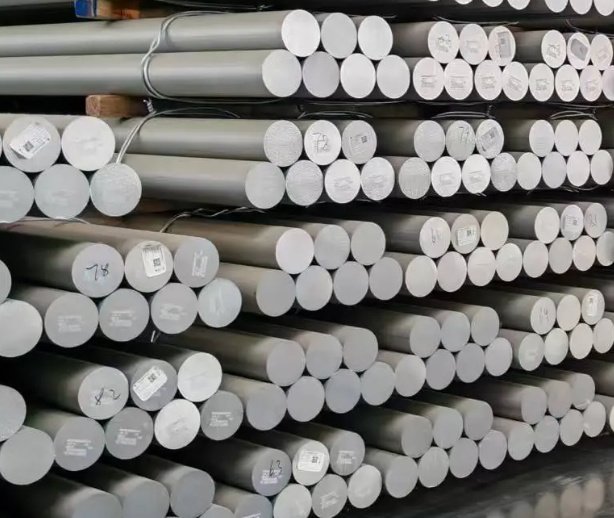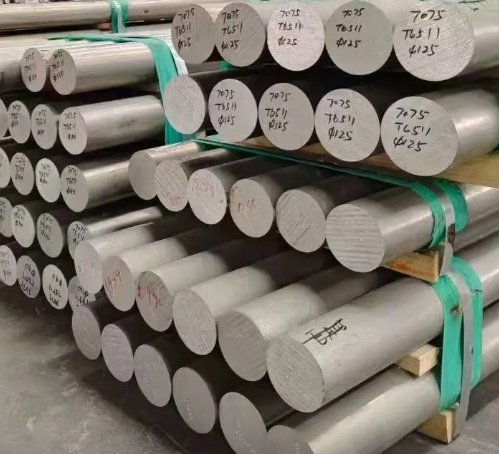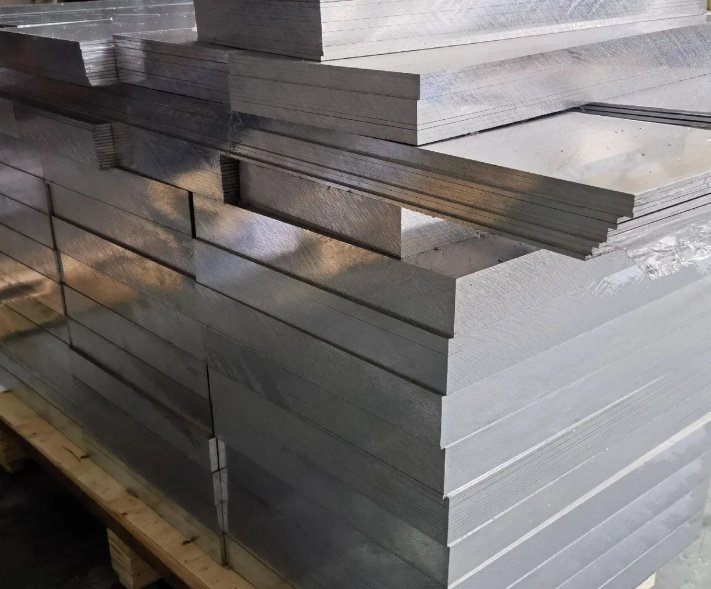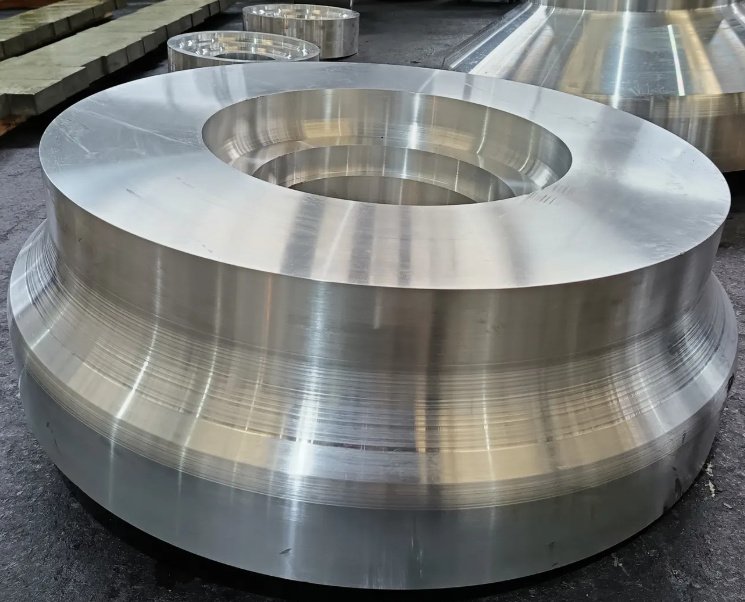
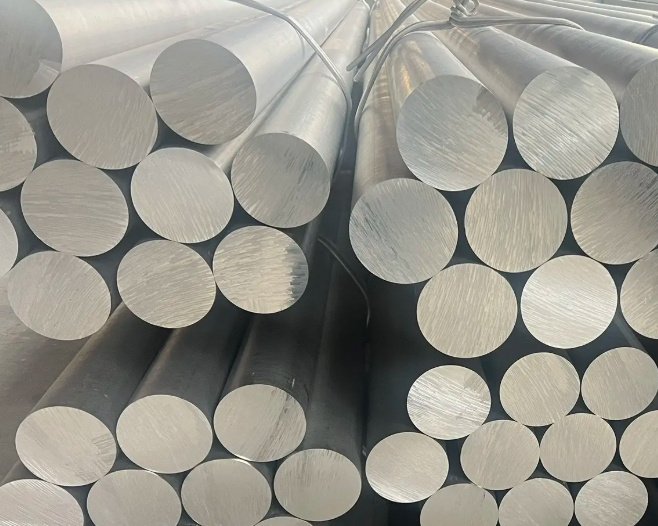
Aluminum 8090 is a lithium-containing aluminum alloy developed for applications where low density, high stiffness-to-weight ratio and aerospace-grade performance are more important than commodity availability. It belongs to the aluminum-lithium family and is commonly considered for aircraft structures, cryogenic hardware, space components and high-performance lightweight assemblies.
Unlike conventional high-strength aluminum alloys such as 2024, 7075 and 7050, Aluminum 8090 gains part of its value from lithium addition. Lithium reduces density and increases elastic modulus, which can produce measurable weight savings when the design is stiffness-controlled. However, it also introduces engineering concerns such as anisotropy, fracture toughness sensitivity, forming limitations and stricter process control.
What Is Aluminum 8090?
Aluminum 8090 is an aluminum-lithium-copper-magnesium-zirconium alloy. It is typically used in wrought product forms such as plate, sheet, extrusions and forgings, depending on mill capability and specification requirements. Its composition is designed to achieve reduced density, increased stiffness and precipitation strengthening after controlled heat treatment.
| Element | Typical Role in Aluminum 8090 | Common Approximate Range by Weight |
|---|---|---|
| Lithium | Reduces density and increases elastic modulus | About 2.2% to 2.7% |
| Copper | Supports precipitation strengthening | About 1.0% to 1.6% |
| Magnesium | Improves strength response and contributes to hardening | About 0.6% to 1.3% |
| Zirconium | Refines grain structure and improves recrystallization resistance | About 0.04% to 0.16% |
| Aluminum | Base metal | Balance |
Exact chemical limits, mechanical properties and inspection rules must be confirmed against the applicable aerospace material specification, purchase order and mill certificate. For critical structures, designers should use certified data for the exact product form, thickness, temper and grain direction.
Key Properties of Aluminum 8090
The main reason engineers evaluate Aluminum 8090 is its combination of low density and high modulus. Compared with many conventional aluminum aerospace alloys, it can provide a lower structural mass for panels, ribs, frames, stringers and other parts where stiffness is a governing design condition.
| Property | Typical Engineering Range | Design Significance |
|---|---|---|
| Density | About 2.54 to 2.57 g/cm³ | Roughly 8% to 10% lower than many 2xxx and 7xxx aluminum alloys |
| Elastic modulus | About 76 to 79 GPa | Higher stiffness than typical 2024 or 7075 aluminum |
| Ultimate tensile strength | Commonly about 430 to 520 MPa, depending on product and temper | Suitable for high-performance lightweight structures |
| Yield strength | Commonly about 360 to 480 MPa, depending on temper and direction | Important for static strength and permanent deformation limits |
| Fracture toughness | Often lower or more direction-sensitive than mature damage-tolerant alloys | Requires careful review for fail-safe and fatigue-critical structures |
| Corrosion behavior | Requires appropriate temper, surface protection and environment review | Not a “fit and forget” substitute for corrosion-resistant grades |
Important note: published values for aluminum-lithium alloys vary significantly with plate thickness, rolling direction, aging condition and test method. Longitudinal, transverse and short-transverse data should not be treated as interchangeable.
Aluminum 8090 vs 2024, 7075 and 7050
A practical specification decision usually compares Aluminum 8090 with established aerospace alloys. The best choice depends on whether the component is stiffness-controlled, strength-controlled, fatigue-controlled, corrosion-controlled or cost-controlled.
| Alloy | Density | Elastic Modulus | Strength Profile | Typical Advantage | Common Limitation |
|---|---|---|---|---|---|
| Aluminum 8090 | About 2.55 g/cm³ | About 76 to 79 GPa | High, product-form dependent | Low density and high stiffness-to-weight ratio | Availability, anisotropy and qualification complexity |
| 2024-T3 | About 2.78 g/cm³ | About 73 GPa | Good static strength and fatigue performance | Proven aircraft skin and structural alloy | Corrosion protection usually required |
| 7075-T6 | About 2.81 g/cm³ | About 72 GPa | Very high strength | Excellent strength-to-weight ratio for many parts | Stress corrosion cracking sensitivity in some tempers |
| 7050-T7451 | About 2.83 g/cm³ | About 72 GPa | High strength with better toughness and SCC resistance than 7075-T6 | Thick plate, bulkheads, frames and critical aerospace structures | Higher density than aluminum-lithium alternatives |
The clearest advantage of Aluminum 8090 appears when weight reduction is driven by stiffness rather than only by yield strength. In a purely strength-controlled component, 7075 or 7050 may still be more efficient, easier to source and easier to qualify.
Engineering Weight-Saving Example
Consider a simplified aircraft panel originally made from 2024-T3 with a structural mass of 100 kg. If the redesign is mainly controlled by axial stiffness, a first-order comparison can use density and elastic modulus:
- 2024-T3 density: approximately 2.78 g/cm³
- 2024-T3 modulus: approximately 73 GPa
- Aluminum 8090 density: approximately 2.55 g/cm³
- Aluminum 8090 modulus: approximately 78 GPa
For an equal axial stiffness estimate, the mass ratio can be approximated as:
Mass ratio ≈ density ratio × modulus ratio = 2.55 / 2.78 × 73 / 78 ≈ 0.86
This suggests a theoretical mass reduction of about 14% before accounting for joints, fasteners, minimum gauge limits, manufacturing constraints, corrosion protection and certification margins. For bending-stiffness-controlled skins, the practical saving may be closer to 8% to 12%, depending on geometry and buckling requirements.
In real engineering programs, coupon testing and finite element validation are essential because aluminum-lithium alloys can show direction-dependent behavior. A design that looks efficient in longitudinal tensile data may not satisfy short-transverse fracture toughness, bearing strength or fatigue crack growth requirements.
Why theoretical weight savings may not fully appear in production
Production parts often include machining allowance, corrosion protection, fastener edge-distance requirements, inspection access, repair rules and minimum thickness restrictions. These factors reduce the difference between calculated material efficiency and delivered assembly weight.
Processing, Heat Treatment and Machining
Aluminum 8090 is not usually selected only for raw material properties. Its performance depends heavily on thermomechanical processing, controlled aging and careful fabrication. Engineers and buyers should treat processing route as part of the specification, not as a secondary purchasing detail.
Heat Treatment and Temper Selection
Aluminum 8090 is commonly used in aged tempers designed to produce a balance of strength, stiffness, toughness and dimensional stability. Heat treatment may include solution treatment, quenching, stretching or cold work, followed by artificial aging. The exact temper designation and process window should be tied to the governing material specification.
Over-aging or improper quenching can reduce strength or alter toughness. Under-aging may create unstable dimensions or insufficient mechanical performance. For aerospace use, heat treatment records and traceability are normally required.
Forming and Joining
Formability depends on sheet thickness, temper and bend direction. Tight bend radii should be validated by trial forming, especially when the part includes flanges, joggles or local thinning. Welding is possible in some aluminum-lithium systems, but structural joining is often performed with fasteners, bonding or hybrid joining to preserve predictable properties and inspection reliability.
Machining Behavior
Machining Aluminum 8090 requires attention to distortion control, tool sharpness and heat management. The alloy can be machined with carbide tools, high positive rake geometry and stable fixturing. Because aerospace parts often remove a large percentage of billet or plate stock, residual stress management is a major factor.
| Machining Factor | Recommended Engineering Practice |
|---|---|
| Tooling | Use sharp carbide cutters, polished flutes and geometries designed for aluminum |
| Cutting speed | Initial milling trials often start around 250 to 600 m/min, then optimize by tool and setup |
| Feed per tooth | Typical starting range: about 0.05 to 0.25 mm/tooth for milling, depending on cutter diameter and rigidity |
| Coolant | Use flood coolant, mist or controlled lubrication to manage heat and chip evacuation |
| Distortion control | Use symmetrical roughing, intermediate stress relief where specified and stable fixturing |
| Chip and dust control | Maintain good housekeeping; fine aluminum-lithium dust should be handled with appropriate safety controls |
Machining note for thin-wall aerospace components
For pocketed ribs, frames and monolithic panels, remove material in balanced passes from both sides when possible. Avoid leaving thin webs unsupported during heavy roughing. If dimensional tolerance is critical, use a rough-machine, stabilize and finish-machine sequence rather than attempting final tolerance in one operation.
Procurement and Quality Control Considerations
Buyers should not purchase Aluminum 8090 only by alloy name. The purchase order should define product form, temper, thickness, dimensional tolerance, specification revision, inspection level and documentation requirements. This is especially important because aluminum-lithium alloys may have fewer suppliers and longer lead times than standard 2xxx or 7xxx alloys.
For engineering procurement, the minimum acceptable documentation should include chemical analysis, mechanical test results, heat lot traceability and applicable ultrasonic or nondestructive inspection records. If the part is flight-critical, additional fracture toughness, fatigue or corrosion data may be required by the design authority.
| Buyer Checkpoint | Why It Matters |
|---|---|
| Certified material test report | Confirms alloy chemistry, temper and mechanical properties |
| Grain direction marking | Supports correct machining orientation and structural testing correlation |
| Thickness and flatness tolerance | Reduces machining allowance and improves yield |
| Ultrasonic inspection | Helps detect internal discontinuities in plate or billet |
| Specification compliance | Prevents substitution with non-equivalent aluminum-lithium material |
| Lead time and minimum order quantity | Influences program cost, prototype planning and spare-part strategy |
Documents commonly requested by aerospace buyers
Common documentation includes mill test certificate, heat treatment record, chemical composition report, tensile test report by direction, nondestructive inspection certificate, dimensional inspection report, country of origin and full lot traceability. Requirements vary by program and governing specification.
Applications of Aluminum 8090
Aluminum 8090 is most relevant where weight reduction has direct economic or performance value. It is not normally used as a low-cost general-purpose aluminum alloy. Typical application areas include:
- Aircraft skins, stringers, frames and stiffened panels
- Helicopter and aerospace structural components
- Spacecraft and launch vehicle parts where low mass is critical
- Cryogenic tanks or structures requiring favorable stiffness-to-weight behavior
- High-performance machined components with strict mass targets
- Experimental or specialized transportation structures
Its use is strongest when an engineering team can justify the additional qualification effort through measurable weight saving, improved payload, increased range or better structural efficiency.
Design Limits and Risks
Aluminum 8090 has advantages, but it should not be treated as a direct drop-in replacement for 2024, 7075 or 7050. The following issues need to be evaluated during design and qualification:
- Anisotropy: mechanical properties may vary significantly with rolling or extrusion direction.
- Fracture toughness: short-transverse toughness can control thick-section design.
- Fatigue behavior: crack initiation and crack growth must be validated under representative loading.
- Corrosion protection: surface treatment, sealants, primers or cladding strategy may be necessary.
- Manufacturing repeatability: heat treatment, forming and machining must be controlled tightly.
- Supply chain: availability may be more limited than standard aerospace aluminum grades.
Designers should also consider repairability. If an aircraft or space structure needs field repair, the maintenance organization must have approved procedures, compatible material and validated inspection methods.
When to Specify Aluminum 8090
Aluminum 8090 is a strong candidate when the component is weight-sensitive, stiffness-controlled and supported by an engineering team capable of material qualification. It is less attractive when low cost, wide availability, simple forming or mature repair procedures are the top priorities.
| Specify Aluminum 8090 When | Consider Another Alloy When |
|---|---|
| The design rewards lower density and higher modulus | The part is mainly strength-controlled and 7075 or 7050 meets the requirement |
| Weight saving can justify material and qualification cost | Cost, lead time and standard availability are dominant |
| Testing can be performed by direction and product form | The design depends on generic handbook values only |
| Machining and inspection processes are tightly controlled | The supplier base lacks experience with aluminum-lithium alloys |
Aluminum 8090 is best viewed as a specialist aerospace lightweighting material rather than a universal high-strength aluminum substitute. Its value is highest when density reduction, stiffness improvement and validated structural performance combine to produce a measurable system-level benefit.