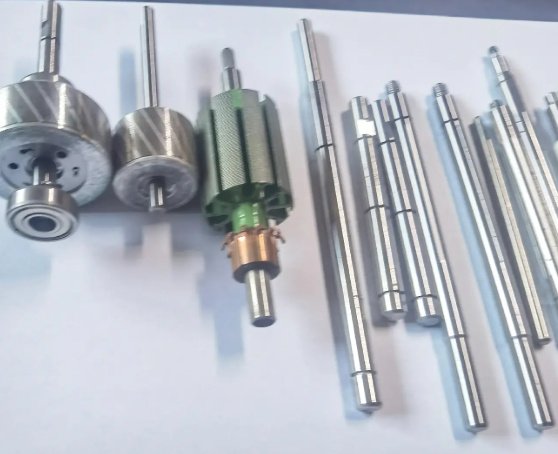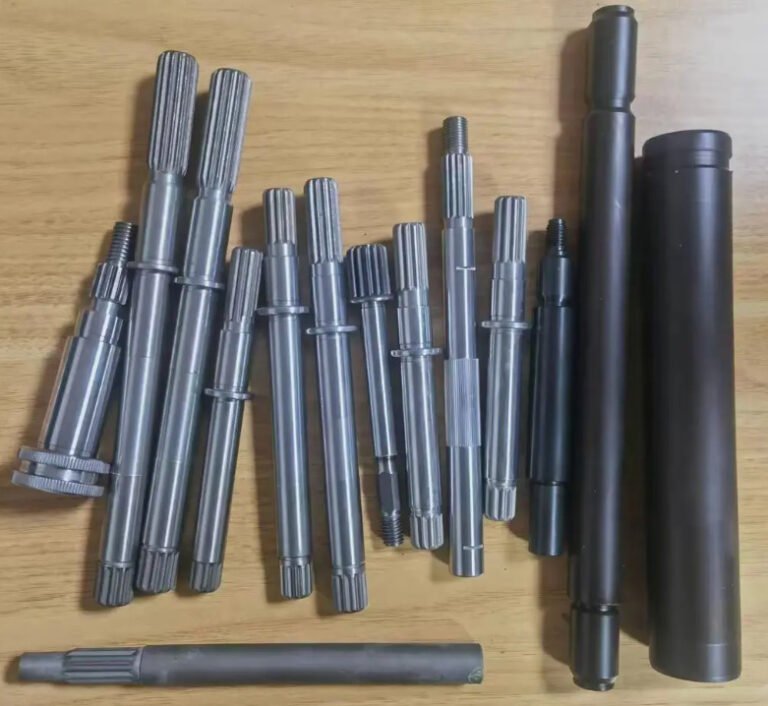
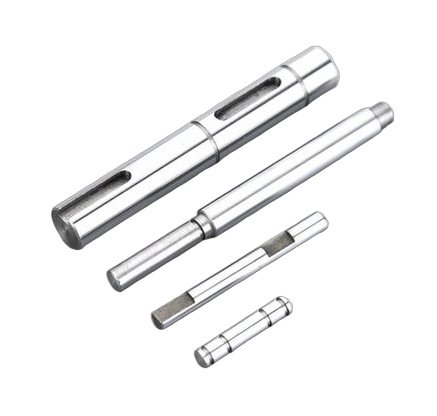
A linear shaft is a precision cylindrical guide rail used with linear bearings, ball bushings, slide blocks and automation modules to support smooth, repeatable straight-line motion. It is also known as a linear motion shaft, precision shaft, guide shaft, bearing shaft, optical shaft, round rail shaft or hardened ground shaft.
In industrial equipment, the shaft is not only a mechanical support component. Its material, hardness, diameter tolerance, surface finish, straightness and machining accuracy directly affect bearing life, positioning accuracy, vibration, noise and maintenance frequency.
What Is a Linear Shaft Used For?
Linear shafts are widely used where guided linear movement is required but a compact, economical and easy-to-install round rail solution is preferred over profiled linear guideways.
- Automation equipment and pick-and-place systems
- Packaging machinery, labeling machines and filling lines
- 3D printers, CNC routers and laser engraving machines
- Medical devices, laboratory instruments and inspection systems
- Robotics, sliding doors, textile machinery and food processing equipment
- Fixture slides, camera sliders, measuring machines and light-duty gantries
A typical linear shaft works together with linear ball bearings, shaft supports, pillow blocks, end supports, aluminum housings, timing belt modules or lead screw assemblies.
Linear Shaft Types
Selecting the correct shaft type depends on load, environment, corrosion resistance, cost target and whether additional machining is required.
| Type | Main Feature | Typical Application |
|---|---|---|
| Hardened and ground linear shaft | High surface hardness and accurate diameter tolerance | General automation, linear bearings, machine slides |
| Chrome-plated linear shaft | Improved corrosion resistance and lower surface friction | Packaging, printing, light outdoor equipment |
| Stainless steel linear shaft | Good corrosion resistance in humid or clean environments | Medical, food machinery, laboratory equipment |
| Hollow linear shaft | Lower weight with internal cable or air passage possibility | Lightweight gantries, robotics, special machines |
| Supported linear shaft | Shaft mounted on an aluminum support rail | Long stroke systems requiring better rigidity |
| Custom machined linear shaft | Threaded ends, flats, holes, grooves, keyways or shoulders | OEM assemblies and equipment-specific installation |
Common Materials and Heat Treatment
Linear shafts are commonly manufactured from bearing steel, carbon steel, alloy steel or stainless steel. For many high-precision motion systems, GCr15 / 52100 bearing steel is selected because it offers high hardness, good wear resistance and stable grinding performance after heat treatment.
| Material | Equivalent / Standard Reference | Typical Hardness | Key Advantage |
|---|---|---|---|
| GCr15 | AISI 52100 | HRC 58-64 | High wear resistance for ball bearing contact |
| 45# steel | AISI 1045 | HRC 50-60 after induction hardening | Cost-effective for general machinery |
| SUS440C | AISI 440C | HRC 56-60 | Corrosion resistance with high hardness |
| SUS304 | AISI 304 | Usually not hardened to bearing-shaft level | Good corrosion resistance for low-load motion |
| 42CrMo | AISI 4140 | Application dependent | Higher toughness for heavy-duty custom shafts |
For shafts used with recirculating ball bushings, the surface is typically induction hardened or through hardened. A hardened surface reduces indentation, pitting and premature bearing wear under repeated rolling contact.
Key Specifications for Linear Shaft Selection
The most important specifications are diameter, length, tolerance, hardness, roughness, straightness and end machining. For bearing compatibility, diameter tolerance is often more critical than nominal diameter alone.
| Specification | Common Range | Engineering Meaning |
|---|---|---|
| Diameter | 3 mm to 100 mm, larger sizes available | Determines load capacity and bearing compatibility |
| Length | Cut-to-length or standard stock length | Affects stiffness, deflection and installation space |
| Diameter tolerance | h6, g6, h7 or custom | Controls bearing clearance and sliding smoothness |
| Surface roughness | Ra 0.2-0.8 µm typical | Influences friction, noise and bearing life |
| Hardness | HRC 50-64 depending on material | Improves resistance to wear and brinelling |
| Straightness | Commonly 0.05-0.10 mm/1000 mm | Reduces binding and uneven bearing load |
For high-precision linear bearing applications, a shaft tolerance such as h6 is commonly used to achieve predictable clearance and stable motion. If the shaft is too large, the bearing may bind; if too small, radial play, vibration and positioning error can increase.
Diameter, Load and Deflection Considerations
Linear shaft diameter should be selected according to stroke length, load direction, support method and acceptable deflection. Long unsupported round shafts can bend under load, even when the surface hardness and diameter tolerance are excellent.
As a practical engineering example, a 20 mm diameter unsupported steel shaft over a 1000 mm span can show noticeable mid-span deflection under a concentrated load. Increasing the shaft diameter to 25 mm can significantly reduce deflection because bending stiffness rises with the fourth power of diameter. In many machine designs, moving from 20 mm to 25 mm may reduce deflection by approximately 59% under comparable conditions.
For long strokes or higher loads, supported linear shafts, dual-shaft arrangements, shorter bearing spacing or profiled linear guide rails may be more appropriate.
When should a supported linear shaft be used?
A supported linear shaft is recommended when the shaft span is long, the moving load is high, or deflection affects positioning accuracy. The aluminum support rail increases rigidity along the full length, making it suitable for gantry axes, sliding tables and automation modules.
Surface Finish, Hardness and Bearing Life
Linear ball bearings require a hard and smooth running surface. Poor surface finish can increase rolling resistance and wear, while insufficient hardness can cause dents or raceway damage. A ground and polished surface with Ra 0.2-0.4 µm is often used for precision linear motion.
Surface hardness is especially important under repeated cycles. If the shaft is too soft, the rolling elements of the linear bearing may create micro-indentations. These indentations can lead to vibration, noise, stick-slip motion and reduced service life.
- Use hardened bearing steel shafts for high-cycle linear bearing systems.
- Use stainless shafts where corrosion resistance is more important than maximum load capacity.
- Use chrome-plated shafts when moderate corrosion protection and low friction are required.
- Use hollow shafts when weight reduction or internal routing is part of the design.
Machining Options for Linear Shafts
Many OEM applications require more than a cut-to-length shaft. Secondary machining allows the shaft to be directly integrated into assemblies without additional adapters.
| Machining Feature | Purpose | Common Requirement |
|---|---|---|
| Cutting and chamfering | Safe handling and easy installation | Deburred ends, 0.5 x 45° or custom chamfer |
| End threading | Mounting with bolts or tensioning | Internal or external metric thread |
| Radial holes | Pinning, locking or assembly positioning | Through holes, tapped holes or counterbored holes |
| Flats | Anti-rotation or set screw contact | Milled flat with specified length and depth |
| Keyways | Torque transmission or guided orientation | Broached or milled according to drawing |
| Grooves | Circlip, sealing or positioning feature | Width, depth and edge radius controlled |
| Steps and shoulders | Locating bearings, pulleys or collars | Concentric turning and grinding as required |
After machining hardened shafts, attention must be paid to burr removal, heat-affected zones, concentricity and surface damage. For high-accuracy parts, grinding after turning or precision cylindrical grinding may be necessary.
Can a hardened linear shaft be drilled or threaded?
Yes, but the process depends on material and hardness depth. Holes or threads are preferably machined before final hardening when possible. If machining is required after hardening, carbide tooling, EDM, grinding or local annealing may be considered depending on the drawing and tolerance requirements.
Typical Tolerances and Quality Inspection
A reliable linear shaft should be inspected not only by size but also by surface and geometry. For precision assemblies, straightness of 0.05 mm/1000 mm or better may be specified, especially when multiple shafts must remain parallel.
- Diameter measurement with micrometer or air gauge
- Roundness and cylindricity checks for precision grades
- Surface roughness testing with a profilometer
- Hardness testing by Rockwell or equivalent method
- Straightness inspection using V-blocks, dial indicators or optical methods
- Visual inspection for scratches, rust, dents and grinding burns
- Thread, hole and chamfer verification for custom-machined shafts
For export or OEM projects, inspection data can include diameter records, hardness values, straightness reports, material certificates and surface treatment documentation.
Engineering Problems Solved by Correct Shaft Selection
Many linear motion issues are caused by incorrect shaft selection or insufficient installation accuracy rather than bearing failure alone.
| Problem | Likely Cause | Recommended Check |
|---|---|---|
| Linear bearing feels tight | Shaft diameter too large, misalignment, poor parallelism | Measure shaft tolerance and support alignment |
| Excessive play or vibration | Shaft diameter too small or bearing clearance too large | Confirm h6/g6 tolerance and bearing class |
| Short bearing life | Low hardness, rough surface, contamination or overload | Check hardness, roughness and lubrication |
| Uneven motion along stroke | Shaft bending, poor straightness or mounting distortion | Inspect straightness and support spacing |
| Rust or surface staining | Material or coating unsuitable for environment | Consider stainless steel or chrome plating |
In one typical packaging-machine retrofit, replacing non-hardened guide rods with hardened ground shafts reduced visible surface wear after 1 million cycles and improved carriage repeatability from approximately ±0.12 mm to ±0.04 mm when combined with proper bearing alignment and lubrication.
How to Specify a Linear Shaft for Purchasing
Clear purchasing data helps avoid mismatched bearings, installation delays and additional machining costs. Buyers and engineers should define the shaft by drawing or by a complete specification list.
- Nominal diameter and total length
- Material grade and heat treatment requirement
- Hardness range and hardened depth if required
- Diameter tolerance, such as h6, g6 or custom tolerance
- Surface roughness and coating requirement
- Straightness tolerance and roundness requirement
- End machining, holes, threads, flats, keyways or grooves
- Quantity, packaging method and anti-rust protection
- Required documents such as material certificate or inspection report
What information is needed for a custom linear shaft drawing?
A complete drawing should include diameter, length, tolerances, material, hardness, surface finish, coating, hole positions, thread specifications, chamfers, datum references and quantity. If the shaft works with a specific linear bearing, the bearing model should also be provided.
Packaging, Handling and Storage
Precision linear shafts must be protected from scratches, bending and corrosion during transportation and storage. Long shafts should be packed with adequate support to prevent impact deformation. Ground surfaces are usually coated with anti-rust oil and wrapped with protective paper, plastic sleeves or tubes.
- Keep shafts dry and away from corrosive vapor.
- Do not place heavy objects on unsupported long shafts.
- Use gloves when handling polished or chrome-plated surfaces.
- Clean the shaft before assembly to remove oil, dust and abrasive particles.
- Check straightness and surface condition before installation in precision systems.
Linear Shaft Compared with Profiled Linear Guide Rail
A round linear shaft is often easier to install, lower in cost and suitable for many moderate-load applications. A profiled linear guide rail provides higher rigidity, compact load capacity and better moment resistance, but usually requires more accurate mounting surfaces.
| Comparison Item | Linear Shaft | Profiled Linear Guide Rail |
|---|---|---|
| Cost | Usually lower | Usually higher |
| Installation | Simple with shaft supports or end supports | Requires accurate mounting surface |
| Load capacity | Good for light to medium loads | Higher load and moment capacity |
| Rigidity | Depends strongly on shaft diameter and support span | High rigidity in compact size |
| Maintenance | Easy bearing replacement | Requires rail and block compatibility |
For cost-sensitive automation and long simple strokes, linear shafts remain a practical solution. For compact high-load axes, high-speed machining centers or high-moment robotic applications, profiled linear guide rails may be the better choice.
Summary
A linear shaft is a critical component in round-rail linear motion systems. The best shaft is not simply the lowest-cost rod with the correct diameter; it must match the bearing, load, environment, tolerance and required service life. By specifying the correct material, hardness, surface finish, straightness and machining details, engineers can reduce friction, improve accuracy and extend the operating life of automation equipment.