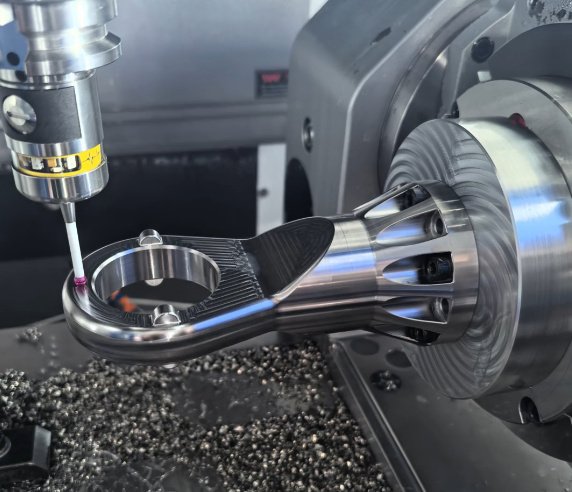
Precision metal machining is no longer just about cutting metal to size. For aerospace brackets, medical implants, semiconductor tooling, robotic joints, hydraulic components, EV powertrain parts, and optical hardware, buyers and engineers need repeatable accuracy, verified tolerances, material traceability, stable surface finishes, and scalable production control.
What Is Precision Metal Machining?
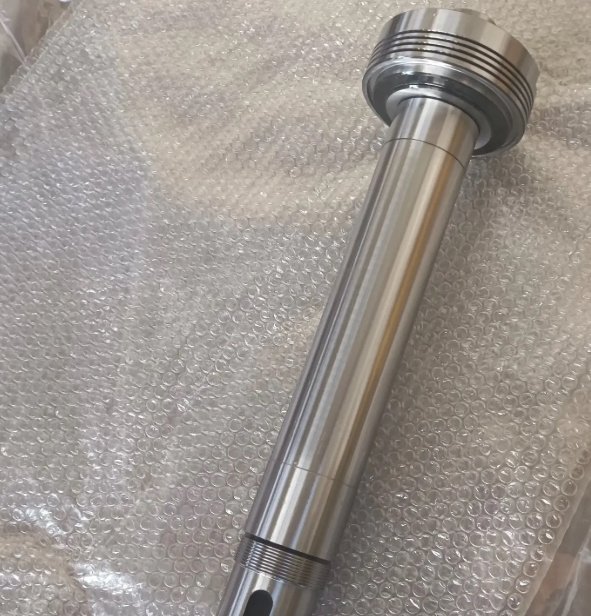
Precision metal machining is the controlled removal of material from metal workpieces to produce components with tight dimensional tolerances, defined geometry, and application-specific surface requirements. It commonly includes CNC milling, CNC turning, wire EDM, sinker EDM, grinding, honing, lapping, drilling, boring, threading, reaming, and finishing operations.
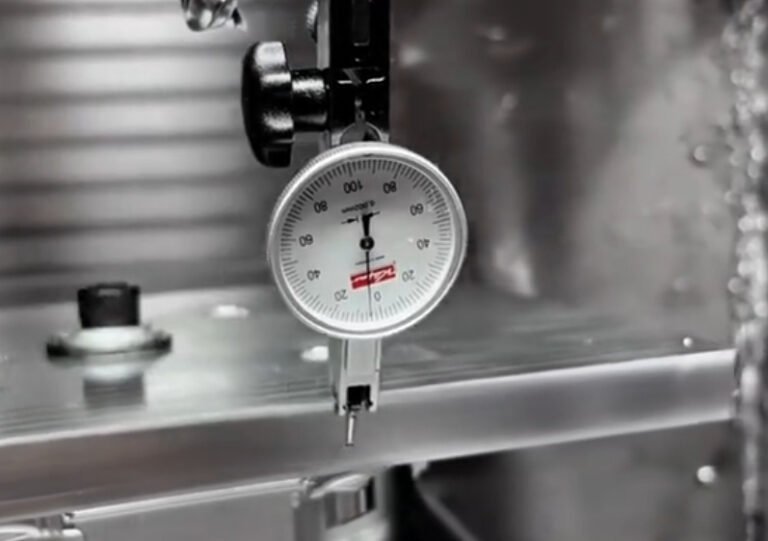
In production environments, precision metal machining usually means more than achieving a tight tolerance once. It means maintaining repeatability across batches, controlling tool wear, validating dimensions through inspection, and documenting process capability using measurement systems such as CMM, optical inspection, surface roughness testing, hardness testing, and first article inspection.
Typical Precision Machining Capabilities
- Common tolerances: ±0.005 mm to ±0.025 mm for critical features, depending on geometry, material, and process.
- Surface roughness: Ra 0.8–3.2 μm for standard CNC machining; Ra 0.05–0.4 μm possible with grinding, lapping, or polishing.
- Materials: aluminum, stainless steel, carbon steel, tool steel, titanium, brass, copper, Inconel, Kovar, tungsten alloys, and engineering alloys.
- Industries: aerospace, medical devices, defense, automotive, energy, semiconductor, robotics, optics, fluid control, and industrial automation.
Engineering note: why the same tolerance can cost very different amounts
A ±0.01 mm tolerance on a short aluminum spacer may be straightforward, while the same tolerance on a thin-wall titanium housing may require stress-relief, custom fixturing, staged roughing and finishing, thermal stabilization, and 100% inspection. The cost driver is not the number printed on the drawing alone; it is the combination of tolerance, material behavior, part geometry, datum structure, and inspection difficulty.
Precision Metal Machining Solutions at a Glance
The best machining method depends on part geometry, production volume, material, tolerance stack-up, and functional requirements. The table below summarizes the seven solutions covered in this article.
| Solution | Best For | Typical Tolerance Range | Key Advantage | Common Buyer Concern |
|---|---|---|---|---|
| High-Precision CNC Milling | Prismatic parts, housings, plates, brackets | ±0.01–0.05 mm | Versatile geometry and fast iteration | Fixture repeatability and flatness control |
| CNC Turning and Swiss Machining | Shafts, pins, bushings, connectors, fasteners | ±0.005–0.025 mm | Excellent roundness and concentricity | Burrs, thread quality, and long slender part deflection |
| 5-Axis CNC Machining | Complex contours, impellers, medical implants | ±0.01–0.03 mm | Fewer setups and better geometric accuracy | Programming verification and machine calibration |
| EDM Machining | Hard metals, sharp internal corners, fine slots | ±0.003–0.015 mm | No cutting force and excellent detail | Recast layer and slower cycle time |
| Grinding and Lapping | Sealing surfaces, bearing seats, gauges | ±0.001–0.01 mm | Superior finish, flatness, and roundness | Added process cost and handling risk |
| Micro-Machining | Miniature parts, micro-holes, fine medical components | ±0.002–0.02 mm | Small features with controlled burrs | Tool breakage and inspection limitations |
| Hybrid Machining and Finishing | End-use parts needing coating, passivation, anodizing | Process-dependent | Manufacturing-to-inspection integration | Dimensional change after finishing |
1. High-Precision CNC Milling
CNC milling uses rotating cutting tools to remove material from a stationary or indexed workpiece. It is one of the most widely used precision metal machining services because it can produce pockets, slots, contours, threaded holes, flat datum surfaces, counterbores, and complex 3D profiles.
High-precision CNC milling is ideal for aluminum housings, stainless steel brackets, titanium plates, tooling components, heat sinks, manifolds, and custom machine parts. With stable fixturing and controlled toolpaths, CNC milled parts can reliably hold ±0.025 mm in production, while selected critical features may reach ±0.01 mm or tighter.
Where CNC Milling Delivers the Most Value
- Prototype-to-production parts requiring quick design changes.
- Parts with multiple flat faces, drilled holes, tapped holes, and milled pockets.
- Precision aluminum components that need anodizing, chromate conversion, or bead blasting.
- Stainless steel and titanium components requiring corrosion resistance and structural strength.
Real Engineering Problem: Flatness Drift in Thin Aluminum Plates
A common problem in CNC milling is distortion after material removal, especially in thin aluminum plates and aerospace-style light-weighted components. For example, a 6061-T6 aluminum plate measuring 320 mm × 180 mm × 8 mm may bow beyond 0.20 mm after aggressive pocketing.
A practical solution is staged roughing, stress-relief between operations, balanced material removal on both sides, vacuum or custom soft-jaw fixturing, and final skim cuts after thermal stabilization. In many production cases, this can reduce flatness variation from approximately 0.20 mm to below 0.05 mm without changing the material grade.
Buyer checkpoint for CNC milled parts
Ask whether the supplier controls datum sequencing, tool wear offsets, in-process probing, and final inspection. For critical parts, request a first article inspection report with actual measurements for all key dimensions, not only a certificate of conformance.
2. CNC Turning and Swiss-Type Machining
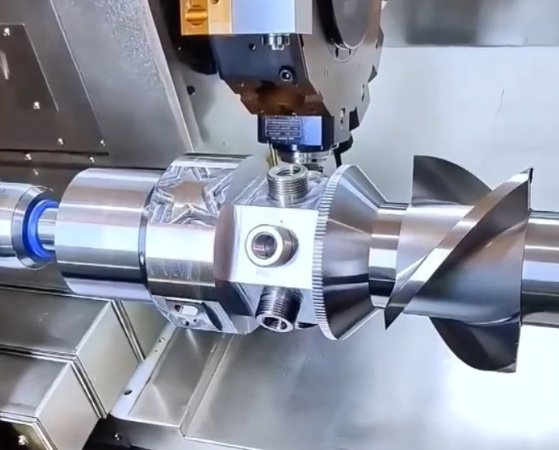
CNC turning is used to manufacture rotational metal components such as shafts, spacers, bushings, sleeves, nozzles, pins, fittings, couplings, connectors, and threaded parts. The workpiece rotates while cutting tools create outer diameters, inner diameters, grooves, tapers, chamfers, threads, and precision bores.
CNC turning and Swiss-type machining are especially valuable when roundness, concentricity, and high-volume repeatability matter. Swiss machining supports long, slender, and small-diameter parts by guiding the bar stock close to the cutting zone, reducing deflection and improving feature consistency.
Best Applications
- Medical pins, bone screws, dental components, and surgical instrument shafts.
- Hydraulic valve spools, aerospace fasteners, and precision bushings.
- Electrical connectors made from brass, copper alloys, stainless steel, or Kovar.
- Automotive and robotic transmission components requiring coaxial features.
Engineering Metrics to Watch
- Concentricity and runout: Often more important than linear tolerance for rotating components.
- Roundness: Critical for seals, bearings, and sliding fits.
- Surface finish: Shaft sealing areas may require Ra 0.2–0.8 μm depending on seal type.
- Burr control: Small cross-holes and thread starts need deburring without damaging edges.
For procurement teams, CNC turning is often cost-effective at scale because bar-fed lathes and Swiss machines can run automated cycles. However, cost estimates should account for secondary operations such as milling flats, cross-drilling, heat treatment, passivation, plating, and laser marking.
3. 5-Axis CNC Machining
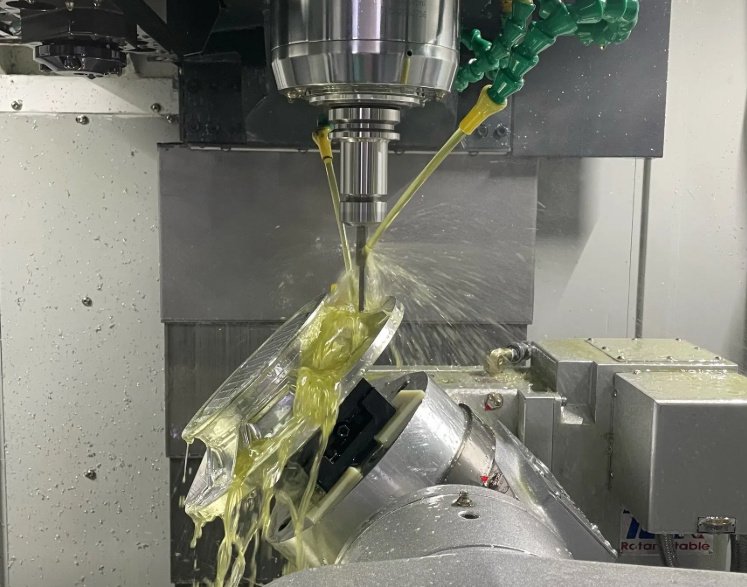
5-axis CNC machining moves the cutting tool or workpiece across five controlled axes, allowing the tool to approach the part from multiple angles in a single setup. This reduces repositioning error and enables complex shapes that are difficult or inefficient on 3-axis machines.
5-axis CNC machining is commonly used for aerospace structural components, turbine blades, impellers, orthopedic implants, optical mounts, high-performance racing components, and precision fixtures with compound angles.
Why 5-Axis Machining Improves Accuracy
Every time a part is removed, rotated, and re-clamped, dimensional uncertainty is introduced. A 3-axis process may require three to six setups for a complex component. A 5-axis strategy can reduce that to one or two setups, improving positional accuracy between features.
| Manufacturing Factor | 3-Axis Multi-Setup Process | 5-Axis Process |
|---|---|---|
| Number of setups | Often 3–6 | Often 1–2 |
| Risk of datum shift | Higher | Lower |
| Tool reach | May require long tools | Shorter, more rigid tools possible |
| Surface blending | Setup transition marks possible | Better continuous surface control |
Practical Use Case: Titanium Medical Implant
Titanium Ti-6Al-4V implants often include organic contours, undercuts, and highly controlled surface zones. A 5-axis approach can reduce setup-induced mismatch and improve surface continuity. In a production scenario, reducing setups from five to two may cut cumulative positional error by 30–60%, depending on fixture quality and datum strategy.
Engineering checkpoint for 5-axis projects
Verify that the supplier uses CAM simulation, collision checking, machine calibration, tool length compensation, and post-processor validation. For complex parts, a digital manufacturing review can prevent expensive scrap before the first part is cut.
4. EDM Machining for Hard Metals and Fine Features
Electrical discharge machining, or EDM, removes metal through controlled electrical sparks rather than mechanical cutting force. The two most common types are wire EDM and sinker EDM. Wire EDM uses a traveling wire electrode to cut profiles, slots, and fine contours. Sinker EDM uses a shaped electrode to create cavities, ribs, and complex internal geometries.
EDM machining is essential for hardened tool steels, carbide, titanium, Inconel, narrow slots, sharp internal corners, fine gear forms, extrusion dies, mold inserts, and delicate parts that would deform under cutting pressure.
When EDM Beats Conventional Cutting
- Material hardness is above what normal milling tools can efficiently handle.
- Internal corners are too sharp for end mill radius limitations.
- Part walls are too thin for conventional cutting forces.
- Fine slots, keyways, and micro profiles require excellent repeatability.
Important EDM Considerations
EDM can create a heat-affected zone or recast layer on the surface. For fatigue-critical aerospace or medical parts, the process plan may include skim cuts, polishing, chemical cleaning, or metallurgical verification. Wire EDM can hold tight tolerances, but speed decreases when requiring multiple skim passes and superior surface finish.
| EDM Requirement | Manufacturing Impact |
|---|---|
| Multiple skim cuts | Improves accuracy and finish, increases cycle time |
| Sharp internal profiles | Possible, but limited by wire diameter or electrode wear |
| Hardened materials | Excellent suitability; hardness has less effect than in milling |
| Fatigue-sensitive parts | May need recast layer control and surface validation |
5. Precision Grinding and Lapping
Precision grinding removes small amounts of metal using abrasive wheels. Lapping uses loose abrasive particles between a workpiece and a lapping plate to achieve very fine flatness and surface finish. These processes are typically used after milling or turning when dimensions, roundness, flatness, parallelism, or surface roughness must exceed standard CNC machining capability.
Precision grinding and lapping are widely used for sealing surfaces, bearing seats, gauge blocks, mold plates, valve components, hydraulic spools, ceramic-metal assemblies, and high-accuracy tooling.
Common Grinding Types
- Surface grinding: Produces flat and parallel surfaces.
- Cylindrical grinding: Controls outer diameter, roundness, and runout.
- Centerless grinding: Efficient for high-volume shafts, pins, and rods.
- Internal grinding: Finishes bores and internal bearing surfaces.
- Lapping: Achieves extremely fine flatness and surface finish on critical faces.
Typical Results
Standard CNC milling may deliver Ra 1.6–3.2 μm on many metals. Grinding can often achieve Ra 0.2–0.8 μm, while lapping can reach Ra 0.05–0.2 μm in controlled conditions. Flatness can be improved from 0.05 mm to 0.005 mm or better, depending on part size, material, and measurement method.
Buyer checkpoint for ground and lapped components
Clarify whether the drawing requires flatness, parallelism, perpendicularity, total indicated runout, or surface roughness. These are not interchangeable. A part can have an excellent surface finish but poor flatness, or good size but unacceptable runout.
6. Micro-Machining for Miniature Metal Components
Micro-machining produces extremely small metal features, often with cutting tools below 1 mm in diameter. It is used in medical devices, electronics, fiber-optic hardware, miniature fluidics, aerospace sensors, watch components, micro molds, and precision instrumentation.
Micro-machining requires high spindle speeds, low runout tooling, stable thermal control, optimized chip evacuation, and advanced inspection. At micro scale, burrs, tool deflection, vibration, and material grain structure can significantly affect quality.
Applications of Micro-Machining
- Micro-holes and precision nozzles in stainless steel or titanium.
- Miniature connector pins and contacts made from copper alloys.
- Microfluidic channels in aluminum or stainless steel plates.
- Miniature surgical instruments and implantable device components.
- Small mold inserts for electronics and optical components.
Manufacturing Challenges
In micro-machining, a 10 μm burr may be functionally significant. Tool runout of only a few microns can double effective chip load on one flute, causing premature tool breakage. This is why high-quality micro-machining often combines precision spindles, microscope-assisted setup, tool wear monitoring, and non-contact inspection.
| Micro-Machining Issue | Risk | Control Method |
|---|---|---|
| Tool breakage | Scrap, embedded fragments, inconsistent features | Short tools, optimized feed, tool life limits |
| Burr formation | Assembly failure or fluid flow disruption | Sharp tooling, controlled deburring, process validation |
| Inspection difficulty | False acceptance or false rejection | Optical metrology, high-magnification measurement, calibrated gauges |
| Heat buildup | Dimensional drift and surface damage | Coolant strategy, light cuts, thermal stabilization |
7. Hybrid Machining with Surface Finishing and Inspection
Many end-use precision metal parts are not complete after cutting. They require heat treatment, anodizing, passivation, electropolishing, nickel plating, black oxide, bead blasting, laser marking, chemical conversion coating, hardcoat anodizing, or protective packaging. Hybrid machining integrates these steps with dimensional planning and inspection.
Hybrid machining with finishing and inspection helps prevent a common manufacturing failure: parts that meet dimensions before finishing but fail after coating, plating, heat treatment, or polishing.
Why Finishing Must Be Planned Early
Finishing changes the part. Hardcoat anodizing can add thickness and alter hole sizes. Electropolishing can remove material from stainless steel surfaces. Heat treatment can cause distortion. Plating can build unevenly on edges and recesses. If the machining process does not compensate for these changes, final parts may fail assembly even if the machined dimensions were correct.
Examples of Finishing-Related Dimensional Effects
| Finishing Process | Typical Effect | Engineering Control |
|---|---|---|
| Hardcoat anodizing | Build-up and penetration on aluminum surfaces | Machine undersize or oversize based on coating thickness target |
| Passivation | Removes free iron; minimal dimensional change | Use for corrosion resistance without major size impact |
| Electropolishing | Removes microscopic peaks from stainless steel | Account for material removal on critical edges and holes |
| Heat treatment | Can distort thin or asymmetrical parts | Rough machine, heat treat, then finish machine or grind |
| Nickel plating | Adds coating thickness and corrosion resistance | Mask critical features or compensate dimensions before plating |
From a buyer’s perspective, an integrated machining supplier should understand not only cutting operations but also how finishing affects tolerances, masking, packaging, cosmetic acceptance criteria, salt spray performance, RoHS or REACH requirements, and documentation.
How to Choose the Right Precision Machining Solution
Selecting a precision metal machining solution should begin with function, not process preference. The drawing, material, tolerance scheme, inspection method, expected annual volume, lead time, and post-processing requirements should determine the route.
Decision Factors for Engineers and Buyers
- Geometry: Prismatic parts often suit milling; round parts suit turning; complex freeform parts may require 5-axis machining.
- Material: Aluminum is easier to machine; titanium, Inconel, hardened steel, and copper alloys require more specialized tooling and process control.
- Tolerance level: Standard CNC machining may be sufficient for ±0.05 mm; grinding, EDM, or lapping may be needed for micron-level requirements.
- Surface finish: Functional surfaces such as seals, sliding fits, and optical mounts may require grinding, polishing, or lapping.
- Production volume: Prototype machining prioritizes speed and flexibility; production machining prioritizes fixtures, cycle time, SPC, and repeatability.
- Inspection burden: Complex GD&T, true position, profile tolerance, and runout requirements may require CMM programming and custom gauges.
- Finishing: Coating thickness, masking, heat treatment, and corrosion resistance must be planned before machining is finalized.
Practical sourcing checklist
- Provide 2D drawings with GD&T, not only 3D CAD files.
- Identify critical-to-function dimensions and surfaces.
- State material grade, temper, heat treatment, and certification needs.
- Define surface roughness, cosmetic standards, and edge break requirements.
- Confirm whether tolerances apply before or after finishing.
- Request inspection reports for first articles and critical production lots.
- Clarify packaging requirements for scratch-sensitive or precision-ground surfaces.
Final Thoughts
The seven precision metal machining solutions covered here—high-precision CNC milling, CNC turning and Swiss machining, 5-axis CNC machining, EDM, grinding and lapping, micro-machining, and hybrid machining with finishing and inspection—solve different manufacturing problems.
For engineering teams, the best results come from matching process capability to functional requirements. For buyers, the safest supplier is not always the one quoting the lowest unit price, but the one that can control tolerances, material behavior, finishing effects, inspection data, and repeatability across the full production lifecycle.