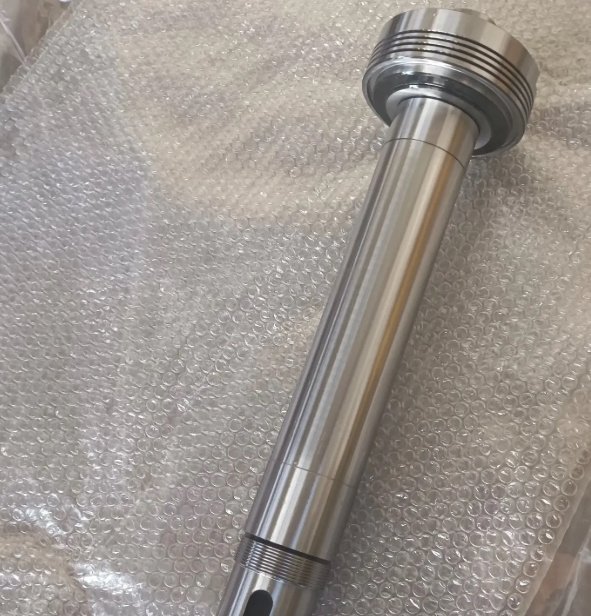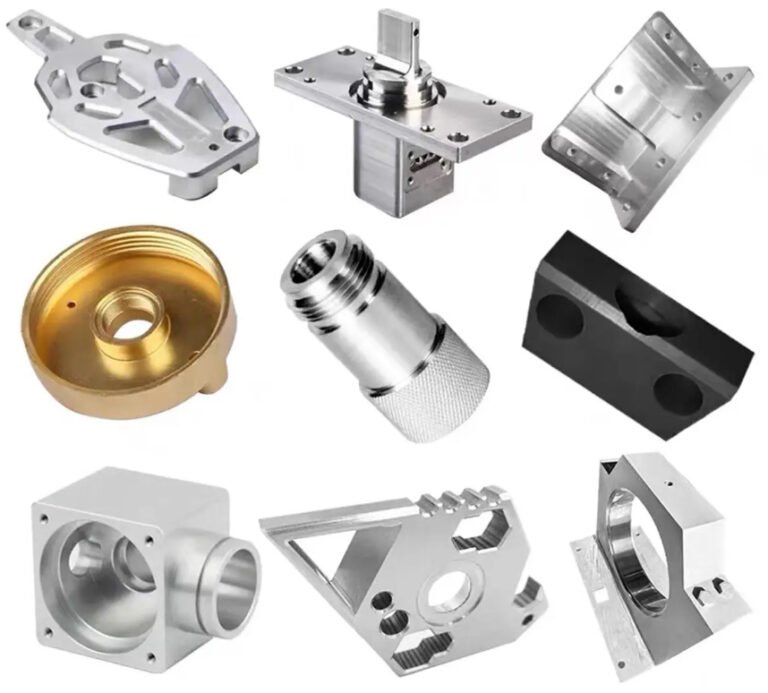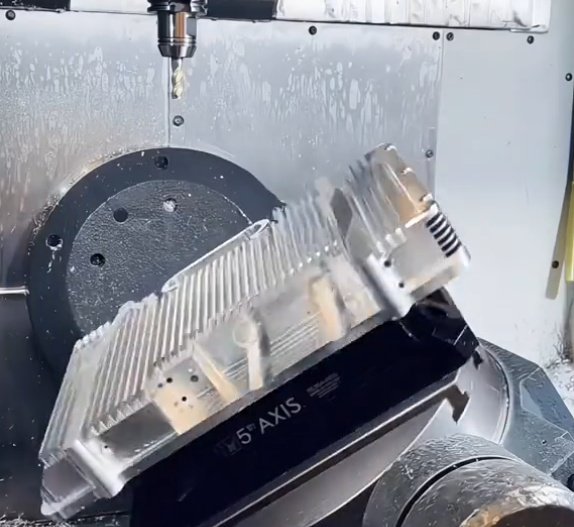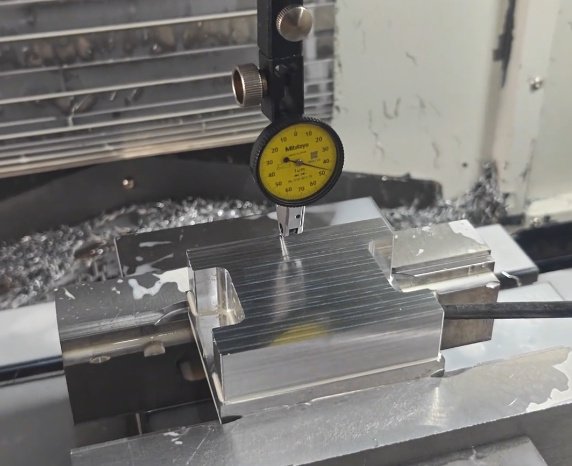
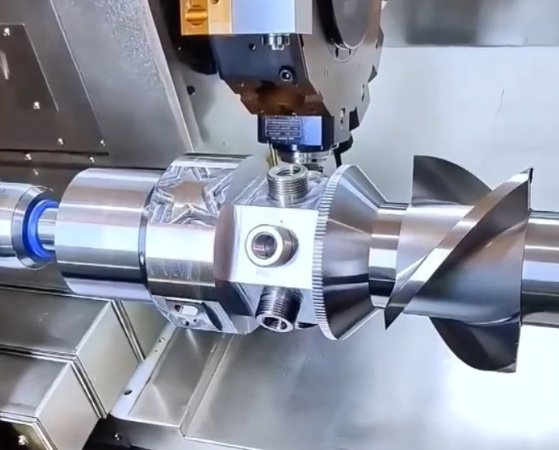
Precision metal machining is the controlled removal of material from metal workpieces to produce parts with defined geometry, surface finish, tolerances, and functional performance. This guide explains how precision metal machining services are specified, priced, inspected, and optimized for real-world manufacturing applications.
Whether the part is an aerospace bracket, a stainless steel medical component, an aluminum electronics housing, or a hardened steel tooling insert, machining quality depends on more than the CNC machine itself. Material selection, fixturing, toolpath strategy, datum structure, inspection planning, and drawing clarity all influence final accuracy and repeatability.
What Is Precision Metal Machining?
Precision metal machining refers to manufacturing processes that cut, drill, mill, turn, grind, bore, ream, tap, or finish metallic materials to meet engineered dimensional and surface requirements. It is commonly used when parts require tight tolerances, complex features, stable mechanical properties, and repeatable production.
In practical terms, precision machining is not simply “making a metal part.” It means controlling variation. A part may be considered precision-machined when its features, datums, flatness, concentricity, perpendicularity, surface roughness, and positional accuracy are verified against the engineering specification.
Common precision machining processes
- CNC milling: Produces pockets, slots, contours, profiles, flat surfaces, and complex 3-axis to 5-axis geometries.
- CNC turning: Produces shafts, bushings, pins, threaded parts, grooves, bores, and rotationally symmetrical components.
- Swiss machining: Used for small, slender, high-volume turned parts with excellent concentricity and repeatability.
- Wire EDM: Cuts hard metals and complex profiles using electrical discharge, often with minimal mechanical cutting force.
- Grinding: Achieves fine surface finish, high flatness, and tight tolerances on hardened metals.
- Drilling, reaming, and tapping: Produce accurate holes, threaded features, and precision-fit bores.
- Deburring and finishing: Removes sharp edges, improves appearance, and supports assembly or sealing performance.
When to Use Precision Metal Machining Services
Companies typically use precision machining when off-the-shelf parts cannot meet application requirements or when the part geometry must be controlled more tightly than casting, stamping, welding, or additive manufacturing can provide without secondary operations.
Typical use cases include prototypes that must behave like production parts, low-volume functional components, complex housings, tooling, fixtures, high-load mechanical parts, thermal management components, and safety-critical assemblies.
| Industry | Example Parts | Common Requirements |
|---|---|---|
| Aerospace | Brackets, actuator parts, structural fittings | Traceable material, tight GD&T, low weight, fatigue resistance |
| Medical devices | Surgical tools, implant trial components, instrument housings | Biocompatible alloys, burr control, cleanable surfaces |
| Robotics and automation | End-effectors, gear housings, precision shafts | Concentricity, bearing fits, alignment accuracy |
| Electronics | Heat sinks, enclosures, RF components | Flatness, thermal conductivity, cosmetic finish |
| Energy and industrial equipment | Valve bodies, couplings, manifolds, tooling inserts | Pressure integrity, corrosion resistance, wear resistance |
Custom Precision Metal Machining: From Drawing to Finished Part
Custom precision metal machining is used when a buyer or engineering team needs parts manufactured to a unique CAD model, technical drawing, material standard, or performance requirement. The workflow usually includes manufacturability review, process planning, programming, machining, in-process inspection, finishing, final inspection, and documentation.
Typical production workflow
- Requirement review: The supplier reviews CAD files, 2D drawings, tolerances, material specifications, finish requirements, and annual demand.
- DFM feedback: Engineers identify costly features, difficult tool access, excessive tolerances, thin walls, deep pockets, or ambiguous datums.
- Process planning: The shop selects machines, tooling, fixtures, inspection methods, and operation sequence.
- First article machining: A first-off part or first article sample is produced to verify the setup and part interpretation.
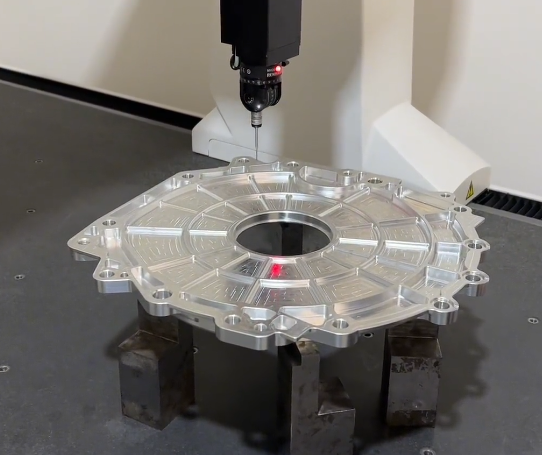
- Inspection: Critical dimensions are measured using calipers, micrometers, height gauges, bore gauges, optical systems, surface roughness testers, or CMMs.
- Production run: Operators monitor tool wear, offsets, coolant, chip evacuation, and feature capability.
- Finishing and packaging: Parts may be anodized, passivated, plated, heat treated, bead blasted, polished, laser marked, cleaned, and protected for shipment.
Engineering note: how DFM changes cost and lead time
A machined aluminum housing with 0.5 mm internal corner radii, deep 8:1 pocket depth-to-width ratio, and blanket ±0.01 mm tolerances may require specialty tooling, slower feeds, multiple setups, and extended inspection. Increasing internal radii to 1.5 mm, applying tight tolerances only to functional features, and adding a clear datum scheme can reduce machine time and inspection burden without reducing product performance.
Tolerances, GD&T, and Surface Finish
Tolerance requirements should match the function of the part. Overly tight tolerances increase cost because they require more stable machines, slower cutting parameters, more frequent inspection, additional finishing operations, controlled temperature, and sometimes grinding or lapping.
Many commercial machined parts can be produced with general tolerances around ±0.05 mm to ±0.13 mm, depending on feature size, material, geometry, and process. Tighter tolerances such as ±0.025 mm or ±0.01 mm may be achievable for selected features, but they should be specified only where necessary.
| Requirement | Typical Range | Manufacturing Impact |
|---|---|---|
| General CNC milling tolerance | ±0.05 mm to ±0.13 mm | Efficient for many functional and structural parts |
| Precision feature tolerance | ±0.01 mm to ±0.025 mm | May require stable setup, tool compensation, and enhanced inspection |
| Standard machined surface finish | Ra 1.6 to 3.2 µm | Common for visible or functional machined surfaces |
| Fine finish by machining or grinding | Ra 0.2 to 0.8 µm | Higher cost; often used for sealing, sliding, or bearing surfaces |
| Flatness or parallelism control | Application-specific | May require stress relief, grinding, or controlled clamping |
Engineering drawings should use recognized standards such as ASME Y14.5 for geometric dimensioning and tolerancing or ISO GPS standards where applicable. For general dimensional tolerances, ISO 2768 is commonly referenced when the drawing does not individually tolerance every feature.
Buyer checklist for tolerance review
- Identify which dimensions affect fit, function, sealing, alignment, load transfer, or safety.
- Avoid applying the tightest tolerance to every dimension unless the design truly requires it.
- Use datums that match how the part is assembled, measured, or functionally located.
- Confirm whether tolerance applies before or after coating, anodizing, plating, or heat treatment.
- Ask the supplier which features may need grinding, reaming, honing, or secondary inspection.
Material Selection for Precision Metal Machining
Material choice affects machinability, tool wear, achievable surface finish, dimensional stability, corrosion resistance, weight, strength, and total cost. A material that looks good on a datasheet may still be difficult to machine if it work-hardens, creates long stringy chips, contains abrasive alloying elements, or distorts after stress relief.
| Material | Advantages | Machining Considerations |
|---|---|---|
| Aluminum 6061 | Lightweight, economical, corrosion resistant, easy to machine | Good for housings, brackets, prototypes, and anodized parts |
| Aluminum 7075 | High strength-to-weight ratio | Used in aerospace and performance structures; corrosion protection may be needed |
| Stainless steel 304 | Good corrosion resistance and availability | Can work-harden; requires appropriate tooling and coolant strategy |
| Stainless steel 316 | Improved corrosion resistance, especially in marine or chemical environments | Often selected for medical, food, and harsh-environment components |
| Carbon steel 1018 | Cost-effective, weldable, suitable for general mechanical parts | May require coating or plating for corrosion protection |
| Alloy steel 4140 | High strength, toughness, and wear resistance after heat treatment | Machining condition and hardness should be specified clearly |
| Titanium Grade 5 | Excellent strength-to-weight ratio and corrosion resistance | Low thermal conductivity increases tool wear and machining cost |
| Brass C360 | Excellent machinability and good dimensional stability | Common for fittings, electrical parts, bushings, and decorative components |
| Copper C110 | High electrical and thermal conductivity | Soft and gummy; sharp tools and proper fixturing are important |
Machinability note for hard and high-temperature alloys
Inconel, hardened tool steels, titanium alloys, and some stainless steels can be machined accurately, but they often require slower cutting speeds, rigid setups, high-performance coatings, specialized coolant delivery, and more frequent tool changes. A quotation for these materials should consider tool consumption, cycle time, scrap risk, and inspection effort rather than raw material cost alone.
Quality Control and Inspection Methods
Reliable machining suppliers do not depend only on final inspection. They build quality into the process through controlled setup, documented work instructions, calibrated equipment, operator checks, tool-life monitoring, and traceable inspection records.
For critical work, ask whether the supplier can provide a first article inspection report, material certificate, certificate of conformity, heat treatment record, plating certificate, passivation certificate, or CMM report. If the project is regulated, relevant quality systems may include ISO 9001, ISO 13485, AS9100, IATF 16949, or customer-specific requirements.
Common inspection tools
- CMM inspection: Measures complex geometry, true position, profiles, flatness, and datum relationships.
- Optical measurement: Useful for small features, profiles, and non-contact inspection.
- Micrometers and bore gauges: Used for shafts, slots, bores, thickness, and precision fits.
- Thread gauges and plug gauges: Verify internal and external thread function.
- Surface roughness testers: Confirm Ra, Rz, or other surface texture requirements.
- Hardness testers: Verify heat-treated steel, tool steel, or wear-resistant components.
A capable supplier should understand process capability, not just one-time measurement. For production quantities, statistical process control can reveal whether a feature remains stable over time or is drifting due to tool wear, temperature change, fixturing movement, or material variation.
Cost Drivers in Precision Metal Machining
The price of a machined part is influenced by material cost, machine time, setup time, tooling, workholding, inspection, finishing, scrap risk, and production volume. Buyers often focus on the part size, but small parts can be expensive if they contain difficult tolerances, miniature features, complex setups, or demanding documentation.
| Cost Driver | Why It Matters | Optimization Option |
|---|---|---|
| Tight tolerances | Increase inspection, slower machining, and setup sensitivity | Apply tight tolerances only to functional interfaces |
| Deep pockets and thin walls | Cause vibration, deflection, and longer cycle times | Increase wall thickness or add radii where function allows |
| Multiple setups | Increase labor, alignment risk, and fixture complexity | Use 5-axis machining or redesign datum access when appropriate |
| Hard-to-machine material | Raises tool wear and cycle time | Consider equivalent alloys with better machinability if allowed |
| Cosmetic finish requirements | May require careful handling, polishing, blasting, or coating control | Define cosmetic zones and acceptable handling marks |
| Low quantity | Setup time is spread across fewer parts | Batch similar revisions or use prototype-friendly tolerances |
In one common engineering scenario, a stainless steel manifold with six cross-drilled ports and ±0.01 mm positional requirements on non-critical holes may take significantly longer to inspect than to machine. If functional analysis shows that only two ports require tight positional control and the remaining ports can follow a general tolerance, total inspection time can drop substantially while performance remains unchanged.
How to Prepare an RFQ for Accurate Machining Quotes
A complete request for quotation helps suppliers estimate accurately and reduces avoidable engineering questions. Incomplete RFQs often produce conservative pricing because the supplier must account for unknown material, finish, tolerance, inspection, and delivery risks.
Include these files and requirements
- 3D CAD file in STEP, Parasolid, IGES, or native CAD format.
- 2D drawing in PDF with dimensions, tolerances, datums, threads, notes, and revision level.
- Material grade, temper, hardness, specification, and required traceability.
- Quantity for prototype, pilot run, and production forecast.
- Surface finish requirements such as Ra value, bead blast, anodizing, passivation, plating, polishing, or painting.
- Critical-to-quality dimensions and any required inspection report format.
- Required standards, such as ISO 2768, ASME Y14.5, ASTM material standards, AMS specifications, or customer-specific requirements.
- Packaging, cleanliness, marking, serialization, and export control requirements if applicable.
For procurement teams comparing suppliers, price should be evaluated alongside engineering communication, quality system maturity, metrology capability, lead-time reliability, material sourcing, and willingness to provide manufacturability feedback. The lowest quote is not always the lowest total cost if it leads to late delivery, rework, assembly failures, or undocumented substitutions.
Design Guidelines for Better Machined Metal Parts
Good machined part design balances performance, manufacturability, inspection, and cost. The goal is not to make every feature easy; the goal is to spend complexity only where it creates measurable product value.
- Use larger internal corner radii where possible to allow stronger tools and faster milling.
- Avoid unnecessarily deep narrow slots because they require long, flexible tools.
- Keep wall thickness sufficient to reduce chatter, distortion, and clamping deformation.
- Specify threads with enough depth for strength, but avoid excessive thread depth that adds cycle time.
- Separate cosmetic requirements from functional requirements on the drawing.
- Confirm coating buildup for anodizing, plating, or conversion coatings when tolerances are tight.
- Use standard stock sizes and common alloy grades when lead time and cost are important.
- Provide realistic edge break requirements, especially for parts with many intersecting features.
- Design datum surfaces that are accessible for both machining and inspection.
Early design for manufacturability review can prevent expensive redesigns after prototypes are made. For example, changing a milled pocket corner radius from 0.25 mm to 1.0 mm can allow a larger end mill, reduce tool deflection, improve surface finish, and shorten cycle time, especially in aluminum and stainless steel housings.
How to Evaluate a Precision Machining Supplier
Supplier selection should be based on demonstrated capability for the part family, not only a general claim of CNC machining experience. A shop that excels at large aluminum plates may not be the best choice for micro-turned stainless pins, and a high-volume Swiss turning supplier may not be ideal for low-volume 5-axis aerospace brackets.
Supplier evaluation criteria
- Machine capability: CNC mills, lathes, mill-turn centers, Swiss machines, EDM, grinding, and 5-axis capacity.
- Material experience: Proven work with aluminum, stainless steel, titanium, copper, brass, alloy steel, or high-temperature alloys.
- Inspection capacity: CMM, optical systems, surface finish testing, thread gauging, hardness testing, and calibrated tools.
- Quality system: ISO 9001 or industry-specific certifications when required by the project.
- Engineering support: Clear DFM feedback, drawing review, tolerance recommendations, and risk identification.
- Documentation: Material certificates, inspection reports, first article reports, coating certificates, and revision control.
- Production fit: Ability to handle prototype, bridge production, or repeat production volumes.
A strong machining partner communicates potential problems before cutting metal. This includes concerns about tolerance stack-up, insufficient datum definition, difficult inspection access, post-machining distortion, coating buildup, or features that require non-standard tooling.
Key Takeaways
Precision metal machining is most successful when design intent, tolerance strategy, material behavior, process capability, and inspection planning are aligned. Clear drawings, realistic tolerances, complete RFQ packages, and early supplier feedback help reduce cost, lead time, and quality risk.
For engineered parts, the best outcome usually comes from treating machining as a collaborative manufacturing process rather than a simple purchase of machine time. When buyers and engineers define what is truly critical, suppliers can recommend the most efficient route to accurate, repeatable, and production-ready metal components.