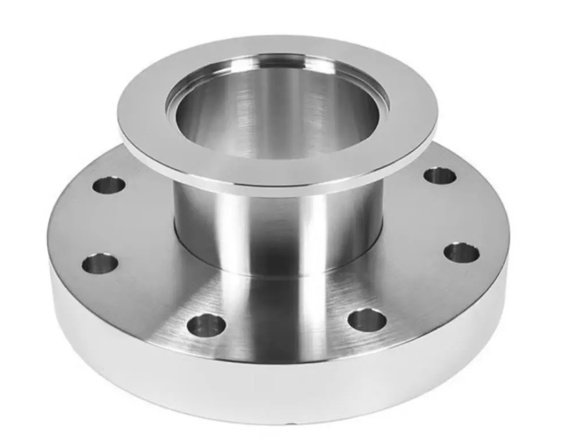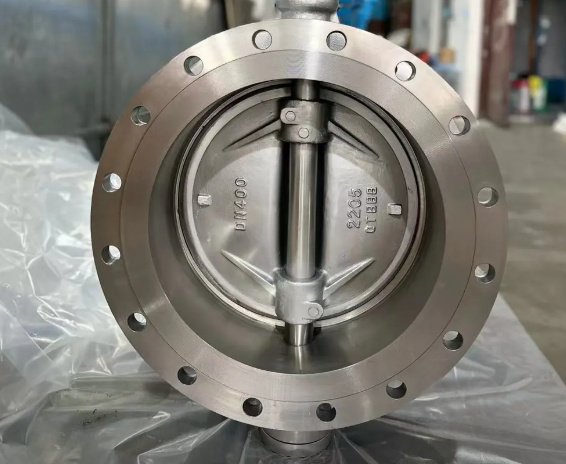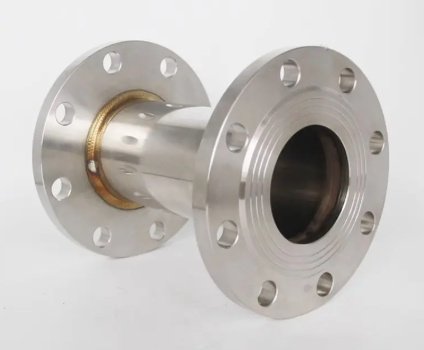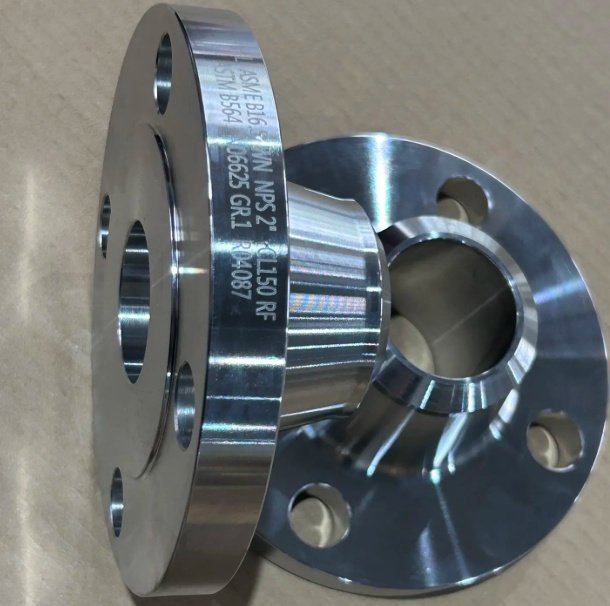
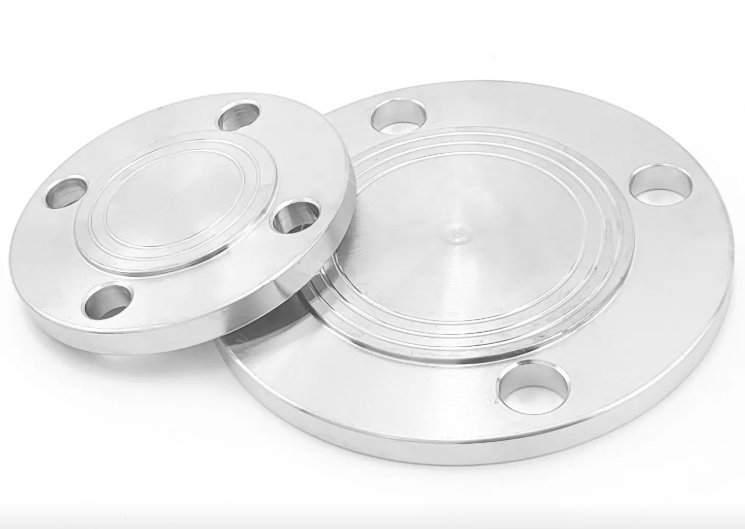
Blind Flanges are solid, non-bore flanges used to close the end of a piping system, valve outlet, pressure vessel nozzle, pump connection or pipeline branch. Unlike weld neck, slip-on or threaded flanges, a blind flange has no center opening, making it suitable for permanent closure, temporary isolation, hydrostatic testing and future system expansion.
Engineered blind flanges are selected according to pressure class, nominal pipe size, flange facing, bolt pattern, gasket type, fluid service, corrosion allowance and applicable standards. For buyers, engineers and project procurement teams, the correct blind flange reduces leakage risk, simplifies maintenance isolation and helps keep the piping system compliant with ASME, EN, DIN, JIS or project specifications.
What Is a Blind Flange?
A blind flange is a bolted pressure-retaining component designed to seal a piping end without welding a cap directly to the pipe. It is normally installed with a gasket and bolting set between the blind flange and a mating flange. Because it can be removed, it offers better inspection and maintenance flexibility than a welded pipe cap.
In industrial piping, blind flanges are widely used in oil and gas, petrochemical plants, power generation, water treatment, offshore modules, shipbuilding, mining, chemical processing, LNG terminals and pressure vessel manufacturing.
Common Types of Blind Flanges
Raised Face Blind Flange
A raised face blind flange, often abbreviated as RF blind flange, has a raised gasket seating surface around the bolt circle. It is one of the most common designs for ASME piping systems and is typically used with spiral wound gaskets, compressed fiber gaskets, graphite gaskets or PTFE gaskets.
Flat Face Blind Flange
A flat face blind flange has a full flat gasket contact surface. It is commonly used with cast iron flanges, low-pressure utility lines and applications where excessive bending stress on the mating flange should be avoided.
Ring Type Joint Blind Flange
RTJ blind flanges are used for high-pressure and high-temperature services. They include a precision-machined ring groove that accepts a metallic ring gasket. Correct groove dimension, surface finish and hardness compatibility are critical to reliable sealing.
Spectacle Blind, Spacer and Spade Related Components
Although not identical to a blind flange, spectacle blinds, spades and spacers are often used together with flanged joints for positive line isolation. A solid blind flange closes the piping end, while a spectacle blind provides switchable open or closed isolation between two flanges.
When should a blind flange be selected instead of a welded cap?
A blind flange is preferred when the line end may need to be reopened for inspection, cleaning, pigging, pressure testing, tie-in work or future expansion. A welded cap is usually more compact and permanent, but it requires cutting or hot work for removal.
Standards, Pressure Classes and Size Range
Blind flanges can be manufactured to major international flange standards. The most common standard for NPS piping is ASME B16.5, covering flanges from NPS 1/2 to NPS 24. For larger pipeline and process applications, ASME B16.47 Series A/B is used for NPS 26 to NPS 60.
| Standard | Typical Size Range | Pressure Rating | Common Facing |
|---|---|---|---|
| ASME B16.5 | NPS 1/2 to NPS 24 | Class 150, 300, 400, 600, 900, 1500, 2500 | RF, FF, RTJ |
| ASME B16.47 Series A | NPS 26 to NPS 60 | Class 75 to 900 | RF, RTJ |
| ASME B16.47 Series B | NPS 26 to NPS 60 | Class 75 to 900 | RF, RTJ |
| EN 1092-1 | DN 10 to DN 4000 | PN 2.5 to PN 400 | Type A, B, C, D, E, F, G, H |
| DIN Flange Standards | Project dependent | PN rated | Flat, raised, grooved |
| JIS B2220 | Nominal metric sizes | 5K, 10K, 16K, 20K, 30K | RF, FF |
Standard and pressure class should be verified against the design code, design pressure, design temperature, gasket standard and bolting grade. A Class 150 flange is not automatically suitable for all 150 psi services, because allowable pressure decreases as temperature rises and varies by material group.
Materials for Blind Flanges
Material selection affects strength, corrosion resistance, operating temperature and compatibility with the connected piping. Common blind flange materials include carbon steel, stainless steel, alloy steel, duplex stainless steel, nickel alloy, copper alloy and low-temperature steel.
| Material Category | Typical Grades | Typical Application |
|---|---|---|
| Carbon Steel | ASTM A105, A350 LF2 | Oil, gas, steam, water and general industrial piping |
| Stainless Steel | ASTM A182 F304, F304L, F316, F316L, F321 | Chemical service, food-grade systems, corrosive environments |
| Alloy Steel | ASTM A182 F11, F22, F5, F9, F91 | High-temperature steam, refinery and power plant service |
| Duplex Stainless Steel | ASTM A182 F51, F53, F55 | Chloride-bearing fluids, offshore and seawater systems |
| Nickel Alloy | Inconel, Incoloy, Hastelloy, Monel grades | Acid, seawater, high-temperature corrosion service |
For sour service, low-temperature operation or chloride-rich environments, material requirements may include NACE MR0175/ISO 15156 compliance, impact testing, ferrite control, solution annealing, intergranular corrosion testing or specific hardness limits.
Facing, Gasket Surface and Dimensional Features
Blind flange sealing performance depends heavily on the gasket seating surface. The raised face, flat face or ring groove must be machined to the specified finish, diameter and flatness. Poor surface finish can create gasket stress concentration, while excessive roughness or scratches may cause leakage during pressure testing.
- RF serrated finish: commonly specified as 125 to 250 microinch Ra for ASME raised face flanges.
- RTJ groove finish: usually smoother and more tightly controlled for metal ring gasket sealing.
- Bolt holes: drilled to the standard bolt circle diameter and normally straddle the centerline unless otherwise specified.
- Thickness: determined by standard pressure class and size, or calculated for custom pressure boundaries.
- Back face: may require spot facing or full machining for uniform nut seating.
Why does a blind flange appear thicker than some other flange types?
A blind flange must resist internal pressure over a solid circular plate area without a pipe bore. The pressure load creates bending stress, so the thickness is designed according to the pressure class, diameter, material strength and design standard.
Manufacturing and Machining Capability
High-quality blind flanges are produced from forged, rolled, plate or cast material depending on the standard, service severity and customer specification. Forged blind flanges are widely preferred for pressure piping because forging improves grain flow, mechanical strength and reliability compared with general plate cutting for critical service.
Typical production steps include raw material inspection, cutting, forging or blank preparation, heat treatment, rough machining, CNC turning, drilling, facing, groove machining, marking, non-destructive testing, final inspection and protective packing.
- CNC turning of outside diameter, thickness and sealing face
- Precision drilling of bolt holes and bolt circle diameter
- RTJ groove machining for R, RX and BX gasket profiles where applicable
- Spot facing for nut bearing surfaces
- Surface protection by oiling, varnish, zinc coating, epoxy coating or special project coating
- Custom machining for special thickness, blind tapped holes, lifting holes or vent/drain connections
For engineer-to-order blind flanges, control of flatness, parallelism, and facing finish is often more important than visual appearance. Even when the material grade is correct, machining deviation can lead to uneven gasket compression and repeated hydrotest failure.
Applications of Blind Flanges
Blind flanges are used wherever a reliable removable closure is required. They are essential components in process piping systems and are also used during construction, commissioning, shutdown and maintenance.
| Application | Engineering Purpose | Common Specification Focus |
|---|---|---|
| Pipeline end closure | Seal pipe ends and allow future tie-ins | Pressure class, coating, corrosion allowance |
| Hydrostatic pressure test | Temporarily close test sections | Strength, gasket selection, bolt torque |
| Pump and valve isolation | Close unused nozzles or outlets | Facing match, bolt pattern, material compatibility |
| Pressure vessel nozzle closure | Seal manways, inspection ports or spare nozzles | Code documentation, traceability, NDE |
| Offshore modular piping | Temporary closure during transport and installation | Coating, seawater resistance, lifting safety |
Real Engineering Issue: Hydrotest Leakage Caused by Incorrect Flange Selection
In one pressure testing scenario, a temporary closure leaked during a 1.5-times hydrostatic test on a process water line. The installed blind flange had the correct nominal pipe size but the wrong facing and gasket combination. The gasket was compressed unevenly, producing leakage at approximately 70% of the target test pressure.
After replacing the component with a matching ASME Class 300 RF blind flange, using a compatible spiral wound gasket and applying a controlled cross-pattern bolt tightening sequence, the test pressure was reached and held for 30 minutes without visible leakage. The measurable improvement came from three factors: correct facing geometry, uniform gasket stress and verified bolt load.
This type of issue shows why engineers should not select blind flanges by nominal size alone. Standard, pressure class, facing, gasket type, bolting and service conditions must be reviewed as a complete sealing system.
Quality Control, Testing and Documentation
For industrial projects, blind flanges should be supplied with traceable quality documents. Common requirements include material certificates, heat number traceability, dimensional reports, visual inspection, surface finish checks and non-destructive examination when specified.
- PMI, MTC EN 10204 3.1 or 3.2 certification for material traceability
- Dimensional inspection according to ASME, EN, DIN, JIS or project drawings
- Ultrasonic testing, magnetic particle testing or liquid penetrant testing as required
- Hardness testing for alloy steel, sour service or heat-treated components
- Impact testing for low-temperature grades such as ASTM A350 LF2
- Marking with size, rating, material grade, heat number and standard
- Protective packing to prevent face damage, rust and thread contamination during shipment
What documents should buyers request for project blind flanges?
Buyers commonly request material test certificates, heat treatment records, dimensional inspection reports, NDE reports, PMI reports, coating records, certificate of conformity and packing lists. For regulated projects, third-party inspection or EN 10204 3.2 certification may be required.
Engineering and Procurement Selection Checklist
A blind flange purchase order should include enough information to avoid dimensional mismatch, material substitution and sealing problems. Procurement teams can reduce technical clarification cycles by specifying the following items clearly.
- Product name: Blind Flange or Blind Flanges
- Standard: ASME B16.5, ASME B16.47, EN 1092-1, DIN, JIS or custom drawing
- Size: NPS or DN
- Pressure class: Class 150 to 2500, PN rating or JIS K rating
- Facing: RF, FF, RTJ or special facing
- Material grade and forging specification
- Operating fluid, design pressure and design temperature if engineering review is needed
- Gasket type and bolting grade when supplied as a flange set
- Coating, surface protection and packing requirements
- Certification, inspection and third-party witness requirements
From an engineering perspective, the key variables are bolt load and gasket stress. From a buyer’s perspective, the key variables are compliance, lead time, documentation, machining accuracy and total installed reliability. A properly specified blind flange supports both objectives by providing a safe, removable and standards-compliant closure for the piping system.