Delayed parts, inconsistent tolerances, poor surface finishes, and incomplete inspection reports can stop production lines, delay product launches, and increase total project cost. For engineers, purchasing teams, and OEM buyers, reliable metal machining is not just about finding a shop with CNC machines—it is about choosing a manufacturing process that consistently delivers accurate, documented, and production-ready components.
Why Delays and Defects Happen in Metal Machining
Metal machining failures usually come from a combination of technical, operational, and communication gaps. A supplier may accept a drawing without fully reviewing tolerances, material requirements, tooling access, inspection methods, or production capacity. The result is often late delivery, nonconforming parts, and expensive rework.
Common causes include unclear engineering drawings, unrealistic tolerances, unstable fixturing, worn cutting tools, poor coolant control, insufficient in-process inspection, and unverified material substitutions. In high-mix, low-volume CNC machining, even small oversights can create large schedule disruptions.
| Problème | Typical Root Cause | Business Impact |
|---|---|---|
| Late delivery | Capacity overbooking, missing material, unplanned rework | Production downtime, expedited freight, missed launch dates |
| Dimensional defects | Tool wear, incorrect datum setup, poor process control | Assembly failure, scrap, repeat inspection |
| Poor surface finish | Wrong feed rate, vibration, unsuitable tooling | Reduced sealing, friction issues, cosmetic rejection |
| Material nonconformity | No traceability, incorrect alloy, missing heat treatment | Strength failure, corrosion risk, compliance problems |
What Reliable Metal Machining Really Means
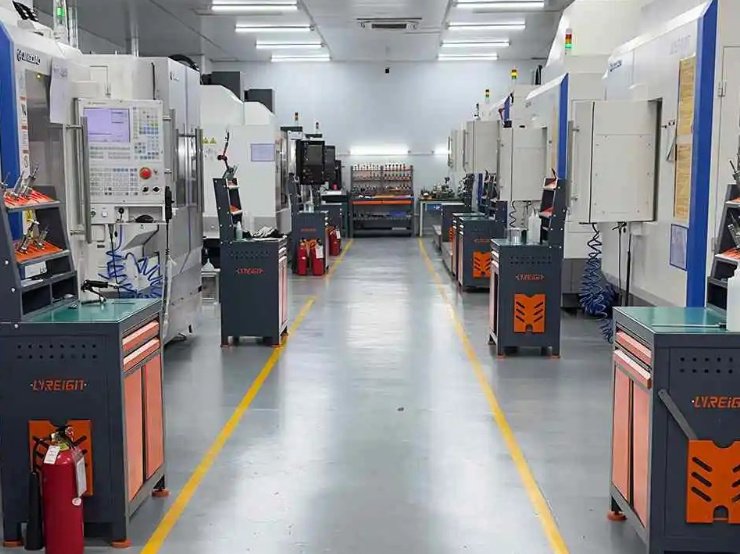
Reliable machining combines precision equipment, controlled processes, skilled machinists, transparent scheduling, and measurable quality assurance. The goal is not simply to cut metal; it is to produce components that match the drawing, function correctly in assembly, and arrive when promised.
In a mature machining workflow, on-time delivery and defect prevention are treated as engineering outputs, not afterthoughts. This means manufacturability is reviewed before production, critical dimensions are measured during machining, and inspection data is captured before shipment.
- CNC milling and CNC turning with verified setup procedures
- Documented tolerances, datums, GD&T requirements, and inspection plans
- Material certificates for aluminum, stainless steel, carbon steel, brass, copper, titanium, and engineering alloys
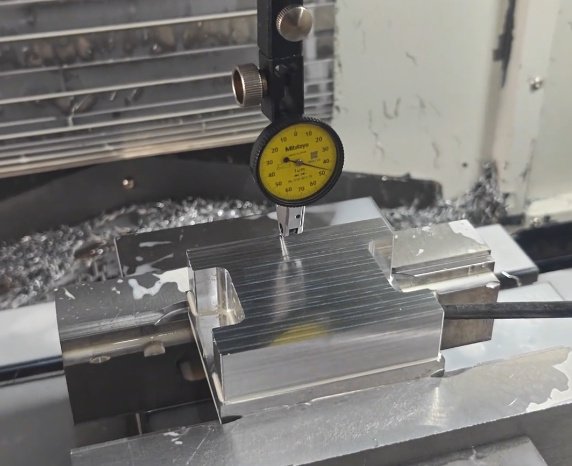
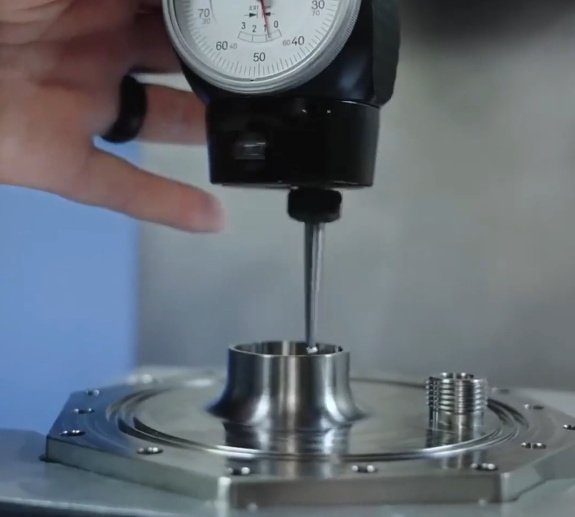
- In-process inspection using calipers, micrometers, bore gauges, height gauges, surface roughness testers, and CMM equipment
- Controlled finishing processes such as anodizing, passivation, plating, heat treatment, bead blasting, and powder coating
- Clear production scheduling, shipment tracking, and change control
Key Capabilities That Reduce Machining Risk
A reliable CNC machining supplier should demonstrate more than general manufacturing experience. Buyers should evaluate whether the supplier can control part geometry, production repeatability, inspection accuracy, and lead-time reliability across prototype, bridge, and production volumes.
CNC Milling for Complex Geometries
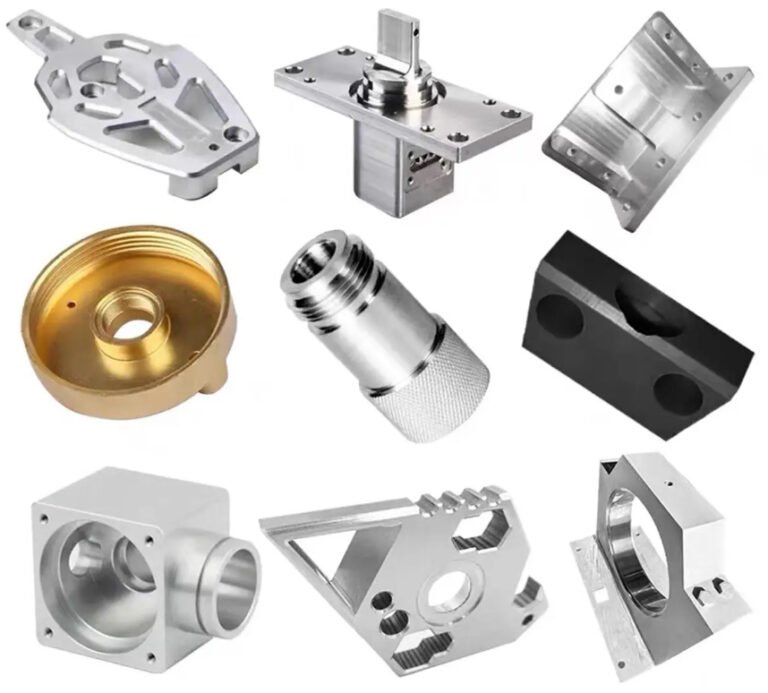
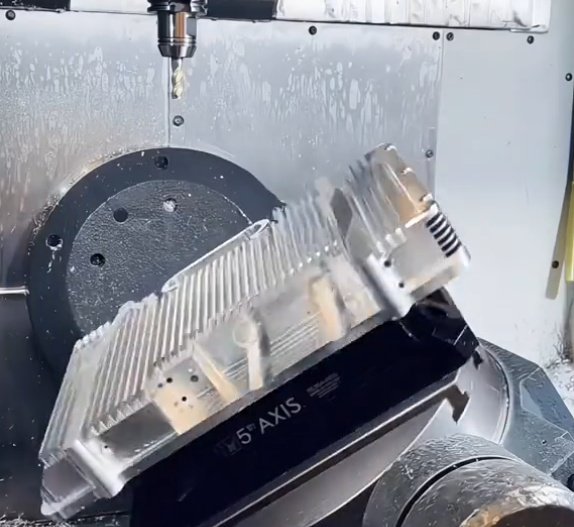
CNC milling is used for prismatic components, housings, brackets, plates, molds, fixtures, heat sinks, and structural parts. Three-axis, four-axis, and five-axis machining centers can reduce setups, improve positional accuracy, and create complex contours or angled features.
CNC Turning for Cylindrical Components
CNC turning is ideal for shafts, bushings, pins, sleeves, threaded parts, valve components, connectors, and precision rings. Live-tool lathes and mill-turn centers can machine flats, grooves, cross-holes, and threads in fewer operations, reducing cumulative tolerance error.
Usinage à tolérances serrées
Tight tolerances require stable machines, suitable cutting tools, controlled temperature, rigid fixturing, and repeatable inspection. For many industrial applications, tolerances of ±0.005 in may be standard, while precision components may require ±0.001 in or tighter depending on material, geometry, and measurement method.
Contrôle de l'état de surface
Surface finish affects sealing, fatigue resistance, friction, wear, appearance, and coating adhesion. Machining parameters such as speed, feed, tool nose radius, step-over, toolpath strategy, and vibration control all influence roughness values such as Ra 3.2 μm, Ra 1.6 μm, or Ra 0.8 μm.
Engineering note: tolerance, finish, and cost are connected
A tighter tolerance or finer finish is not always better. Unnecessary precision increases machining time, inspection time, tool wear, and scrap risk. A reliable supplier should identify which features are function-critical and which dimensions can be relaxed without affecting assembly or performance.
Quality Control: From Drawing Review to Final Inspection
Quality begins before the first chip is cut. A controlled machining process starts with drawing review, DFM feedback, material verification, setup planning, toolpath simulation, and inspection method selection. Once production starts, dimensional checks should occur at defined intervals rather than only at final inspection.
For repeat production, suppliers may track process capability (Cpk/Ppk) on critical-to-quality dimensions. Capability data helps determine whether a process is centered, stable, and suitable for ongoing production. While requirements vary by industry, many controlled manufacturing environments target Cpk values of 1.33 or higher for mature processes.
| Quality Step | Objectif | Common Output |
|---|---|---|
| DFM review | Identify machining risks before production | Manufacturability notes, tolerance recommendations |
| First article inspection | Verify initial setup and drawing compliance | FAI report, dimensional record |
| In-process inspection | Detect drift before batch defects occur | Inspection logs, tool-offset adjustments |
| CMM inspection | Measure complex geometries and GD&T features | CMM report, feature deviation data |
| Final inspection | Confirm shipment readiness | Certificate of conformance, inspection summary |
Pour aerospace, medical, automotive, robotics, and energy applications, First Article Inspection can be essential. It confirms that the manufacturing process, tooling, material, and inspection plan can produce a conforming part before full production continues.
What inspection documents should buyers expect?
Depending on the application, useful documents may include material certificates, certificate of conformance, dimensional inspection reports, CMM reports, surface finish records, hardness test results, heat treatment certificates, plating or anodizing certificates, and first article inspection reports.
Materials and Finishes for Reliable Machined Parts
Material selection strongly affects machinability, tolerance stability, corrosion resistance, weight, strength, and cost. Reliable metal machining requires the correct alloy grade, certified supply, proper storage, and controlled secondary processing.
Traçabilité des matériaux is especially important when parts must meet mechanical, safety, or regulatory requirements. If an alloy is substituted without approval, the part may pass dimensional inspection but fail in service due to strength, corrosion, temperature, or fatigue limitations.
Common Machined Metals
- Aluminum 6061: widely used for brackets, housings, fixtures, and general-purpose components due to good machinability and corrosion resistance.
- Aluminum 7075: used where higher strength-to-weight ratio is needed, common in aerospace, robotics, and performance applications.
- Stainless steel 304: selected for corrosion resistance in food processing, medical equipment, and general industrial environments.
- Stainless steel 316: preferred for marine, chemical, and chloride-exposed environments.
- Carbon steel 1018/1045: suitable for shafts, plates, tooling, and structural parts requiring strength and economical machining.
- Brass and copper: used for electrical, thermal, fluid, and decorative components.
- Titanium: used in aerospace, medical, and high-performance applications where strength, corrosion resistance, and low weight matter.
Secondary Operations and Surface Treatments
Machined parts often require finishing after cutting. Anodizing improves corrosion resistance and appearance on aluminum. Passivation improves corrosion resistance for stainless steel. Plating can improve conductivity, wear resistance, or corrosion protection. Heat treatment changes mechanical properties, while bead blasting and polishing influence surface texture and visual consistency.
Engineering Example: Reducing Defects in a CNC Aluminum Housing
Consider a precision aluminum electronics housing with several threaded holes, a sealing surface, and a positional tolerance requirement for connector alignment. The initial supplier shipped parts with inconsistent flatness and misaligned threaded features. The buyer experienced assembly delays, gasket leakage risk, and repeated incoming inspection failures.
A controlled machining review identified three main issues: the part was being machined in too many setups, the clamping method distorted the thin wall, and critical features were inspected only after full batch completion. A revised process used a dedicated soft-jaw fixture, combined operations on a four-axis machining center, and introduced in-process inspection after the first five pieces.
| Metric | Before Process Review | After Controlled Machining Plan |
|---|---|---|
| Incoming rejection rate | 8.5% | 1.2% |
| Average lead-time variance | +6 days | +1 day |
| Rework hours per 100 parts | 14 hours | 3 hours |
| Connector positional deviation | Up to 0.18 mm | Within 0.05 mm |
The improvement did not come from faster machining alone. It came from better fixturing, fewer datum transfers, earlier measurement, and clearer definition of critical features. This is the practical value of reliable precision machining: fewer surprises after parts arrive.
Buyer insight: why the lowest unit price may increase total cost
A lower quoted price can become expensive if it leads to late shipments, rework, sorting, assembly downtime, or field failure. Buyers should compare total landed cost, inspection burden, supplier responsiveness, engineering support, and historical delivery performance rather than focusing only on unit price.
How Buyers and Engineers Can Evaluate a Machining Supplier
Selecting a machining supplier is both a purchasing decision and an engineering risk decision. The best supplier for a simple spacer may not be the best supplier for a tolerance-critical aerospace bracket, medical device component, hydraulic manifold, or robotic actuator part.
A practical evaluation should consider technical capability, communication speed, inspection discipline, supply-chain stability, and willingness to challenge unclear requirements. The goal is to find a supplier that can prevent problems before they become late deliveries or defective shipments.
Supplier Evaluation Checklist
- Can the supplier machine the required material grade and provide material certificates?
- Does the supplier understand GD&T, datums, critical dimensions, and inspection requirements?
- Are CNC milling, CNC turning, mill-turn, or five-axis capabilities aligned with the part geometry?
- Can the supplier provide DFM feedback before production starts?
- Are first article inspection, CMM reports, and final inspection records available when required?
- Does the supplier have documented quality procedures such as ISO 9001, AS9100, or customer-specific controls?
- Is the quoted lead time based on real machine capacity, material availability, and finishing schedules?
- Can the supplier support prototypes, low-volume production, and repeat production with consistent quality?
For strategic sourcing, total cost of ownership should include engineering support, defect risk, communication efficiency, packaging quality, documentation accuracy, and delivery reliability. A dependable supplier reduces hidden costs by preventing nonconformance before shipment.
Reliable Metal Machining Supports Better Production Outcomes
Delays and defects are not unavoidable consequences of usinage des métaux. They are often symptoms of weak process control, insufficient inspection, poor communication, or unrealistic manufacturing assumptions. Reliable machining replaces uncertainty with documented methods, measurable results, and engineering discipline.
For buyers and engineers, the most valuable machining partner is one that can interpret technical requirements, identify manufacturability risks, control critical dimensions, document quality, and deliver parts predictably. Whether the project involves CNC milled aluminum housings, stainless steel turned shafts, titanium brackets, or production-ready assemblies, dependable metal machining helps protect schedules, budgets, and product performance.