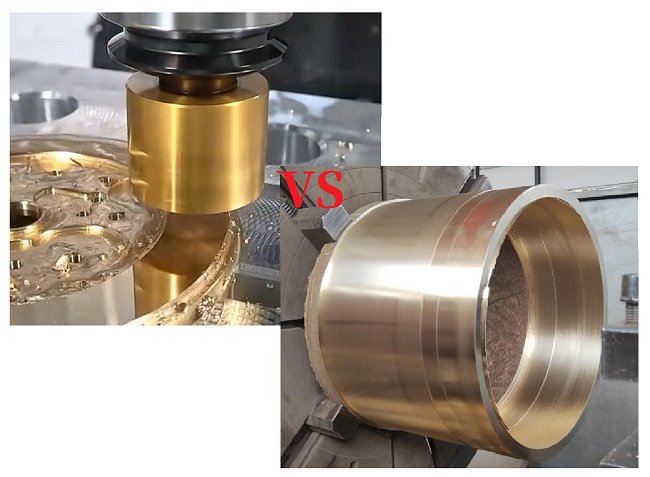
Choosing between metal machining and traditional fabrication affects part performance, unit cost, lead time, quality control, and long-term scalability. Both methods are widely used in industrial manufacturing, but they solve different engineering problems. Metal machining is generally preferred when precision, complex features, tight tolerances, and high repeatability are required. Traditional fabrication is often better for structural frames, sheet metal assemblies, brackets, tanks, enclosures, and welded components where forming and joining are more cost-effective than removing material from a solid block.
What Is Metal Machining?
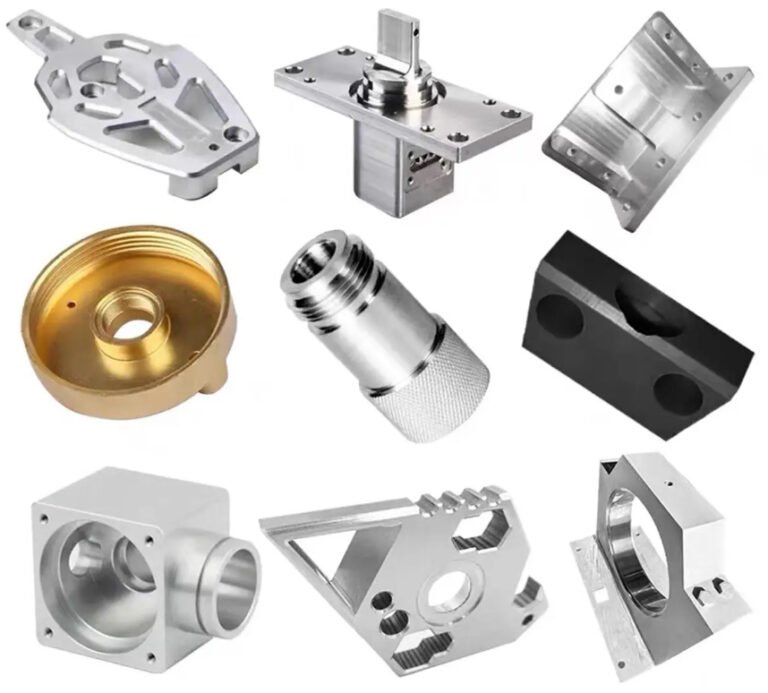
Metal machining is a subtractive manufacturing process that removes material from a workpiece to create a finished component. Common machining operations include CNC milling, CNC turning, drilling, tapping, boring, reaming, grinding, broaching, and electrical discharge machining. The workpiece may start as bar stock, billet, plate, casting, forging, or extrusion.
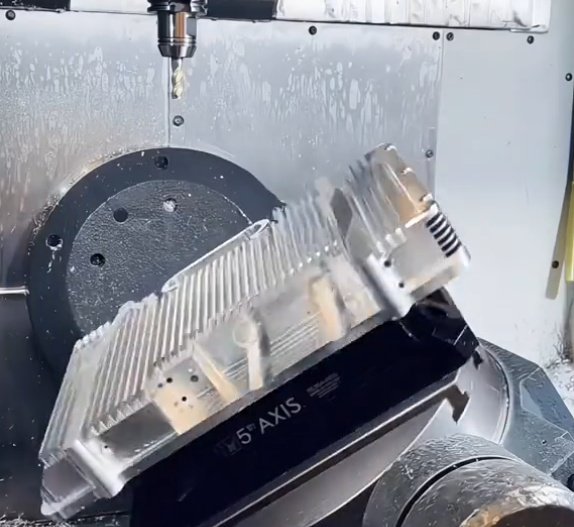
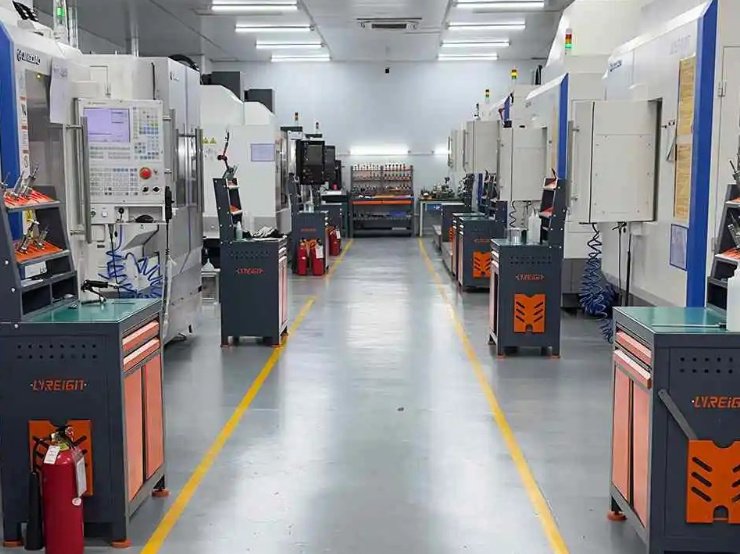
In modern production, machining is often performed on CNC machines using programmed toolpaths, precision cutting tools, fixtures, coolant, and inspection systems. Metal machining is best suited for parts that require tight dimensional control, precise holes, flatness, concentricity, threads, slots, sealing surfaces, or complex 3D geometries.
Typical machined parts include:
- Hydraulic manifolds and valve bodies
- Shafts, bushings, spacers, and bearing housings
- Medical device components
- Aerospace brackets and engine parts
- Robotics components and automation tooling
- Precision aluminum, stainless steel, brass, copper, and titanium components
What Is Traditional Metal Fabrication?
Traditional metal fabrication refers to a group of processes used to cut, form, join, and assemble metal into functional products. It commonly includes laser cutting, plasma cutting, waterjet cutting, shearing, punching, bending, rolling, stamping, welding, riveting, bolting, grinding, and surface finishing.
Fabrication usually starts with sheet metal, plate, tube, pipe, angle, channel, or structural profiles. Instead of removing large amounts of material, fabrication reshapes and joins material into the final product. Traditional fabrication is especially effective for large structures, sheet metal parts, welded frames, guards, racks, enclosures, platforms, and low-to-medium precision assemblies.
Common fabricated products include:
- Sheet metal enclosures and cabinets
- Machine frames and welded bases
- Industrial platforms, stairs, and handrails
- Brackets, panels, covers, and guards
- Storage tanks, hoppers, ducts, and conveyors
- Heavy equipment structures and agricultural components
Metal Machining vs. Traditional Fabrication: Key Differences
| Comparison Factor | Usinage des métaux | Traditional Fabrication |
|---|---|---|
| Manufacturing principle | Subtractive material removal | Cutting, forming, joining, and assembly |
| Typical starting material | Billet, bar, plate, casting, forging | Sheet, plate, tube, pipe, structural profiles |
| Common equipment | CNC mills, lathes, grinders, EDM machines | Laser cutters, press brakes, welders, rollers, shears |
| Typical tolerance capability | Often ±0.005 in / ±0.13 mm or tighter; precision machining can reach ±0.001 in / ±0.025 mm or better | Commonly ±0.030 in to ±0.125 in / ±0.8 mm to ±3.2 mm depending on forming, welding, and part size |
| Finition de la surface | Can achieve fine finishes, such as Ra 0.8–3.2 µm with proper tooling and finishing | Depends on cutting, welding, grinding, and coating; cosmetic finish may require secondary work |
| Efficacité des matériaux | Can generate more chips and scrap, especially from billet | Usually better for sheet and structural stock when nesting and forming are optimized |
| Best for | Precision parts, mechanical interfaces, complex features, tight fits | Large assemblies, frames, panels, covers, welded structures |
| Main cost drivers | Machine time, tool wear, setup, programming, material removal volume | Cutting time, bending operations, welding labor, fixtures, distortion control, finishing |
When Metal Machining Is the Better Choice
Machining is usually the right choice when the part must meet exact dimensional or functional requirements. A machined component can hold precise geometric relationships between holes, slots, bores, sealing faces, bearing seats, threads, and datum surfaces.
Choose machining when your design includes:
- Tight tolerances below what bending or welding can reliably maintain
- Precision bores, tapped holes, reamed holes, counterbores, or countersinks
- Flatness, perpendicularity, parallelism, runout, or concentricity requirements
- Complex internal or external contours
- High-strength parts made from billet, forging, or heat-treated stock
- Critical mating surfaces for bearings, seals, shafts, or optical components
For example, a hydraulic manifold with multiple intersecting ports, O-ring grooves, and threaded connections is difficult to fabricate reliably. CNC machining allows accurate port alignment, controlled surface finish, and repeatable pressure-sealing geometry.
Engineering example: machined aluminum housing
A robotics supplier needed an aluminum gearbox housing with bearing pockets held to ±0.015 mm and a surface finish of Ra 1.6 µm on sealing faces. Fabricating the housing from welded plates caused distortion after welding and required extensive rework. Switching to CNC machining from 6061-T6 billet increased material waste but reduced assembly alignment failures from 7.5% to less than 1% during incoming inspection.
When Traditional Fabrication Is the Better Choice
Traditional fabrication is often more practical when the product is large, structural, or made from sheet and plate. It is especially cost-effective when a part can be produced by cutting, bending, welding, and finishing rather than machining most of the shape from solid material.
Choose fabrication when the project involves:
- Sheet metal enclosures, panels, doors, guards, or brackets
- Welded frames, bases, platforms, and machine supports
- Large parts where machining would require oversized equipment
- Moderate tolerances where welding and forming variation is acceptable
- Low-volume custom industrial products
- Designs that can be assembled from standard profiles, tubes, and plates
Fabrication usually offers a lower total cost for large structures because it uses standard stock shapes and avoids excessive material removal. A welded steel machine base, for instance, would rarely be machined from a solid block because the raw material cost, machine capacity, and cycle time would be impractical.
Engineering example: fabricated machine frame
A packaging equipment manufacturer compared a fully machined steel base with a fabricated and stress-relieved weldment. The machined-from-solid concept required a 900 kg plate and more than 40 hours of roughing and finishing. The fabricated version used laser-cut plate, rectangular tubing, robotic welding, stress relief, and final machining only on mounting pads. The final assembly reduced raw material usage by about 55% and shortened production lead time by approximately two weeks.
Cost Comparison: Machining and Fabrication
Cost is not determined by process name alone. It depends on geometry, tolerance, material, batch size, equipment availability, labor rate, inspection requirements, finishing, and supply chain complexity.
Machining Cost Drivers
- Setup and programming time for CNC milling or turning
- Cycle time based on material removal rate
- Cutting tool cost and tool life
- Material cost and buy-to-fly ratio
- Fixture design and workholding complexity
- Secondary operations such as deburring, grinding, anodizing, plating, or passivation
- Inspection requirements, including CMM reports and first article inspection
Fabrication Cost Drivers
- Laser, plasma, or waterjet cutting time
- Press brake setup and bend sequence planning
- Welding time, filler metal, shielding gas, and weld inspection
- Distortion correction, straightening, and grinding
- Jigs, fixtures, and assembly tooling
- Surface finishing such as powder coating, galvanizing, painting, or polishing
- Transportation and handling of large assemblies
As a general rule, machining becomes more economical when precision, feature density, and functional complexity are high. Fabrication becomes more economical when the component is large, hollow, structural, or can be built from sheet and profiles. The lowest quote is not always the lowest total cost if it leads to tolerance failures, rework, late delivery, or assembly problems.
Tolerance, Quality, and Inspection Considerations
One of the most important differences between usinage des métaux and traditional fabrication is tolerance control. Machining can maintain closer dimensional accuracy because the cutting tool follows a controlled path relative to a rigid workholding setup. Fabrication involves additional variables such as bend allowance, springback, weld shrinkage, heat affected zones, fixture repeatability, and manual assembly variation.
In machining, quality control may involve:
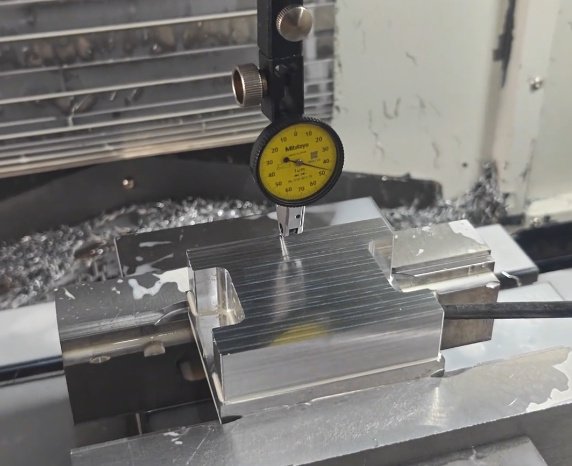
- Calipers, micrometers, bore gauges, and height gauges
- Coordinate measuring machines
- Surface roughness testing
- Thread gauges and plug gauges
- Statistical process control for production runs
- Material certifications and heat treatment records
In fabrication, inspection may involve:
- Dimensional checks against drawings or templates
- Weld visual inspection
- Dye penetrant, magnetic particle, ultrasonic, or radiographic testing where required
- Flatness, squareness, and diagonal measurements
- Coating thickness testing
- Load testing for structural assemblies
Buyers should define critical-to-quality characteristics early. For example, a fabricated frame may only need ±2 mm overall dimensional tolerance, but its machined mounting pads may require ±0.05 mm positional accuracy. In such cases, a hybrid manufacturing strategy is often best.
Hybrid Manufacturing: Combining Machining and Fabrication
Many industrial products are not purely machined or purely fabricated. A common approach is to fabricate the main structure and then machine critical surfaces after welding. This combines the material efficiency of fabrication with the precision of machining.
Hybrid examples include:
- Welded machine frames with machined mounting pads
- Fabricated steel bases with precision bored bearing locations
- Sheet metal enclosures with machined inserts or PEM hardware
- Welded pressure vessels with machined flanges
- Cast or forged blanks finished by CNC machining
- Laser-cut plates with post-machined holes and datum edges
Hybrid manufacturing is often the most practical option when a part needs both structural efficiency and precision interfaces. However, process sequencing matters. Welding before machining can reduce final distortion at critical surfaces, while machining before welding may lead to out-of-tolerance features due to heat input and shrinkage.
Material Selection and Process Compatibility
Both machining and fabrication can work with carbon steel, stainless steel, aluminum, copper, brass, titanium, and specialty alloys. However, each material behaves differently during cutting, forming, and welding.
| Matériau | Machining Notes | Fabrication Notes |
|---|---|---|
| Acier au carbone | Generally machinable; tool wear depends on hardness and grade | Excellent for welding, cutting, bending, and structural applications |
| Acier inoxydable | Can work harden; requires correct speeds, feeds, and coolant | Weldable but distortion and discoloration must be controlled |
| Aluminium | High machinability; good for complex CNC parts and lightweight components | Good for sheet metal and extrusions; welding may reduce local strength in heat-treated alloys |
| Titane | Challenging to machine due to heat and tool wear; common in aerospace and medical parts | Fabrication requires strict contamination control and specialized welding procedures |
| Copper and brass | Good machinability for electrical, plumbing, and precision components | Formable, but welding or brazing requirements vary by alloy |
Procurement teams should confirm material grade, certification requirements, heat treatment condition, corrosion resistance, weldability, and finishing compatibility before releasing an RFQ. A design that looks simple in CAD may become expensive if the selected alloy is difficult to machine, bend, or weld.
Design for Manufacturability: Practical Tips
Good design for manufacturability can reduce cost and prevent production delays. The best design choices depend on whether the part will be machined, fabricated, or made through a hybrid process.
DFM Tips for Machined Parts
- Avoid unnecessarily tight tolerances on non-critical features.
- Use standard hole sizes, thread sizes, and cutter-friendly radii.
- Minimize deep narrow pockets that require long tools and slow machining.
- Design with accessible tool paths and stable workholding surfaces.
- Specify surface finish only where functionally required.
- Use GD&T to clarify datums and critical relationships.
DFM Tips for Fabricated Parts
- Use standard sheet thicknesses, tube sizes, and structural profiles.
- Account for bend radius, bend allowance, and material springback.
- Design weld joints with access for welding, inspection, and grinding.
- Avoid placing precision holes too close to bend lines unless post-machining is planned.
- Use slots or tabs for self-fixturing where appropriate.
- Plan for coating clearance, drainage holes, and masking requirements.
Early collaboration between design engineers, machinists, fabricators, and quality teams can prevent expensive redesigns after production begins. This is particularly important for assemblies that require both welding and precision machining.
Buyer and Procurement Checklist
For buyers comparing machining suppliers and fabrication shops, the decision should go beyond price per part. Evaluate technical capability, process control, material traceability, inspection capacity, and communication quality.
| Question | Pourquoi c'est important |
|---|---|
| Can the supplier meet the required tolerance repeatedly? | Prevents fit-up problems, assembly delays, and quality claims. |
| Does the supplier have experience with the selected material? | Reduces tool wear, cracking, weld defects, distortion, and finishing issues. |
| Is inspection equipment available in-house? | Improves process feedback and shortens approval cycles. |
| Can the supplier support prototypes and production volumes? | Ensures the manufacturing route can scale without redesign. |
| Are finishing, heat treatment, or coating services coordinated? | Reduces logistics risk and supplier management burden. |
| Can the supplier review drawings before quoting? | Identifies cost-saving design changes and tolerance conflicts early. |
Which Process Should You Choose?
Choose metal machining when your part depends on accuracy, repeatability, complex geometry, fine surface finish, or precision mechanical interfaces. Choose traditional fabrication when the product is large, structural, made from sheet or profiles, or requires welding and forming more than precision material removal.
In many real-world projects, the best solution is a combination: fabricate the basic shape, stress relieve if needed, and machine the critical surfaces afterward. This approach can reduce cost while still achieving reliable assembly fit and functional performance.
The right manufacturing choice is the one that meets functional requirements at the lowest total cost, not simply the process with the lowest initial quote. Engineers should define critical tolerances, expected loads, material requirements, inspection criteria, and finishing needs before sourcing. Procurement teams should then compare suppliers based on capability, quality systems, lead time reliability, and total delivered value.