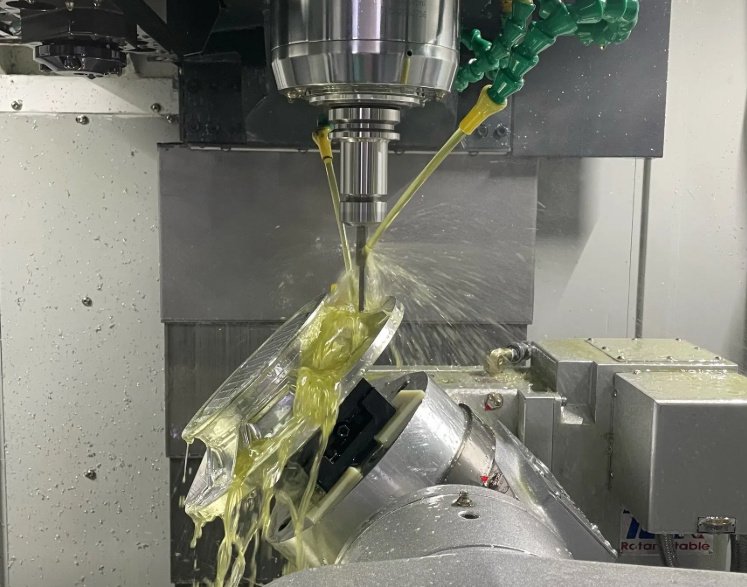
What “Perfect Precision” Means in Metal Machining
In manufacturing, perfect precision does not mean every feature is produced at zero deviation. It means each critical characteristic is manufactured within the required tolerance window, measured using a reliable inspection method, and controlled with a repeatable process. Precision is not just a tight tolerance; it is the ability to achieve the same result consistently across prototypes, pilot runs, and production batches.
High-quality metal machining services typically control four major performance dimensions:
- Dimensional accuracy: length, diameter, hole position, slot width, wall thickness, and feature depth.
- Geometric accuracy: flatness, parallelism, perpendicularity, concentricity, circularity, runout, and true position.
- Surface integrity: roughness, burr control, tool marks, edge breaks, microcracks, and residual stress.
- Material performance: hardness, tensile strength, corrosion resistance, wear resistance, and thermal stability.
| Machining Requirement | Typical Engineering Concern | Common Control Method |
|---|---|---|
| Tight dimensional tolerance | Will the part fit correctly in the assembly? | CNC process control, in-process probing, CMM inspection |
| Flatness and parallelism | Will sealing, sliding, or mounting surfaces perform as designed? | Precision milling, grinding, stress relief, fixture control |
| Hole position accuracy | Will fasteners, dowel pins, or bearing bores align? | GD&T-based programming, datum control, CMM reporting |
| Finition de la surface | Will the part seal, rotate, slide, or resist fatigue? | Toolpath optimization, finishing passes, grinding, polishing |
Why a very tight tolerance is not always the best specification
Over-specifying tolerances can increase machining time, inspection cost, scrap rate, and lead time without improving product performance. A practical precision machining review should identify critical-to-function features, apply GD&T where necessary, and leave non-critical dimensions with economical general tolerances such as ISO 2768 or drawing-specific standards.
Core Capabilities of Professional Metal Machining Services
A complete precision machining supplier should support multiple manufacturing processes so that the selected method matches the part geometry, tolerance requirement, production volume, and material behavior. This is especially important for complex components that require both roughing efficiency and fine finishing accuracy.
Fraisage CNC
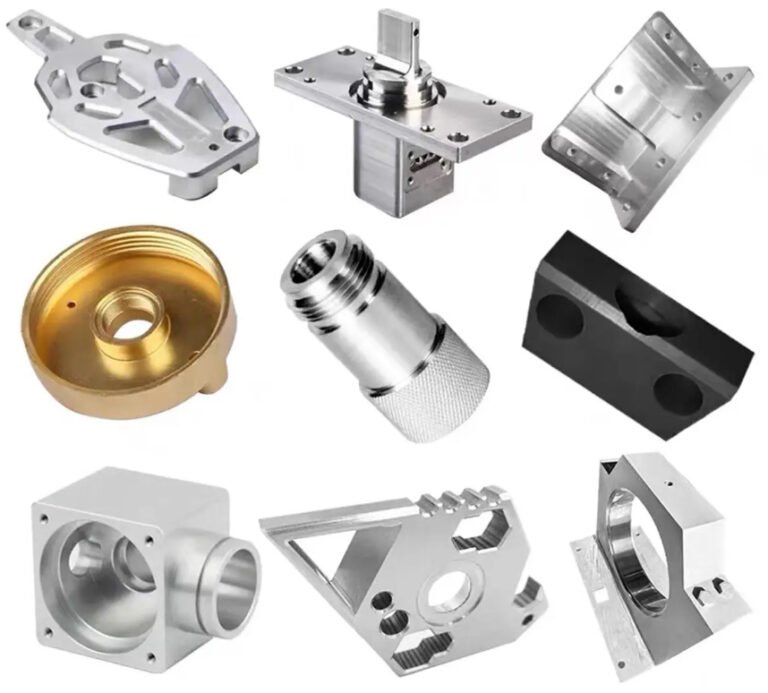
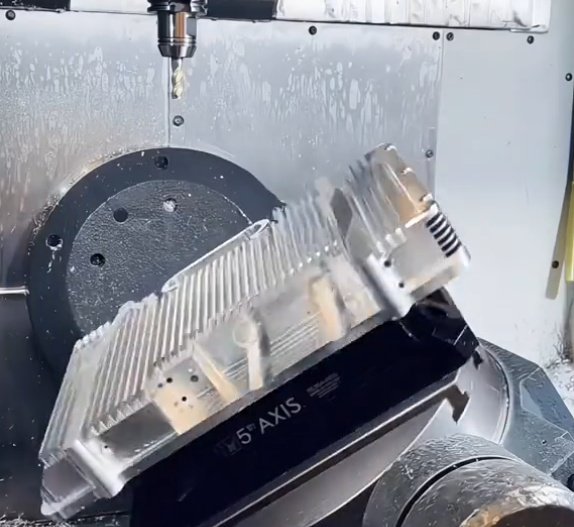
CNC milling is ideal for prismatic parts, housings, brackets, plates, manifolds, heat sinks, tooling components, and parts with pockets, slots, drilled holes, and contoured surfaces. 3-axis milling supports many standard parts, while 4-axis and 5-axis CNC machining reduce setups, improve positional accuracy, and allow better access to complex geometries.
Tournage CNC
CNC turning is used for shafts, bushings, spacers, pins, threaded components, hydraulic fittings, valve parts, and rotationally symmetrical components. Live-tool turning centers can combine turning, drilling, milling, grooving, and threading in one setup, improving concentricity and reducing cumulative setup error.
Electrical Discharge Machining
EDM is valuable for hardened steel, sharp internal corners, narrow slots, fine profiles, and difficult-to-machine alloys. Wire EDM can achieve accurate profiles with low mechanical cutting force, while sinker EDM is commonly used for mold cavities, tool inserts, and intricate internal features.
Precision Grinding and Finishing
Surface grinding, cylindrical grinding, centerless grinding, honing, lapping, polishing, deburring, and edge finishing help achieve tight tolerances and controlled surface roughness. These secondary operations are often essential for bearing fits, sealing faces, sliding surfaces, and high-wear applications.
| Processus | Applications les mieux adaptées | Typical Precision Focus |
|---|---|---|
| Fraisage CNC | Plates, housings, brackets, manifolds | Flatness, true position, pocket accuracy |
| Tournage CNC | Shafts, sleeves, bushings, fittings | Diameter, roundness, concentricity |
| 5-axis machining | Complex aerospace, medical, robotic, and optical parts | Multi-surface alignment, reduced setup error |
| EDM | Hard materials, fine profiles, sharp internal geometry | Profile accuracy, minimal cutting force |
| Broyage | Sealing faces, shafts, tooling, precision rails | Surface finish, size control, flatness |
Materials We Machine for High-Precision Components
Material selection directly affects machining strategy, tool wear, dimensional stability, finish quality, and post-processing options. The best machining result begins with matching the material grade to the functional requirement, not simply choosing the lowest raw material cost.
Alliages d'aluminium
Aluminum 6061, 6082, 7075, 2024, and MIC-6 cast tooling plate are frequently used for lightweight components, fixtures, aerospace parts, electronic enclosures, and thermal management components. Aluminum offers high machinability and excellent strength-to-weight ratio, but thin-wall parts require careful fixturing to prevent distortion.
Acier inoxydable
Stainless steels such as 304, 316, 17-4PH, 410, and 420 are used where corrosion resistance, hygiene, strength, and temperature performance are required. Stainless machining requires optimized cutting parameters to control work hardening, burr formation, and tool wear.
Acier au carbone et acier allié
1018, 1045, 4140, 4340, D2, H13, and other steels are common in tooling, automation, industrial equipment, energy systems, and high-load parts. Heat treatment, stress relieving, and grinding may be necessary when parts require hardness, wear resistance, or dimensional stability after machining.
Titanium, Copper, Brass, and Specialty Metals
Titanium alloys such as Grade 2 and Ti-6Al-4V are used in aerospace, medical, and high-performance industrial applications. Copper and brass are selected for electrical conductivity, thermal conductivity, and corrosion resistance. Nickel alloys, Inconel, and other superalloys may be used for high-temperature or corrosive environments, requiring advanced tooling and process control.
Material questions buyers should clarify before requesting a quotation
- Is a certified material test report required?
- Will the part be heat treated before or after machining?
- Are there corrosion, fatigue, conductivity, or magnetic requirements?
- Does the part require anodizing, passivation, plating, black oxide, nitriding, or painting?
- Are any dimensions critical after surface finishing?
Engineering Controls That Protect Accuracy
Precision machining depends on a controlled chain of decisions: drawing interpretation, CAD/CAM programming, fixture design, tool selection, machine stability, environmental control, in-process measurement, and final inspection. A small error in any link can create nonconforming parts.
Drawing and GD&T Review
Engineering review should evaluate datums, tolerance stack-ups, fit classes, critical features, surface roughness symbols, thread callouts, and inspection requirements. Standards such as ASME Y14.5 and ISO 1101 are often used for geometric dimensioning and tolerancing. ISO 286 may be referenced for fits and limits, while ISO 2768 is commonly used for general tolerances.
Fixture and Workholding Strategy
Good workholding minimizes vibration, deflection, and datum shift. For thin-wall aluminum parts, improper clamping can cause the component to spring back after machining. For long shafts, inadequate support can create taper, chatter, and poor roundness. Fixture planning is therefore a major driver of precision.
Tooling and Cutting Parameter Optimization
Tool geometry, coating, flute count, coolant delivery, chip evacuation, spindle speed, feed rate, and depth of cut all influence dimensional accuracy and surface finish. Process capability is built through stable cutting conditions, not corrected only by final inspection.
In-Process Measurement
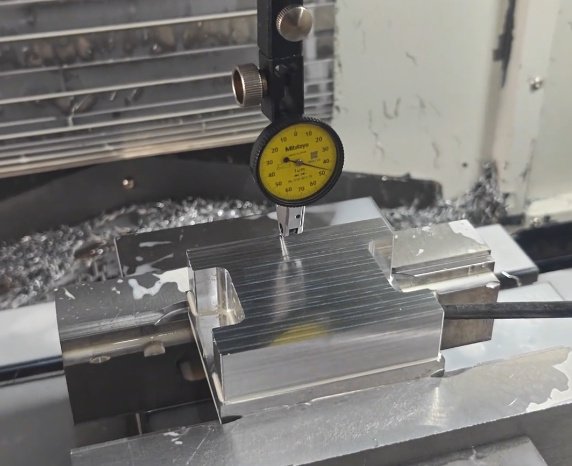
In-process probing, tool wear compensation, first-piece inspection, and statistical process monitoring help detect variation before parts move through the entire production run. This reduces scrap, rework, and late-stage rejection.
| Point de contrôle | Risk Without Control | Precision Machining Practice |
|---|---|---|
| Datum interpretation | Misaligned features and assembly failure | GD&T review before programming |
| Clamping method | Distortion, flatness error, repeatability loss | Custom fixtures, soft jaws, vacuum fixtures, low-stress clamping |
| Tool wear | Size drift and poor finish | Tool life monitoring and offset compensation |
| Thermal expansion | Dimensional variation during long cycles | Machine warm-up, coolant control, stable inspection environment |
Real Engineering Problems Solved by Precision Metal Machining
Engineers and buyers often search for metal machining services because a current part is failing to meet fit, function, or delivery requirements. The following examples show how machining strategy can influence measurable outcomes.
Case Example: Thin-Wall Aluminum Housing Distortion
A thin-wall 6061-T6 aluminum electronics housing required flatness within 0.05 mm across a sealing surface. Initial machining using aggressive roughing and high clamping force produced post-release distortion up to 0.18 mm. By changing to staged roughing, stress-relief dwell time, reduced clamping pressure, and a final light finishing pass, representative flatness improved to 0.035-0.045 mm across production samples.
Case Example: Stainless Steel Shaft Concentricity
A 316 stainless steel shaft used in a fluid handling assembly required two bearing diameters to remain concentric within 0.015 mm total indicator reading. Splitting the operation across multiple setups caused alignment variation. A revised process using turning between controlled centers, live inspection, and grinding of final bearing journals reduced measured TIR from approximately 0.032 mm to 0.010-0.014 mm.
Case Example: Manifold Leak Path Control
An aluminum hydraulic manifold with cross-drilled passages required burr-free intersections and controlled port depths. Manual deburring alone was inconsistent. A revised toolpath, controlled peck drilling, borescope inspection, and targeted abrasive flow finishing reduced internal burr-related rework and improved pressure test pass rate from 92% to 99% in a representative batch.
| Question d'ingénierie | Process Change | Measured Result |
|---|---|---|
| Thin-wall housing distortion | Staged machining and low-stress fixturing | Flatness improved from up to 0.18 mm to 0.035-0.045 mm |
| Shaft concentricity drift | Controlled centers and finish grinding | TIR reduced to 0.010-0.014 mm |
| Internal manifold burrs | Optimized drilling and finishing process | Pressure test pass rate improved to 99% |
How to identify whether your part is difficult to machine
A part is usually more challenging when it has thin walls, deep pockets, long slender features, multiple datum systems, tight true position requirements, small internal radii, high aspect-ratio holes, difficult alloys, post-machining heat treatment, cosmetic surfaces, or critical dimensions after coating. These characteristics should be reviewed before pricing and production planning.
Quality Documentation and Inspection Methods
Precision manufacturing must be verifiable. Buyers should look beyond verbal claims and evaluate whether the supplier can provide inspection evidence appropriate to the part’s risk level. Reliable quality documentation gives purchasing teams confidence and gives engineers objective data for approval.
Common Inspection Equipment
- Coordinate measuring machine: used for dimensional inspection, GD&T verification, true position, flatness, and profile checks.
- Optical comparator: used for profiles, radii, angles, and small feature verification.
- Surface roughness tester: used to confirm Ra, Rz, or other surface finish requirements.
- Height gauge and granite surface plate: used for layout inspection and height measurements.
- Thread gauges and plug gauges: used for threaded holes, pin fits, and go/no-go verification.
- Hardness tester: used after heat treatment or when material condition is critical.
Inspection Reports Buyers May Request
- First Article Inspection report
- Rapport d'inspection dimensionnelle
- CMM report with datum reference frame
- Material certificate or mill test report
- Surface finish report
- Heat treatment certificate
- Coating, plating, anodizing, or passivation certificate
- Certificate of Conformance
- PPAP documentation when required for automotive or production programs
| Document | Objectif | Common Buyer Use |
|---|---|---|
| FAI report | Confirms first production part meets drawing requirements | Engineering approval before batch production |
| CMM report | Verifies critical dimensions and GD&T | Supplier quality review and incoming inspection |
| Material certificate | Confirms material grade, chemistry, and mechanical properties | Traceability and compliance |
| Certificate of Conformance | States supplied parts conform to order and drawing | Procurement and quality records |
Procurement Criteria for Selecting a Metal Machining Supplier
For buyers, the lowest unit price is not always the lowest total cost. A poor machining supplier can create hidden costs through late delivery, rework, assembly downtime, quality sorting, engineering support, and supplier replacement. A strong evaluation process balances cost, capability, quality, and communication.
Technical Capability
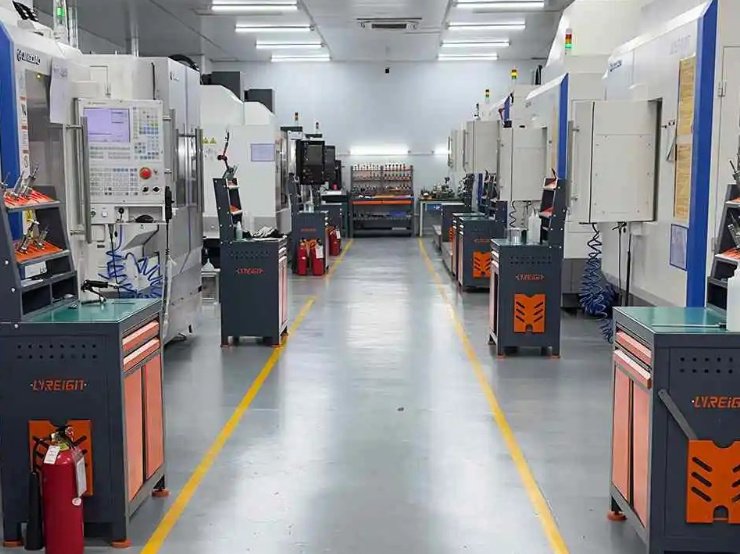
Review whether the supplier has the machine capacity, axis capability, work envelope, tooling knowledge, inspection equipment, and material experience required for the part. If the design requires 5-axis machining, tight bore tolerances, EDM, or grinding, confirm that these processes are available and controlled.
Quality System Maturity
ISO 9001 is a common baseline for general manufacturing quality management. Aerospace, automotive, medical, defense, and energy projects may require additional quality expectations such as AS9100, IATF 16949, ISO 13485, customer-specific requirements, or controlled traceability.
Soutien à l'ingénierie
A capable supplier can identify manufacturability risks before production. This includes advising on radius changes, material substitutions, tolerance rationalization, datum strategy, coating allowance, thread depth, burr control, and fixture access. Early design-for-manufacturing feedback often prevents expensive changes after tooling, programming, or production has started.
Supply Chain Reliability
Reliable metal machining services require stable raw material sourcing, clear lead-time planning, secondary process coordination, packaging control, and proactive communication. For production buyers, repeatability and delivery performance may be as important as initial sample quality.
Procurement checklist for machined metal parts
- Provide 2D drawings with tolerances, datums, surface finish, and material requirements.
- Provide 3D CAD files in STEP, IGES, Parasolid, or native format when possible.
- Define annual volume, batch size, and delivery schedule.
- Identify critical-to-quality dimensions and inspection requirements.
- Clarify surface treatment, heat treatment, marking, cleaning, and packaging requirements.
- Confirm whether FAI, CMM report, material certificate, or PPAP is required.
- Review whether the supplier has experience with similar materials and tolerances.
Cost, Lead Time, and Total Value in Precision Machining
Machining cost is influenced by more than material weight and cutting time. Complex geometry, tight tolerances, surface finish requirements, inspection scope, small batch size, setup quantity, secondary processing, and documentation requirements all affect price. Buyers should evaluate the total value of a machining quote rather than only comparing the number at the bottom of the page.
Major Cost Drivers
- Material type and condition: titanium, stainless steel, hardened steel, and superalloys usually cost more to machine than aluminum or brass.
- Tolerance level: tighter tolerances require slower cutting, more setups, stable temperature, and more inspection time.
- Part geometry: deep pockets, thin walls, undercuts, and complex 3D surfaces increase programming and machining effort.
- Setup count: fewer setups generally improve accuracy and reduce handling time.
- Finishing requirements: anodizing, plating, passivation, painting, grinding, polishing, and heat treatment affect both cost and schedule.
- Documentation sur la qualité : full dimensional reports, CMM data, FAI, and traceability add value but require time and resources.
How Engineers Can Improve Machinability
Small design changes can significantly reduce cost while preserving function. Examples include increasing internal corner radii, avoiding unnecessarily deep blind holes, standardizing thread sizes, allowing practical surface roughness, reducing excessive datum complexity, and separating cosmetic surfaces from critical functional surfaces.
| Design Choice | Potential Issue | Machining-Friendly Alternative |
|---|---|---|
| Sharp internal corners | Requires EDM or special tools | Add radius compatible with standard end mills |
| Very deep narrow pocket | Tool deflection, chatter, poor finish | Increase pocket width or allow stepped geometry |
| Unnecessary ±0.005 mm tolerance | Higher cost and inspection burden | Apply tight tolerance only to critical features |
| Critical dimension before coating only | Final fit may fail after surface treatment | Define required dimension after finishing |
Industries That Depend on Precision Metal Machining
Precision machined components are used across industries where reliability, repeatability, and mechanical performance matter. Different sectors prioritize different requirements, but all depend on accurate manufacturing and verifiable quality.
- Aerospace: structural brackets, housings, actuator parts, turbine-related components, lightweight aluminum and titanium parts.
- Medical devices: surgical instruments, implant-related components, diagnostic equipment parts, stainless steel and titanium components.
- Automotive and electric vehicles: powertrain components, battery fixtures, thermal management parts, prototype and production hardware.
- Robotics and automation: precision frames, end-effector parts, linear motion components, sensor mounts, gear housings.
- Electronics and semiconductor equipment: enclosures, heat sinks, vacuum-compatible parts, high-flatness plates, precision fixtures.
- Energy and industrial equipment: valve bodies, pump parts, couplings, manifolds, shafts, and wear-resistant components.
How Precision Machining Supports Better Product Performance
Accurate machining directly affects product performance. A bearing bore that is too small can create excessive press fit and premature failure. A sealing surface with poor flatness can leak. A misaligned mounting pattern can create assembly stress. A burr inside a fluid passage can contaminate a system. For buyers and engineers, precision machining is therefore a risk-control function as much as a manufacturing service.
When metal machining services are supported by proper engineering review, process planning, inspection, and documentation, they help achieve:
- Improved assembly fit and reduced adjustment time
- Lower scrap and rework rates
- More stable supplier quality
- Better long-term mechanical reliability
- Reduced quality disputes through objective inspection data
- Shorter development cycles through manufacturability feedback
Perfect precision is achieved when machining capability, engineering judgment, material knowledge, and quality verification work together. For organizations sourcing critical metal components, this integrated approach is the difference between simply receiving parts and receiving parts that perform reliably in the real application.