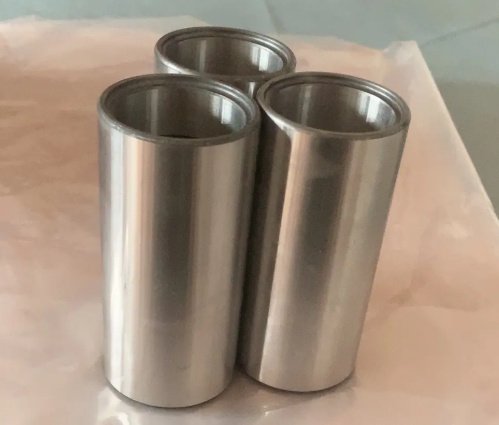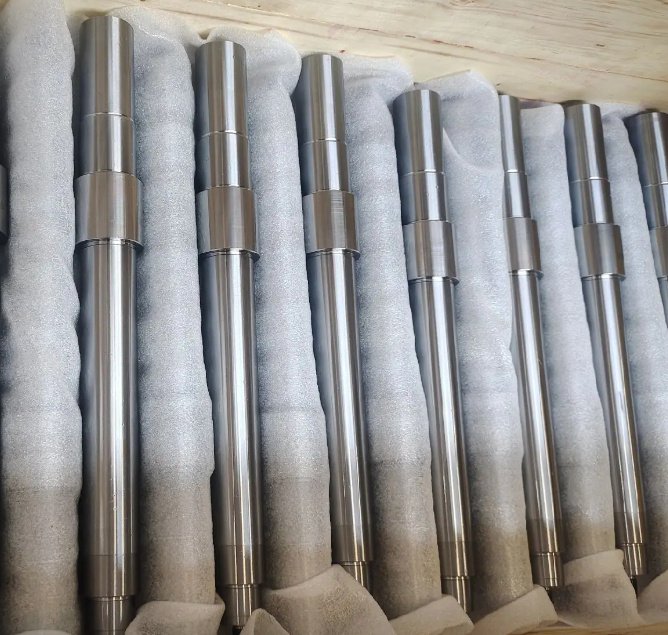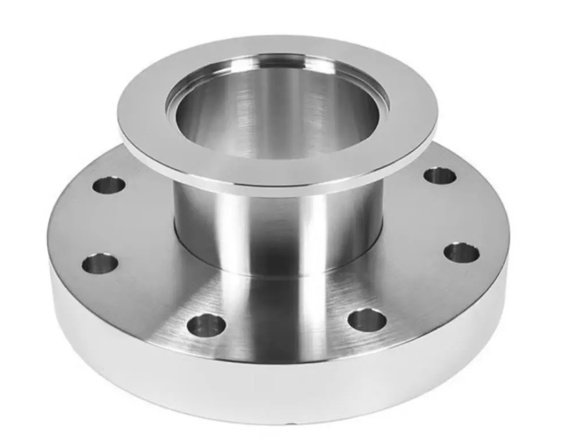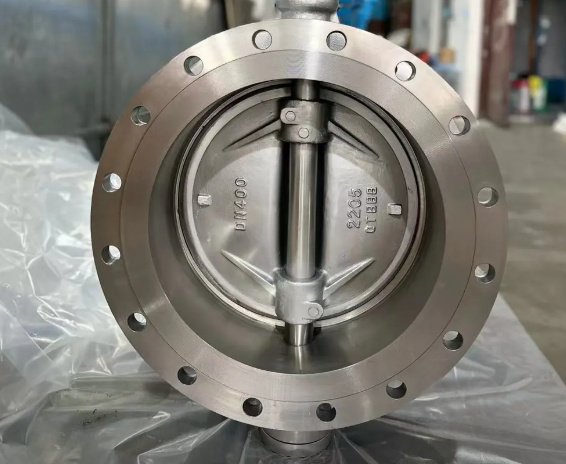
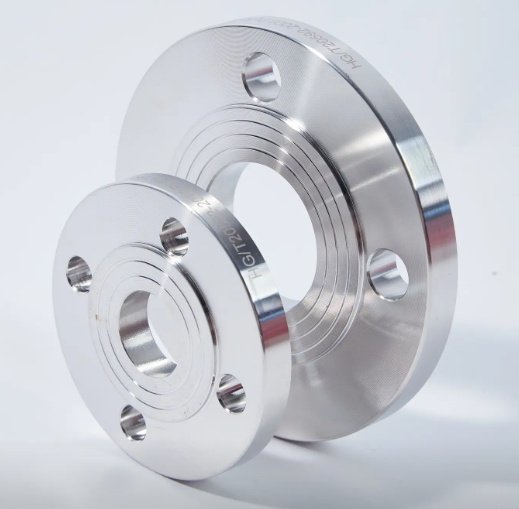
A mild steel flange, also called an MS flange or mild steel pipe flange, is a bolted pipe-connecting component used to join pipes, valves, pumps, strainers, pressure vessels and fabricated equipment. It is widely selected for water supply, HVAC, compressed air, fire-fighting, irrigation, low-pressure oil, general plant piping and structural fabrication because it offers good machinability, weldability and cost efficiency.
Our mild steel flanges can be supplied as plate flanges, slip-on flanges, weld neck flanges, blind flanges, threaded flanges, socket weld flanges and custom-machined flanges according to ASME, EN, BS, DIN, JIS, IS or customer drawings. For buyers and engineers, the key purchasing variables are standard, pressure rating, pipe size, material grade, sealing face, coating and inspection requirement.
What Is a Mild Steel Flange?
Mild steel is a low-carbon steel, commonly containing approximately 0.05% to 0.25% carbon by weight. Compared with high-carbon steel, it is easier to cut, drill, machine, weld and form. In flange manufacturing, mild steel is used where the service environment does not require stainless steel corrosion resistance or high-alloy performance.
In many piping specifications, the term “mild steel flange” may refer to flanges made from ASTM A36, IS 2062, S235JR, SS400, Q235, or similar low-carbon structural steel grades. For forged pressure flanges, buyers may also compare them with carbon steel grades such as ASTM A105; however, A105 is generally classified as forged carbon steel rather than ordinary mild steel plate. Correct grade selection should follow design pressure, temperature, medium and code requirements.
| Property | Typical Relevance | Engineering Note |
|---|---|---|
| Carbon content | Low carbon, usually about 0.05%–0.25% | Improves weldability and machinability |
| Machinability | Good | Suitable for CNC facing, drilling and bore machining |
| Weldability | Good | Commonly used for welded pipe systems and fabricated assemblies |
| Corrosion resistance | Moderate to low without protection | Painting, oiling, electro-galvanizing or hot-dip galvanizing may be required |
| Cost level | Economical | Often selected for general-purpose piping and utility systems |
Mild Steel Flange Types
Mild steel flanges are available in multiple connection designs. The correct type depends on pressure class, pipe schedule, installation space, welding method, maintenance plan and leakage risk.
MS Plate Flange
A mild steel plate flange is cut from MS plate and then machined, drilled and faced. It is commonly used in water pipelines, ducting, low-pressure process lines, irrigation systems and fabricated equipment. Plate flanges are cost-effective for larger diameters and non-critical pressure services.
MS Slip-On Flange
A slip-on flange slides over the pipe and is usually fillet welded on both the inside and outside. It provides easier alignment during installation and is widely used in low to medium pressure piping systems.
MS Weld Neck Flange
A weld neck flange has a tapered hub and is butt-welded to the pipe. It is preferred where stress concentration, vibration, thermal cycling or higher pressure is a concern. For engineered piping, weld neck design improves load transfer from flange to pipe.
MS Blind Flange
A blind flange is used to close the end of a piping system, valve outlet or pressure vessel nozzle. It allows future extension and inspection access. Blind flanges require careful thickness selection because they resist full internal pressure without a center bore.
Threaded, Socket Weld and Custom Flanges
Threaded and socket weld mild steel flanges are used where welding restrictions, small-bore piping or maintenance needs justify their use. Custom flanges can be manufactured with non-standard bolt holes, special outside diameters, oval shapes, rectangular patterns, special grooves or customer-specific equipment interfaces.
Standards, Pressure Ratings and Sizes
Mild steel flanges can be manufactured according to international flange standards or project drawings. When placing an order, the standard must be clearly defined because bolt circle diameter, number of holes, hole diameter, flange thickness and sealing face dimensions differ between standards.
| Standard | Common Ratings | Typical Use |
|---|---|---|
| ASME B16.5 | Class 150, 300, 600 and above | Process piping, industrial plants, oil and gas utilities |
| ASME B16.47 | Large diameter Class 75 to 900 | Large pipelines and high-capacity process systems |
| EN 1092-1 | PN6, PN10, PN16, PN25, PN40 | European water, HVAC and industrial piping |
| BS 10 | Table D, Table E, Table F, Table H | Waterworks, utilities and legacy piping systems |
| DIN | PN series | European industrial and mechanical systems |
| JIS B2220 | 5K, 10K, 16K, 20K | Asian industrial piping, pumps and valves |
| Custom drawing | As specified | Equipment flanges, repair flanges, adapter flanges and OEM fabrication |
Typical nominal sizes range from small-bore flanges such as 1/2 inch or DN15 to large-diameter flanges above DN1200. Larger sizes are commonly produced from plate by CNC cutting and machining, while smaller high-pressure flanges may be forged or machined from bar or ring material depending on the specification.
Important dimensional information to confirm before production
- Nominal pipe size or DN size
- Pressure class or PN rating
- Flange standard and flange type
- Pipe outside diameter and schedule, if bore matching is required
- Raised face, flat face, ring-type joint or special sealing face
- Bolt hole quantity, hole diameter and pitch circle diameter
- Material grade and coating requirement
- Inspection documents, marking and packing method
Materials and Surface Protection
Material selection affects mechanical strength, welding behavior, corrosion protection and compliance. For general mild steel flange supply, common grades include ASTM A36, IS 2062, S235JR, S275JR, SS400, Q235 and equivalent low-carbon steels. Grade equivalency should be confirmed by mill test certificate and project specification rather than name alone.
| Option | Purpose | Typical Application |
|---|---|---|
| Bare mild steel | Lowest initial cost | Indoor fabrication, short-term storage, systems painted after installation |
| Anti-rust oil | Temporary corrosion protection | Machined flange surfaces during transport and storage |
| Black paint or primer | General oxidation resistance | Utility piping, fire lines, equipment fabrication |
| Epoxy coating | Improved chemical and moisture resistance | Water treatment, outdoor pipelines and corrosive atmospheres |
| Electro-galvanizing | Thin zinc coating | Indoor or light-duty environments |
| Hot-dip galvanizing | Thicker zinc protection | Outdoor water systems, irrigation and structural piping |
For outdoor or humid environments, unprotected mild steel should not be treated as corrosion resistant. A proper coating system can reduce premature rusting, protect sealing surfaces during storage and improve service life. If galvanizing is required, bolt holes and mating surfaces should be checked after coating because zinc buildup can affect fit-up.
Manufacturing and Machining Process
Mild steel flange production can involve plate cutting, ring rolling, forging, turning, drilling, facing, beveling, stamping, coating and final inspection. The process route depends on flange size, pressure rating, standard and required quantity.
Plate Cutting and Blank Preparation
For MS plate flanges, raw plates are selected according to material grade and thickness. Blanks are produced by CNC plasma cutting, laser cutting, waterjet cutting or flame cutting. The outside diameter and center bore are then prepared for machining allowance.
CNC Turning and Facing
The flange sealing face, outside diameter, bore and thickness are machined to drawing tolerances. Common sealing face finishes include flat face and raised face. Serrated or phonographic finishes may be used to improve gasket grip, depending on gasket type and flange standard.
Drilling and Bolt Hole Accuracy
Bolt holes are drilled according to the required pitch circle diameter. In field installation, hole misalignment is one of the most common causes of rework. For production control, PCD accuracy, bolt hole diameter and angular spacing are checked before coating and shipment.
Welding Preparation
Slip-on flanges, weld neck flanges and custom weld flanges may require bore matching, bevel preparation or weld-end machining. Proper fit-up reduces welding distortion and helps maintain gasket surface parallelism after fabrication.
Typical inspection points during flange machining
- Outside diameter and flange thickness measurement
- Bore diameter and pipe fit-up verification
- Pitch circle diameter and bolt hole spacing check
- Sealing face flatness and surface finish inspection
- Visual inspection for lamination, cracks, heavy scale and machining defects
- Material certificate review and heat number traceability where required
- Coating thickness or galvanizing condition check when specified
Engineering Performance and Common Site Problems
Mild steel flanges are simple components, but their performance depends heavily on dimensional accuracy, surface quality, gasket selection and installation practice. Poorly manufactured flanges can cause leakage, bolt stress imbalance, gasket crushing or pipe misalignment.
| Problem | Possible Cause | Recommended Control |
|---|---|---|
| Gasket leakage | Uneven sealing face, incorrect gasket, insufficient bolt torque | Specify face finish, check flatness, use controlled bolt tightening sequence |
| Bolt holes do not align | Wrong standard, PCD error, coating buildup | Confirm standard before production and inspect bolt circle after machining |
| Premature rusting | No protective coating or poor packing | Use primer, epoxy, galvanizing or anti-rust oil with moisture-proof packing |
| Flange warping after welding | Excessive heat input or thin flange selection | Use proper welding sequence, thicker flange, or post-weld machining if required |
| Wrong bore size | Pipe schedule not confirmed | Confirm pipe OD and wall thickness before machining |
In a typical pump-room replacement project, changing from hand-cut MS rings to CNC-machined PN16 mild steel plate flanges reduced bolt-hole correction work from repeated on-site grinding to direct assembly. Dimensional control of the pitch circle and sealing face helped reduce installation time per flange joint by approximately 20% to 35% compared with reworked non-standard flanges. Actual results vary by pipe diameter, installation crew and site access, but the example shows why flange accuracy matters more than raw material cost alone.
For engineers, the lowest-price flange is not always the lowest-cost flange. A small dimensional error can delay installation, damage gaskets, require re-drilling, or create leakage during hydrostatic testing.
Applications of Mild Steel Flanges
Mild steel flanges are used in many industries where economical and reliable bolted pipe connections are required. They are especially suitable for non-corrosive or moderately corrosive environments when proper coating is applied.
- Water supply and water treatment pipelines
- HVAC chilled water and condenser water systems
- Fire-fighting and sprinkler pipe networks
- Compressed air and utility piping
- Irrigation and agricultural pumping systems
- General fabrication and equipment mounting
- Low-pressure oil and fuel transfer lines, subject to specification approval
- Mining, cement, power plant and industrial maintenance piping
- Ducting, exhaust lines and non-standard mechanical connections
For seawater, strong acids, food-grade service, pharmaceutical systems or high-corrosion chemical environments, stainless steel, duplex stainless steel, lined flanges or coated carbon steel alternatives may be more appropriate.
Buyer and Engineer Specification Guide
A clear flange specification prevents quotation errors, production delays and installation problems. Procurement teams should avoid sending only the name “mild steel flange” without defining size, rating, standard and drawing requirements.
| Specification Item | Example | Why It Matters |
|---|---|---|
| Flange type | Plate flange, slip-on, weld neck, blind | Determines connection method and machining process |
| Standard | ASME B16.5, EN 1092-1, BS 10, JIS B2220 | Controls all major dimensions |
| Size | DN100, NPS 4, DN300 | Defines pipe connection and bolt pattern |
| Pressure rating | PN10, PN16, Class 150, Table E | Affects thickness and pressure capability |
| Material grade | ASTM A36, S235JR, IS 2062, Q235 | Confirms mechanical and chemical compliance |
| Face type | Flat face, raised face, serrated face | Must match gasket and mating flange |
| Surface treatment | Black paint, epoxy, hot-dip galvanized | Protects against corrosion during storage and service |
| Inspection document | MTC, dimensional report, coating report | Supports project approval and quality traceability |
Procurement risk checklist
- Do the mating flanges follow the same standard and pressure rating?
- Is the pipe schedule confirmed for bore machining?
- Will the flange be installed indoors, outdoors, underground or near chemicals?
- Is galvanizing required before or after machining?
- Are gasket type and face finish compatible?
- Does the project require mill test certificates or third-party inspection?
- Are packing and rust prevention suitable for sea freight or long-term storage?
Quality Documentation and Traceability
For industrial projects, mild steel flanges may require documentation beyond basic dimensions. Available quality records can include material test certificates, dimensional inspection reports, visual inspection records, coating inspection records, packing lists and heat number traceability.
Dimensional inspection normally covers flange outside diameter, bore, thickness, bolt hole size, pitch circle diameter, raised face height, sealing face condition and quantity marking. When required by the project, third-party inspection can be arranged before shipment to verify compliance with purchase order and drawing requirements.
Typical marking options
- Standard and pressure rating, such as PN16 or Class 150
- Nominal size, such as DN100 or NPS 4
- Material grade, such as ASTM A36 or S235JR
- Heat number or batch number where traceability is required
- Manufacturer identification or project code
- Special marking by stencil, stamping, tag or label
Packaging, Storage and Handling
Mild steel flanges should be protected from moisture, salt spray and impact during transport. Small flanges are commonly packed in cartons or wooden cases, while large-diameter flanges may be stacked on pallets with separators. Machined faces should be protected with oil, film, cardboard, plywood or plastic caps depending on the shipping distance and project requirement.
During storage, flanges should be kept off the ground and away from standing water. If flanges are supplied bare or only lightly oiled, long-term outdoor storage may lead to rust formation on sealing faces and bolt holes. For export shipments, seaworthy packing and desiccant protection may be specified.
Technical Summary
| Product name | Mild Steel Flange, MS Flange, Mild Steel Pipe Flange |
|---|---|
| Available types | Plate, slip-on, weld neck, blind, threaded, socket weld, custom flange |
| Common materials | ASTM A36, IS 2062, S235JR, S275JR, SS400, Q235 and equivalent mild steel grades |
| Standards | ASME B16.5, ASME B16.47, EN 1092-1, BS 10, DIN, JIS B2220, IS and custom drawings |
| Pressure ratings | Class 150/300, PN6/PN10/PN16/PN25/PN40, JIS 5K/10K/16K, BS tables and custom ratings |
| Manufacturing processes | Cutting, forging, machining, drilling, facing, beveling, coating and inspection |
| Surface treatments | Anti-rust oil, black paint, primer, epoxy coating, electro-galvanizing, hot-dip galvanizing |
| Main applications | Water, HVAC, fire-fighting, compressed air, irrigation, general industrial piping and fabrication |