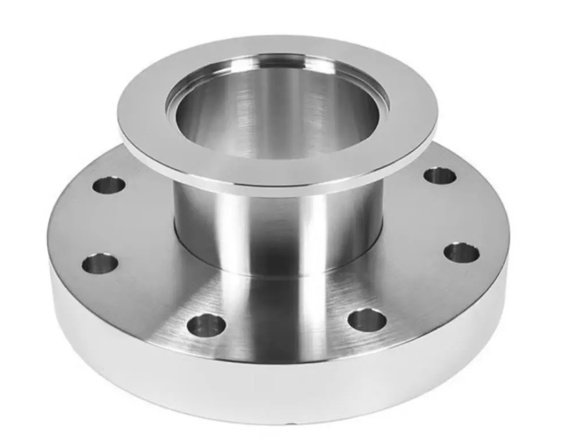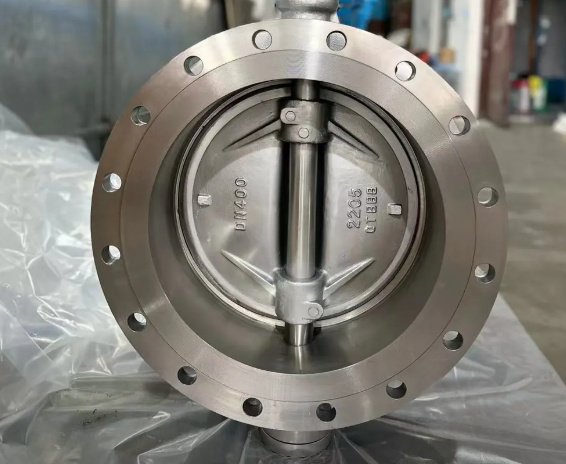
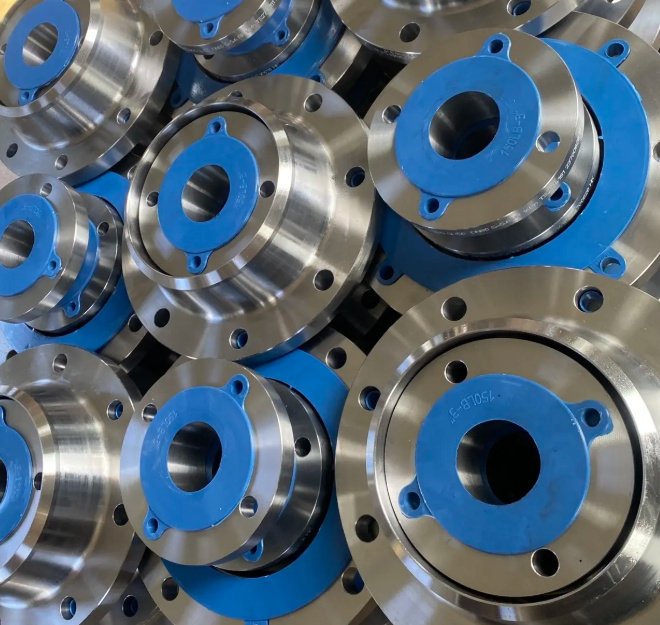
High pressure flanges are engineered pipe connection components used where ordinary flanges cannot safely handle elevated pressure, cyclic loading, high temperature, corrosive media or strict leak-tight requirements. They are widely used in oil and gas production, refineries, petrochemical plants, power generation, subsea systems, hydrogen service, water injection, steam lines and hydraulic equipment.
Our High Pressure Flanges are manufactured to recognized international standards including ASME B16.5, ASME B16.47, API 6A, MSS SP-44, EN 1092-1 and project-specific drawings. Each flange can be supplied with material traceability, dimensional inspection, machining records and pressure-related quality documentation for procurement, engineering and maintenance teams.
What Are High Pressure Flanges?
A high pressure flange is a bolted connection used to join pipe, valves, pumps, pressure vessels, manifolds and process equipment in systems where the joint must resist internal pressure and maintain gasket sealing stress. Compared with low pressure flanges, high pressure designs require stronger materials, more precise machining, controlled sealing surfaces, higher bolt loads and careful compatibility with gaskets and mating equipment.
Typical pressure designations include ASME Class 300, 600, 900, 1500 and 2500, as well as API 6A pressure ratings such as 2,000 psi, 3,000 psi, 5,000 psi, 10,000 psi, 15,000 psi and 20,000 psi depending on size, material and service conditions.
| Standard | Typical Rating Range | Common Application |
|---|---|---|
| ASME B16.5 | Class 150 to Class 2500 | Process piping flanges up to NPS 24 |
| ASME B16.47 | Class 75 to Class 900 | Large diameter steel flanges above NPS 24 |
| API 6A | 2,000 psi to 20,000 psi | Wellhead, Christmas tree and oilfield pressure equipment |
| EN 1092-1 | PN 6 to PN 400 | European industrial piping systems |
High Pressure Flange Types
The correct flange type depends on pipe size, design pressure, operating temperature, welding method, inspection access, gasket type and maintenance requirements. For critical applications, flange selection should consider pressure-temperature rating, pipe schedule, bolt material, gasket stress, corrosion allowance and code compliance.
Weld Neck High Pressure Flanges
Weld neck flanges are the preferred choice for high pressure and high temperature piping because the tapered hub provides smooth stress transition from flange to pipe. They are suitable for severe service, cyclic loading, thermal expansion and applications requiring full penetration butt welding and radiographic inspection.
Blind High Pressure Flanges
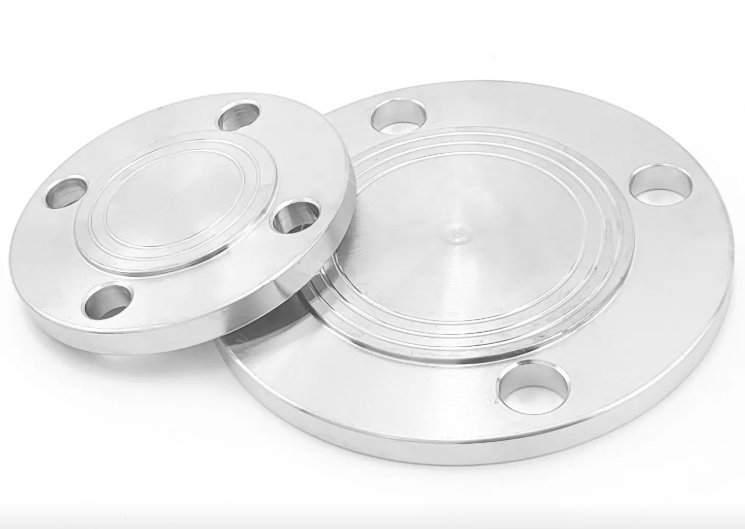
Blind flanges are used to close piping ends, pressure vessel openings, valve outlets and inspection ports. In high pressure service, blind flanges are typically thicker than pipe flanges of similar nominal size because they must withstand full internal pressure without a bore opening.
Socket Weld High Pressure Flanges
Socket weld flanges are commonly used for small-bore high pressure piping, instrumentation lines, hydraulic systems and chemical injection lines. They offer good alignment and compact installation but may require attention to crevice corrosion and thermal fatigue in certain services.
Threaded High Pressure Flanges
Threaded flanges can be used where welding is not permitted or where temporary connections are required. They are generally applied to smaller sizes and moderate high pressure services, but they are not recommended for severe cyclic, high temperature or hazardous fluid systems unless approved by the project specification.
RTJ High Pressure Flanges
Ring type joint flanges use a precision-machined groove and metallic ring gasket to create a high-integrity seal. RTJ flanges are widely used in refinery, offshore, sour gas, high temperature steam and API 6A oilfield applications where leak prevention is critical.
Compact and Special High Pressure Flanges
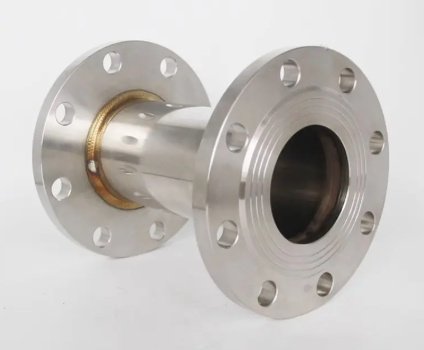
Compact flanges, swivel flanges, orifice flanges, anchor flanges and custom high pressure flanges can be produced for space-limited modules, subsea assemblies, metering systems, high thrust pipelines and OEM equipment. These designs often require finite element analysis, special bolting patterns or project-specific sealing geometry.
Materials for High Pressure Service
Material selection has a direct impact on pressure rating, impact toughness, corrosion resistance, weldability and long-term sealing performance. Common materials include carbon steel, low temperature carbon steel, alloy steel, stainless steel, duplex stainless steel, super duplex stainless steel and nickel alloys.
| Material Grade | Material Type | Typical Service |
|---|---|---|
| ASTM A105 | Carbon steel forging | General refinery, oil and gas, water, steam and process piping |
| ASTM A350 LF2 | Low temperature carbon steel | Low temperature service, LNG support systems and cold climates |
| ASTM A694 F52, F60, F65, F70 | High yield carbon steel | High pressure transmission pipelines and manifold systems |
| ASTM A182 F304, F316, F316L | Austenitic stainless steel | Corrosive fluids, chemical processing and clean utility systems |
| ASTM A182 F51, F53, F55 | Duplex and super duplex stainless steel | Seawater, offshore, chloride-bearing media and high strength applications |
| ASTM A182 F11, F22, F91 | Chrome-moly alloy steel | High temperature steam, power generation and hydroprocessing |
| Inconel 625, Incoloy 825, Hastelloy C276 | Nickel alloy | Sour gas, acid, seawater, high corrosion and high temperature environments |
For sour service, materials and hardness control should be reviewed against NACE MR0175 / ISO 15156 or NACE MR0103 requirements. For low temperature service, Charpy impact testing, heat treatment condition and minimum design metal temperature should be confirmed before purchase.
Standards, Face Types and Connection Details
High pressure flange performance depends not only on pressure class but also on facing type, gasket compatibility, bolt load and surface finish. The same nominal flange size can perform very differently if the facing, gasket or bolt material is incorrectly specified.
- Raised Face: Common for ASME process piping using spiral wound, graphite, PTFE or compressed fiber gaskets.
- Ring Type Joint: Preferred for high pressure, high temperature and critical hydrocarbon service using metallic ring gaskets.
- Flat Face: Used in selected low-pressure or cast equipment connections; generally not preferred for high pressure steel flange joints.
- Male and Female Face: Helps gasket positioning and reduces lateral gasket movement.
- Tongue and Groove Face: Provides gasket containment for special services and equipment connections.
Important dimensional features include bolt hole diameter, bolt circle diameter, flange outside diameter, hub diameter, flange thickness, bore diameter, gasket seating width and sealing face finish. For RTJ flanges, groove dimensions and surface finish require strict control to prevent leakage under high bolt stress.
Engineering note: why flange face finish matters
A sealing surface that is too rough can damage the gasket, while a surface that is too smooth may reduce gasket grip and promote leakage under pressure cycling. ASME B16.5 raised face flanges are commonly supplied with a serrated finish, often in the range of 125 to 250 microinch AARH depending on specification. RTJ grooves require smoother and more precise machining because the seal is made by metal-to-metal contact between the ring gasket and groove surfaces.
Manufacturing and Machining Capabilities
High pressure flanges are normally produced from forged steel because forging improves grain flow, mechanical strength and resistance to pressure-related failure compared with many cast alternatives. Production may include raw material inspection, cutting, heating, forging, heat treatment, rough machining, finish machining, drilling, facing, marking, inspection and protective packaging.
Our flange machining process focuses on dimensional accuracy, gasket sealing reliability and repeatable fit-up with pipes, valves and equipment nozzles. CNC turning and drilling are used to control bore concentricity, bolt hole position, flange thickness, hub profile and sealing face finish.
- Forged blanks from approved mills with heat number traceability
- Normalized, quenched and tempered, solution annealed or stress relieved conditions as required
- CNC machining for ASME, API, EN, DIN, JIS and customer drawings
- Raised face, flat face, RTJ groove and special facing machining
- Bore matching for heavy wall pipe schedules and corrosion-resistant overlay options
- Low emission gasket surface preparation for refinery and chemical applications
- Custom drilling, tapping, counterboring and special bolt patterns
Inspection, Testing and Documentation
Because high pressure flange joints are often installed in hazardous or difficult-to-maintain systems, inspection and documentation are essential. A complete quality package helps engineers verify compliance and helps buyers reduce project risk during receiving inspection, installation and commissioning.
| Inspection Item | Purpose | Common Reference |
|---|---|---|
| Dimensional inspection | Confirms size, thickness, bore, bolt circle and facing geometry | ASME B16.5, ASME B16.47, API 6A, EN 1092-1 |
| Material test certificate | Verifies chemical composition, mechanical properties and heat treatment | EN 10204 3.1 or 3.2 |
| Positive material identification | Confirms alloy grade and prevents material mix-up | Project specification |
| Ultrasonic testing | Detects internal discontinuities in forgings | ASTM A388 or equivalent |
| Magnetic particle or liquid penetrant testing | Detects surface cracks and machining defects | ASTM E709, ASTM E165 or equivalent |
| Hardness testing | Supports sour service and heat treatment verification | NACE or project limits |
| Impact testing | Verifies toughness for low temperature operation | ASTM A370 or project requirement |
Documentation can include MTC, heat treatment chart, NDE report, dimensional report, PMI report, hardness report, impact test report, coating report, packing list and certificate of conformity. Third-party inspection by agencies such as TÜV, BV, SGS, ABS, DNV or Lloyd’s Register can be arranged when specified.
Real Engineering Issues Solved by Correct Flange Selection
In high pressure piping, leakage is rarely caused by the flange alone. Most failures result from a combination of insufficient bolt load, gasket mismatch, flange rotation, poor surface finish, incorrect material, pipe misalignment or pressure-temperature conditions outside the rating envelope. A well-specified flange reduces these risks before installation.
Problem 1: Gasket Blowout in Cyclic Pressure Service
In reciprocating compressor discharge lines and water injection systems, pressure pulsation can reduce gasket seating stress over time. Upgrading from a general raised face joint to an RTJ flange connection can improve gasket containment and sealing stability. For many Class 1500 and Class 2500 applications, RTJ sealing is preferred because the metallic ring gasket is confined in a machined groove and energized by bolt load.
Problem 2: Flange Leakage After Hydrostatic Testing
Hydrostatic test pressure is commonly higher than design pressure, often 1.5 times the pressure rating according to applicable code or project rules. If flange surfaces are damaged during transport or if bolt tightening is uneven, leakage may appear during testing even when the flange material is correct. Controlled machining, protective packaging and cross-pattern bolt tightening reduce this risk.
Problem 3: Material Failure in Sour Gas Service
Sour gas containing H2S can cause sulfide stress cracking when material hardness, chemistry or heat treatment is not controlled. For this reason, sour service flanges should be ordered with NACE compliance, hardness limits, appropriate material grade and full traceability. This is particularly important for API 6A high pressure wellhead and manifold equipment.
Example engineering outcome from improved specification control
In a typical refinery revamp package, replacing mixed-origin Class 900 raised face carbon steel flanges with fully traceable ASTM A105N flanges, controlled serrated facing and verified spiral wound gasket compatibility can reduce installation rework. Project records commonly show that dimensional nonconformity, bolt hole mismatch and face damage are among the most frequent receiving inspection issues for flange packages. A controlled flange procurement specification can reduce these issues before site assembly.
How to Specify High Pressure Flanges for Procurement
Buyers and engineers should provide complete technical information to avoid delays, incorrect machining or mismatched components. A high pressure flange inquiry should include standard, pressure class, nominal pipe size, material grade, face type, bore, pipe schedule, end connection, gasket type, bolt requirements, testing requirements and coating requirements.
The most important purchasing data are standard, pressure rating, material and facing type. If any of these are unclear, the flange may not match the piping class or may fail inspection at site.
- Flange standard: ASME B16.5, ASME B16.47 Series A or B, API 6A, EN 1092-1 or custom drawing
- Nominal size: NPS, DN or project-specific dimensions
- Pressure class: Class 300, 600, 900, 1500, 2500 or API psi rating
- Material grade: ASTM, EN, API or project-approved equivalent
- Flange type: weld neck, blind, socket weld, threaded, slip-on, RTJ or special design
- Face type: RF, RTJ, FF, M&F, T&G or special sealing face
- Bore and pipe schedule: STD, XS, XXS, Sch 40, Sch 80, Sch 160 or heavy wall
- Service medium: oil, gas, steam, seawater, hydrogen, acid, sour gas or chemical fluid
- Temperature range and design pressure
- NDE, PMI, impact testing, hardness testing and third-party inspection requirements
- Surface protection: anti-rust oil, black paint, galvanizing, epoxy coating or special coating
Buyer note: common ordering mistakes
The most common mistakes include ordering a raised face flange where an RTJ flange is required, selecting a standard bore when the pipe has a heavy wall schedule, missing low temperature impact requirements, specifying stainless steel without confirming chloride exposure, and mixing ASME Class ratings with API psi ratings. These errors can lead to re-machining, replacement orders and delayed commissioning.
Applications of High Pressure Flanges
High pressure flange connections are used wherever the piping joint must remain safe and leak-tight under demanding operating conditions. The right flange design supports plant safety, maintenance efficiency, code compliance and lifecycle reliability.
- Oil and gas wellhead equipment, Christmas trees and choke manifolds
- Refinery hydrocracking, hydrotreating and high pressure process units
- Petrochemical reactors, heat exchangers and high pressure transfer lines
- Power plant high temperature steam and feedwater systems
- Subsea, offshore platform and seawater injection systems
- Hydrogen production, compression, storage and distribution systems
- High pressure hydraulic skids, test benches and OEM equipment
- Desalination, mining slurry and water injection pipelines
- Chemical processing lines handling corrosive or hazardous media
Product Range and Custom Options
High Pressure Flanges can be supplied in standard dimensions or produced according to customer drawings for replacement projects, equipment manufacturing and engineered piping packages. Customization is available for special bore sizes, non-standard thickness, corrosion-resistant cladding, special facing, overlay welding, modified bolt holes and project-specific marking.
| Item | Available Options |
|---|---|
| Size range | NPS 1/2 to NPS 60 and larger custom sizes depending on standard and forging capacity |
| Pressure class | ASME Class 300 to Class 2500; API 6A 2,000 psi to 20,000 psi; PN ratings on request |
| Flange types | Weld neck, blind, socket weld, threaded, slip-on, lap joint, RTJ, orifice, swivel and custom flanges |
| Facing | RF, RTJ, FF, M&F, T&G and special sealing designs |
| Machining | CNC turning, drilling, facing, boring, groove machining, tapping and drawing-based machining |
| Marking | Heat number, material grade, size, pressure class, standard, manufacturer mark and project code |
| Packaging | Sealing face protection, anti-rust treatment, plywood cases, pallets and export seaworthy packing |
For critical piping systems, traceability and machining consistency are as important as material strength. Properly manufactured high pressure flanges help reduce leakage risk, improve site fit-up, support code compliance and extend the service life of bolted flange joints.