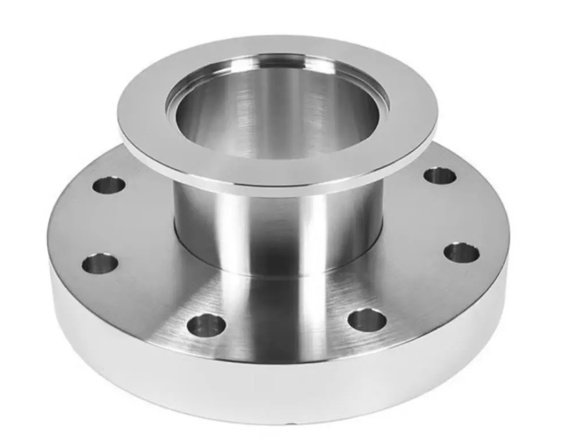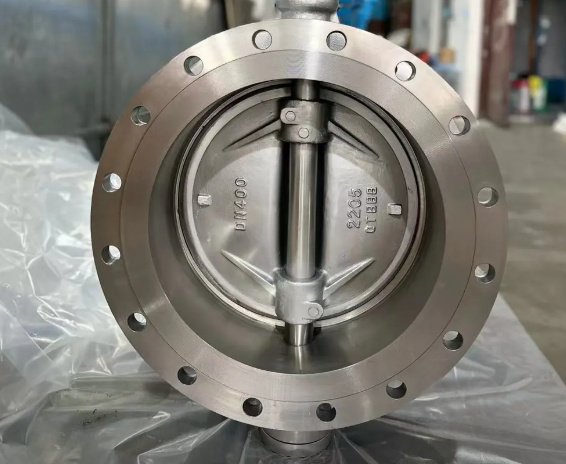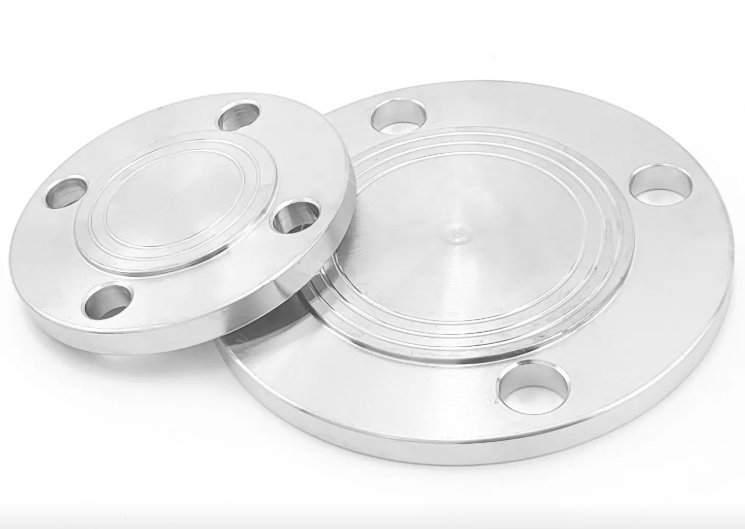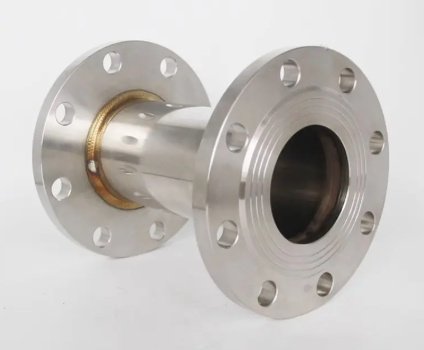
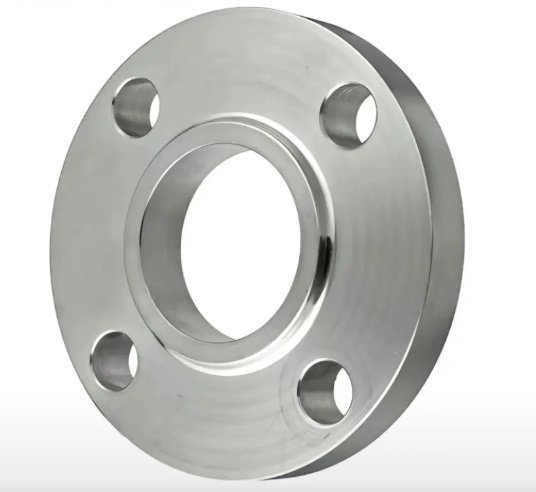
A Slip-On Flange is a pipe flange designed to slide over the outside diameter of a pipe and then be fixed by fillet welding on both the inside and outside. Because it is easy to align, cost-effective to install and widely available in multiple materials, it is commonly used in water treatment, oil and gas, chemical processing, HVAC, shipbuilding, power generation and general industrial piping.
Our Slip-On Flanges are manufactured to recognized international standards including ASME B16.5, ASME B16.47, EN 1092-1, JIS B2220 and project-specific specifications. Each flange can be supplied with full dimensional inspection, material traceability, pressure class identification and surface protection suitable for domestic or export projects.
What Is a Slip-On Flange?
A slip-on flange, often abbreviated as SO flange, has a bore slightly larger than the pipe outside diameter. The pipe is inserted through the flange bore, positioned to the required depth and welded with two fillet welds. Compared with a weld neck flange, a slip-on flange normally requires less pipe-end preparation and provides faster fit-up during field installation.
In many construction schedules, slip-on pipe flanges are selected where alignment flexibility, lower initial flange cost and moderate pressure-temperature service are more important than maximum fatigue strength. They are especially practical for low to medium pressure systems where frequent assembly, inspection or equipment connection is required.
Key Benefits for Engineering and Procurement
- Easy installation: The flange can slide on the pipe, allowing installers to adjust alignment before final welding.
- Lower welding complexity: Two fillet welds are used instead of a full-penetration butt weld.
- Broad availability: Common sizes and pressure classes are readily produced in carbon steel, stainless steel and alloy steel.
- Suitable for many utilities: Water, air, steam, oil, gas, cooling systems and process lines can use slip-on flanges when design conditions allow.
- Cost control: For non-critical services, the total installed cost may be lower than weld neck alternatives due to simpler fit-up and machining.
Available Types of Slip-On Flanges
Slip-on flanges can be supplied in several face and design configurations depending on gasket type, pressure class, sealing requirement and pipe specification.
| Type | Description | Typical Application |
|---|---|---|
| Raised Face Slip-On Flange | Machined sealing face raised above the bolt circle area. | General process piping, oil and gas, chemical systems. |
| Flat Face Slip-On Flange | Full contact face, often used with cast iron or non-metallic mating flanges. | Waterworks, pumps, low-pressure utility lines. |
| Ring Type Joint Slip-On Flange | Special sealing groove for metallic ring gasket when specified. | Selected high-pressure services subject to project approval. |
| Plate Slip-On Flange | Flat plate-style flange, commonly used in EN, DIN and JIS systems. | HVAC, water treatment, light industrial piping. |
| Hubbed Slip-On Flange | Flange with hub section for improved strength and smoother stress transition. | ASME pressure piping and industrial pipelines. |
Standards, Dimensions and Pressure Classes
Dimensional compliance is critical for interchangeability with valves, pumps, fittings and equipment nozzles. We manufacture and inspect slip-on flanges according to the applicable standard, drawing or piping material specification.
| Standard | Common Range | Pressure Rating |
|---|---|---|
| ASME B16.5 | NPS 1/2 to NPS 24 | Class 150, 300, 400, 600, 900, 1500 |
| ASME B16.47 Series A/B | NPS 26 to NPS 60 | Class 75, 150, 300, 400, 600, 900 |
| EN 1092-1 | DN 10 to DN 2000 | PN 6, PN 10, PN 16, PN 25, PN 40 |
| JIS B2220 | Project dependent | 5K, 10K, 16K, 20K |
| DIN Standards | DN series | PN-rated systems |
Standard dimensions include outside diameter, flange thickness, bolt circle diameter, bolt hole quantity, bolt hole diameter, bore size, hub diameter, raised face height and facing finish. For replacement or brownfield projects, matching the existing flange drilling pattern is often as important as selecting the correct nominal pipe size.
Materials and Metallurgical Options
Material selection should consider corrosion resistance, fluid chemistry, design temperature, pressure class, weldability and compatibility with connected pipe. Common materials include carbon steel, low-temperature carbon steel, stainless steel, duplex stainless steel and alloy steel.
| Material Category | Typical Grades | Common Service Conditions |
|---|---|---|
| Carbon Steel | ASTM A105, ASTM A350 LF2 | Water, oil, gas, steam and general industrial service. |
| Stainless Steel | ASTM A182 F304, F304L, F316, F316L | Corrosive fluids, food processing, chemical and marine environments. |
| Duplex Stainless Steel | ASTM A182 F51, F53, F55 | Chloride-bearing environments, offshore and seawater applications. |
| Alloy Steel | ASTM A182 F5, F9, F11, F22, F91 | High-temperature and high-pressure process systems. |
| Nickel Alloy | Alloy 400, 600, 625, 825 | Severe corrosion, acid service and special chemical processing. |
For sour service, low-temperature service or aggressive process media, additional requirements such as NACE MR0175 / ISO 15156, impact testing, ferrite control or intergranular corrosion testing can be specified. The correct material grade helps reduce leakage risk, premature corrosion and unplanned shutdowns.
Manufacturing and Machining Process
The production route for a Slip-On Flange normally includes raw material verification, cutting, forging or plate preparation, heat treatment when required, rough machining, drilling, facing, final dimensional inspection, marking and packing. Forged slip-on flanges are preferred for pressure piping because the forging process improves grain flow and mechanical integrity compared with simple cut plate in demanding services.
Critical machining operations include flange face turning, bolt hole drilling, bore machining and hub profiling. The flange face finish is controlled according to gasket type. For ASME raised face flanges, a serrated finish is commonly used to support gasket compression and sealing performance.
- Face finish: Smooth, stock finish, spiral serrated or concentric serrated as required.
- Bore tolerance: Controlled to allow pipe insertion while maintaining weld fit-up quality.
- Bolt holes: Drilled evenly on the bolt circle with standard or project-specific orientation.
- Marking: Size, rating, material grade, heat number, standard and manufacturer identification.
- Surface protection: Anti-rust oil, black paint, yellow paint, galvanizing, pickling or passivation.
Machining note for installation fit-up
The bore of a slip-on flange must be large enough to slide over the pipe but not so loose that weld alignment becomes unstable. For field welding, engineers often verify pipe outside diameter, wall thickness, flange bore and pipe ovality before releasing material to site. This prevents delays caused by poor insertion, excessive weld gap or bolt-hole misalignment.
Engineering Performance and Selection Considerations
Slip-on flanges are generally recommended for low and medium pressure piping where cyclic loading, severe vibration and high bending moments are limited. Because the pipe is not butt-welded through the neck like a weld neck flange, the stress distribution is different. For high-pressure, high-temperature, toxic or highly cyclic service, engineers should evaluate whether a weld neck flange is more appropriate.
In practical pipe fabrication, alignment flexibility is one of the main reasons engineers select slip-on flanges. The flange can be rotated to match bolt holes before final welding, reducing rework during tie-ins and equipment installation. On utility skids and modular piping packages, this can reduce fit-up corrections and improve assembly consistency.
| Engineering Factor | Slip-On Flange Consideration |
|---|---|
| Pressure and temperature | Confirm rating using the applicable flange standard and material group. |
| Fluid hazard | Assess whether leakage consequences require a higher-integrity flange type. |
| Vibration | Review rotating equipment, compressor discharge and pulsating flow conditions. |
| Corrosion allowance | Select material and surface treatment based on internal and external environment. |
| Welding procedure | Use qualified WPS/PQR and compatible filler metal for the flange and pipe material. |
Field problem example: bolt-hole mismatch on replacement piping
A common maintenance issue occurs when replacement flanges match the pipe size but not the drilling standard. For example, a DN100 PN16 flange and an NPS 4 Class 150 flange may appear similar, but their bolt circle and hole dimensions are not always interchangeable. Verifying the standard, pressure rating and drilling pattern before purchase can prevent site modification, delayed shutdown work and rejected materials.
Quality Control and Documentation
Quality control for slip-on flanges should verify both material integrity and dimensional accuracy. We can provide inspection and documentation packages suitable for engineering contractors, distributors, OEM equipment builders and project owners.
- Material test certificate according to EN 10204 3.1 or project requirement.
- Chemical composition and mechanical property verification.
- Dimensional inspection report for OD, ID, thickness, bolt circle and facing.
- Visual inspection for flange machining defects, cracks, dents and surface damage.
- PMI testing for stainless steel, duplex steel and alloy materials when specified.
- Ultrasonic testing, magnetic particle testing or liquid penetrant testing on request.
- Heat number traceability from raw material to finished flange.
For projects where third-party inspection is required, inspection by agencies such as SGS, BV, TUV, DNV or customer-appointed inspectors can be arranged according to the approved inspection and test plan.
Specification Guide for Buyers
A clear purchase specification helps avoid wrong flange selection, project delays and non-conforming deliveries. Buyers and engineers should confirm the following items before ordering:
- Flange type: slip-on, plate slip-on or hubbed slip-on.
- Standard: ASME B16.5, ASME B16.47, EN 1092-1, JIS B2220 or other.
- Size: NPS or DN and compatible pipe outside diameter.
- Pressure rating: Class, PN or JIS K rating.
- Material grade: ASTM, EN, DIN, JIS or project-specific grade.
- Face type: raised face, flat face or ring type joint.
- Facing finish: stock finish, smooth finish or specified roughness.
- Coating: anti-rust oil, paint, galvanizing, pickling, passivation or no coating.
- Documentation: MTC, inspection report, PMI report, NDT report or certificate package.
From a procurement perspective, the most frequent ordering errors are mixing ASME and EN drilling, selecting the wrong face type, missing low-temperature impact requirements and assuming that all stainless steel slip-on flanges are dual-certified. A complete line item description reduces clarification time and improves delivery accuracy.
Recommended purchase description format
Example: Slip-On Flange, ASME B16.5, NPS 6, Class 150, ASTM A105, Raised Face, stock finish, black painted, with EN 10204 3.1 material certificate. This format gives suppliers enough information to confirm material, dimensions, pressure class, machining and documentation.
Slip-On Flange vs Weld Neck Flange
Slip-on and weld neck flanges are both widely used in pressure piping, but they serve different engineering priorities. A weld neck flange provides a long tapered hub and butt-welded connection, which is preferred for severe pressure, temperature and cyclic stress. A slip-on flange provides easier alignment and lower installation complexity for many non-critical services.
| Comparison Item | Slip-On Flange | Weld Neck Flange |
|---|---|---|
| Installation | Slides over pipe and uses two fillet welds. | Butt-welded to pipe with bevel preparation. |
| Alignment | Easy to rotate and adjust before welding. | Requires more precise pipe-end fit-up. |
| Stress performance | Suitable for many low and medium pressure systems. | Better for high stress, high pressure and cyclic service. |
| Cost profile | Often lower flange and fabrication cost. | Higher machining and welding preparation cost. |
| Typical use | Utility lines, water, air, low-pressure process piping. | Critical process lines, high-pressure steam, severe service. |
Surface Treatment, Packing and Traceability
Proper surface protection and packing help maintain flange quality during storage, inland transportation and sea shipment. Carbon steel flanges are commonly coated with anti-rust oil, black paint, yellow paint or hot-dip galvanizing. Stainless steel flanges may be pickled, passivated or supplied with machined surfaces protected from contamination.
Each flange can be marked with heat number traceability, material grade, size, rating and standard. For export shipment, products are typically packed in plywood cases or pallets with moisture protection, clear labels and packing lists. Protective covers can be added to flange faces to reduce damage to gasket seating surfaces.
Applications of Slip-On Flanges
- Water supply and wastewater treatment pipelines.
- Cooling water, chilled water and fire protection systems.
- Oil, gas and petrochemical utility lines.
- Low-pressure steam and condensate piping.
- Compressed air and nitrogen distribution systems.
- Marine piping, ballast water and deck service lines.
- HVAC mechanical rooms and building service piping.
- Pump, valve, heat exchanger and skid-mounted equipment connections.
The correct Slip-On Flange selection depends on the design code, fluid service, pipe material, pressure-temperature rating, gasket type and installation environment. When specified correctly, slip-on flanges provide a reliable and economical connection for a wide range of industrial piping systems.