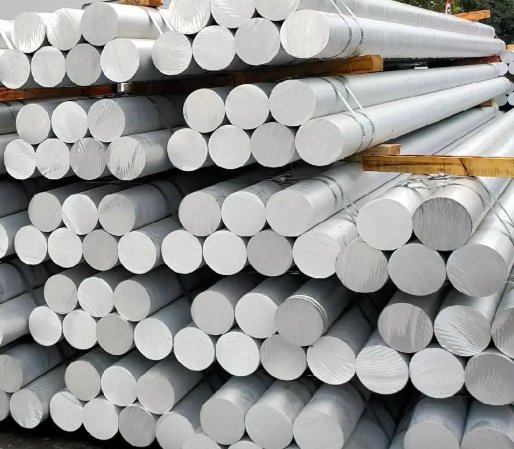
Aluminum A390 is a hypereutectic aluminum-silicon casting alloy designed for applications where wear resistance, dimensional stability and lower thermal expansion are more important than ductility. It is commonly used in engine blocks, cylinder bores, compressor parts, pump housings, pistons, sliding components and other castings that operate under friction, heat and cyclic loading.
Unlike general-purpose aluminum casting alloys, Aluminum A390 contains a high silicon level, typically around 16% to 18%. The hard primary silicon particles improve abrasion resistance and reduce thermal expansion, but they also make the alloy more difficult to machine and less forgiving during casting. For engineers, purchasing teams and foundries, the key question is not whether A390 is “stronger” than another aluminum alloy, but whether its wear performance justifies the additional tooling, machining and process-control requirements.
What Is Aluminum A390?
Aluminum A390, often referenced as A390.0 in cast alloy systems, is a high-silicon aluminum-copper-magnesium alloy. It belongs to the Al-Si-Cu-Mg family and is classified as hypereutectic because its silicon content is above the aluminum-silicon eutectic composition. This produces primary silicon crystals in the aluminum matrix.
These silicon particles act as a built-in hard phase. In sliding or abrasive environments, they help reduce surface wear and scuffing. This is why A390 aluminum alloy is widely considered for engine cylinder applications, hydraulic components and parts where conventional aluminum alloys may wear too quickly.
| Material characteristic | Aluminum A390 | Engineering meaning |
|---|---|---|
| Alloy type | Hypereutectic Al-Si-Cu-Mg casting alloy | Optimized for wear resistance and thermal stability |
| Silicon content | Typically 16% to 18% | Hard silicon particles improve abrasion resistance |
| Ductility | Low compared with A356 or 6061 | Not ideal for impact-loaded or highly deformable parts |
| Machining difficulty | High | Requires suitable tools, rigid fixturing and controlled cutting data |
Chemical Composition and Related Metallurgy
The exact chemistry of Aluminum A390 depends on the governing standard, foundry specification and customer drawing. However, the alloy is normally defined by high silicon, controlled copper and magnesium additions, and limited iron and impurity levels.
| Element | Typical range or role | Effect on performance |
|---|---|---|
| Silicon, Si | About 16.0% to 18.0% | Improves wear resistance, hardness and lowers coefficient of thermal expansion |
| Copper, Cu | Commonly about 4.0% to 5.0% | Increases strength and heat-treat response |
| Magnesium, Mg | Controlled addition | Supports precipitation hardening during heat treatment |
| Iron, Fe | Usually restricted | Excess iron can form brittle intermetallic phases and reduce toughness |
| Aluminum, Al | Balance | Provides low density, castability and corrosion resistance baseline |
A critical metallurgical factor is silicon morphology. Coarse or poorly distributed primary silicon can cause inconsistent machining, localized tool damage and reduced fatigue reliability. Fine, uniformly distributed silicon particles normally produce better wear behavior and more predictable machining results.
Why high silicon matters in A390 aluminum castings
In ordinary aluminum-silicon casting alloys, silicon improves fluidity and reduces shrinkage. In Aluminum A390, the silicon level is high enough to form hard primary silicon particles. These particles can resist sliding wear in cylinder surfaces, pump bores and compressor components. The trade-off is reduced ductility and greater tool wear during machining.
Mechanical and Physical Properties of Aluminum A390
Property values vary with casting method, section thickness, porosity level, heat treatment and testing standard. The following ranges are useful for early material screening, but final design values should be based on certified test data from the actual casting supplier.
| Property | Typical engineering range | Design implication |
|---|---|---|
| Density | Approximately 2.70 g/cm³ | Lightweight alternative to cast iron in wear applications |
| Tensile strength | Often about 250 to 330 MPa depending on condition | Adequate for many cast housings and engine components |
| Yield strength | Often about 200 to 280 MPa depending on heat treatment | Improved by Cu-Mg precipitation hardening |
| Elongation | Typically low, often below 1% to 2% | Not preferred for parts requiring high impact toughness |
| Hardness | Commonly about 110 to 140 HB | Contributes to wear resistance but increases machining difficulty |
| Coefficient of thermal expansion | Generally lower than standard Al-Si casting alloys | Useful for precision bores, pistons and heat-cycling assemblies |
The main technical value of A390 is the combination of light weight and wear resistance. Compared with cast iron, it can reduce component mass significantly. Compared with common aluminum casting alloys, it can withstand more severe sliding contact, especially where lubrication is present but boundary friction still occurs.
Aluminum A390 vs A356, 4032, ADC12 and Cast Iron
Material selection becomes clearer when Aluminum A390 is compared with alternative alloys used in casting, piston, die casting and wear-resistant applications.
| Material | Strengths | Limitations | Best-fit applications |
|---|---|---|---|
| Aluminum A390 | Excellent wear resistance, low thermal expansion, good high-temperature dimensional stability | Difficult machining, low ductility, strict casting control required | Cylinder bores, compressor parts, pump components, sliding wear castings |
| A356 aluminum | Good castability, better ductility, good corrosion resistance | Lower wear resistance than A390 | Structural castings, brackets, housings, automotive suspension parts |
| 4032 aluminum | Good piston alloy, lower expansion than many wrought aluminum alloys | Usually not selected for complex cast housings like A390 | Forged pistons, precision thermal-cycle components |
| ADC12 aluminum | Excellent die castability, cost-effective, high production efficiency | Lower wear resistance and lower high-temperature stability than A390 | Die-cast housings, covers, general industrial components |
| Gray cast iron | Excellent damping and wear performance, easy cylinder liner material | Much higher density than aluminum alloys | Engine blocks, liners, brake parts, heavy-duty wear components |
A390 is usually chosen when A356 or ADC12 cannot provide enough wear resistance, but cast iron is too heavy or thermally inefficient for the assembly. However, if the part requires impact toughness, high elongation or severe vibration resistance, A356-T6 or another aluminum casting alloy may be more suitable.
Quick material selection guidance
Choose Aluminum A390 when the design requires aluminum weight reduction, sliding wear resistance and lower thermal expansion. Choose A356 when ductility and structural reliability are more important. Choose ADC12 when high-volume die casting economics matter more than wear resistance. Choose cast iron when maximum wear resistance, damping and low material risk are more important than weight.
Casting Process Considerations for A390 Aluminum Alloy
A390 is castable, but it is not a “simple” aluminum casting alloy. The high silicon level increases the need for careful melt treatment, temperature control, mold design and solidification management. Common casting routes include permanent mold casting, sand casting and specialized casting processes for engine and compressor components.
For production parts, the foundry must control primary silicon size, porosity, oxide films and shrinkage defects. If these variables are not controlled, the casting may pass basic dimensional inspection but fail during machining, pressure testing or service.
| Casting issue | Typical cause | Engineering consequence | Control method |
|---|---|---|---|
| Coarse primary silicon | Improper melt control or slow cooling | Tool chipping, inconsistent wear surface, lower fatigue reliability | Refinement practice, controlled solidification and stable pouring temperature |
| Porosity | Gas pickup, shrinkage or poor feeding | Leakage, reduced strength, poor surface after machining | Degassing, gating optimization and pressure-tightness validation |
| Segregation | Non-uniform solidification | Variable hardness and machining response | Thermal simulation, mold temperature control and section-thickness review |
| Hot cracking risk | Restrained contraction or unsuitable geometry | Scrap or hidden crack initiation points | Design radii, uniform wall thickness and controlled cooling |
In engineering validation, pressure-tight castings should be evaluated by leak testing, X-ray inspection or computed tomography when the application requires safety or fluid sealing. Wear surfaces may also require microstructure checks to confirm silicon distribution and surface integrity after machining.
Machining Aluminum A390: Tools, Cutting Data and Surface Quality
Machining is one of the most important cost drivers for Aluminum A390. The hard silicon particles are abrasive, which means conventional carbide tools can wear quickly, especially in boring, reaming, milling and finishing operations on cylinder surfaces.
PCD tooling is commonly preferred for production machining because polycrystalline diamond resists abrasive wear far better than uncoated carbide. CBN is generally more associated with hard ferrous materials, while PCD is the usual choice for high-silicon aluminum.
| Machining factor | Recommended practice | Reason |
|---|---|---|
| Tool material | PCD for finishing and high-volume machining; carbide for limited roughing or prototypes | Improves tool life against abrasive silicon particles |
| Cutting edge | Sharp edge with controlled geometry | Reduces built-up edge and improves bore finish |
| Coolant | Flood coolant or optimized minimum quantity lubrication depending on process | Controls temperature, chip evacuation and surface consistency |
| Fixturing | Rigid clamping with minimal distortion | Maintains bore geometry and prevents chatter |
| Surface finishing | Fine boring, honing or plateau finishing when required | Creates controlled oil retention and sliding surface performance |
For production planning, machining trials should measure tool wear, surface roughness, bore roundness, silicon pull-out and burr formation. A realistic result is that A390 may reduce part weight and improve wear life, but machining cost per part can be higher than A356 or ADC12 due to tool consumption and slower finishing validation.
Practical machining note for buyers and process engineers
When comparing supplier quotations, check whether the quoted price assumes carbide or PCD tooling. A low initial quote may become expensive if tool life is not validated. For high-volume A390 parts, tool-life data, bore capability studies and surface roughness records are more useful than a generic metal machining statement.
Real Engineering Problems Where Aluminum A390 Performs Well
A390 is most valuable when the part experiences sliding wear, thermal cycling and dimensional tolerance requirements at the same time. The following examples describe realistic engineering scenarios where high-silicon aluminum can provide measurable benefits.
| Engineering problem | Why standard aluminum may fail | How Aluminum A390 helps | Validation metric |
|---|---|---|---|
| Aluminum cylinder bore wear | Soft matrix wears under piston ring contact | Primary silicon provides hard load-bearing particles | Bore wear depth, oil consumption, scuffing test results |
| Pump housing abrasion | Particles in fluid erode bore surfaces | Higher hardness and silicon-rich microstructure resist abrasion | Mass loss, flow-rate stability, leakage growth |
| Thermal expansion mismatch | Standard aluminum expands too much near steel parts | High silicon lowers expansion compared with many aluminum alloys | Clearance change after thermal cycling |
| Compressor component wear | Repeated sliding causes surface damage | Wear-resistant aluminum enables lighter rotating or moving assemblies | Surface roughness retention, efficiency loss, endurance hours |
In a typical design review, A390 should be assessed not only by tensile strength but also by wear testing, surface finish, microstructure and thermal dimensional stability. For sliding components, a 10% improvement in tensile strength may be less important than a major reduction in bore wear or a tighter thermal clearance window.
Heat Treatment, Surface Treatment and Finishing Options
Aluminum A390 can be heat treated to improve strength and hardness, commonly using solution treatment, quenching and artificial aging where the casting design and foundry specification allow it. The copper and magnesium additions support precipitation hardening, but heat treatment must be balanced against distortion, residual stress and dimensional requirements.
Surface engineering may also be used depending on the application. Honing, lapping, controlled boring and surface texturing are common for sliding surfaces. Coatings may be considered, but one advantage of A390 is that the alloy itself already provides a wear-resistant silicon phase, reducing reliance on thick external coatings in some designs.
| Process | Purpose | Key caution |
|---|---|---|
| T6-type heat treatment | Increase strength and hardness | Control distortion and verify final dimensions |
| Fine boring | Achieve tight bore geometry | Requires stable tooling and machine rigidity |
| Honing or plateau finishing | Improve oil retention and sliding performance | Must avoid silicon pull-out and surface tearing |
| Anodizing or coating | Improve corrosion or surface behavior in selected environments | High silicon may affect cosmetic uniformity and coating response |
Buyer and Engineer Checklist for Sourcing Aluminum A390 Parts
When sourcing A390 aluminum castings, the lowest casting price is not always the lowest total cost. The alloy requires careful foundry practice and machining validation. A reliable supplier should be able to discuss microstructure control, tooling strategy, inspection methods and expected scrap risks.
- Confirm the exact alloy designation, chemistry limits and applicable standard or customer specification.
- Define heat treatment condition, mechanical property requirements and test coupon location.
- Specify critical wear surfaces, machining allowance and surface roughness targets.
- Request microstructure evidence when primary silicon size and distribution are critical.
- Review porosity acceptance criteria for pressure-tight or fatigue-sensitive castings.
- Clarify whether PCD tools are used for production finishing operations.
- Validate bore roundness, cylindricity, hardness and leak performance on real production samples.
- Compare total cost, including machining, tool life, scrap rate and inspection—not only casting weight price.
For purchasing decisions, A390 should be evaluated as a performance alloy rather than a commodity aluminum grade. The supplier’s process capability can be as important as the nominal alloy name on the drawing.
Advantages and Limitations of Aluminum A390
| Advantages | Limitations |
|---|---|
| Excellent wear resistance for an aluminum casting alloy | Lower ductility than many structural aluminum alloys |
| Lower thermal expansion than standard aluminum alloys | More difficult to machine due to abrasive silicon particles |
| Good dimensional stability in thermal cycling applications | Requires strong foundry process control |
| Potential weight reduction versus cast iron | May require PCD tooling and higher inspection effort |
| Suitable for sliding and friction-related components | Not ideal for impact-loaded or highly deformable structures |
The best use cases for Aluminum A390 are applications where wear, weight and thermal stability are all important. It is less suitable when the design mainly requires high elongation, crash energy absorption or simple low-cost machining.
Conclusion: When Aluminum A390 Is the Right Choice
Aluminum A390 is a specialized high-silicon casting alloy for demanding wear-resistant aluminum components. Its primary silicon particles provide excellent abrasion resistance and reduced thermal expansion compared with many standard aluminum casting alloys. These benefits make it valuable for cylinder bores, compressor parts, pump housings and precision sliding components.
The trade-offs are clear: A390 is harder to cast, harder to machine and less ductile than general-purpose alloys such as A356 or ADC12. For successful production, engineers should define microstructure, porosity, heat treatment, machining method and surface finish requirements early in the project.
In short, Aluminum A390 is the right material when the application needs lightweight aluminum with strong wear resistance and stable thermal behavior—and when the manufacturing plan is capable of controlling the alloy’s casting and machining challenges.