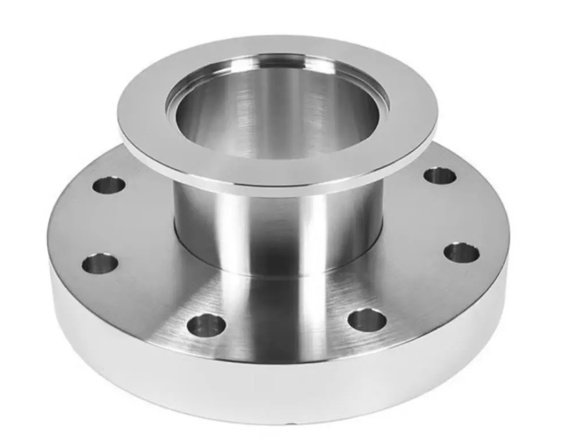
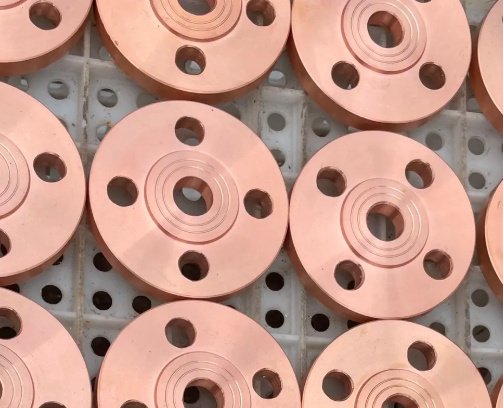
Copper Flanges are conductive, corrosion-resistant connection components used in piping systems, heat exchangers, electrical grounding assemblies, vacuum equipment, marine cooling lines, HVAC units and custom OEM machinery. A copper flange can be supplied as a standard pipe flange, a brazing flange, a blind flange, a plate flange, a loose backing flange or a fully machined part based on engineering drawings.
Compared with carbon steel or stainless steel flanges, copper flanges are selected where thermal conductivity, electrical continuity, antimicrobial surface behavior, seawater resistance in selected alloys, ductility or non-sparking performance is important. Correct selection depends on material grade, flange geometry, sealing face, bolt pattern and documentation level.
Product Overview: Copper Flange for Conductive and Corrosion-Resistant Connections
A copper flange is normally installed between pipe ends, tubes, valves, pumps, tanks, manifolds or equipment ports. It provides a bolted connection that can be assembled, inspected and removed more easily than a permanent welded or brazed joint. Copper flanges are widely used with copper pipe, copper-nickel pipe, brass components, bronze valves and mixed-metal systems where galvanic compatibility has been reviewed.
Typical supply forms include forged copper flanges, CNC-machined copper plate flanges, copper alloy pipe flanges, custom copper rings, brazed copper tube flanges and precision conductive flanges for electrical or thermal transfer applications.
| Product Name | Common Terms | Typical Use |
|---|---|---|
| Copper Flange | Copper pipe flange, copper plate flange, copper ring flange | Piping, HVAC, cooling water, heat transfer equipment |
| Copper Alloy Flange | Bronze flange, brass flange, copper-nickel flange | Marine, seawater, pump and valve connections |
| Custom Copper Flange | CNC copper flange, drawing-based copper flange | OEM equipment, busbar connection, vacuum and thermal systems |
Copper Flange Types Available
The correct flange type depends on the pipe connection method, pressure level, gasket design, installation space and maintenance requirements. Standard and custom copper flanges can be manufactured with drilled bolt holes, counterbores, grooves, serrated faces, flat faces, raised faces, O-ring grooves or special electrical contact surfaces.
| Type | Best Used For | Engineering Notes |
|---|---|---|
| Copper Slip-On Flange | Low to medium duty copper piping and cooling loops | Easy alignment; may be brazed, soldered or welded depending on material and design |
| Copper Weld Neck Flange | Higher integrity pipe connections and thermal cycling service | Long tapered hub improves stress transition from pipe to flange |
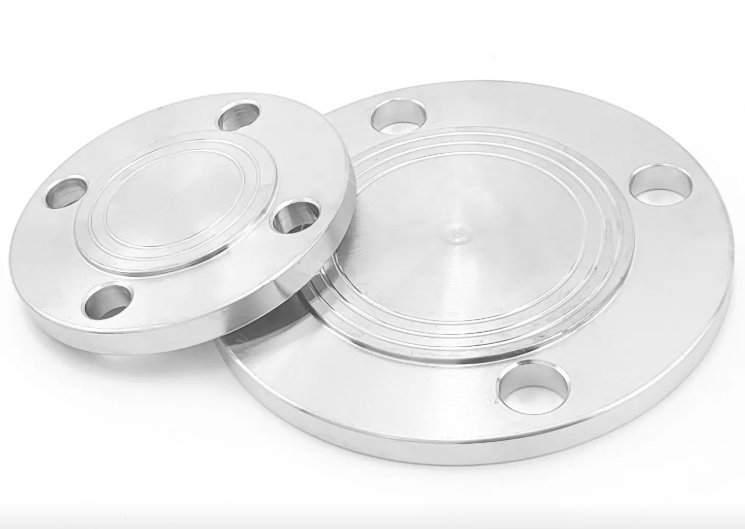
| Copper Blind Flange | Closing pipe ends, inspection ports, test ports and manifolds | Can be supplied with tapped holes, drain holes or sensor ports |
| Copper Plate Flange | HVAC, refrigeration, heat exchanger and OEM assemblies | Cost-effective for non-standard outside diameter, bolt circle or thickness |
| Copper Lap Joint Flange | Systems requiring frequent alignment or disassembly | Often used with stub ends or loose backing arrangements |
| Copper Threaded Flange | Small bore systems where hot work is restricted | Thread engagement and sealing method must be checked carefully due to copper softness |
| Copper Reducing Flange | Connecting different pipe sizes in compact assemblies | Useful for manifolds, skids and equipment nozzle transitions |
| Custom Machined Copper Flange | Electrical, vacuum, semiconductor, power and thermal transfer equipment | Can include precision grooves, conductive faces, dowel holes and controlled surface finish |
When should engineers choose pure copper instead of a copper alloy flange?
Pure copper grades such as C11000 or C10200 are preferred where high electrical or thermal conductivity is the primary requirement. Copper alloys such as C70600 copper-nickel, bronze or brass are preferred where mechanical strength, seawater resistance, wear resistance or castability is more important than maximum conductivity.
Materials, Standards and Typical Specifications
Copper flanges can be produced from commercially pure copper, oxygen-free copper, phosphorus-deoxidized copper, tellurium copper, brass, bronze and copper-nickel alloys. The best material depends on operating media, joining process, pressure, conductivity requirement, flange machining complexity and corrosion environment.
| Material Grade | Common Name | Typical Reason for Selection | Relevant Material Standards |
|---|---|---|---|
| C11000 / Cu-ETP | Electrolytic tough pitch copper | High electrical conductivity, general conductive parts, busbar flanges | ASTM B152, ASTM B187, EN CW004A |
| C10200 / Cu-OF | Oxygen-free copper | Vacuum, high-conductivity and hydrogen-sensitive environments | ASTM B152, ASTM B187, EN CW008A |
| C12200 / Cu-DHP | Phosphorus-deoxidized copper | HVAC, refrigeration, brazed tube and pipe assemblies | ASTM B75, ASTM B88, EN CW024A |
| C14500 | Tellurium copper | Improved machinability for precision CNC copper flanges | ASTM B301, ASTM B196 |
| C70600 | 90/10 copper-nickel | Seawater cooling, marine piping, condenser systems | ASTM B151, ASTM B466, ASTM B171 |
| C71500 | 70/30 copper-nickel | More demanding marine and offshore corrosion conditions | ASTM B151, ASTM B466, ASTM B171 |
Dimensional references may include ASME B16.24 for cast copper alloy pipe flanges, ASME B16.5 or ASME B16.47 dimensions where project compatibility is required, EN 1092-3 for copper alloy flanges, DIN flange patterns, JIS B2220 drilling patterns or customer drawings.
Important note: dimensional compatibility does not automatically equal pressure-code compliance. For pressure equipment, the material, design calculation, rating, temperature, gasket, bolting and inspection requirements must be verified according to the applicable project code.
| Specification Item | Typical Capability |
|---|---|
| Nominal Size | DN15 to DN1200 / NPS 1/2 to 48, or custom |
| Pressure Class | Class 150, Class 300, PN6, PN10, PN16 or drawing-based rating, subject to material verification |
| Face Type | Flat face, raised face, serrated face, smooth face, O-ring groove, custom sealing profile |
| Manufacturing Method | Forging, plate cutting, CNC turning, milling, drilling, boring, grooving and deburring |
| Surface Finish | As-machined, polished, tumbled, pickled, anti-tarnish protected or cleaned for oxygen/vacuum service |
| Documentation | Material certificate, dimensional report, PMI report, pressure test report, RoHS/REACH declaration where required |
Can copper flanges be welded, soldered or brazed to copper pipe?
Yes, but the joining method should match the copper grade, wall thickness, service temperature and cleanliness requirement. C12200 copper is commonly used for brazed or soldered HVAC and refrigeration assemblies. TIG welding may be used for suitable copper grades with controlled heat input. After hot work, final machining of the sealing surface may be required to restore flatness.
Engineering Benefits and Performance Data
The main engineering value of copper flanges is the combination of conductivity, corrosion behavior and formability. In heat-transfer or electrical systems, a flange is not only a mechanical connector; it can also become part of the thermal path or current path. For this reason, face finish, contact pressure, oxide control and bolt preload can influence system performance.
| Property | Typical Value or Behavior | Why It Matters |
|---|---|---|
| Electrical Conductivity | C11000 copper: about 100% IACS | Useful for busbar flanges, grounding plates and conductive joints |
| Thermal Conductivity | C11000 copper: approximately 390 W/m·K at room temperature | Supports heat transfer in cooling, condenser and thermal interface systems |
| Thermal Expansion | Approximately 16.5 to 17.7 µm/m·K for many copper grades | Important for gasket compression under thermal cycling |
| Corrosion Resistance | Good resistance in fresh water; copper-nickel grades perform well in seawater | Reduces maintenance risk in cooling water and marine applications |
| Ductility | High compared with many ferrous materials | Helps absorb vibration, but requires controlled bolt torque to avoid distortion |
Engineering Problem Example: Leakage After Brazing
A common field problem is gasket leakage after copper flange brazing. The root cause is often flange face distortion caused by uneven heat input, excessive local clamping or machining the sealing face before thermal joining. For soft copper flanges, even a small angular error can reduce gasket compression on one side of the joint.
Practical corrective actions include using a support mandrel during brazing, balancing heat input, selecting half-hard or suitable temper material, leaving machining allowance before hot work and finish machining the sealing face after brazing. For small and medium copper flanges, typical controlled targets may include face flatness of 0.05 mm to 0.10 mm, bolt circle tolerance of ±0.10 mm and sealing surface roughness matched to the gasket type.
In a shop trial on a chilled-water skid assembly, replacing saw-cut drilled copper rings with CNC-machined copper flanges reduced average bolt-hole positional error from about 0.32 mm to 0.06 mm. Across 64 bolted joints, measured assembly time per joint decreased by approximately 18% because installers spent less time correcting bolt alignment and gasket centering.
Manufacturing and Quality Control for Copper Flanges
Copper is ductile and thermally conductive, which makes it different from steel during machining. Tool geometry, chip evacuation, coolant selection and clamping pressure must be controlled to avoid burrs, chatter, smearing, workpiece distortion and poor sealing finish. The most important manufacturing control point is the repeatability of the sealing face and bolt circle.
Typical Manufacturing Process
- Material selection according to grade, temper, thickness and certificate requirement.
- Blank preparation by forging, sawing, waterjet cutting, laser cutting or plate cutting.
- Rough turning or milling to establish outside diameter, bore and thickness allowance.
- Stress control or intermediate annealing when required by the flange geometry.
- CNC drilling of bolt holes, counterbores, tapped holes, dowel holes or custom patterns.
- Finish machining of sealing face, gasket groove, hub profile and contact surface.
- Deburring, cleaning, oxide removal, anti-tarnish protection or special clean packaging.
- Inspection, marking, documentation and protective packing.
Inspection Options
| Inspection Item | Purpose |
|---|---|
| Material Certificate Review | Confirms chemical composition, grade and heat or batch traceability |
| PMI Testing | Verifies alloy identity for mixed copper alloy orders |
| Dimensional Inspection | Checks OD, ID, thickness, bolt circle, hole size, hub and groove dimensions |
| Flatness and Parallelism | Controls gasket seating and even bolt load distribution |
| Surface Roughness Measurement | Ensures compatibility with rubber, PTFE, graphite, spiral wound or metal gaskets |
| Pressure or Leak Testing | Used for assemblies, brazed flanges, tube flanges and pressure-related parts |
| Conductivity Testing | Used for electrical copper flanges and high-conductivity parts |
Pressure-rating note for copper flanges
Pressure capability depends on the flange design, material grade, temperature, gasket, bolting, pipe connection and applicable code. Pure copper is softer than steel, so bolt load and gasket selection require careful review. For regulated pressure systems, engineering approval and code-based verification are required before installation.
How to Specify Copper Flanges for Procurement
Clear specifications reduce quotation errors, machining revisions and field installation problems. For custom copper flanges, the drawing should define all functional dimensions, tolerance levels and documentation requirements.
- Part description: copper slip-on flange, copper blind flange, copper plate flange, copper-nickel flange or custom CNC copper flange.
- Material grade: C11000, C10200, C12200, C14500, C70600, C71500 or equivalent EN/JIS grade.
- Standard or drawing: ASME, EN, DIN, JIS or fully customized drawing number and revision.
- Size and rating: DN/NPS, pressure class, bore, outside diameter, thickness and hub dimensions.
- Sealing face: flat face, raised face, serrated finish, smooth finish, O-ring groove or special gasket profile.
- Bolt pattern: number of holes, hole diameter, bolt circle diameter, slot direction and counterbore requirements.
- Joining method: brazing, soldering, welding, mechanical bolting, threaded connection or conductive clamping.
- Tolerance level: general tolerance plus critical tolerances for face flatness, bore, bolt circle and parallelism.
- Surface condition: as-machined, polished, pickled, anti-tarnish, oxygen-cleaned or vacuum-cleaned.
- Documentation: EN 10204 3.1 certificate, inspection report, test report, compliance declaration and packaging requirement.
| Buyer Concern | Recommended Checkpoint |
|---|---|
| Flange does not align with existing pipe or valve | Confirm bolt circle diameter, hole count, bore and standard revision before production |
| Leakage during hydrotest | Specify face flatness, gasket type, surface roughness and post-brazing finish machining |
| Material mix-up | Require material marking, certificate and PMI testing for alloy copper flanges |
| Oxidation during storage | Use dry packaging, anti-tarnish paper, sealed bags and humidity control where needed |
| Poor electrical contact | Specify contact surface finish, oxide removal, conductivity requirement and bolt preload range |
Application Areas for Copper Flanges
Copper flanges are used in industries where clean installation, conductivity, heat transfer and corrosion resistance are part of the equipment function. The same flange may serve as a mechanical connection, a thermal bridge, an electrical contact surface or a removable maintenance interface.
| Industry | Common Applications | Typical Material Choice |
|---|---|---|
| HVAC and Refrigeration | Chilled-water loops, condenser lines, brazed copper tube connections | C12200, C11000 |
| Marine and Offshore | Seawater cooling, condenser systems, pump connections | C70600, C71500 |
| Power and Electrical | Busbar flanges, grounding plates, conductive connectors | C11000, C10200 |
| Heat Exchanger Manufacturing | Tube sheet connections, end covers, thermal transfer joints | C12200, C70600 |
| Vacuum and Laboratory Equipment | Custom sealing rings, clean conductive flanges, instrumentation interfaces | C10200, C11000 |
| Chemical and Process Equipment | Low-pressure corrosion-resistant pipe joints and inspection covers | Application-specific copper alloy |
| OEM Machinery | Custom manifolds, cooling plates, compact bolted connectors | Drawing-based selection |
Packaging, Documentation and Compliance
Copper surfaces can oxidize, stain or scratch during handling, so packaging should match the final use. Precision copper flanges are commonly separated by soft interleaving material, wrapped in anti-tarnish paper, sealed in plastic bags and packed in wooden cases or export cartons. Critical sealing faces may require protective caps or face guards.
Documentation can include material test certificates, dimensional inspection reports, surface roughness records, pressure or leak test reports, conductivity test data, RoHS declaration, REACH declaration and country-of-origin information. Traceability is especially important for pressure-related, marine, electrical and regulated OEM projects.
For engineering teams and procurement departments, the best purchasing result comes from matching the copper flange design to the actual operating condition rather than selecting by size alone. Material grade, sealing design, machining tolerance, joining process and inspection level should be reviewed together to ensure reliable installation and long service life.