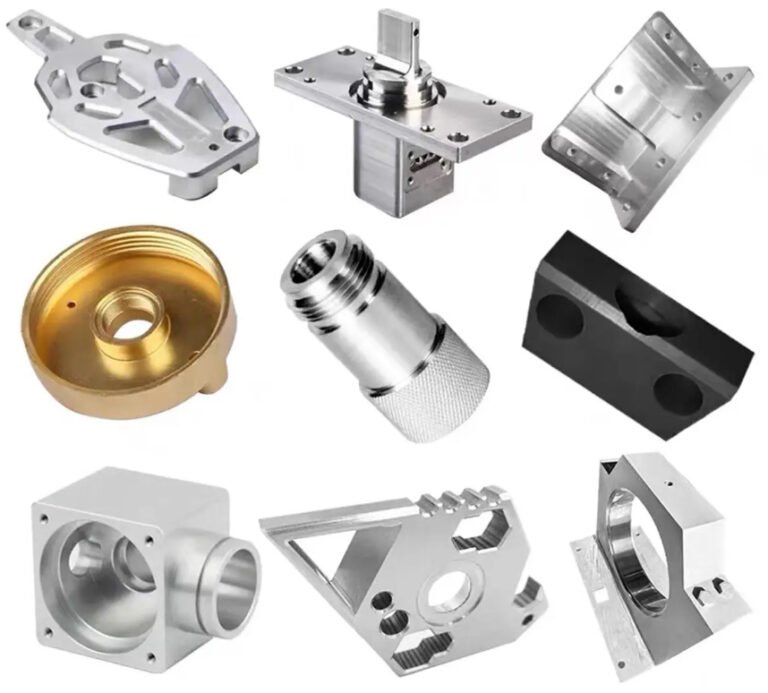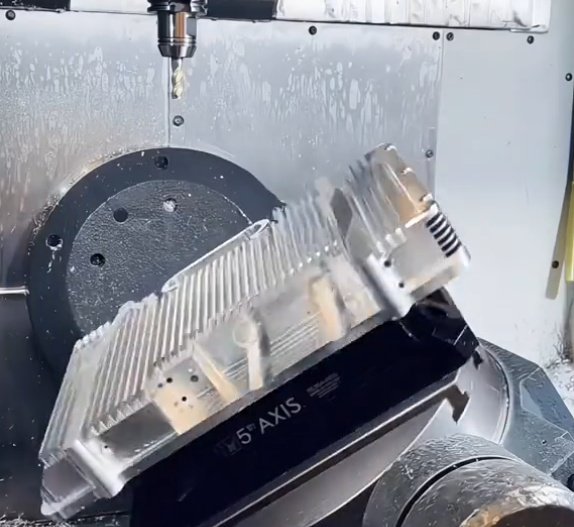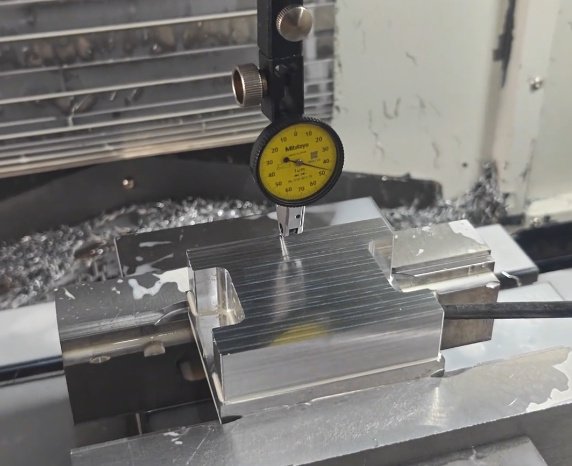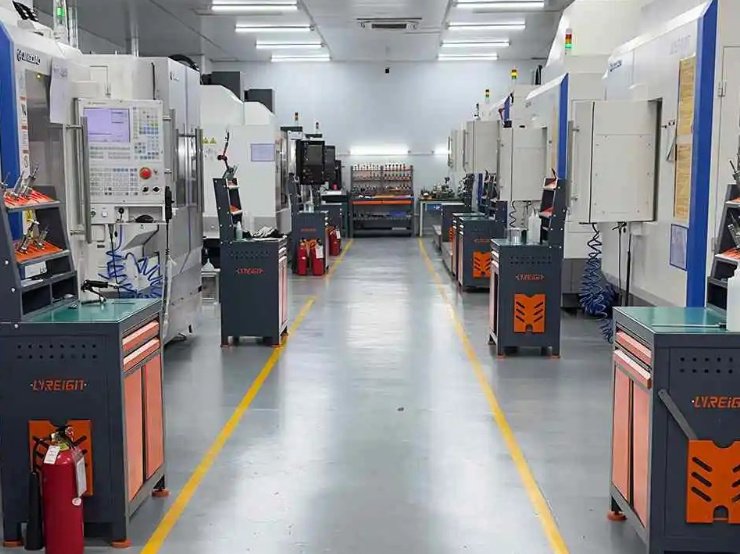
Metal machining usually fails industry standards for reasons that are more systematic than accidental: unclear drawings, uncontrolled processes, poor measurement systems, weak material traceability, inadequate documentation, or a mismatch between design requirements and actual shop capability. In regulated sectors such as aerospace, medical devices, automotive, energy, and industrial equipment, “close enough” is rarely acceptable because the part must meet dimensional, material, surface, functional, and documentation requirements at the same time.
Industry Standards Mean More Than Tight Tolerances
A common misconception is that usinage des métaux meets industry standards if the final dimensions are “within tolerance.” In reality, industry standards are acceptance systems that combine design interpretation, manufacturing controls, inspection methods, material verification, and traceable records.
Depending on the application, a machined part may be evaluated against several standards or customer-specific requirements. These may include ISO 9001 for quality management, AS9100 for aerospace suppliers, ISO 13485 for medical device manufacturing, IATF 16949 for automotive production, ASME Y14.5 or ISO 1101 for GD&T interpretation, ISO 2768 for general tolerances, ISO 286 for fits, ASTM or AMS material specifications, and customer drawings or purchase order clauses.
| Requirement Area | Typical Standard or Reference | What It Controls |
|---|---|---|
| Quality management | ISO 9001, AS9100, ISO 13485, IATF 16949 | Process control, corrective action, traceability, supplier management |
| Geometric tolerancing | ASME Y14.5, ISO 1101 | Position, flatness, perpendicularity, profile, runout, datum systems |
| General tolerances | ISO 2768, customer drawing notes | Default dimensional and angular tolerances when not individually specified |
| Fits and limits | ISO 286, ANSI B4.1 | Shaft and hole fit classes, clearance and interference conditions |
| Material compliance | ASTM, AMS, EN, DIN, JIS specifications | Chemical composition, mechanical properties, heat treatment, certification |
| Inspection reporting | FAI, PPAP, customer inspection plans | Dimensional evidence, process approval, production readiness |
Why a part can pass size inspection but still fail compliance
A part may measure correctly on length, width, and hole diameter but still fail because the hole position is out of true position, the surface roughness exceeds the specified Ra value, the material certificate does not match the required alloy condition, the heat treatment record is missing, or the inspection method does not align with the drawing datum scheme.
Key Symptoms That Your Machining Process Is Not Standard-Compliant
Nonconformance often appears as recurring quality escapes rather than a single obvious machining error. Engineering and purchasing teams should treat the following as warning signs of a process that is not stable enough for industry-standard production.
- Repeated dimensional failures on the same features, especially bores, slots, thin walls, and datum-related hole patterns.
- Inspection reports showing borderline results with no evidence of process capability.
- Parts passing internal inspection but failing customer CMM inspection.
- Surface finish values such as Ra, Rz, or waviness outside specification after tool wear or secondary processing.
- Inconsistent material certificates, missing heat-lot numbers, or unclear country-of-origin documentation.
- GD&T callouts interpreted differently by programming, machining, and quality teams.
- Frequent rework, deburring variation, manual blending, or undocumented “shop fixes.”
- First Article Inspection results not matching production-lot performance.
These symptoms point to uncontrolled variation, which is one of the most common reasons CNC machining quality fails to meet customer or regulatory expectations.
Root Cause 1: Drawing Interpretation and GD&T Are Not Aligned
Many machining failures begin before the first chip is cut. If the manufacturer, buyer, and design engineer interpret the drawing differently, the finished part may be manufactured correctly according to one interpretation but rejected according to another.
GD&T-related issues are especially common. A position tolerance may require inspection from a specific datum reference frame, while a machinist may set up the part from a convenient surface that is not the functional datum. A flatness tolerance may apply to a sealing face, but distortion from clamping or heat treatment may not be evaluated in the free-state condition required by the drawing.
Common drawing-related failure points
- Missing or contradictory datum references.
- Unclear default tolerance class, such as unspecified ISO 2768-mK or company-specific tolerances.
- Overly tight tolerances applied to nonfunctional features.
- Surface finish requirements shown without measurement direction, cutoff length, or acceptance method.
- Thread callouts missing class of fit, depth, coating allowance, or gaging requirement.
- Drawing revision mismatch between quotation, production, and inspection.
In practical terms, a drawing that specifies ±0.01 mm on a feature without explaining function, datum relationship, or inspection method can create avoidable cost, scrap, and supplier disputes.
Root Cause 2: Machine Capability Does Not Match the Tolerance Requirement
A CNC machine may be accurate under ideal conditions but still incapable of holding a tolerance consistently in production. Machine capability depends on spindle condition, guideway wear, thermal compensation, toolholding rigidity, fixture repeatability, cutting strategy, machine calibration, and environmental control.
| Machining Requirement | Common Capability Risk | Typical Engineering Control |
|---|---|---|
| ±0.005 mm bore tolerance | Thermal drift, tool deflection, spindle runout | In-process probing, boring compensation, controlled warm-up cycle |
| True position of 0.025 mm | Fixture location error, datum mismatch | Datum-controlled fixturing, CMM program aligned to drawing datums |
| Ra 0.8 μm sealing surface | Tool wear, chatter, feed rate variation | Defined finishing pass, tool-life limit, surface roughness verification |
| Thin-wall aluminum housing | Clamping distortion, stress relief after machining | Soft jaws, staged roughing and finishing, stress-relieved material |
| High-volume turned shaft | Tool wear trend, bar stock variation | SPC, automatic offset control, periodic gage calibration |
For precision machining, the process should normally be more capable than the tolerance itself. If a feature tolerance is 0.02 mm, a process that naturally varies by 0.018 mm may appear acceptable for a few samples but will likely fail across production lots.
Example: A tolerance that looked achievable but failed in production
An aluminum valve body had a 0.020 mm positional tolerance on a six-hole pattern. Prototype parts passed manual inspection, but production lots showed a 12% rejection rate at incoming inspection. A CMM study found that the machine was repeating within 0.008 mm, but fixture loading variation contributed up to 0.018 mm relative to the specified datum. After replacing a general-purpose fixture with datum-specific hardened locators and adding a clamp sequence, the rejection rate dropped below 1.5% over three consecutive lots.
Root Cause 3: Measurement Systems Are Not Reliable Enough
If the inspection system is not repeatable and reproducible, you cannot confidently determine whether the machining process meets the standard. This includes the measuring instrument, fixture, operator technique, software program, environmental conditions, and gage calibration status.
A common benchmark in Measurement System Analysis is that a gage R&R value below 10% is generally considered acceptable, 10% to 30% may be conditionally acceptable depending on application, and gage R&R above 30% is usually unsuitable for process control. Exact acceptance criteria should follow the customer, sector, and risk level.
Inspection-related causes of false acceptance or false rejection
- Using calipers for features that require micrometers, bore gages, air gages, optical systems, or CMM inspection.
- Inspecting a GD&T feature without referencing the correct datum structure.
- Measuring parts immediately after machining while they are still thermally expanded.
- Using worn thread plug gages or uncalibrated surface roughness testers.
- Relying on a single operator’s technique for flexible, thin, or small parts.
- Reporting only pass/fail results instead of actual measured values and uncertainty context.
For high-precision CNC machining, CMM reports, ballooned drawings, first article inspection, and calibrated gage records should be connected. If they are not, the customer may not accept the inspection evidence even when the parts appear dimensionally acceptable.
Root Cause 4: Material and Heat Treatment Controls Are Weak
Material compliance is a major reason machined components fail industry standards. A part can be dimensionally perfect and still be rejected if the alloy, temper, hardness, grain direction, heat treatment, or certification does not match the specification.
Buyers in aerospace, defense, medical, and energy markets often require mill test reports, certificates of conformity, special process certificates, and full heat-lot traceability. If material traceability is broken, the part may be unusable even if every measured dimension is correct.
| Material Issue | How It Affects Machining | Compliance Risk |
|---|---|---|
| Wrong alloy or substitute grade | Different machinability, strength, corrosion resistance | Failure to meet drawing or purchase order requirements |
| Incorrect temper or heat treatment | Dimensional instability, hardness variation, distortion | Rejected hardness, tensile, or functional performance |
| Uncontrolled residual stress | Warping after rough machining or finishing | Flatness and profile nonconformance |
| Missing material certification | Cannot verify composition or mechanical properties | Traceability failure during audit or incoming inspection |
| Coating allowance ignored | Final dimensions shift after anodizing, plating, or passivation | Fit, thread, bore, or sealing failure |
Engineering teams should also consider how downstream processes affect compliance. Anodizing, electroless nickel plating, passivation, nitriding, carburizing, and heat treatment may change dimensions, hardness, surface texture, or fatigue behavior.
Root Cause 5: Surface Finish, Burrs, and Edge Conditions Are Undercontrolled
Industry-standard machining is not limited to nominal geometry. Surface integrity, burr control, edge breaks, and cleanliness can determine whether a part functions correctly. This is especially important for hydraulic manifolds, sealing components, surgical tools, aerospace brackets, optical mounts, and precision motion assemblies.
Surface and edge failures that often cause rejection
- Ra value exceeds the drawing requirement after tool wear or an aggressive feed rate.
- Directional tool marks interfere with sealing, sliding, or fatigue performance.
- Burrs remain inside cross-drilled holes, threads, keyways, or internal passages.
- Manual deburring changes edge geometry beyond the specified chamfer or radius.
- Sharp edges remain where drawings require “break all edges.”
- Excessive polishing removes material and causes dimensional or profile failure.
A drawing note such as “deburr and break sharp edges” may be insufficient for critical components. Better requirements define maximum burr height, edge radius range, surface roughness value, inspection method, and cleanliness level when functionally necessary.
Example: Internal burrs caused a field failure
A stainless steel hydraulic fitting met dimensional inspection but failed during assembly testing because a cross-hole burr detached and blocked a small fluid passage. The corrective action added borescope inspection, abrasive-flow deburring for the intersecting holes, and a maximum allowable burr condition in the control plan. Subsequent production lots passed pressure and flow testing without recurrence.
Root Cause 6: Process Capability Is Not Proven With Data
One good first article does not prove that a machining process meets industry standards. A capable process must repeatedly produce conforming parts under normal production conditions. For critical features, many customers expect statistical process control, capability studies, and reaction plans.
A commonly used benchmark is Cpk of 1.33 for stable production features, while higher-risk or safety-critical applications may require 1.67 or higher. Requirements vary by customer and industry, but the principle is consistent: the process must demonstrate margin, not merely pass inspection by luck.
| Metric | Meaning | Why It Matters in Machining |
|---|---|---|
| Cp | Potential process capability if centered | Shows whether process spread fits within tolerance |
| Cpk | Actual capability considering process centering | Shows whether production is drifting toward a tolerance limit |
| SPC chart | Trend monitoring over time | Detects tool wear, thermal drift, and fixture changes |
| First Article Inspection | Initial dimensional and documentation verification | Confirms setup and interpretation before full production |
| Control plan | Defined inspection and reaction strategy | Prevents repeated defects and undocumented decisions |
Data-driven example
A turned stainless shaft required a diameter of 12.000 mm ±0.010 mm. Initial samples measured between 11.995 mm and 12.004 mm, so the lot appeared acceptable. After collecting 125 production measurements, the process average shifted to 11.993 mm as the tool wore, and 4.8% of parts fell below the lower specification limit. By adding a tool-life limit at 180 pieces, automatic offset correction every 40 pieces, and an in-process air gage check, the process achieved a reported Cpk increase from 0.92 to 1.46 over the next validated run.
Root Cause 7: Documentation and Traceability Do Not Support the Part
In regulated machining supply chains, documentation is part of the product. Missing documents can cause rejection even when the physical part meets specifications. This is why aerospace machining, medical machining, and automotive machining place heavy emphasis on records, revision control, nonconformance management, and approval evidence.
Strong documentation provides drawing-to-inspection traceability, showing that each critical requirement was identified, manufactured, inspected, and accepted using appropriate methods.
Documentation typically expected for higher-standard machining
- Current drawing revision and purchase order requirements.
- Ballooned drawing linked to inspection report numbers.
- First Article Inspection report when required.
- Material test report or certificate of conformity.
- Heat treatment, plating, anodizing, passivation, welding, or NDT certificates when applicable.
- Calibration records for critical inspection equipment.
- Nonconformance reports and corrective action records.
- Lot identification, serial number tracking, or batch records.
- Packaging, preservation, and cleanliness records for sensitive parts.
If a supplier cannot connect a shipped part to its material lot, manufacturing route, inspection results, and special process records, many customers will classify the issue as a quality system failure rather than a minor paperwork error.
Buyer and Engineer Checklist: How to Identify the Real Problem
When metal machining is not meeting industry standards, the best approach is not to blame the machine, operator, or inspector first. The issue should be isolated across design, process, measurement, material, and documentation.
- Confirm the correct drawing revision, specification list, and purchase order clauses.
- Review whether all critical dimensions, GD&T features, surface finishes, and material requirements are clearly defined.
- Compare supplier inspection methods with the required datum scheme and acceptance criteria.
- Check whether the production machine, fixture, and tooling are capable of holding the specified tolerance over time.
- Request actual measured data, not only pass/fail statements.
- Review Cpk, SPC charts, or lot trend data for critical-to-quality features.
- Verify material certificates, heat-lot traceability, and special process records.
- Audit calibration status and gage suitability for the measured features.
- Inspect burrs, edge conditions, cleanliness, and packaging when functional failure occurs despite dimensional conformance.
- Document corrective actions and verify effectiveness on subsequent production lots.
For purchasing teams, the supplier’s quotation should also be reviewed carefully. A low quote may exclude CMM inspection, FAI documentation, material certifications, special packaging, PPAP submission, or capability studies. This creates risk when the actual requirement is high-compliance machining rather than basic part fabrication.
How to Bring Metal Machining Back Into Compliance
Correcting noncompliant machining requires a structured plan. The most effective improvements usually combine engineering clarification, process control, inspection validation, and documentation discipline.
| Problème | Corrective Action | Expected Result |
|---|---|---|
| Ambiguous tolerance interpretation | Clarify drawing notes, datum structure, GD&T, and inspection method | Reduced supplier-customer inspection disagreement |
| Dimensional drift | Add SPC, tool-life control, offset strategy, and thermal stabilization | Higher process capability and fewer lot rejects |
| Poor measurement repeatability | Perform MSA, improve fixtures, calibrate gages, and standardize technique | More reliable acceptance decisions |
| Surface finish failure | Define finishing tools, cutting parameters, inspection frequency, and roughness method | More consistent Ra, Rz, and functional surface quality |
| Material documentation gaps | Link purchase orders, material lots, certificates, and production travelers | Improved audit readiness and traceability |
| Recurring rework | Use root cause analysis, corrective action, and effectiveness verification | Lower scrap, lower rework cost, and more stable delivery |
A practical compliance review should start with the features that affect fit, function, safety, sealing, fatigue life, regulatory approval, or assembly yield. Not every dimension requires the same level of control, but every critical requirement needs a defined manufacturing and inspection strategy.
Conclusion: Most Machining Standard Failures Are Process Failures
Metal machining fails industry standards when the process cannot consistently prove that the part meets its dimensional, geometric, material, surface, and documentation requirements. The root cause is often not a single bad operator or a defective CNC machine; it is a gap between design intent, shop capability, measurement confidence, and quality system discipline.
The most reliable path to compliance is standard-compliant quoting, clear engineering requirements, capable equipment, controlled tooling, validated inspection, traceable materials, and data-based process control. When these elements are aligned, CNC machined parts are far more likely to pass audits, incoming inspection, functional testing, and long-term production requirements.