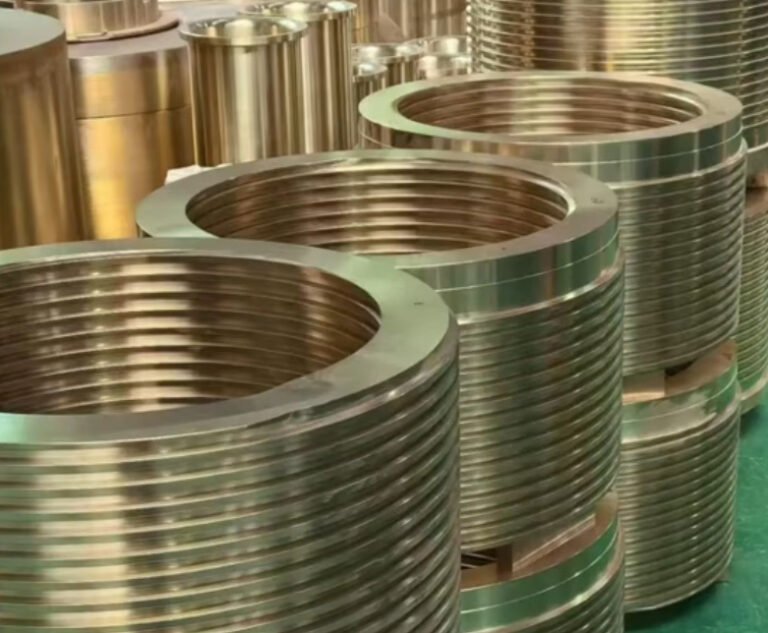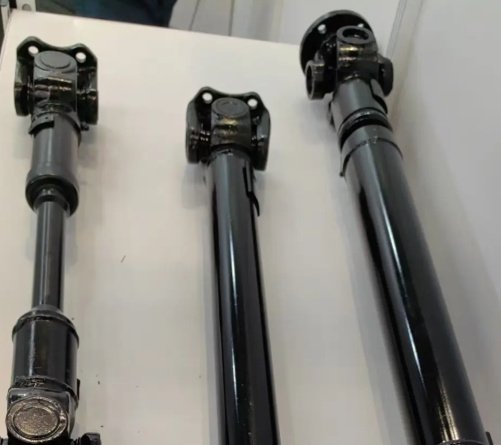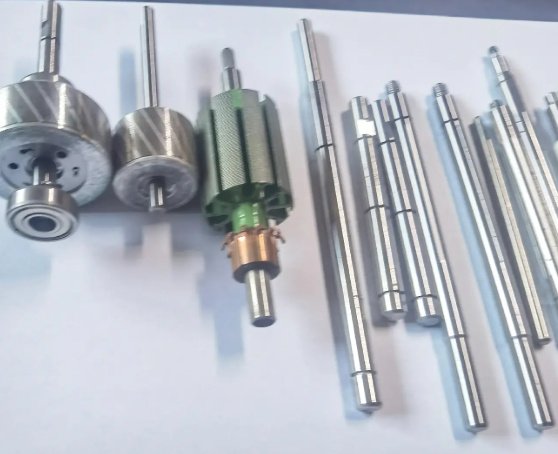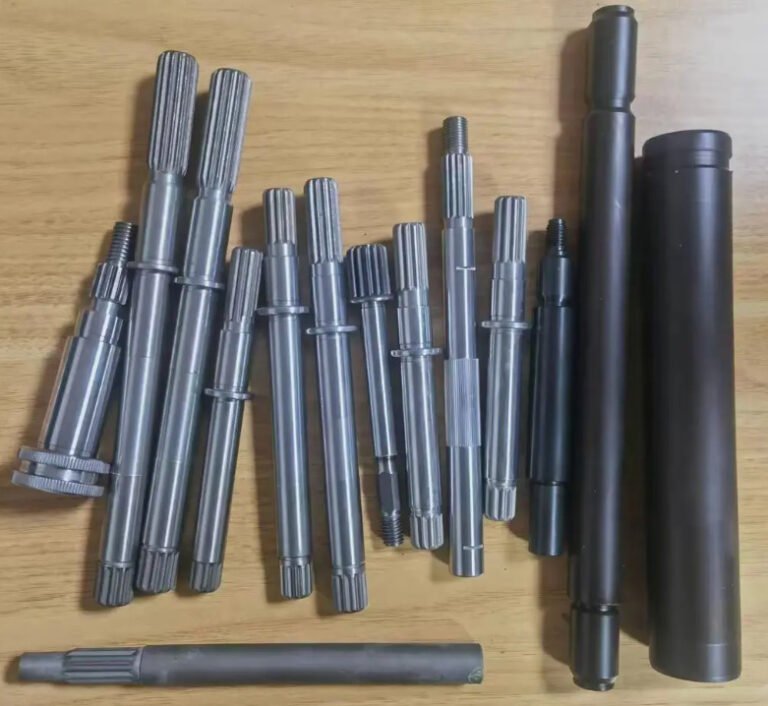
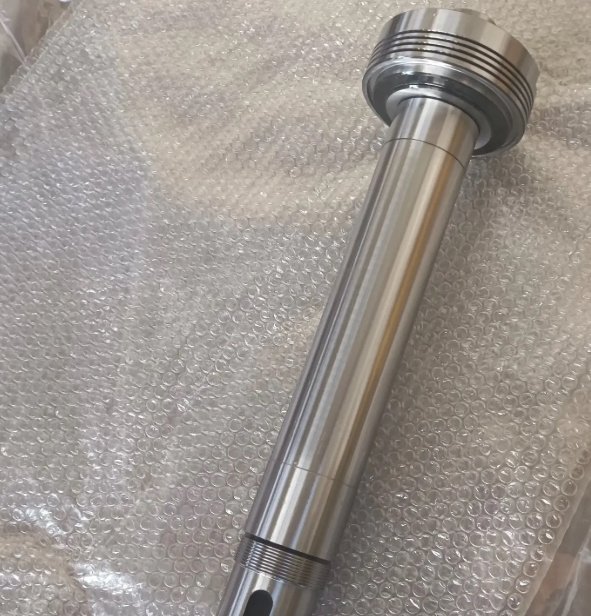
Precision shafts are engineered cylindrical components used to transmit torque, guide linear motion, support rotating assemblies and maintain alignment in mechanical systems. Unlike general-purpose round bars, Precision Shafts are manufactured with controlled diameter tolerance, straightness, concentricity, runout, hardness and surface roughness so that bearings, couplings, gears, pulleys, bushings and linear guides can operate with predictable performance.
For engineers, buyers and machine builders, the key question is not only “What shaft diameter do I need?” but also “What tolerance, material, surface finish and heat treatment will keep the system stable under load, speed, duty cycle and environment?” This page explains how precision shafts are specified, manufactured and inspected for industrial applications.
What Is a Precision Shaft?
A precision shaft is a machined, ground or finished shaft designed to meet tighter dimensional and geometric requirements than standard commercial shafting. It may be used as a rotating shaft, linear guide shaft, motor shaft, transmission shaft, roller shaft, spline shaft, stepped shaft or custom CNC shaft.
In practical terms, a precision shaft specification often includes nominal diameter, length, tolerance class, total indicated runout, straightness, surface roughness, hardness, material grade, coating, end features and inspection method. Runout and straightness are especially important when the shaft supports high-speed rotation, linear bearings or components that must remain concentric during operation.
Common Types of Precision Shafts
The correct shaft type depends on whether the application needs torque transmission, linear guidance, bearing support, corrosion resistance, light weight or wear resistance.
| Type | Typical Function | Common Features | Typical Applications |
|---|---|---|---|
| Linear precision shaft | Guides linear bearings or bushings | Ground OD, hard chrome plating or induction hardening | Automation slides, pick-and-place units, packaging equipment |
| Rotary precision shaft | Transmits torque and supports rotating components | Bearing journals, keyways, shoulders, threaded ends | Motors, gearboxes, pumps, conveyors |
| Stepped shaft | Locates multiple components at different diameters | Shoulders, relief grooves, multiple fits | Drive trains, spindles, rollers, transmission assemblies |
| Spline shaft | Transfers torque while allowing axial movement or indexing | External splines, involute or straight-sided profiles | Robotics, automotive systems, power transmission |
| Hollow precision shaft | Reduces weight or allows cables, fluid or air passage | Deep-hole drilling, ID finishing, reduced mass | Medical devices, robotics, printing machinery |
| Stainless precision shaft | Resists corrosion in wet or clean environments | 304, 316, 420, 440C or precipitation-hardened stainless steel | Food equipment, laboratory automation, marine systems |
Critical Specifications for Precision Shafts
A shaft drawing should define more than diameter and length. The most reliable specifications translate the application requirement into measurable manufacturing and inspection targets.
Diameter Tolerance and Fit
Diameter tolerance controls how the shaft fits into bearings, gears, pulleys, collars and couplings. Common fit systems reference ISO 286 tolerance grades such as h6, h7, g6, k6 or m6 depending on whether the fit is clearance, transition or interference. For example, a bearing journal may require a tighter tolerance than a non-functional spacer area.
Straightness
Straightness affects vibration, bearing load distribution and linear bearing smoothness. Long, slender shafts are more difficult to keep straight after turning, heat treatment and grinding. Engineers should specify straightness per unit length and total straightness when the shaft is used as a guide rail or high-speed rotating member.
Concentricity and Total Indicated Runout
Concentricity and total indicated runout help control eccentric rotation. For rotating assemblies, excessive runout can increase vibration, seal wear, bearing heat and noise. Tight tolerances should be applied only where function requires them, because unnecessary tolerance compression increases grinding, inspection and scrap cost.
Surface Finish
Surface finish affects bearing life, friction, lubrication retention, seal performance and wear rate. A ground shaft for linear bearings may require a smoother finish than a turned drive shaft. Typical precision shaft surface roughness may range from Ra 0.2 μm to Ra 1.6 μm depending on material, finishing process and bearing interface.
Hardness and Case Depth
Hardness is critical when the shaft is exposed to rolling contact, sliding wear or repeated assembly. Induction-hardened carbon steel shafts may reach approximately HRC 58-62 at the surface, while through-hardened alloy or stainless grades are selected when strength and wear resistance are needed throughout the section.
Practical tolerance note for buyers and engineers
If a drawing applies the same tight tolerance to every diameter, the part may become unnecessarily expensive. A better approach is to classify features by function: bearing journals, seal seats and coupling fits usually need tighter control; clearance diameters, wrench flats or non-contact regions may allow wider tolerances.
Materials Used for Precision Shafts
Material selection determines the shaft’s strength, machinability, corrosion resistance, wear behavior, heat-treatment response and final cost. The best material is not always the hardest or most expensive; it is the material that meets load, environment and lifecycle requirements with the lowest total risk.
| Material | Advantages | Common Use Cases | Engineering Considerations |
|---|---|---|---|
| 1045 carbon steel | Good machinability, moderate strength, cost-effective | General machinery shafts, rollers, drive shafts | May require induction hardening or plating for wear and corrosion resistance |
| 4140 alloy steel | Higher strength, good fatigue resistance, heat-treatable | High-load rotating shafts, spindles, transmission components | Heat treatment must be controlled to reduce distortion |
| 52100 bearing steel | High hardness and wear resistance | Linear shafts, precision bearing contact surfaces | Requires careful grinding and hardness verification |
| 304 stainless steel | Good corrosion resistance, widely available | Food handling, light-duty guide shafts, clean environments | Lower hardness than martensitic stainless grades |
| 316 stainless steel | Improved corrosion resistance in chloride environments | Marine equipment, chemical processing, washdown systems | Not ideal for high-wear bearing contact without surface treatment |
| 420 or 440C stainless steel | Hardenable stainless with better wear resistance | Medical devices, precision instruments, corrosion-resistant shafts | More demanding machining and grinding than low-carbon steels |
| Aluminum alloy | Lightweight, easy to machine | Robotics, aerospace fixtures, low-load automation | Lower stiffness and wear resistance than steel; may need anodizing |
Machining and Finishing Processes
Precision shaft manufacturing usually combines several processes. The sequence depends on shaft geometry, batch size, material, tolerance, hardness and required surface finish.
CNC Turning
CNC turning creates the main diameters, shoulders, grooves, chamfers and threaded features. For long shafts, steady rests, follow rests and center support reduce deflection. Tool selection, cutting parameters and workholding are critical because a slender shaft can bend under cutting force.
Centerless Grinding and Cylindrical Grinding
Grinding improves roundness, diameter tolerance and surface finish. Centerless grinding is efficient for straight cylindrical shafts and high-volume production. Cylindrical grinding is commonly used when stepped features, bearing journals or tight concentricity between centers must be maintained. Surface finish targets should match the bearing, seal or bushing interface rather than being specified as smooth as possible by default.
Milling, Broaching and Slotting
Secondary machining may add keyways, flats, wrench features, cross holes, oil grooves, spline profiles or retaining ring grooves. These features can introduce stress concentration, so fillet radius, deburring and edge condition should be reviewed for fatigue-sensitive shafts.
Heat Treatment
Heat treatment includes induction hardening, carburizing, nitriding, through hardening, quenching and tempering, or stress relieving. Because heat can distort the shaft, critical diameters are often ground after hardening. A process plan may include rough turning, stress relief, finish turning, heat treatment, straightening and final grinding.
Coating and Surface Treatment
Coatings can improve corrosion resistance, wear life or friction behavior. Options include hard chrome plating, electroless nickel plating, black oxide, phosphate, nitriding, DLC coating and anodizing for aluminum shafts. Coating thickness must be included in final dimensional planning, especially on bearing seats and precision fits.
Why long shafts often need process control beyond the drawing
A long shaft with a high length-to-diameter ratio can deflect during turning and warp during heat treatment. In production, manufacturers may use center drilling, between-centers grinding, intermediate stress relief, controlled quench orientation and final straightening to meet the same drawing tolerance repeatably.
Engineering Problems Precision Shafts Help Solve
Precision shafts are often specified after a machine experiences bearing failure, vibration, inconsistent linear motion or premature wear. The root cause is frequently a combination of tolerance stack-up, material mismatch, poor surface finish or insufficient hardness.
| Observed Problem | Likely Shaft-Related Cause | Specification Improvement | Expected Result |
|---|---|---|---|
| Linear bearing chatter | Poor straightness or rough surface | Ground linear shaft with controlled straightness and Ra 0.2-0.8 μm finish | Smoother motion and lower bearing noise |
| High-speed vibration | Excessive runout or unbalanced features | Between-centers grinding and runout inspection at bearing journals | Reduced vibration and improved bearing life |
| Coupling fretting | Incorrect fit or insufficient surface hardness | Controlled shaft tolerance, proper keyway geometry and hardened contact area | More stable torque transmission |
| Corrosion in washdown area | Unprotected carbon steel | 316 stainless steel or suitable plating | Lower corrosion risk and fewer maintenance events |
| Seal leakage | Rough or eccentric seal seat | Ground seal journal with controlled runout and finish | Improved sealing consistency |
Example: Reducing Vibration in a Conveyor Drive Shaft
A conveyor drive shaft running at 1,800 rpm may show elevated vibration when the bearing journals are turned but not finish-ground. If total indicated runout at the journal is reduced from approximately 0.08 mm to 0.015 mm and the shaft is dynamically balanced with the mounted pulley, the rotating assembly can achieve lower bearing temperature, reduced noise and improved seal stability. The exact improvement depends on shaft length, bearing span, pulley mass and installation alignment, but the engineering direction is consistent: control runout at the functional surfaces rather than only controlling the overall bar diameter.
How to Specify Precision Shafts on a Drawing or Purchase Requirement
A complete shaft specification reduces quotation ambiguity, manufacturing risk and inspection disputes. Buyers should provide a technical drawing whenever possible. For repeat production, the drawing should be supported by material standards, inspection requirements and any application-specific constraints.
- Nominal diameter, length and all stepped dimensions
- Material grade and applicable standard, such as ASTM, AISI, SAE, EN, JIS or GB
- Diameter tolerance for each functional feature
- Geometric tolerance for runout, straightness, concentricity, cylindricity or perpendicularity
- Surface roughness values for bearing journals, seal seats and sliding areas
- Heat treatment, hardness range and case depth if required
- Coating type, thickness and post-coating dimensional requirement
- Thread type, keyway standard, spline profile, holes, flats and end details
- Inspection method, sampling plan and documentation needs
- Packaging requirements to prevent corrosion, nicks and bending during transport
Supplier capability should be evaluated by more than unit price. For precision shaft programs, confirm maximum grinding length, achievable OD tolerance, available heat-treatment control, inspection equipment, material traceability and experience with similar shaft geometries.
Buyer checklist for comparing precision shaft quotations
- Are material grade, hardness and coating clearly included?
- Is final grinding performed before or after heat treatment and coating?
- Are key features inspected at 100% or by statistical sampling?
- Does the quote include straightness correction for long shafts?
- Are protective packaging, rust prevention and shipping supports included?
- Are certificates of conformity, material reports or inspection records available when required?
Inspection and Quality Control
Precision shafts require inspection methods that match the drawing requirements. A micrometer can verify diameter, but it cannot fully confirm runout, straightness or functional alignment. Quality control may include micrometers, air gauges, dial indicators, V-blocks, between-centers inspection, roundness testers, surface roughness testers, hardness testers and coordinate measuring machines.
| Inspection Item | Common Tool or Method | Why It Matters |
|---|---|---|
| Outside diameter | Micrometer, air gauge, laser micrometer | Controls bearing, bushing and coupling fit |
| Runout | Dial indicator between centers or on V-blocks | Controls vibration and eccentric rotation |
| Straightness | Indicator sweep, optical measurement, CMM | Controls linear motion quality and bearing load distribution |
| Surface roughness | Profilometer | Controls friction, lubrication behavior and seal performance |
| Hardness | Rockwell, Vickers or microhardness test | Confirms wear resistance and heat-treatment result |
| Coating thickness | X-ray fluorescence, magnetic gauge or cross-section test | Ensures corrosion protection without oversizing fits |
Design Standards and Reference Concepts
Shaft design and inspection may reference established engineering standards depending on industry and region. ISO 286 is commonly used for limits and fits. ASME Y14.5 and ISO 1101 define geometric dimensioning and tolerancing concepts. ISO 1302 is used for surface texture indication. Material standards such as ASTM, SAE, EN and JIS help define chemical composition and mechanical properties.
In rotating shaft design, engineers also consider torsional stress, bending stress, fatigue strength, stress concentration at shoulders and keyways, bearing span, critical speed, lubrication, thermal growth and assembly preload. For linear shafts, the main concerns are deflection, straightness, hardness, wear compatibility and corrosion resistance.
Choosing the Right Precision Shaft for Your Application
The best precision shaft is specified from the application outward. Start with load, speed, stroke length, bearing type, duty cycle, environment and required service life. Then define material, diameter, tolerance, hardness, finish and surface treatment. This approach avoids both under-specification, which leads to failure, and over-specification, which adds cost without measurable performance benefit.
For a low-speed adjustment mechanism, a turned stainless shaft may be sufficient. For a high-cycle linear automation axis, a hardened and ground shaft with controlled straightness may be necessary. For a high-speed drive assembly, runout, dynamic balance, journal finish and bearing fit may dominate the specification. Precision shaft sourcing is most successful when engineering, purchasing and manufacturing teams align on the functional surfaces that actually determine machine performance.