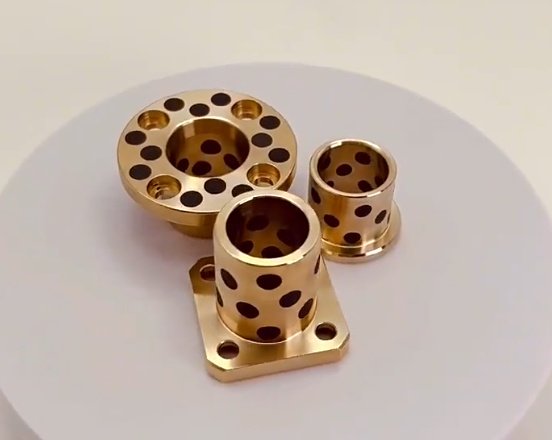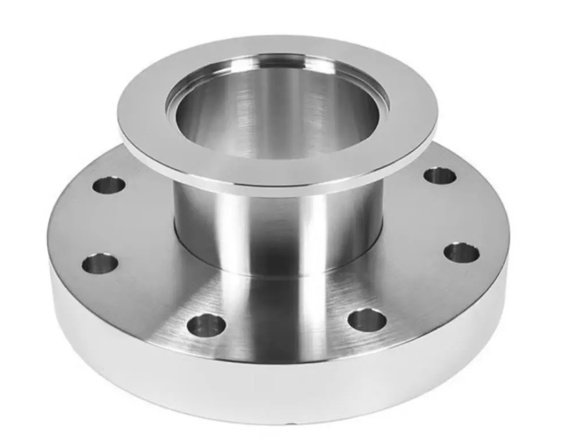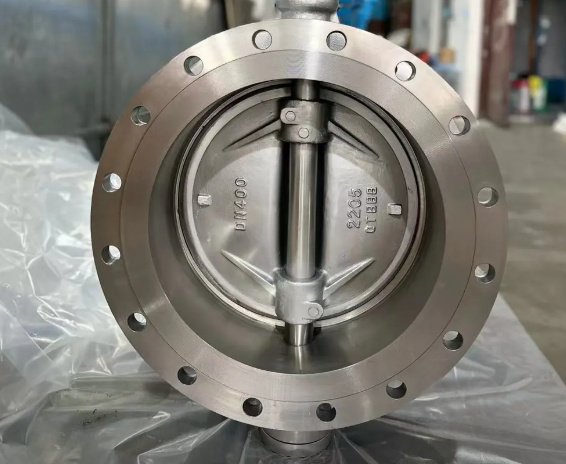
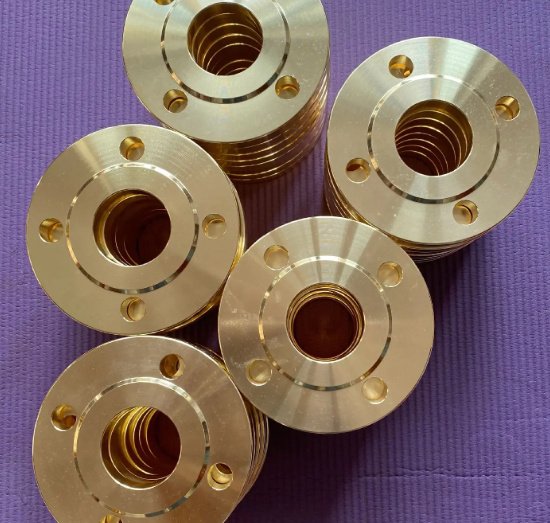
A brass flange is a precision-machined connection component used to join pipes, valves, meters, pumps, manifolds, heat exchangers, and custom equipment where corrosion resistance, dimensional stability, and easy assembly are required. Compared with carbon steel flanges, brass offers better resistance to water, humidity, many non-aggressive chemicals, and dezincification-controlled applications when the correct alloy is selected.
Our Brass Flanges are produced for plumbing systems, HVAC equipment, marine hardware, fuel and gas components, water treatment units, instrumentation assemblies, and OEM machinery. Standard and custom designs can be manufactured according to drawings, samples, pressure requirements, sealing face geometry, and installation conditions.
Product Overview
| Product Name | Brass Flange / Brass Pipe Flange / Custom Brass Flange |
|---|---|
| Available Forms | Threaded flange, slip-on flange, solder flange, brazed flange, blind flange, reducing flange, custom mounting flange |
| Materials | C36000, C37700, CW617N, CW614N, H59, H62, DZR brass, lead-free brass upon request |
| Nominal Size Range | DN8 to DN200, 1/4 inch to 8 inch, custom dimensions available |
| Connection Options | BSP, NPT, metric thread, solder socket, plain bore, bolt-on mounting, customized ports |
| Surface Finish | Natural brass, polished, nickel plated, chrome plated, tin plated, passivated, anti-tarnish treated |
| Typical Applications | Water supply, HVAC, marine piping, compressed air, fuel systems, gas equipment, instrumentation, pump connections |
Why Brass Flanges Are Used in Engineering Systems
Brass flanges are selected when engineers need corrosion resistance, machinability, and reliable sealing in one component. Brass has good thermal conductivity, stable mechanical performance, and excellent thread-forming behavior, making it suitable for components that require repeated assembly, accurate bolt alignment, and tight dimensional control.
- Corrosion resistance: Suitable for potable water, hot water, humid environments, and many marine-adjacent installations when the correct alloy is used.
- Machinability: Brass can be CNC turned, milled, drilled, tapped, reamed, and polished with excellent surface quality.
- Sealing reliability: Flat face, raised face, O-ring groove, cone seat, and custom sealing profiles can be produced for different gasket systems.
- Electrical and thermal conductivity: Useful in grounding, instrumentation, heat transfer, and special equipment assemblies.
- Assembly convenience: Brass threads resist galling better than many stainless steels and are easier to maintain in field service.
Common Types of Brass Flanges
Threaded Brass Flange
A threaded brass flange uses internal or external threads such as BSP, NPT, G, R, Rc, or metric thread. It is commonly used for water meters, valve assemblies, pressure gauges, compressed air lines, and equipment ports where welding is not practical. Threaded designs are preferred for maintenance-friendly systems and small to medium pipe sizes.
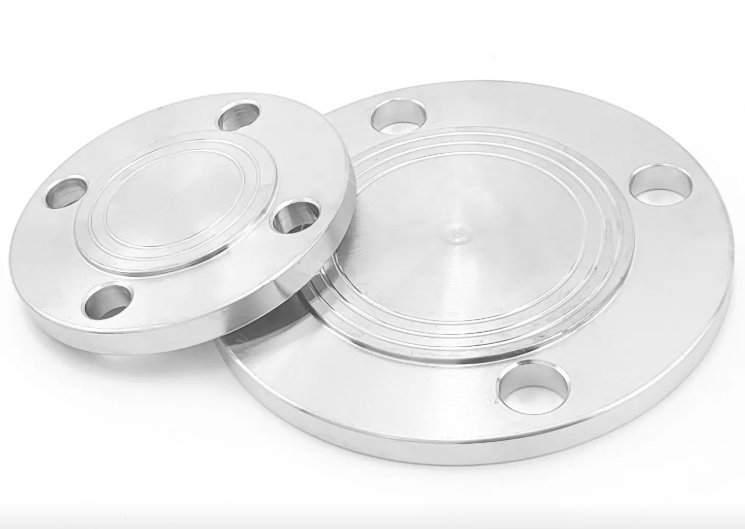
Brass Blind Flange
A brass blind flange closes the end of a pipeline, tank opening, manifold port, or inspection interface. It is often used in testing, system isolation, and future expansion points. For pressure applications, blind flanges require careful control of flange thickness, bolt spacing, gasket compression area, and material strength.
Slip-On Brass Flange
A slip-on brass flange is installed over a tube or pipe and then soldered, brazed, or mechanically fixed. It is widely used in copper pipe systems, HVAC assemblies, heat exchangers, and custom manifolds. This design provides simple alignment and good installation efficiency.
Solder or Brazing Brass Flange
Solder-type brass flanges are designed with socket bores, capillary gaps, or brazing lands. They are used in plumbing, refrigeration, heating circuits, and copper alloy pipework. Proper clearance control improves solder flow and reduces leakage risk.
Custom CNC Machined Brass Flange
Custom brass flanges are produced according to customer drawings or samples. Features may include non-standard bolt circles, counterbores, grooves, O-ring seats, sensor ports, stepped bores, hex flats, anti-rotation profiles, and integrated hose or tube connections.
When should a threaded brass flange be selected instead of a solder flange?
Choose a threaded brass flange when the connection must be removable, when hot work is restricted on site, or when the flange connects to valves, meters, regulators, or serviceable equipment. Choose a solder or brazed flange when a permanent copper-pipe connection, compact layout, or vibration-resistant joint is required.
Materials and Alloy Selection
Material selection directly affects corrosion resistance, machinability, lead compliance, strength, and long-term sealing performance. Typical brass flange materials include CW617N, C36000, C37700, or lead-free brass, depending on the market standard and application environment.
| Material | Typical Feature | Common Use |
|---|---|---|
| C36000 Free-Cutting Brass | Excellent machinability and dimensional accuracy | CNC machined flanges, fittings, instrumentation parts |
| C37700 Forging Brass | Good hot forging performance and strength | Forged brass pipe flanges, valve bodies, pressure fittings |
| CW617N | Widely used European brass alloy for plumbing components | Water systems, valves, connectors, threaded flanges |
| DZR Brass | Improved resistance to dezincification | Hot water, potable water, aggressive water conditions |
| Lead-Free Brass | Designed for drinking water compliance | Potable water fittings, sanitary systems, regulated markets |
For potable water projects, buyers should confirm lead-content requirements such as NSF/ANSI/CAN 61, NSF/ANSI 372, RoHS, REACH, or local drinking water regulations. For seawater or high-chloride environments, brass selection must be reviewed carefully because bronze or stainless steel may be more suitable in some continuous immersion conditions.
Manufacturing and Machining Process
Brass flanges can be produced by bar stock machining, hot forging followed by machining, casting followed by finishing, or fully customized CNC manufacturing. The production route depends on flange size, annual quantity, mechanical strength requirements, tooling budget, and tolerance level.
- Raw material inspection: Brass bar, forging blank, or casting blank is checked for grade, surface condition, and chemical composition.
- Cutting and blank preparation: Material is cut to the required weight or length before forging or machining.
- Forging or rough machining: Forged flanges improve grain flow and density; CNC roughing removes excess material for custom forms.
- CNC turning: Outer diameter, bore, sealing face, raised face, shoulder, and thickness are machined.
- CNC milling and drilling: Bolt holes, slots, flats, counterbores, and special mounting features are produced.
- Threading and tapping: BSP, NPT, metric, or custom threads are cut and gauged.
- Deburring and surface finishing: Sharp edges are removed to protect gaskets, installers, and mating components.
- Inspection and packaging: Critical dimensions, sealing surfaces, threads, and appearance are checked before shipment.
For sealing applications, flange machining quality is critical. In many OEM projects, flange face runout is controlled to less than 0.10 mm to improve gasket compression uniformity and reduce the probability of leakage under pressure cycling.
Engineering Performance and Real Application Considerations
In actual installations, flange leakage is often not caused by material failure alone. Common causes include uneven bolt tightening, poor gasket selection, surface scratches, incorrect thread sealant, galvanic corrosion, pipe misalignment, and vibration. A properly designed brass flange can reduce these risks through correct face geometry, stable bolt-hole positioning, and controlled sealing surface finish.
| Engineering Issue | Possible Cause | Design or Manufacturing Response |
|---|---|---|
| Leakage after pressure cycling | Uneven gasket compression or poor face flatness | Control face flatness, specify gasket land width, use proper bolt torque sequence |
| Thread damage during assembly | Incorrect thread tolerance or burrs | Use calibrated thread gauges, chamfer thread entry, remove burrs after tapping |
| Premature corrosion | Wrong brass alloy for water chemistry | Select DZR or lead-free brass where required; evaluate chloride and pH conditions |
| Misalignment with mating part | Bolt circle error or pipe stress | Inspect pitch circle diameter, hole diameter, concentricity, and flange thickness |
| Surface tarnishing | Oxidation during storage or humid transport | Use anti-tarnish treatment, sealed packaging, or plated finish |
Example engineering result: reducing leakage in a brass manifold flange
In a water-meter manifold project, leakage occurred during 1.6 MPa pressure cycling after repeated assembly. The root cause was uneven flange face contact and bolt-hole positional variation. After changing to CNC-controlled facing, adding a defined gasket compression land, and tightening bolt-circle tolerance to ±0.05 mm, the assembly passed 100% hydrostatic testing at 2.4 MPa without visible leakage during final inspection.
Key Specifications for Buyers and Engineers
Before purchasing brass flanges, engineers and procurement teams should define not only nominal size, but also pressure rating, connection standard, material compliance, sealing method, tolerance requirements, and surface treatment. A clear specification reduces sampling cycles and prevents mismatch with mating pipes or valves.
- Nominal size: DN, inch size, pipe outer diameter, or custom bore dimension.
- Pressure requirement: Working pressure, test pressure, burst safety margin, and temperature range.
- Thread standard: BSPP, BSPT, NPT, metric, UNF, or customer-specific thread.
- Flange face: Flat face, raised face, groove face, O-ring face, conical seat, or custom profile.
- Bolt pattern: Number of holes, hole diameter, pitch circle diameter, slot length, and counterbore depth.
- Material standard: ASTM, EN, JIS, GB, RoHS, REACH, NSF-related lead requirements, or customer drawing callout.
- Surface finish: Natural machined brass, polished brass, nickel plating, chrome plating, tin plating, or passivation.
- Inspection requirement: Dimensional report, material certificate, pressure test, plating thickness report, or PPAP documents.
Quality Control and Inspection
Reliable brass flange production depends on controlling face flatness, bolt-hole position, and thread integrity. These features directly influence installation accuracy and sealing stability. Quality inspection can be adjusted according to drawing criticality and project risk.
| Inspection Item | Typical Method | Purpose |
|---|---|---|
| Material composition | Spectrometer or material certificate verification | Confirm alloy grade and compliance |
| Outer diameter and thickness | Caliper, micrometer, height gauge | Ensure fit with mating equipment |
| Bore and concentricity | Bore gauge, CMM, concentricity fixture | Maintain flow area and alignment |
| Bolt circle and hole position | CMM, optical measuring system, custom gauge | Prevent assembly mismatch |
| Thread accuracy | Go/no-go thread gauge | Ensure proper connection and sealing |
| Sealing face quality | Flatness test, roughness tester, visual inspection | Reduce gasket damage and leakage risk |
| Pressure tightness | Hydrostatic or pneumatic test when applicable | Verify performance under operating conditions |
Documents commonly requested for brass flange procurement
Buyers often request 2D drawings, 3D models, material certificates, dimensional inspection reports, RoHS or REACH declarations, plating thickness reports, pressure test records, and packaging specifications. For automotive, gas, or safety-critical equipment, PPAP, control plans, and traceability documents may also be required.
Customization Options
Custom brass flanges are suitable for OEM equipment where standard pipe flanges cannot meet layout, sealing, flow, or assembly requirements. With drawing-controlled brass flange production, dimensions and features can be optimized for specific equipment interfaces.
- Custom outside diameter, bore diameter, thickness, and shoulder height
- Non-standard bolt circle, slotted holes, countersunk holes, or counterbored holes
- Integrated BSP, NPT, metric, UN, or special threads
- O-ring grooves, gasket lands, raised faces, cone seats, and stepped sealing profiles
- Knurled edges, wrench flats, hex profiles, anti-rotation designs, and locating pins
- Nickel, chrome, tin, silver-color, or anti-tarnish surface treatment
- Laser marking, stamping, batch coding, or logo marking
- Small-batch prototypes and volume production support
Applications of Brass Flanges
Brass flanges are used across industries where a compact, corrosion-resistant, and accurately machined connection is required. Their combination of strength, workability, and sealing performance makes them practical for both standard pipework and specialized equipment.
- Plumbing systems: Water meters, manifolds, pump connections, pipe transitions, and valve assemblies.
- HVAC and heating: Boilers, heat exchangers, radiators, circulation pumps, and temperature-control units.
- Marine hardware: Freshwater systems, deck equipment, cabin plumbing, and pump interfaces where suitable alloy selection is confirmed.
- Gas and fuel equipment: Regulators, burners, fuel lines, and metering systems requiring accurate threaded connections.
- Industrial machinery: Lubrication systems, compressed air, cooling circuits, and custom equipment ports.
- Instrumentation: Pressure gauges, sensors, calibration units, and measurement manifolds.
Packaging, Storage and Handling
Brass is more resistant to corrosion than plain carbon steel, but proper packaging is still important because humidity, fingerprints, sulfur-containing materials, and abrasion can affect appearance. For machined brass flanges, sealing faces and threads should be protected from impact and contamination.
- Individual separation with paper, foam, or plastic sleeves for precision machined surfaces
- Thread protectors or caps for critical threaded brass flange products
- Anti-tarnish bags or vapor corrosion inhibitor packaging when required
- Strong export cartons or wooden cases for heavy brass flange shipments
- Clear labeling by part number, material, size, batch number, and quantity
How to Specify a Brass Flange Correctly
For accurate quotation, sampling, and production, a brass flange specification should include the application environment, mating part dimensions, required pressure, material grade, thread type, surface finish, and inspection level. If a drawing is not available, a physical sample or detailed measurement sheet can be used to build a manufacturable design.
A complete specification helps avoid common purchasing problems such as thread mismatch, bolt-hole misalignment, unsuitable alloy selection, gasket leakage, insufficient wall thickness, and surface finish inconsistency. For OEM projects, tolerance review during the design stage can also reduce machining cost while preserving sealing and assembly performance.