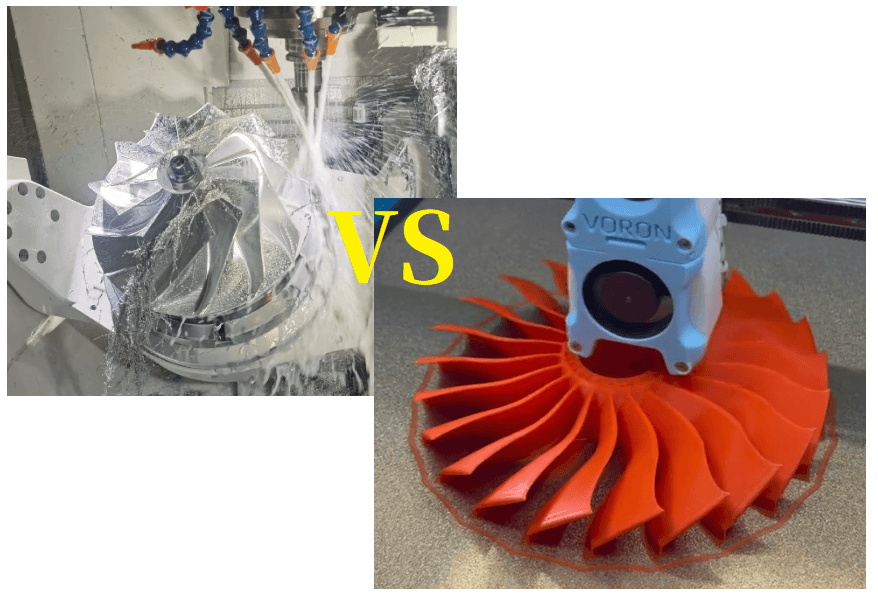
The debate around metal machining vs metal 3D printing is not about which process is universally better. It is about which manufacturing route delivers the required geometry, tolerance, surface finish, mechanical performance, lead time, and cost for a specific metal part.
Many buyers search for terms such as “additive machining metal” when they are comparing subtractive CNC machining with metal additive manufacturing. In practice, the decision often involves three options: traditional machining, metal 3D printing followed by machining, or hybrid manufacturing that combines additive deposition and subtractive finishing in one workflow.
What Metal Machining Means
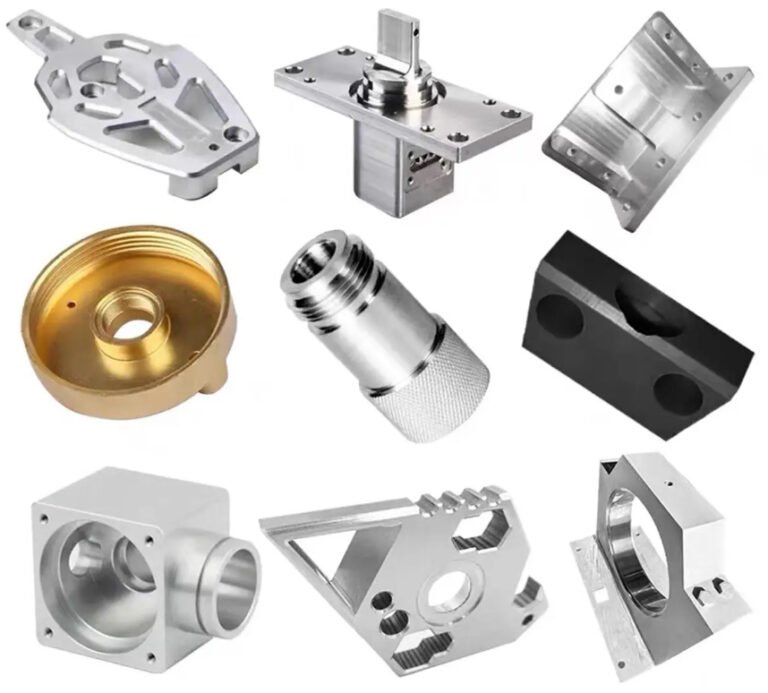
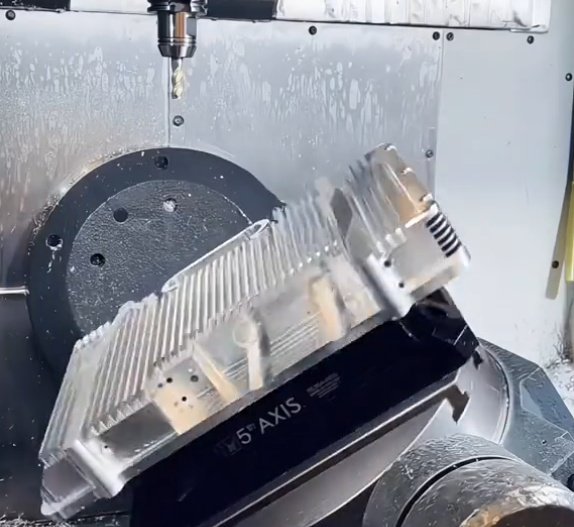
Metal machining is a subtractive manufacturing process. A billet, bar, casting, forging, plate, or extrusion is cut into the final shape using controlled material removal. Common machining methods include milling, turning, drilling, boring, grinding, electrical discharge machining, and wire EDM.
CNC machining is widely used for aluminum, stainless steel, carbon steel, tool steel, titanium, brass, copper, Inconel, and engineering alloys. It is especially strong when parts require accurate dimensions, tight fits, threads, flat sealing surfaces, or excellent surface finish.
Common machining capabilities
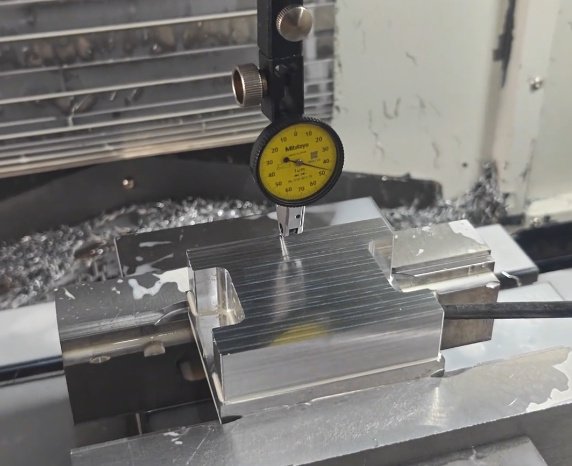
- Typical CNC tolerance: ±0.025 mm to ±0.125 mm depending on geometry, material, and setup.
- High-precision grinding or finishing: often capable of ±0.005 mm to ±0.010 mm on selected features.
- Typical milled surface roughness: Ra 0.8–3.2 µm; finer finishes are possible with grinding, lapping, or polishing.
- Best suited for prismatic parts, shafts, housings, plates, fixtures, molds, dies, and production components.
What Metal 3D Printing Means
Metal 3D printing, also called metal additive manufacturing, builds parts layer by layer from powder, wire, or bound metal feedstock. According to ISO/ASTM 52900 terminology, additive manufacturing creates objects from 3D model data by joining material, usually layer upon layer, as opposed to subtractive manufacturing.
The main advantage is geometric freedom. Metal additive manufacturing can produce internal channels, lattice structures, topology-optimized parts, consolidated assemblies, and complex shapes that are difficult or impossible to machine from solid stock.
Major metal additive manufacturing processes
- LPBF / DMLS / SLM: Laser powder bed fusion processes for stainless steel, titanium, aluminum, cobalt chrome, Inconel, and tool steels.
- EBM: Electron beam melting, commonly used for titanium alloys and high-temperature applications.
- DED: Directed energy deposition using powder or wire, often used for repair, cladding, near-net-shape builds, and large metal structures.
- Binder jetting: A powder-bed process using a liquid binder, followed by debinding and sintering; useful for batch production of small to medium metal parts.
- Metal FFF / bound metal extrusion: Filament or rod feedstock containing metal powder and binder, followed by debinding and sintering.
Side-by-Side Comparison: Machining vs Metal 3D Printing
| Factor | Metal Machining | Metal 3D Printing | Engineering Interpretation |
|---|---|---|---|
| Design freedom | Limited by tool access, cutter radius, workholding, and setup direction. | Excellent for internal channels, organic shapes, lattices, and part consolidation. | 3D printing wins for complex geometry; machining wins for simple accurate geometry. |
| Tolerance | Typically tighter; precision features can reach micrometer-level control with finishing. | As-built tolerances are usually looser, often around ±0.1 mm to ±0.3 mm or more depending on process and size. | Critical interfaces on printed parts often require secondary CNC machining. |
| Surface finish | Ra 0.8–3.2 µm is common; polishing and grinding can go much finer. | LPBF as-built surfaces are often around Ra 5–20 µm; down-facing surfaces can be rougher. | Machining is usually better for sealing surfaces, bearing seats, and cosmetic metal faces. |
| Material waste | Can be high when cutting from billet, especially for aerospace titanium or nickel alloys. | Lower buy-to-fly ratio; unused powder may be recycled depending on material and quality control. | Printing can reduce waste for expensive alloys and high material-removal parts. |
| Unit cost | Low to moderate for simple parts and medium to high production volumes. | Competitive for complex low-volume parts; less competitive for simple blocks, plates, and shafts. | Cost depends more on geometry and volume than on the technology label. |
| Lead time | Fast for simple parts if stock and machine capacity are available. | Fast for complex prototypes, but post-processing and heat treatment can add time. | Printing is not automatically faster; total lead time must include finishing and inspection. |
| Mechanical properties | Predictable when using certified wrought, forged, or cast stock. | Can achieve high density and strength, but properties may be anisotropic and process-dependent. | Critical applications require qualified parameters, heat treatment, and testing. |
| Scalability | Excellent for serial production with fixtures, automation, and multi-axis machines. | Good for complex small batches; binder jetting can scale better than LPBF for certain geometries. | For high-volume simple metal parts, machining, casting, stamping, or forging may still win. |
Cost Drivers: Why the Cheaper Process Changes by Part
Cost comparison is often misunderstood. Metal machining cost is driven by raw stock size, material removal rate, machine time, tool wear, setups, fixturing, inspection, and operator involvement. Metal 3D printing cost is driven by build volume, height, support structures, powder cost, machine utilization, heat treatment, depowdering, surface finishing, and final machining.
A simple aluminum bracket with two holes is usually cheaper to CNC machine. A titanium aerospace bracket with topology optimization, internal weight reduction, and a high material removal ratio may be cheaper to print and finish-machine. The key metric is not only part price; it is also total manufactured cost, including scrap risk, inventory, assembly labor, and qualification.
Example cost logic
- A machined titanium component may start from a 3 kg billet and finish as a 0.4 kg part, producing a buy-to-fly ratio of 7.5:1.
- A printed near-net-shape titanium part may reduce the material input significantly, but still require supports, stress relief, HIP, CNC finishing, and inspection.
- If 3D printing consolidates five machined parts into one, the savings may come from eliminating fasteners, welding, assembly labor, leak paths, and inventory items.
When metal 3D printing is likely to reduce cost
Metal 3D printing is more likely to reduce cost when the part has high geometric complexity, expensive material, low annual volume, long tooling lead time, high assembly count, or significant lightweighting value. It is less likely to reduce cost for simple plates, spacers, shafts, bushings, and blocks that can be machined quickly from standard stock.
Tolerance, Surface Finish, and Post-Processing Reality
Buyers sometimes expect metal 3D printing to deliver finished metal components directly from the printer. In many industrial applications, that is not realistic. Printed metal parts often require support removal, stress relief, heat treatment, hot isostatic pressing, shot peening, abrasive flow machining, polishing, coating, and CNC machining.
The best practical description is that metal additive manufacturing creates a near-net-shape blank. CNC machining then creates the accurate interfaces. This is why the phrase additive machining metal is frequently associated with hybrid manufacturing: additive processes build geometry, and machining creates precision.
Typical features that still need machining after printing
- Threaded holes and tapped features.
- Bearing seats, shaft bores, and press-fit diameters.
- O-ring grooves, gasket faces, and hydraulic sealing surfaces.
- Datum surfaces used for inspection and assembly.
- High-precision mounting pads and flat reference planes.
Engineering note on dimensional compensation
Metal printed parts may shrink, distort, or warp due to thermal gradients, residual stress, support strategy, and heat treatment. Experienced suppliers use build simulation, parameter qualification, scan strategy control, support design, and machining stock allowance to manage these risks. A common approach is to print 0.3 mm to 1.0 mm of extra stock on critical surfaces, then machine them to final tolerance.
Material Properties and Qualification
Machined parts usually start from wrought, forged, cast, or extruded materials with established standards such as ASTM, AMS, EN, or ISO material specifications. This gives engineers predictable baseline properties, especially for fatigue-critical or safety-critical components.
Metal 3D printing can achieve excellent mechanical properties, but results depend heavily on powder chemistry, particle size distribution, oxygen pickup, build orientation, laser parameters, layer thickness, heat treatment, and post-processing. LPBF parts can reach relative densities above 99.5% under qualified parameters, but density alone does not guarantee fatigue performance.
For aerospace, medical, energy, and defense applications, printed metal components often require process qualification, including material certificates, build records, tensile coupons, density measurement, CT scanning, metallography, fatigue testing, and traceability.
Material selection considerations
- Aluminum alloys: CNC machining offers broad alloy availability; LPBF commonly uses AlSi10Mg and selected high-strength aluminum alloys.
- Titanium alloys: Ti-6Al-4V is widely used in both machining and additive manufacturing; printing can reduce waste for expensive titanium parts.
- Stainless steels: 316L and 17-4PH are common in both routes, but heat treatment and corrosion requirements must be reviewed.
- Nickel superalloys: Inconel 625 and 718 are difficult to machine but printable, making additive attractive for complex hot-section components.
- Tool steels: Additive manufacturing enables conformal cooling channels in molds and dies, while machining remains essential for cavity finish.
Best Use Cases for Each Process
The strongest manufacturing decisions are made from part function rather than technology preference. Engineers should evaluate load path, interfaces, environment, production volume, inspection method, and downstream assembly.
Choose metal machining when
- The geometry is simple to moderately complex and accessible with cutting tools.
- Tight tolerances and excellent surface finish are primary requirements.
- The material is readily available as bar, plate, tube, casting, or forging.
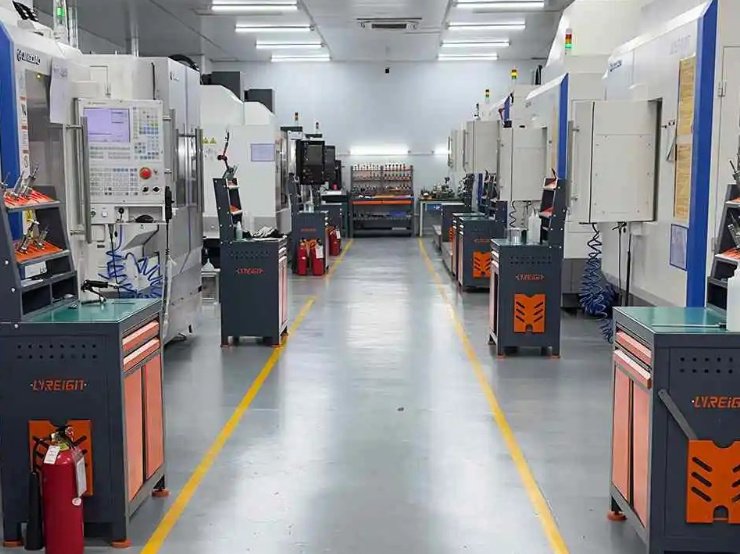
- Production volume justifies fixtures, process optimization, and automation.
- The part includes many precision holes, threads, bores, slots, and flat surfaces.
Choose metal 3D printing when
- The part contains internal channels, lattice structures, or complex organic geometry.
- Weight reduction has measurable economic value, such as in aerospace or robotics.
- Part consolidation can reduce assembly count, welding, leakage, or inventory.
- Lead time for casting, forging, or tooling is too long for the program schedule.
- The material is expensive and machining would remove most of the starting stock.
Choose a hybrid approach when
- The part needs printed complexity but machined datum surfaces and interfaces.
- Internal channels are required, but sealing faces must meet CNC-level precision.
- A near-net-shape printed blank can reduce material waste before final machining.
- Repair, cladding, or feature addition is needed on an existing metal component.
Buyer and Engineer Checklist Before Selecting a Supplier
A technically capable supplier should not simply recommend its own process. It should explain the trade-off between CNC machining, metal additive manufacturing, and hybrid production using part-specific evidence. For procurement teams, the lowest unit price may not be the lowest program cost if rework, qualification, scrap, or delayed delivery is ignored.
Before placing an order, buyers and engineers should confirm critical-to-quality requirements, including tolerances, surface roughness, heat treatment, inspection reports, material traceability, and acceptance criteria.
Questions to ask during sourcing
- Which surfaces are functional, cosmetic, or non-critical?
- What tolerance is truly required, and where can general tolerance be relaxed?
- Does the quoted price include post-processing, machining, heat treatment, and inspection?
- Is the material certified to the required standard?
- For metal 3D printing, is build orientation documented and repeatable?
- Are witness coupons, CT inspection, CMM reports, or metallurgical testing required?
- Can the supplier support design for manufacturability or design for additive manufacturing?
Procurement risk: comparing quotes fairly
A CNC quote and a metal 3D printing quote may not include the same scope. One supplier may include material certification, stress relief, CNC finishing, CMM inspection, and packaging, while another may quote only the printed blank. To compare accurately, normalize every quote by delivery condition, tolerance class, inspection level, post-processing, and documentation.
Engineering Decision Matrix
| Requirement | Preferred Process | Reason |
|---|---|---|
| Simple bracket, spacer, block, shaft, or plate | CNC machining | Fast, accurate, and cost-effective from standard stock. |
| Complex titanium lightweight structure | Metal 3D printing plus machining | Reduces material waste and enables topology optimization. |
| High-precision sealing component | CNC machining or printed blank with CNC finishing | Sealing faces require controlled flatness and surface roughness. |
| Mold insert with conformal cooling | Metal 3D printing plus machining and polishing | Additive creates internal cooling channels; machining finishes cavity surfaces. |
| Large repaired turbine or die component | DED or welding plus machining | Directed deposition can rebuild worn areas before final machining. |
| High-volume simple metal part | Machining, casting, forging, stamping, or MIM depending on geometry | Additive manufacturing is often not the lowest-cost route for simple mass production. |
Conclusion: The Best Choice Is Often Machining Plus Additive
Metal machining and metal 3D printing solve different manufacturing problems. Machining is the stronger choice for precision, surface finish, predictable stock materials, and economical production of accessible geometries. Metal 3D printing is the stronger choice for complex geometry, lightweighting, internal channels, part consolidation, and low-volume production of difficult-to-machine alloys.
In many real engineering programs, the winning route is not purely additive or purely subtractive. It is a controlled hybrid workflow: print the geometry that machining cannot create, then machine the features that must be precise. That is the practical meaning behind the search term additive machining metal in modern manufacturing decision-making.