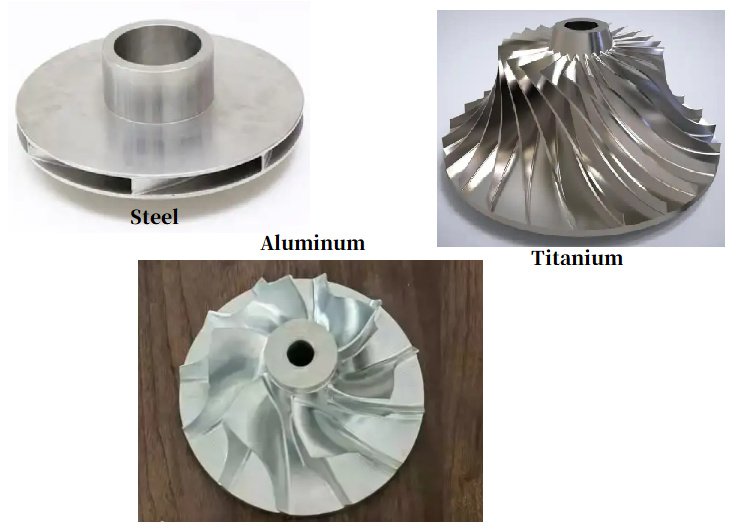
Selecting between a Stainless Steel Impeller, a titanium impeller, and an aluminum impeller is not only a material-cost decision. It affects pump efficiency, cavitation resistance, corrosion life, rotor balance, machining difficulty, lead time, and total ownership cost. For engineers and buyers, the best choice depends on the pumped fluid, temperature, chloride content, solids, shaft speed, required weight reduction, and maintenance strategy.
In centrifugal pumps, mixers, marine pumps, chemical transfer pumps, HVAC circulation systems, and industrial blowers, the impeller is the rotating component that transfers energy to the fluid. Because it is exposed to hydraulic load, vibration, erosion, and corrosion at the same time, impeller material selection often determines whether a pump runs reliably for years or fails early through pitting, blade cracking, galvanic corrosion, or cavitation damage.
Quick Comparison: Stainless Steel, Titanium, and Aluminum Impellers
| Factor | Stainless Steel Impeller | Titanium Impeller | Aluminum Impeller |
|---|---|---|---|
| Typical alloys | 304, 316, 316L, duplex stainless, 17-4 PH | Grade 2, Grade 5 Ti-6Al-4V | 6061, 6082, 7075, cast aluminum alloys |
| Density | About 7.7-8.0 g/cm³ | About 4.5 g/cm³ | About 2.7-2.8 g/cm³ |
| Corrosion resistance | Good to excellent, especially 316/duplex grades | Excellent in seawater, chlorides, and many oxidizing media | Moderate; vulnerable in alkaline, chloride, and galvanic environments |
| Strength-to-weight ratio | High absolute strength, heavier rotor | Very high strength-to-weight ratio | Good for lightweight duty, lower fatigue margin than titanium |
| Cavitation and erosion resistance | Good; improves with duplex or precipitation-hardened grades | Very good in many severe services | Fair to poor in abrasive or cavitating service |
| Machining difficulty | Moderate; work hardening must be controlled | Difficult; low thermal conductivity and tool wear issues | Easy; fast CNC machining and good productivity |
| Relative material cost | Medium | High to very high | Low to medium |
| Best use cases | Chemical pumps, food-grade pumps, wastewater, general industrial pumps | Seawater, offshore, aerospace, high-value chemical service | Air handling, portable pumps, low-corrosion water service, weight-sensitive equipment |
As a general rule, stainless steel offers the best balance of corrosion resistance, mechanical strength, manufacturability, and cost. Titanium is preferred when chloride corrosion, seawater durability, or weight saving justifies a premium. Aluminum is selected when weight and machining speed are more important than corrosion or erosion life.
When a Stainless Steel Impeller Is the Best Choice
A Stainless Steel Impeller is often the default engineering choice for industrial pumps because it combines mechanical reliability with broad fluid compatibility. Grades such as 316 and 316L provide molybdenum-enhanced resistance to pitting corrosion in mildly chloride-bearing liquids, while 17-4 PH stainless steel offers higher strength after precipitation hardening. Duplex stainless steels can be used where both chloride resistance and strength are required.
Stainless steel impellers are commonly used in centrifugal pumps, sanitary pumps, wastewater pumps, cooling water pumps, fire pumps, chemical transfer pumps, and marine auxiliary pumps. They are especially practical when the buyer needs a durable impeller without the cost and machining complexity of titanium.
Engineering advantages of stainless steel impellers
- Good resistance to rust, oxidation, and many process chemicals.
- High mechanical strength for thin vanes, high-speed rotation, and pressure load.
- Better wear life than aluminum in cavitating or particle-laden service.
- Well-established manufacturing routes, including casting, forging, CNC machining, welding repair, and dynamic balancing.
- Availability of food-grade and hygienic finishes for sanitary applications.
For procurement teams, stainless steel also reduces sourcing risk. Compared with titanium, stainless steel bar, plate, and castings are widely available, and more machine shops can process them. Compared with aluminum, stainless steel usually provides a longer service interval in wet, corrosive, or abrasive environments.
Common stainless steel grades used for impellers
304 stainless steel is suitable for clean water and low-corrosion industrial service. 316 and 316L are better for chloride exposure and chemical resistance. 17-4 PH is used when higher strength and fatigue resistance are needed. Duplex stainless steel grades are selected for severe chloride environments where conventional austenitic stainless steel may pit or suffer crevice corrosion.
When a Titanium Impeller Outperforms Stainless Steel
Titanium impellers are selected for applications where corrosion failure would be more expensive than the material premium. Titanium forms a stable oxide film that provides exceptional resistance in seawater, chlorides, wet chlorine environments, and many oxidizing chemical media. It is also much lighter than stainless steel, which can reduce rotor inertia and bearing load in high-speed equipment.
The main value of titanium is not simply strength; it is corrosion resistance in aggressive media combined with a high strength-to-weight ratio. In offshore seawater pumps, desalination equipment, marine cooling systems, aerospace pumps, and specialty chemical plants, titanium can provide long service life where stainless steel may experience pitting, crevice corrosion, or chloride stress corrosion cracking.
Limitations of titanium impellers
- Higher raw material cost and longer procurement lead time.
- More difficult CNC machining due to heat concentration at the cutting edge.
- Requires strict control of cutting speed, coolant, tool geometry, and chip evacuation.
- Can gall against mating components if surface finish and lubrication are not controlled.
- Not always cost-effective for clean water, HVAC, or low-duty industrial pumps.
Titanium is often the best technical answer but not always the best commercial answer. If the pumped fluid is only mildly corrosive and downtime is manageable, a 316 stainless steel impeller may deliver a lower lifecycle cost. If the application involves continuous seawater exposure, titanium may reduce maintenance and avoid repeated replacement.
When an Aluminum Impeller Makes Sense
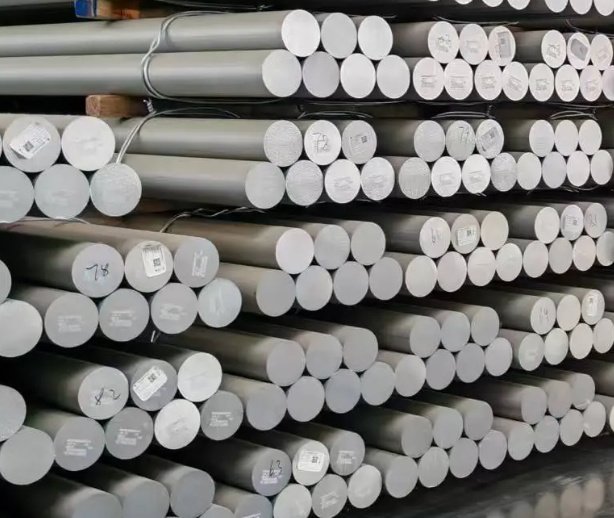
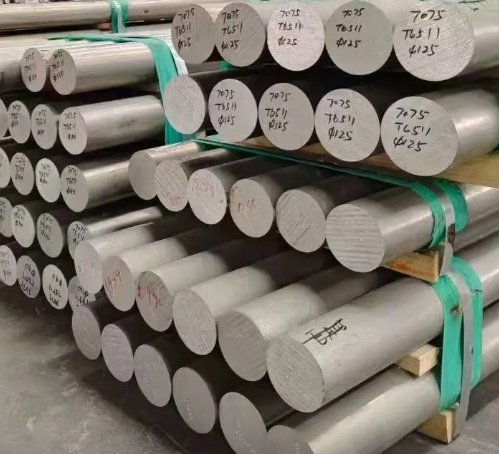
Aluminum impellers are valued for low density, easy machining, and fast production. They are common in air-moving devices, lightweight portable pumps, some automotive and racing applications, low-pressure water pumps, and equipment where reduced rotating mass improves acceleration or handling.
Aluminum is the lightest of the three materials in this comparison. A similarly sized aluminum impeller can weigh roughly one-third of a stainless steel impeller. This can reduce motor starting load, rotor inertia, and bearing load. However, aluminum has lower resistance to corrosion, cavitation, and erosion in many pump environments.
Risks of aluminum impellers
- Chloride-rich water can attack aluminum, especially if protective coatings fail.
- Galvanic corrosion can occur when aluminum is connected to stainless steel, bronze, or carbon steel in an electrolyte.
- Aluminum vanes may erode faster under slurry, sand, scale, or cavitation bubbles.
- High-temperature service can reduce strength and dimensional stability.
- Some aluminum alloys have lower fatigue resistance under repeated hydraulic shock.
Aluminum can be a smart choice when the medium is clean, corrosion risk is low, weight reduction is critical, and replacement cost is acceptable. It is less suitable for seawater pumps, chemical process pumps, abrasive slurry pumps, and high-cavitation service unless coatings, anodizing, or special design measures are validated.
Material Performance in Real Pump Conditions
Laboratory properties are useful, but impeller failure usually happens because multiple conditions act together. A pump handling warm chloride water may also face cavitation due to insufficient net positive suction head. A wastewater pump may see grit erosion and chemical attack at the same time. A high-speed impeller may pass static strength calculations but fail from fatigue at the blade root.
The table below summarizes practical performance expectations for engineering selection. Actual results depend on alloy grade, heat treatment, casting quality, surface finish, coating, pump design, and operating duty cycle.
| Operating condition | Best material tendency | Engineering reason |
|---|---|---|
| Clean freshwater circulation | Stainless steel or aluminum | Corrosion risk is moderate; aluminum may be acceptable if weight and cost matter. |
| Seawater cooling | Titanium or duplex stainless steel | High chloride content increases pitting and crevice corrosion risk. |
| Food, beverage, or sanitary pumping | 316L stainless steel | Cleanability, passivation, and hygienic surface finish are key requirements. |
| Abrasive wastewater | Stainless steel, duplex stainless, or hardened alloy | Aluminum may erode quickly; titanium may be costly unless corrosion is severe. |
| Aerospace or high-speed lightweight pump | Titanium or aluminum | Reduced rotating mass improves dynamic response and lowers bearing load. |
| Strong chloride chemical service | Titanium | Titanium oxide film offers excellent resistance in many chloride environments. |
Machining and Manufacturing Considerations
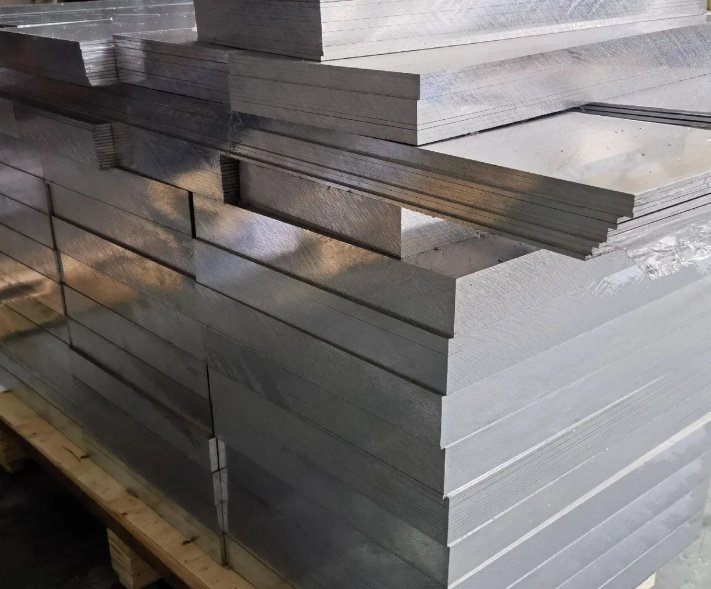
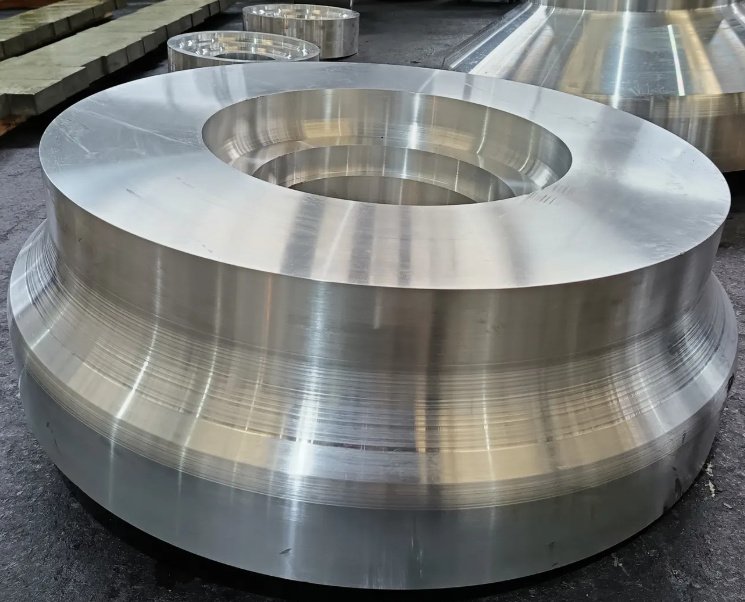
Impellers can be produced by investment casting, sand casting, die casting, forging plus CNC machining, 5-axis milling from billet, welding fabrication, or additive manufacturing followed by finish machining. The best process depends on impeller size, vane geometry, flow accuracy, tolerance, production volume, alloy, and balancing requirements.
A machined impeller usually requires tight control of vane profile, hub bore concentricity, keyway accuracy, surface roughness, and dynamic balance. Poor machining can reduce pump efficiency, increase vibration, and shorten bearing and seal life even if the material itself is correct.
Stainless steel machining
Stainless steel tends to work-harden, especially austenitic grades such as 304 and 316. Tooling should maintain a positive cutting action, stable feed, sufficient coolant, and rigid fixturing. After machining, stainless impellers may be passivated or electropolished to improve corrosion resistance and cleanability. For high-speed pumps, dynamic balancing according to ISO 21940 or similar balancing practices may be specified.
Titanium machining
Titanium has low thermal conductivity, so heat remains near the cutting zone. This increases tool wear and can affect surface integrity. Manufacturers often use sharp carbide tools, high-pressure coolant, conservative cutting speeds, and careful chip control. Titanium impellers may require extra inspection for surface tearing, residual stress, or distortion after rough machining.
Aluminum machining
Aluminum is the easiest material to machine among the three. It supports high spindle speeds, fast material removal, and good surface finish. However, thin aluminum vanes can deflect during machining, and some alloys may need anodizing, conversion coating, or protective finishing to reduce corrosion. For cast aluminum impellers, porosity control is important because internal defects can reduce fatigue strength.
Buyer checklist for impeller manufacturing quality
- Confirm alloy grade with material certificates, not only trade names.
- Specify casting inspection requirements when porosity or shrinkage is a concern.
- Define surface roughness for hydraulic passages if pump efficiency matters.
- Require dimensional inspection of bore, keyway, hub faces, and vane geometry.
- Specify dynamic balancing grade for high-speed or vibration-sensitive equipment.
- Check compatibility between impeller material, shaft material, fasteners, and pumped fluid to avoid galvanic corrosion.
Cost and Lifecycle Value: Which Impeller Is Cheaper Over Time?
The lowest purchase price is not always the lowest operating cost. A stainless steel impeller may cost more than aluminum at purchase, but it can last significantly longer in corrosive or erosive water. A titanium impeller may cost several times more than stainless steel, but it can be justified when pump downtime, offshore maintenance, or chemical leakage risk is expensive.
From a buyer’s perspective, the practical question is: how much failure risk is acceptable? If the pump is easy to access and handles clean fluid, aluminum may be economical. If the pump is a critical production asset, stainless steel often provides the best risk-adjusted value. If the pump is offshore, subsea, or handling aggressive chlorides, titanium may protect the system from repeated failures.
Example engineering comparison
Consider a seawater cooling pump operating continuously at 25-35°C with moderate chloride exposure and occasional sand particles. In a simplified material review, aluminum may reduce impeller weight by about 60-65% compared with stainless steel, but its corrosion and erosion risk is high. A 316 stainless steel impeller provides better mechanical durability but may still face pitting or crevice corrosion depending on stagnation zones and oxygen conditions. Titanium Grade 2 or Grade 5 can provide superior seawater resistance, but at a much higher initial material and machining cost.
In this type of duty, the best decision may be titanium for critical offshore service, duplex stainless steel for a balanced cost-performance solution, or 316 stainless steel for moderate service with planned inspection. Aluminum would generally require strong justification, such as temporary service, low budget, low criticality, or validated protective coating.
How to Choose the Right Impeller Material
Material selection should start with the fluid, not the catalog. Engineers should review pH, chloride concentration, dissolved oxygen, temperature, solids content, viscosity, flow rate, pump speed, NPSH margin, pressure pulsation, and cleaning chemicals. Buyers should also evaluate lead time, spare parts availability, repairability, and supplier machining capability.
- Choose a Stainless Steel Impeller when you need balanced strength, corrosion resistance, manufacturability, and lifecycle cost.
- Choose titanium when corrosion failure is unacceptable, especially in seawater, chloride-rich, or high-value chemical service.
- Choose aluminum when low weight, fast machining, and low-cost replacement are more important than long corrosion life.
- Use duplex stainless steel or high-strength stainless grades when standard 304/316 stainless steel is not enough.
- Validate coating or anodizing performance before using aluminum in wet or chloride-bearing environments.
The most reliable decision is based on a complete operating profile and a realistic maintenance plan. For many industrial applications, the Stainless Steel Impeller remains the most practical and widely specified option because it offers a strong balance of performance, cost, availability, and process compatibility. Titanium is the premium solution for severe corrosion and lightweight high-value systems, while aluminum is best reserved for lightweight, low-corrosion, and cost-sensitive applications.