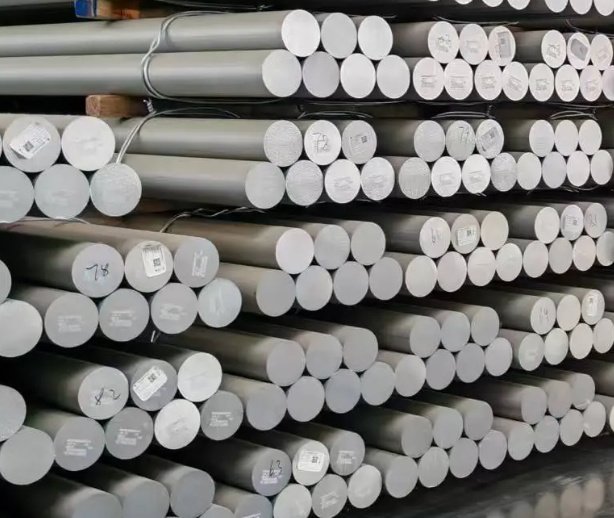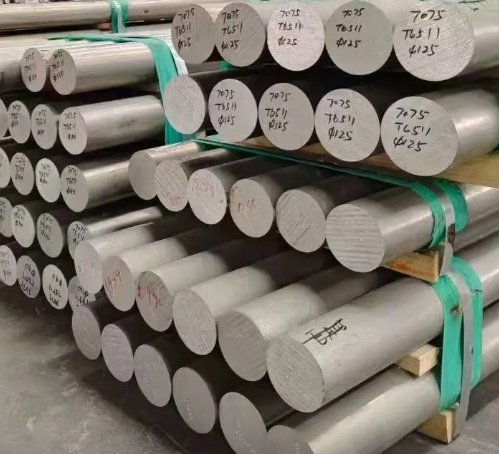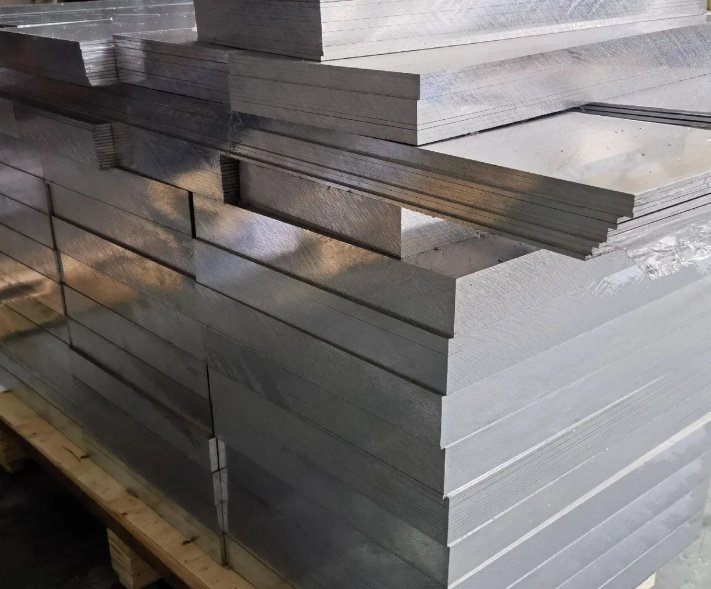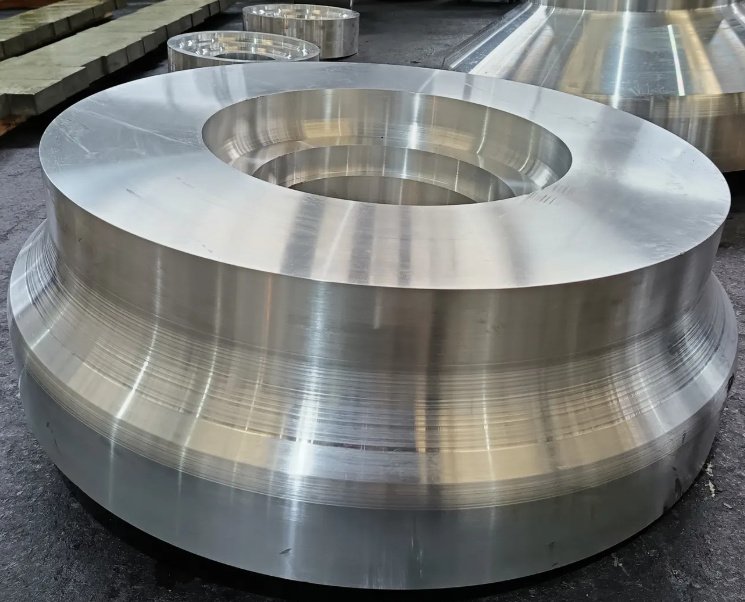
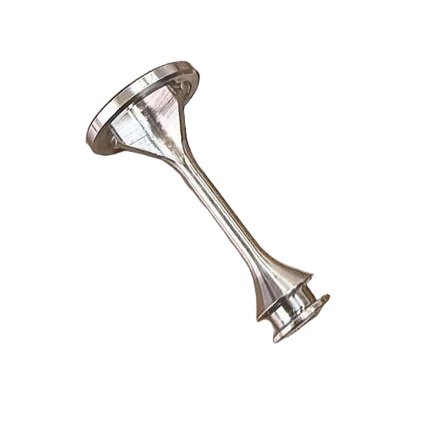
An aluminum shaft is a cylindrical component used to transmit rotary motion, support bearings, locate pulleys or gears, and reduce moving mass in mechanical assemblies. Compared with carbon steel or stainless steel shafts, Aluminum Shafts are selected when weight reduction, corrosion resistance, fast acceleration, non-magnetic behavior, and machinability are more important than maximum stiffness or wear resistance.
Common applications include automation equipment, robotics, conveyor rollers, packaging machinery, marine hardware, medical devices, optical instruments, aerospace fixtures, lightweight drive assemblies, and custom OEM equipment. A properly specified aluminum shaft can reduce rotating inertia, shorten cycle time, simplify handling, and lower energy demand without compromising alignment or service life.
What Is an Aluminum Shaft?
An aluminum shaft is typically machined from aluminum round bar, drawn bar, extruded bar, forged stock, or precision tubing. It may be supplied as a simple cut-to-length rod, a precision-turned shaft, a keyed drive shaft, a hollow shaft, a splined shaft, a threaded shaft, or a fully finished CNC-machined component.
Unlike commodity aluminum rod, a functional shaft must be evaluated by mechanical properties, dimensional tolerance, concentricity, straightness, surface finish, bearing fit, coating thickness, and fatigue requirements. For rotating assemblies, small errors in runout or balance can produce vibration, noise, bearing wear, and shortened machine life.
Key Advantages and Limitations of Aluminum Shafts
Aluminum has a density of about 2.70 g/cm³, while carbon steel is about 7.85 g/cm³. This means an aluminum shaft can be roughly one-third the weight of a similar steel shaft before geometry changes. The lower density is the primary reason aluminum is used in high-speed, manually handled, or weight-sensitive assemblies.
| Engineering Factor | Aluminum Shaft Benefit | Design Consideration |
|---|---|---|
| Weight | Approximately 60% to 66% lighter than steel at the same size | May need a larger diameter to match steel stiffness |
| Machinability | Excellent turning, drilling, boring, threading, and milling performance | Tool geometry and chip control affect surface quality |
| Corrosion behavior | Natural oxide layer resists many indoor and mild outdoor environments | Marine, chemical, or abrasive environments may need anodizing or coating |
| Rotating inertia | Lower inertia improves acceleration and deceleration response | Dynamic balance may still be required for high RPM |
| Stiffness | Useful for many light-duty and medium-duty mechanisms | Elastic modulus is about one-third that of steel |
| Wear resistance | Good when properly coated or used with compatible bearings | Bare aluminum is not ideal for sliding wear surfaces |
The main limitation is stiffness. Aluminum’s modulus of elasticity is typically about 69 to 72 GPa, while steel is about 200 GPa. If a shaft is governed by deflection rather than weight, torque, or corrosion, diameter changes or a different material may be required.
Common Aluminum Shaft Alloys
Alloy selection determines strength, machinability, corrosion resistance, coating response, weldability, fatigue performance, and cost. The most common aluminum shaft materials are 6061, 6082, 7075, and 2024, with temper designations such as T6 or T651 used to define heat treatment and stress-relieved condition.
| Alloy | Typical Use in Shafts | Approximate Tensile Strength | Key Benefit | Potential Limitation |
|---|---|---|---|---|
| 6061-T6 | General-purpose shafts, rollers, automation parts, light drive components | About 290 MPa | Balanced strength, corrosion resistance, availability, and cost | Lower strength than 7075 |
| 6082-T6 | Structural shafts and European-standard machined components | About 290 to 340 MPa | Good strength and machinability | Availability varies by region |
| 7075-T6 | High-strength lightweight shafts, aerospace fixtures, performance equipment | About 510 to 570 MPa | High strength-to-weight ratio | Lower corrosion resistance than 6061; usually needs coating |
| 2024-T351 | Aerospace and high-fatigue applications where strength is critical | About 430 to 470 MPa | Good fatigue strength | Poorer corrosion resistance; coating often required |
| 5052 | Light-duty non-precision shafts, marine brackets, formed components | About 210 to 260 MPa | Excellent corrosion resistance | Not usually selected for high-precision rotating shafts |
6061-T6 is often the default choice for precision aluminum shafts because it is widely available, economical, easy to machine, and suitable for anodizing. 7075-T6 is preferred when a higher strength-to-weight ratio is needed, but it should be evaluated carefully in corrosive environments.
Aluminum Shaft Types and Configurations
Aluminum shafts can be manufactured in multiple configurations depending on how torque is transmitted, how bearings are mounted, and how the shaft integrates with surrounding components.
- Solid aluminum shaft: A round bar machined to diameter, commonly used for support rods, linear guides, lightweight axles, and rotating drive shafts.
- Hollow aluminum shaft: Reduces mass and rotational inertia while keeping a relatively large outside diameter for stiffness.
- Keyed aluminum shaft: Includes one or more keyways for pulleys, sprockets, couplings, or gears.
- Threaded aluminum shaft: Features internal or external threads for mounting knobs, fasteners, collars, or end hardware.
- Stepped aluminum shaft: Uses multiple diameters for bearing seats, shoulders, retaining rings, spacers, or gear locations.
- Splined aluminum shaft: Used when axial sliding and torque transmission are required, though aluminum splines may need hard coating for wear resistance.
- Anodized aluminum shaft: Adds a controlled oxide layer for improved corrosion resistance, surface hardness, appearance, and wear behavior.
When should a hollow aluminum shaft be used?
A hollow shaft is useful when bending stiffness, low inertia, and cable passage are important. For many rotating systems, placing material farther from the centerline increases stiffness efficiently. A hollow aluminum tube can outperform a small solid rod in stiffness-to-weight ratio, but wall thickness must be checked for torque, buckling, keyway strength, and clamping pressure.
Aluminum Shaft vs Steel, Stainless Steel, and Carbon Fiber
Material comparison is essential because a shaft is rarely selected by strength alone. Engineers usually compare density, stiffness, torque capacity, corrosion resistance, wear behavior, cost, availability, and manufacturability.
| Material | Density | Elastic Modulus | Corrosion Resistance | Machinability | Best Fit |
|---|---|---|---|---|---|
| Aluminum 6061-T6 | About 2.70 g/cm³ | About 69 GPa | Good | Excellent | General lightweight shafts and rollers |
| Aluminum 7075-T6 | About 2.81 g/cm³ | About 71 GPa | Moderate | Good to excellent | High-strength lightweight components |
| Carbon Steel 1045 | About 7.85 g/cm³ | About 200 GPa | Low without coating | Good | High stiffness, heavy-duty shafts |
| Stainless Steel 304/316 | About 7.9 to 8.0 g/cm³ | About 193 GPa | Very good | Moderate | Food, medical, marine, and washdown applications |
| Carbon Fiber Composite | About 1.5 to 1.8 g/cm³ | Directional, design-dependent | Excellent | Specialized | Ultra-light, high-speed tubes |
For a 20 mm diameter by 600 mm long solid shaft, the material volume is approximately 188.5 cm³. A 1045 steel shaft of this size weighs about 1.48 kg, while a 6061 aluminum shaft weighs about 0.51 kg. That is a weight reduction of roughly 65%. However, because aluminum is less stiff, the same-diameter aluminum shaft has only about one-third of the bending stiffness of steel.
If equal bending stiffness is required, a 20 mm steel shaft may need to be replaced by an aluminum shaft around 26 mm in diameter, depending on alloy and boundary conditions. Even after increasing the diameter, the aluminum shaft can still be approximately 40% lighter than the steel equivalent. This is why aluminum is often selected for moving axes, gantries, manual equipment, and fast-cycling machines.
Machining, Tolerances, and Surface Finishing
Precision aluminum shaft manufacturing typically includes sawing, CNC turning, centerless grinding, milling of flats and keyways, drilling, tapping, boring, thread rolling or single-point threading, deburring, polishing, anodizing, and inspection. For bearing journals and rotating assemblies, surface finish and diameter consistency are often as important as alloy strength.
| Feature | Common Manufacturing Method | Typical Engineering Note |
|---|---|---|
| Outer diameter | CNC turning, precision turning, centerless grinding | Bearing fits may require tight diameter tolerance and stable roundness |
| Keyway | Keyseat milling, broaching, slotting | Reduces shaft section strength and should be considered in torque calculations |
| Threads | Single-point turning, tapping, thread milling | Aluminum threads may require inserts under repeated assembly |
| Cross holes | Drilling, reaming, chamfering | May create stress concentration in cyclic loading |
| Surface protection | Clear anodizing, hardcoat anodizing, electroless nickel plating | Coating thickness affects final dimensions and bearing fits |
| End features | Facing, chamfering, counterboring, internal threading | Important for assembly safety and repeatable axial location |
Typical commercial tolerances for turned aluminum shafts may range from ±0.05 mm to ±0.10 mm, while precision bearing seats may require ±0.01 mm or tighter depending on size, process capability, and inspection method. Straightness requirements may be specified per length, such as 0.1 mm per 300 mm, but high-speed shafts often need more demanding values.
How does anodizing affect shaft dimensions?
Anodizing grows an oxide layer into and above the aluminum surface. A portion of the coating penetrates the base metal and a portion builds outward. For precision journals, the drawing should state whether the final tolerance applies before or after anodizing. Hardcoat anodizing can improve wear resistance, but the added thickness must be included in bearing, bushing, and coupling fits.
Engineering Design Considerations
Shaft performance depends on torque, bending load, span length, support conditions, RPM, dynamic balance, temperature, environment, and connection method. A shaft that is strong enough in static torque may still fail because of fatigue, excessive deflection, bearing misalignment, or fretting at a hub interface.
For torsion, a simplified solid round shaft stress relationship is:
Maximum shear stress: τ = 16T / πd³
where τ is shear stress, T is torque, and d is shaft diameter. For example, a 25 mm diameter solid 6061-T6 aluminum shaft designed with a conservative allowable shear stress of 55 MPa gives an estimated torque capacity of about 169 N·m before applying reductions for keyways, cross holes, stress concentration, fatigue, shock loading, or safety requirements.
For rotating shafts, straightness and runout should be specified clearly. Excessive total indicated runout can cause vibration, uneven belt tracking, coupling misalignment, bearing heating, and noise. For long aluminum shafts, packaging and handling are also important because lower stiffness makes them more vulnerable to bending during transport.
What real engineering problem can aluminum shafts solve?
In a packaging machine, replacing a 600 mm long steel indexing shaft with an optimized 7075-T6 aluminum shaft can reduce shaft mass by more than 40% while maintaining comparable bending stiffness through diameter adjustment. Lower rotating inertia can reduce motor load during frequent start-stop cycles, improve positioning response, and reduce stress on couplings. The final result depends on acceleration profile, bearing spacing, torque, and safety factor.
Procurement and Quality Requirements for Buyers
From a buyer or manufacturing engineer’s perspective, an aluminum shaft should not be purchased by diameter and length alone. The drawing or purchase specification should define alloy, temper, heat lot traceability, tolerance class, surface finish, straightness, runout, coating, inspection reports, packaging, and applicable standards.
- Material specification: Define alloy and temper, such as 6061-T6, 6061-T651, 6082-T6, 7075-T6, or 2024-T351.
- Dimensional requirements: Include diameter tolerances, length tolerances, shoulder locations, chamfers, groove dimensions, thread class, and keyway width.
- Functional fits: Identify bearing seats, press-fit areas, sliding-fit areas, and coating-critical dimensions.
- Inspection requirements: Specify CMM inspection, micrometer reports, runout measurement, first article inspection, or production lot sampling.
- Surface condition: Define roughness values such as Ra 0.8 µm, Ra 1.6 µm, or application-specific requirements.
- Coating requirements: State clear anodize, black anodize, hardcoat anodize, PTFE seal, electroless nickel, or no coating.
- Documentation: Request material certificates, RoHS/REACH declarations, coating certificates, and inspection records when needed.
material traceability is especially important for aerospace, medical, defense, high-speed machinery, and export-controlled equipment. For repeat production, buyers should also confirm bar stock source, heat treatment consistency, anodizing color range, burr limits, and packaging methods that prevent dents or shaft bending.
Applications and Best-Fit Use Cases
Aluminum shafts are best suited for systems where reduced mass improves performance or usability. They are widely used in machine frames, conveyors, belt rollers, robotic arms, encoder shafts, camera rigs, laboratory equipment, lightweight axles, textile equipment, drone fixtures, and marine hardware. In these environments, corrosion resistance, machinability, and low weight often provide more value than maximum load capacity.
Steel remains the better option for compact high-torque shafts, heavily loaded bearing journals, high-impact service, hardened wear surfaces, and applications where deflection must be minimized within a small diameter. Stainless steel is preferred for washdown, food processing, and aggressive chemical environments. Carbon fiber can be superior for ultra-light, high-speed tube assemblies but usually requires specialized bonding, inserts, and inspection.
The best aluminum shaft design balances strength, stiffness, surface protection, manufacturability, and total cost of ownership. When the shaft is specified correctly, aluminum can deliver measurable weight savings, faster machine response, simplified assembly, and reliable long-term performance in precision mechanical systems.