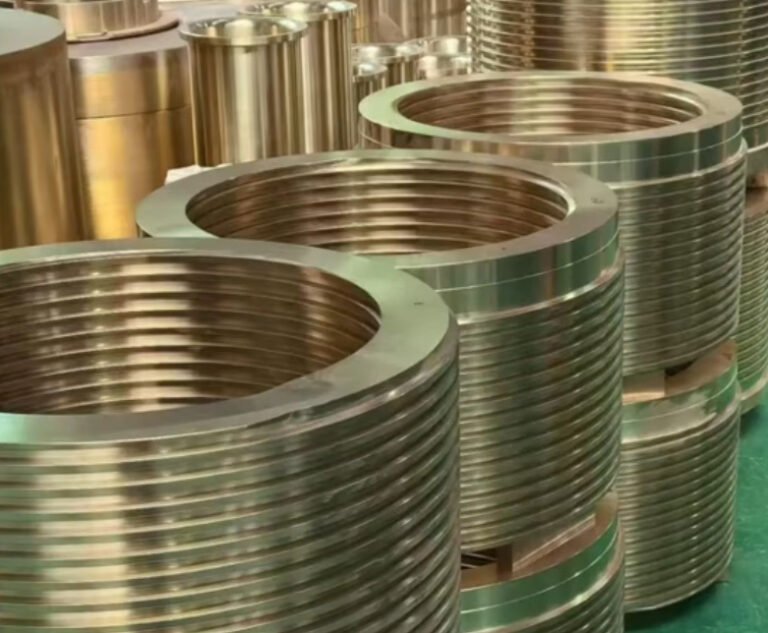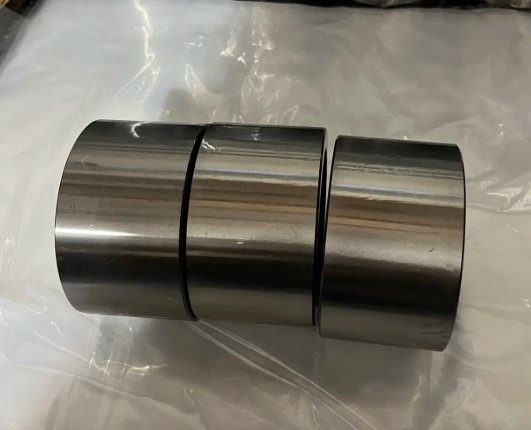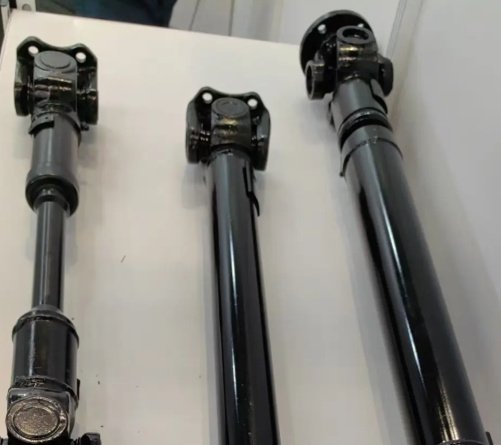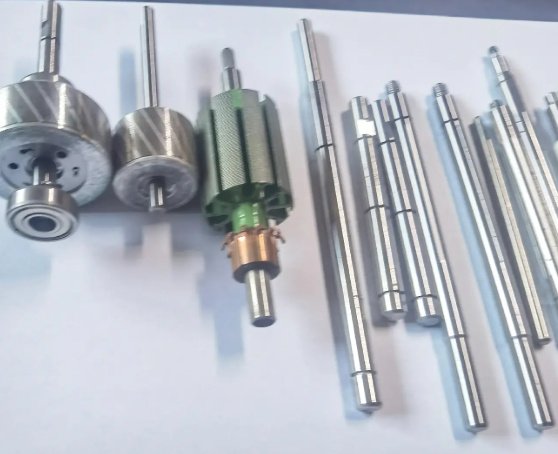
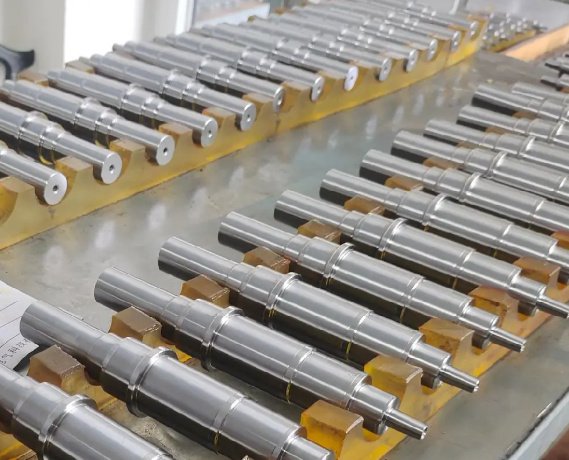
A stainless steel shaft is a cylindrical mechanical component used to transmit torque, support rotating elements, guide linear motion, or provide a corrosion-resistant bearing surface. In applications exposed to moisture, chemicals, washdown, marine air, food processing environments, or medical cleaning cycles, Stainless Steel Shafts are often selected instead of carbon steel or plated steel because they combine mechanical strength with long-term corrosion resistance.
This page explains common stainless steel shaft types, grade selection, machining considerations, tolerance choices, surface finish requirements, and purchasing factors. It is written for engineers, sourcing teams, maintenance managers, and OEM buyers who need a technically reliable shaft specification rather than a generic material description.
What Is a Stainless Steel Shaft?
A stainless steel shaft is typically manufactured from stainless round bar, ground bar, centerless-ground stock, or forged material, then machined to meet dimensional, surface, and geometric requirements. Depending on the application, it may include features such as keyways, cross holes, snap ring grooves, threaded ends, shoulders, flats, splines, bearing journals, or coupling seats.
The defining advantage is the chromium-rich passive oxide layer formed on stainless steel. This layer helps resist oxidation and many corrosive media. However, stainless steel is not a single material. Grade, heat treatment, surface finish, passivation, loading condition, and operating environment all affect performance.
- Typical forms: solid shaft, hollow shaft, stepped shaft, keyed shaft, splined shaft, pump shaft, motor shaft, linear guide shaft, and precision ground shaft.
- Common manufacturing routes: turning, milling, drilling, grinding, thread rolling, polishing, straightening, heat treatment, and passivation.
- Typical industries: food and beverage, packaging, marine equipment, pumps, valves, robotics, automation, pharmaceutical machinery, medical devices, and chemical processing.
Common Stainless Steel Shaft Grades and When to Use Them
Grade selection should be based on corrosion exposure, strength requirement, machinability, magnetic properties, cost, and availability. The table below compares widely used stainless steel grades for shaft applications.
| Grade | Typical Standard Reference | Key Characteristics | Best-Fit Shaft Applications | Limitations |
|---|---|---|---|---|
| 304 / 304L | ASTM A276, ASTM A479 | Good general corrosion resistance, widely available, non-hardenable by heat treatment | Food equipment shafts, light-duty guide shafts, packaging machinery, washdown environments | Lower strength than precipitation-hardening grades; not ideal for chloride-heavy marine service |
| 316 / 316L | ASTM A276, ASTM A479 | Improved pitting resistance due to molybdenum content | Marine shafts, chemical equipment, pharmaceutical machinery, wet processing lines | Higher cost than 304; not high-hardness without work hardening or special processing |
| 410 | ASTM A276 | Martensitic stainless steel, heat treatable, moderate corrosion resistance | Pump shafts, valve stems, wear-resistant rotating shafts | Less corrosion resistant than 304/316; heat treatment control is important |
| 420 | ASTM A276 | Higher carbon martensitic grade, can achieve higher hardness | Cutting equipment shafts, wear-focused mechanical parts, hardened shaft components | Reduced corrosion resistance compared with austenitic grades |
| 431 | ASTM A276 | High strength, better corrosion resistance than many martensitic grades | Marine drive shafts, high-load pump shafts, demanding rotating components | Requires correct heat treatment; may be less available than 304 or 316 |
| 17-4 PH | ASTM A564, ASTM A693 | Precipitation-hardened stainless steel with high strength and good corrosion resistance | Aerospace shafts, precision automation shafts, torque transmission components | Heat treatment condition must be specified, such as H900, H1025, or H1150 |
For many standard corrosion-resistant shafts, 304 is economical and sufficient. For chloride exposure, 316 is commonly preferred. For high torque, high load, or tight deflection requirements, 17-4 PH, 431, or heat-treated martensitic stainless grades may provide a better strength-to-size solution.
Stainless Steel Shaft vs Carbon Steel, Plated Steel and Aluminum
A material comparison is useful when deciding whether the additional cost of stainless steel is justified. The lowest purchase price is not always the lowest lifecycle cost, especially where corrosion, cleaning chemicals, downtime, or contamination risk is involved.
| Material Option | Corrosion Resistance | Strength Potential | Surface Durability | Lifecycle Consideration |
|---|---|---|---|---|
| Stainless steel shaft | High, depending on grade and finish | Medium to very high, depending on grade | Good; can be ground, polished and passivated | Higher initial cost, often lower replacement risk in wet or corrosive service |
| Carbon steel shaft | Low without coating or oil protection | High and cost-effective | Good after hardening or grinding | Economical in dry environments; corrosion can drive maintenance cost |
| Chrome-plated steel shaft | Good until coating is damaged | High core strength possible | Very good wear surface when plating is intact | Risk of flaking, under-film corrosion, and coating repair issues |
| Aluminum shaft | Good in many atmospheric environments | Lower modulus and strength than steel | Requires anodizing or coating for improved wear | Useful for weight reduction but less suitable for high-load bearing journals |
In a wet conveyor drive shaft application, replacing painted carbon steel with 316 stainless steel can eliminate recurring rust-related maintenance. In one typical washdown packaging line scenario, corrosion inspection intervals may be extended from monthly checks to quarterly checks when the shaft, fasteners, and mating hardware are all upgraded to compatible stainless materials. Actual results depend on cleaning chemistry, temperature, crevice design, and lubrication.
Types of Stainless Steel Shafts
Different shaft types are optimized for different mechanical functions. Specifying the correct shaft geometry can improve assembly accuracy, service life, and cost control.
- Precision ground shafts: Used for linear bearings, bushings, guide rails, measuring equipment, and automation systems where consistent diameter and roundness are important.
- Stepped shafts: Include multiple diameters for bearing seats, shoulders, seals, gears, pulleys, and couplings.
- Keyed shafts: Transmit torque through a key and keyway, commonly used with pulleys, sprockets, gears, and couplings.
- Splined shafts: Provide higher torque transfer and better angular positioning than a single keyway.
- Threaded shafts: Used for fastening, adjustment, clamping, or assembly into housings and rotating components.
- Hollow stainless steel shafts: Reduce weight, allow internal routing of cables or fluids, or improve dynamic behavior in some rotating systems.
- Pump shafts: Designed for corrosion resistance, straightness, seal compatibility, and controlled runout under rotating load.
When should a hollow stainless steel shaft be considered?
A hollow shaft may be useful when weight reduction, internal fluid passage, cable routing, or reduced rotational inertia is required. However, torsional stiffness, wall thickness, critical speed, and stress concentration near holes or shoulders must be checked before replacing a solid shaft.
Key Engineering Specifications for Stainless Steel Shafts
A high-quality shaft drawing should define more than diameter and length. The most common performance failures are caused by missing or unclear tolerance, finish, straightness, concentricity, hardness, and material condition requirements.
| Specification Item | Typical Engineering Consideration | Why It Matters |
|---|---|---|
| Diameter tolerance | Common bearing fits may require ISO h6, h7, g6, or application-specific tolerance | Controls bearing fit, sliding performance, and assembly force |
| Straightness | Often specified per total length or per 300 mm segment | Reduces vibration, uneven bearing load, and seal wear |
| Runout | Critical for rotating shafts with bearings, seals, gears, and impellers | Improves balance, noise control, and service life |
| Surface roughness | Ra 0.2 to 0.8 micrometers is common for precision bearing or seal journals | Affects friction, lubrication film, seal performance, and corrosion resistance |
| Hardness | Depends on grade and heat treatment; 17-4 PH and martensitic grades can be hardened | Improves wear resistance and load capacity |
| Passivation | Often specified to ASTM A967 or similar practice | Removes free iron and improves corrosion resistance after machining |
For precision motion systems, diameter tolerance and surface finish directly affect bearing friction and positioning stability. For power transmission shafts, torsional strength, shoulder radii, keyway stress concentration, and fatigue resistance may be more important than mirror polishing.
Machining and Manufacturing Considerations
Stainless steel shafts can be more challenging to machine than plain carbon steel because many stainless grades work harden, generate heat, and may produce stringy chips. Stable tooling, correct speeds and feeds, sharp inserts, coolant control, and proper workholding are essential for repeatable shaft quality.
- Turning: Used to create diameters, shoulders, grooves, chamfers, and threaded features. Austenitic grades such as 304 and 316 require attention to work hardening.
- Centerless grinding: Produces tight diameter control and improved roundness for precision shafts and bearing surfaces.
- Cylindrical grinding: Used for journals, critical fits, and high-accuracy rotating shaft features.
- Milling and broaching: Used for keyways, flats, slots, and spline features.
- Drilling and cross-hole machining: Requires burr control because burrs can damage seals, bearings, cables, or mating components.
- Polishing: Improves surface smoothness for sanitary, sealing, or low-friction applications.
- Passivation: Recommended after machining when corrosion resistance is a functional requirement.
A practical machining rule is to avoid leaving unnecessary sharp internal corners. Generous fillet radii at shoulders can reduce stress concentration and improve fatigue life. For shafts with keyways, engineers should evaluate whether the keyway reduces the effective torque capacity below the required safety factor.
Why can stainless steel shafts gall or seize during assembly?
Stainless steel can gall when similar stainless surfaces slide under pressure without adequate lubrication, especially with threaded or tight-fitting components. Using compatible lubricants, dissimilar mating materials, anti-seize compounds, controlled fits, and smoother finishes can reduce galling risk.
Surface Finish, Passivation and Corrosion Performance
The corrosion resistance of stainless steel is influenced by surface condition. A rough, contaminated, or heat-tinted surface can corrode faster than a clean, smooth, passivated surface of the same alloy.
For sanitary and washdown machinery, a smoother shaft surface helps reduce residue retention and improves cleanability. For seal journals, excessive roughness can accelerate seal wear, while an overly polished surface may reduce lubricant retention in some dynamic sealing systems. The right finish depends on whether the shaft contacts a bearing, bushing, seal, product stream, or open atmosphere.
- Ra 0.8 micrometers may be adequate for many machined shaft surfaces.
- Ra 0.4 micrometers is commonly used for improved bearing or sliding contact performance.
- Ra 0.2 micrometers or better may be specified for high-precision, sanitary, or sealing applications.
- Passivation after machining helps remove embedded free iron and restore the passive layer.
- Electropolishing can further improve cleanability and surface chromium enrichment for selected applications.
When specifying shafts for chloride exposure, 316 stainless steel is generally more resistant to pitting than 304, but it is not immune to corrosion. Crevices, stagnant saltwater, high temperature, and aggressive cleaning chemicals can still cause localized attack.
Real Engineering Problem: Shaft Corrosion in a Washdown Conveyor
A food packaging conveyor used carbon steel drive shafts with painted surfaces. After repeated alkaline cleaning and high-pressure washdown, coating damage appeared near bearing shoulders and keyways. Rust particles migrated toward seals and bearings, causing premature bearing noise and unplanned maintenance.
The engineering team changed the specification to 316 stainless steel for the shaft, added passivation after machining, increased shoulder radius where space allowed, and specified a controlled surface finish for the seal journal. The result was a more stable corrosion-resistant assembly with fewer rust-related inspections.
| Before Change | After Change | Engineering Impact |
|---|---|---|
| Painted carbon steel shaft | 316 stainless steel shaft | Improved resistance to washdown corrosion |
| Unspecified post-machining surface treatment | Passivation specified after machining | Reduced risk from free iron contamination |
| Sharp shoulder transition | Larger fillet radius where compatible with bearing layout | Lower stress concentration at diameter change |
| Reactive replacement after visible rust | Planned inspection interval based on operating exposure | Lower unplanned downtime risk |
This example highlights an important point: stainless steel selection alone is not always enough. Geometry, finish, surface treatment, bearing sealing, and compatible fasteners also influence final performance.
Buyer and Engineer Checklist for Stainless Steel Shaft Procurement
Before ordering a custom or standard stainless steel shaft, buyers should confirm the technical details that affect cost, lead time, inspection, and fitness for use. A complete specification helps avoid rework, rejected parts, and assembly delays.
- Material grade and standard, such as ASTM A276 316 or ASTM A564 17-4 PH.
- Heat treatment condition, especially for 17-4 PH, 410, 420, or 431 stainless steel.
- Overall length, diameter, steps, shoulders, holes, grooves, threads, keyways, and chamfers.
- Dimensional tolerances for bearing seats, seal journals, and coupling fits.
- Geometric tolerances such as straightness, concentricity, cylindricity, and runout.
- Surface roughness requirements and whether grinding or polishing is required.
- Passivation, electropolishing, marking, cleaning, or packaging requirements.
- Inspection documents, material certificates, hardness reports, or dimensional inspection reports.
- Operating environment, including chemicals, temperature, washdown frequency, and chloride exposure.
- Required quantity, prototype needs, production repeatability, and spare-part strategy.
What information should be included on a shaft drawing?
A shaft drawing should include material grade, heat treatment, dimensions, tolerances, surface finish, geometric controls, critical features, edge break requirements, passivation or coating requirements, and inspection criteria. If the shaft mates with bearings, seals, gears, pulleys, or couplings, the mating component specifications should also be reviewed.
Quality Control and Inspection Methods
Inspection requirements should match functional risk. A simple spacer shaft may need only dimensional verification, while a high-speed pump shaft may require runout measurement, material certification, hardness testing, surface roughness inspection, and balance verification.
- Micrometer and bore gauge checks: Verify shaft diameter and fit zones.
- Dial indicator runout inspection: Confirms rotating accuracy of journals and critical features.
- Coordinate measuring machine inspection: Useful for complex stepped shafts and positional tolerances.
- Surface roughness testing: Confirms Ra values for seal, bearing, sanitary, or sliding surfaces.
- Hardness testing: Verifies heat treatment condition for hardenable stainless grades.
- Positive material identification: Reduces risk of grade mix-up in critical applications.
- Visual and contamination inspection: Detects burrs, scratches, heat tint, embedded iron, or handling damage.
For repeat production, inspection data from first article parts can establish a baseline for process capability. In high-volume shaft manufacturing, controlling grinding wheel condition, centerless setup, coolant cleanliness, and bar straightness can be as important as final inspection.
How to Select the Right Stainless Steel Shaft
The right shaft is the one that satisfies mechanical load, corrosion exposure, dimensional accuracy, production cost, and maintenance requirements simultaneously. Selecting only by grade can lead to over-specification or under-performance.
- Define the function: torque transmission, rotation support, linear guidance, sealing surface, or structural support.
- Quantify operating conditions: load, speed, duty cycle, temperature, chemical exposure, and cleaning method.
- Select the material grade based on corrosion and strength requirements.
- Specify heat treatment if high strength or hardness is needed.
- Choose tolerances and fits based on bearings, bushings, couplings, and seals.
- Define surface finish and passivation requirements.
- Review stress concentration at keyways, holes, shoulders, and thread roots.
- Confirm inspection methods and documentation before production.
For general wet-duty machinery, 304 or 316 may be sufficient. For high-strength applications, 17-4 PH stainless steel shafts can provide substantially higher yield strength than annealed austenitic grades when specified in the correct heat-treated condition. For shafts exposed to sliding wear, the selected grade, hardness, surface finish, lubrication, and mating material must be evaluated together.
Summary
A stainless steel shaft is more than a corrosion-resistant round bar. It is a functional mechanical component whose performance depends on grade selection, machining quality, tolerance control, surface finish, passivation, and correct fit with bearings, seals, couplings, gears, and housings.
Compared with carbon steel, plated steel, and aluminum, stainless steel shafts offer strong lifecycle value in corrosive, sanitary, marine, chemical, and washdown environments. The best results come from a complete specification that defines not only the material but also the geometry, finish, hardness, inspection requirements, and operating conditions.