
Alloy Steel CNC Machining Services
- Fast prototype & low MOQ support
- Tight tolerance up to +0.002mm
- Surface finishing available
- Engineering review before production
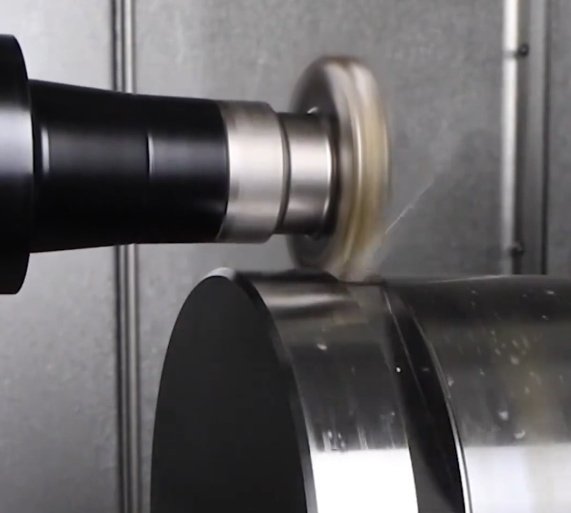
Alloy Steel CNC Machining
CNC Turning and Mill-Turn Machining
CNC Milling
Grinding and Finishing
What Searchers Usually Need From Alloy Steel CNC Machining
- Machining of annealed, normalized, pre-hardened and heat-treated alloy steel blanks
- Prototype, bridge production and repeat production batches
- CNC turning, CNC milling, mill-turn machining, drilling, boring, tapping, reaming and thread milling
- Secondary operations such as surface grinding, cylindrical grinding, honing, broaching and deburring
- Heat treatment coordination including quenching, tempering, carburizing, nitriding, induction hardening and stress relieving
- Inspection reports for critical dimensions, threads, runout, flatness, concentricity and hardness
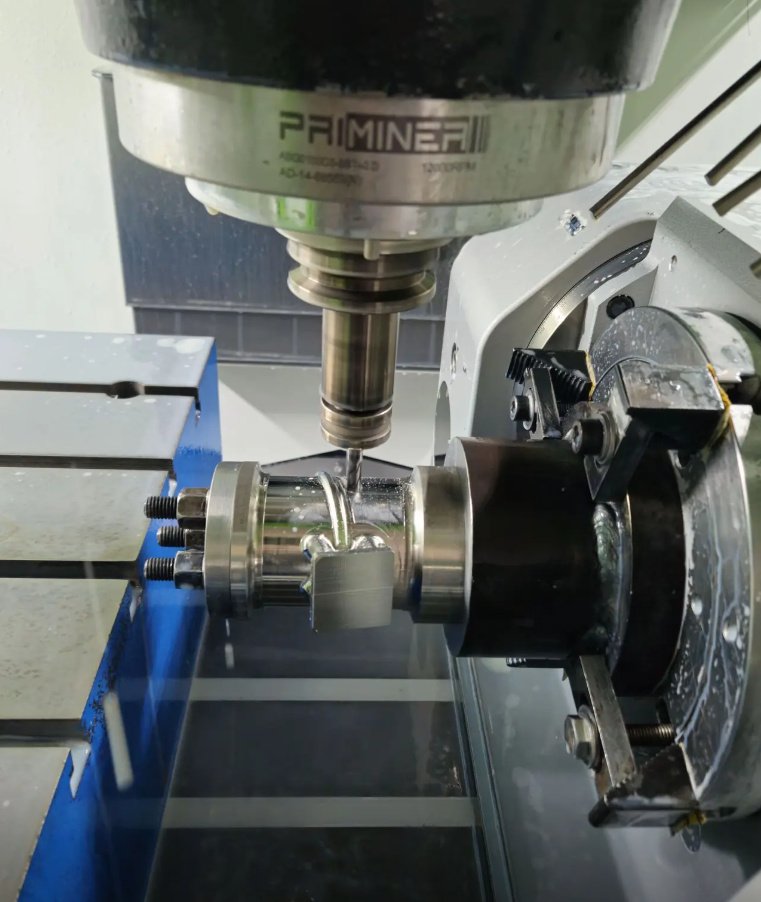
Engineering Problems We Solve in Alloy Steel Machining
1
4140 shaft runout exceeded print requirement after heat treatment
- Engineering Problem: Runout exceeded print requirement after heat treatment.
- Root Cause: Unbalanced roughing stock and no post-heat-treatment correction step.
- Manufacturing Response: Changed sequence to rough turn, stress relieve, heat treat, finish turn and cylindrical grind journals.
- Measured Result: Runout improved from ~0.030 mm to below 0.008 mm on controlled journals.
2
4340 Milled Bracket Chatter Issue
- Engineering Problem: Showed chatter on deep pocket walls.
- Root Cause: High tool overhang and full-width cutting engagement.
- Manufacturing Response: Used adaptive clearing, shorter carbide end mill, revised stepdown and added semi-finish pass.
- Measured Result: Wall finish improved from visible chatter marks to stable finishing passes.
3
8620 Carburized Gear Blank Distortion
- Engineering Problem: Required excessive rework.
- Root Cause: Insufficient stock allowance and distortion at thin sections.
- Manufacturing Response: Added datum-controlled pre-carburizing geometry, localized finishing allowance and post-carburizing grind plan.
- Measured Result: Reduced scrap risk and stabilized final bore and face perpendicularity.
Material, Heat Treatment and Coating Options
Alloy steel components may require different treatments depending on load, wear, corrosion exposure and assembly conditions. Selecting the correct process early helps avoid dimensional changes after final machining. For high-strength alloy steels above certain hardness or tensile strength levels, hydrogen embrittlement is an important risk during electroplating. Baking requirements should be defined according to the applicable standard and end-use requirements.
| Process | Purpose | Machining Consideration |
|---|---|---|
| Quench and temper | Improves strength and toughness | Plan finishing stock for distortion correction |
| Carburizing | Creates hard wear-resistant case with tough core | Useful for 8620 and 9310; grinding may be needed after case hardening |
| Nitriding | Improves surface hardness and wear resistance with lower distortion than quenching | Final machining is usually completed before nitriding |
| Induction hardening | Hardens selected areas such as journals or gear teeth | Requires clear case depth and hardness specifications |
| Black oxide | Provides mild corrosion protection and dark appearance | Minimal dimensional impact compared with thick coatings |
| Phosphate coating | Improves oil retention and corrosion resistance | Common for fasteners, gears and mechanical components |
| Zinc plating | Improves corrosion resistance | Hydrogen embrittlement relief may be required for high-strength steels |
Machining Hardened and Heat-Treated Alloy Steel
Heat treatment can improve strength and wear resistance, but it also creates distortion risk. Parts with thin sections, asymmetric geometry, interrupted slots or deep pockets are more likely to move during quenching or carburizing. For critical components, we recommend a planned sequence: rough machine, stress relieve, heat treat, semi-finish, then final machine or grind.
Recommended process route for a precision 4140 or 4340 component
A practical route is to rough machine the blank with balanced stock removal, leave controlled finishing allowance, perform stress relieving when geometry is distortion-sensitive, complete quench and temper to the target hardness, then finish machine or grind datum features. For bearing journals, bores and tight fits, leaving 0.01-0.05 mm finishing stock per side is common, but the exact allowance depends on part size, heat-treatment method and tolerance class.
When hard milling may replace grinding
Hard milling can be effective for localized features, pockets, slots and non-bearing surfaces in hardened alloy steel. Grinding is still preferred for very tight roundness, long bearing journals, sealing surfaces and surfaces requiring highly controlled Ra values. The decision depends on hardness, geometry, tool access, surface finish requirement and inspection method.
Design for Manufacturability Recommendations
A manufacturable alloy steel part balances strength requirements with tool access, fixturing stability, heat-treatment behavior and inspection feasibility. Small changes to geometry can reduce machining cost while improving part consistency.
DFM checklist for alloy steel CNC machined parts
- Specify the exact material grade, standard and condition, such as AISI 4140 annealed or 4140 pre-hardened to 28-32 HRC.
- Define which dimensions apply before and after heat treatment.
- Avoid unnecessarily deep narrow slots that require long-reach tools.
- Use internal radii that match practical end mill sizes where possible.
- Separate cosmetic requirements from functional surfaces.
- Indicate datum features clearly for multi-operation machining.
- Allow grinding stock on bearing journals, seal diameters and precision bores when heat treatment is required.
- Call out thread class, thread depth and whether threads must be produced before or after coating.
Quoting Requirements for Accurate Alloy Steel CNC Machining
Accurate quoting requires more than a 3D model. Material condition, hardness, heat treatment and inspection requirements can significantly change machining time and production risk. The more complete the technical package, the more reliable the price and lead time.
Information that improves quote accuracy
- 2D drawing with tolerances, threads, finishes, datum references and inspection notes
- 3D CAD model in STEP, Parasolid, IGES or native CAD format
- Material grade, specification and supply condition
- Required hardness range and heat-treatment process
- Annual quantity, release quantity and prototype quantity
- Surface finish or coating requirements
- Critical-to-function dimensions and assembly interfaces
- Required documentation such as material certificate, dimensional report or PPAP package
Why Process Planning Matters for Alloy Steel Parts
Alloy steel is often used where failure is expensive: rotating equipment, power transmission, hydraulic systems, tooling, transportation, defense, aerospace and industrial automation. A low-cost machining plan that ignores heat treatment, tool wear or datum control can result in scrap, rework and delayed assembly.
A robust plan considers material hardness, cutter geometry, chip load, coolant delivery, roughing strategy, stress relief, finishing allowance, inspection sequence and traceability. For production parts, stable manufacturing is achieved by controlling not only the CNC program but also the complete process chain from raw material to final inspection.
If your project requires precision alloy steel components, provide the material grade, drawing, model and performance requirements so the manufacturing route can be matched to the part’s function, not just its shape.
Common Alloy Steel Grades We Machine
| Material Grade | Typical Condition | Machining Characteristics | Typical Applications |
|---|---|---|---|
| AISI 4140 / 42CrMo4 | Annealed, normalized, Q&T, pre-hardened | Good strength-to-machinability balance; requires rigid setups for deep cuts | Shafts, pins, couplings, fixtures, machine parts |
| AISI 4340 / EN24 | Annealed or quenched and tempered | High toughness; higher cutting forces than 4140; benefits from coated carbide tools | Aerospace fittings, drive components, high-load shafts |
| AISI 4130 / 25CrMo4 | Annealed or normalized | Relatively machinable chromium-molybdenum steel; weldable compared with higher-carbon grades | Structural brackets, frames, sleeves, motorsport parts |
| AISI 8620 | Annealed, carburized case-hardened | Machines well before carburizing; finish allowance needed for case-hardening distortion | Gears, splines, camshafts, wear components |
| AISI 52100 | Annealed or hardened | High carbon chromium bearing steel; abrasive when hardened; grinding often required | Bearing races, rollers, guide pins, wear sleeves |
| AISI 9310 | Annealed, carburized | High fatigue strength; precision planning needed for gear and aerospace parts | Aircraft gears, transmission shafts, high-duty rotating parts |