
Brass CNC Machining Services
Brass CNC machining services are used to produce accurate, corrosion-resistant, electrically conductive, and visually clean components for fluid control, electronics, medical devices, instrumentation, marine hardware, and industrial equipment. With the right brass alloy, tooling strategy, chip control, and finishing process, CNC-machined brass parts can achieve excellent dimensional stability and repeatable surface quality from one-off prototypes to high-volume production.
- Fast prototype & low MOQ support
- Tight tolerance up to +0.002mm
- Surface finishing available
- Engineering review before production
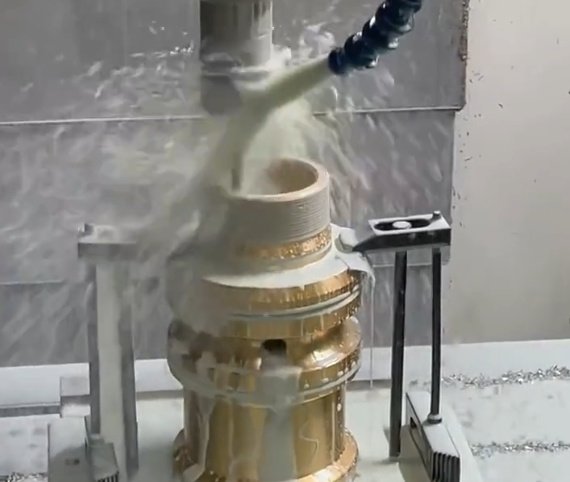
Brass CNC Machining Capabilities
Precision Milling
- Multi-axis CNC milling for complex geometries.
- Tight tolerances as tight as ±0.002mm and fine surface finishes.
- Suitable for prototypes and mass production.
CNC Turning
- High-speed turning for shafts, rods, and cylindrical parts.
- Thread cutting, grooving, and facing operations.
- Supports both small and large batch production.
Drilling, Tapping & Boring
- CNC drilling for holes of all sizes and depths.
- Threading and tapping for assemblies.
- High repeatability for precision alignment.
Multi-Axis Machining
- 4-axis and 5-axis machining for intricate parts.
- Reduced setups and improved accuracy.
- Ideal for aerospace, automotive, and medical components.
Finishing
- Deburring, polishing, brushing, plating, passivation-like cleaning
- Cosmetic parts, conductive parts, corrosion-exposed hardware
CNC Prototyping
- Rapid CNC prototyping to test designs quickly.
- Small batch to full-scale production runs.
- Flexible workflow to meet tight deadlines.
Why Brass Is Well Suited for CNC Machining
Brass offers a combination of machinability, dimensional stability, corrosion resistance, electrical conductivity, thermal conductivity, and attractive appearance. Compared with many stainless steels and high-strength alloys, brass usually allows higher cutting speeds, lower tool wear, and smoother machined finishes.
- Excellent chip formation in free-machining grades such as C360 brass
- Good corrosion resistance in water, air, fuel, and many industrial environments
- High electrical and thermal conductivity for contacts, terminals, and heat-transfer parts
- Good thread strength and sealing performance for fittings and fluid components
- Attractive gold-toned appearance for visible hardware and decorative components
- Reliable dimensional repeatability for precision CNC turned brass parts
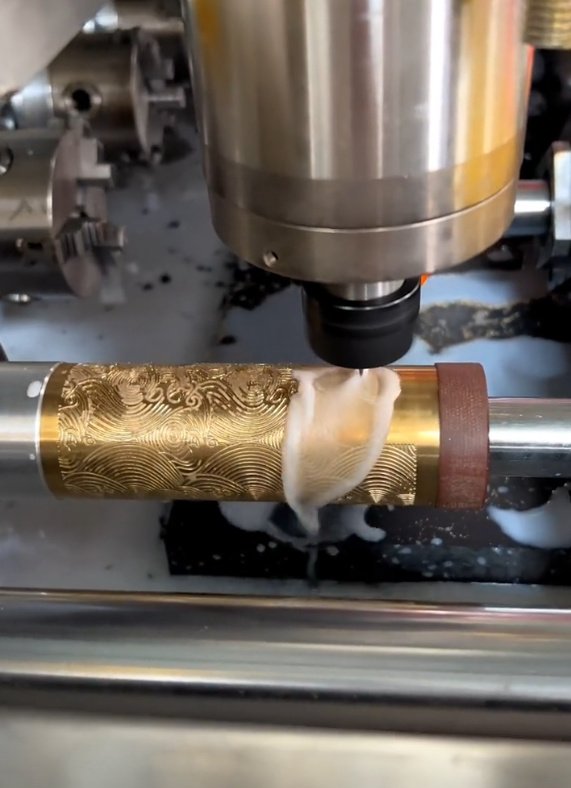
Brass CNC Milling and CNC Turning Process Details
1
CNC Turning Brass Parts
2
CNC Milling Brass Components
3
Swiss Machining for Small Brass Parts
Common Brass Materials for CNC Machined Parts
| Brass Grade | Typical Characteristics | Best-Fit CNC Machined Parts |
|---|---|---|
| C360 Free-Cutting Brass | Excellent machinability, good dimensional stability, clean chips | Fittings, inserts, bushings, screws, connectors, high-volume turned parts |
| C260 Cartridge Brass | Good ductility, good cold forming, lower machinability than C360 | Electrical parts, stamped-and-machined components, decorative hardware |
| C353 Engraving Brass | Good machinability and engraving performance | Nameplates, engraved components, precision decorative parts |
| C464 Naval Brass | Improved corrosion resistance, especially in marine environments | Marine fittings, pump components, valve parts, hardware exposed to moisture |
| Lead-Free Brass | Lower lead content for regulatory or potable-water requirements | Water-contact fittings, compliant plumbing components, consumer products |
How to choose between C360 brass and lead-free brass
C360 brass is often the first choice when the main requirements are fast machining, clean threads, stable tolerances, and competitive cost. Lead-free brass should be considered for potable-water systems, consumer-contact products, or applications where RoHS, REACH, NSF, or customer-specific material restrictions apply. Lead-free brass may require adjusted cutting parameters because it can produce different chip behavior and higher tool load than C360.
Tolerances, Surface Finishes, and Quality Control
Brass components can often be machined to tight tolerances, but achievable results depend on part geometry, alloy, feature size, wall thickness, workholding access, inspection method, and production quantity. For many CNC-machined brass parts, general tolerances follow ISO 2768 unless tighter tolerances are specified on critical dimensions.
Typical achievable tolerances for precision brass CNC parts may range from ±0.005 in. to ±0.001 in. for selected features, or approximately ±0.13 mm to ±0.025 mm, depending on the feature and inspection requirements. Ultra-tight tolerances should be applied only where functionally necessary to avoid unnecessary cost.
| Requirement | Typical Range | Engineering Notes |
|---|---|---|
| General machined tolerance | ±0.13 mm / ±0.005 in. | Suitable for many non-critical dimensions |
| Precision feature tolerance | ±0.025 mm / ±0.001 in. | Best for controlled bores, fits, and datum-related features |
| Surface roughness | Ra 0.8–3.2 μm typical | Depends on tool path, feed rate, tool condition, and finishing pass |
| Thread inspection | Go/no-go gauges or thread micrometers | Applicable for UNC, UNF, metric, NPT, BSP, and custom threads |
| Critical dimensional inspection | Calipers, micrometers, bore gauges, CMM, optical comparator | Inspection method should match tolerance and feature geometry |
Quality control for brass machining may include incoming material verification, first article inspection, in-process checks, final dimensional inspection, thread gauging, surface finish measurement, visual inspection for scratches and dents, and packaging controls to protect cosmetic surfaces.
Design Guidelines for Custom Brass CNC Machined Parts
Designing brass parts for CNC machining can reduce cost, improve yield, and shorten production time. The goal is to keep critical features accessible, avoid unnecessary tight tolerances, and control features that commonly create burrs or tool chatter.
- Use standard hole sizes and thread forms when possible to reduce tooling cost.
- Specify tight tolerances only on functional dimensions such as sealing diameters, press-fit bores, thread locations, and datum-critical features.
- Avoid extremely thin walls where clamping pressure or cutting force may cause deformation.
- Use generous internal radii where possible; sharp internal corners require smaller tools and longer cycle times.
- Define cosmetic surfaces clearly if scratches, tool marks, or polishing direction are important.
- Add chamfers to threaded holes and turned edges to improve assembly and reduce burr risk.
- For NPT or BSP fittings, define thread standard, gauge requirement, sealing face, and pressure-related inspection needs.
Burr control is one of the most important design and process issues in brass machining. Cross-holes, intersecting slots, fine threads, thin edges, and small drilled features can generate burrs that affect sealing, assembly, electrical contact, or fluid flow. Deburring should be treated as an engineered process, not an afterthought.
Design recommendations for threaded brass fittings
For threaded brass fittings, specify the thread standard, tolerance class, thread depth, lead-in chamfer, sealing method, and whether the thread must be inspected with a go/no-go gauge. If the part seals against an O-ring, copper washer, tapered pipe thread, or machined cone, the sealing surface finish and geometry are usually more important than the appearance of non-functional surfaces.
Surface Finishing Options for CNC Machined Brass
Brass parts can be used as-machined or finished for appearance, corrosion resistance, conductivity, solderability, wear behavior, or customer branding. The correct finish depends on the application environment and whether the brass part must maintain electrical contact or fluid compatibility.
| Finish | Purpose | Typical Considerations |
|---|---|---|
| As-Machined | Functional finish with visible tool marks | Cost-effective for internal components and prototypes |
| Polishing | Improved cosmetic appearance and smoother feel | May slightly round edges and affect tight dimensions |
| Brushing | Directional satin appearance | Requires consistent grain direction on visible surfaces |
| Nickel Plating | Improved wear resistance and corrosion resistance | Plating thickness must be considered on tight fits and threads |
| Tin Plating | Improved solderability and electrical performance | Common for terminals, contacts, and electronic components |
| Gold Plating | High conductivity and oxidation resistance | Used for premium contacts and sensitive electrical interfaces |
When plating is required, drawings should identify masked areas, post-plate dimensions, thread requirements after plating, and whether hydrogen embrittlement relief is relevant to any non-brass assembled parts.
Real Engineering Challenges in Brass CNC Machining
Precision brass machining is rarely limited to simply cutting the material. Real production issues often involve burrs, surface protection, threaded feature consistency, tolerance stack-up, and matching inspection methods to function.
Case Example: Reducing Burrs in a Brass Valve Insert
A brass valve insert with intersecting 1.2 mm cross-holes experienced inconsistent flow because micro-burrs remained inside the bore after drilling. The part was made from free-cutting brass and required a smooth internal passage for repeatable fluid performance.
Process changes included using a sharper drill geometry, reducing unsupported drill length, adding a controlled peck cycle, changing the operation sequence so the main bore was finished after cross-hole drilling, and introducing targeted mechanical deburring followed by inspection under magnification.
| Metric | Before Optimization | After Optimization |
|---|---|---|
| Parts rejected for internal burrs | 8.5% | 1.2% |
| Average manual deburring time | 42 seconds per part | 18 seconds per part |
| Flow test variation | ±6.8% | ±2.1% |
This type of improvement is common when brass machining is treated as a complete manufacturing process involving tool selection, sequence planning, deburring method, inspection strategy, and functional testing.
Industries and Applications for CNC Machined Brass Parts
Brass CNC machined components are used where dimensional accuracy, corrosion resistance, electrical performance, and reliable assembly matter. The material is especially valuable in parts that combine machined threads, fluid passages, sealing faces, and cosmetic requirements.
- Plumbing and fluid control: adapters, valve stems, seats, nozzles, elbows, fittings
- Electrical and electronics: contacts, terminals, connectors, sensor bodies, grounding components
- Automotive and mobility: bushings, inserts, fuel fittings, pneumatic fittings, precision spacers
- Medical and laboratory equipment: small connectors, instrument hardware, gas and liquid handling parts
- Marine hardware: corrosion-resistant fittings, fasteners, pump parts, valve components
- Industrial equipment: manifolds, bearing sleeves, threaded inserts, machine adjustment parts
- Consumer and decorative products: knobs, handles, nameplates, luxury hardware, visible fasteners
When brass may not be the best material choice
Brass may not be suitable for applications requiring very high tensile strength, high-temperature strength, extreme wear resistance, or compatibility with certain chemicals. Stainless steel, bronze, aluminum bronze, phosphor bronze, or engineered plastics may be better choices depending on the environment, load, conductivity requirement, and corrosion exposure.
Information Needed for Accurate Brass CNC Machining Evaluation
Clear manufacturing information helps determine the best process, avoid quoting assumptions, and reduce design revisions before production. For precision brass machining, the most useful data includes the 3D model, 2D drawing, material grade, quantity, tolerance requirements, finish requirements, and intended application.
- 3D CAD file such as STEP, STP, IGES, Parasolid, or native CAD format
- 2D drawing with critical dimensions, tolerances, datums, thread callouts, and surface finish notes
- Required brass alloy, such as C360, C260, C353, C464, or lead-free brass
- Quantity range for prototype, pilot run, or production machining
- Functional requirements such as sealing, conductivity, press fit, cosmetic surface, or pressure exposure
- Post-processing requirements including deburring, polishing, plating, cleaning, marking, or packaging
- Inspection requirements such as first article inspection, CMM report, material certification, or thread gauge report
The most cost-effective brass CNC machined parts are designed around function, manufacturability, and inspection clarity. A well-defined drawing reduces ambiguity, improves production repeatability, and helps ensure that the final brass components meet both dimensional and application requirements.