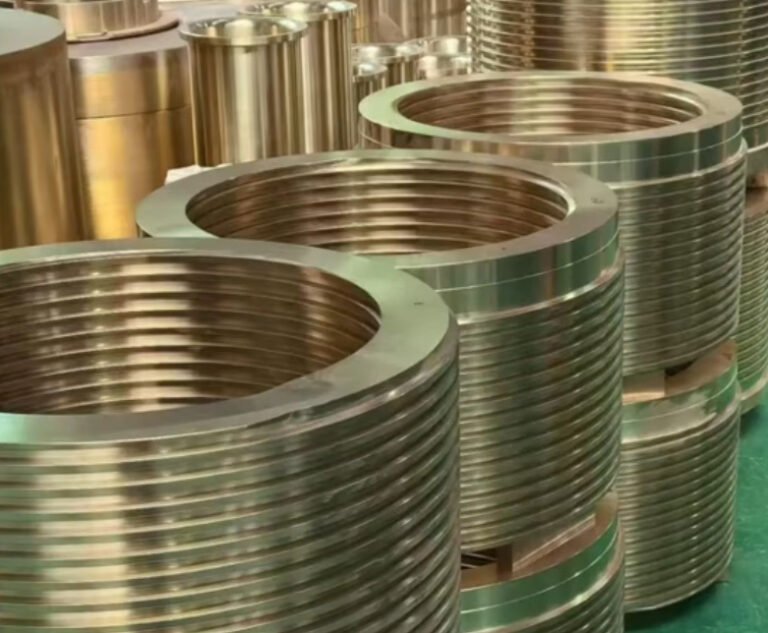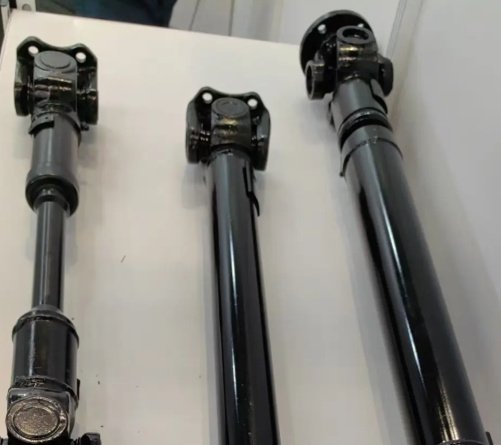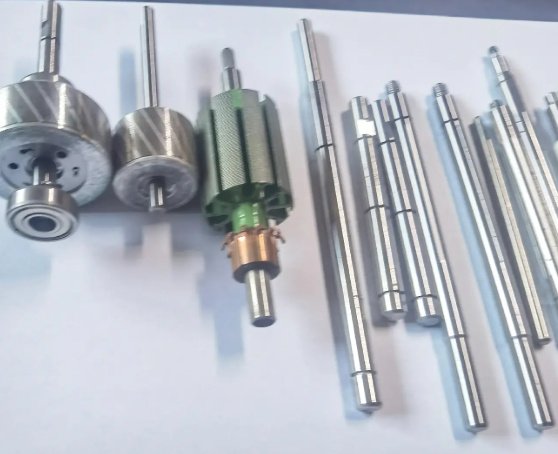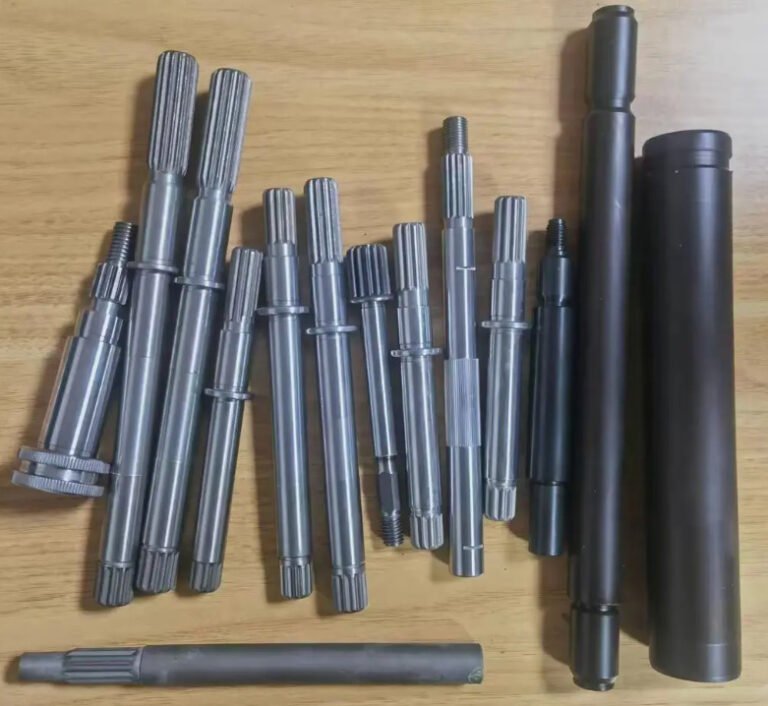
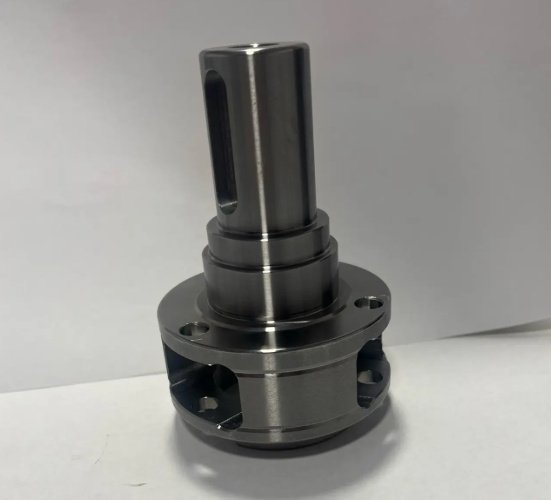
A rotary shaft is a cylindrical mechanical component used to transmit torque, support rotating elements, or provide precise rotational motion in machinery. In real applications, Rotary Shafts directly affect torque transmission, bearing life, vibration, concentricity and equipment uptime. They are commonly used in electric motors, gearboxes, pumps, conveyors, robotics, CNC equipment, agricultural machinery, automotive systems and industrial automation assemblies.
For engineers and buyers, selecting the right rotary shaft is not only about diameter and length. Material strength, straightness, runout, surface finish, heat treatment, keyway accuracy, thread quality and corrosion resistance all influence long-term performance. A shaft that is underspecified may bend, wear, seize in bearings or fail by fatigue; a shaft that is overspecified may increase cost without improving service life.
What Is a Rotary Shaft?
A rotary shaft is a rotating machine element designed to carry torsional loads, radial loads or axial loads while maintaining alignment between connected parts. Depending on the system, it may support pulleys, sprockets, gears, couplings, impellers, rollers, encoders or bearings.
In a typical power transmission system, the shaft receives torque from a motor or gearbox and transfers it to another mechanical element. In precision equipment, the shaft may also function as a locating surface, meaning that concentricity, roundness and surface roughness become as important as strength.
Common Types of Rotary Shafts
Rotary shafts are available in several structural forms. The best choice depends on torque, speed, bearing arrangement, assembly method and manufacturing cost.
| Type | Typical Features | Common Applications | Key Engineering Consideration |
|---|---|---|---|
| Plain Round Shaft | Uniform diameter, simple cylindrical form | Rollers, guide shafts, light transmission systems | Low machining cost, but may require collars or set screws for positioning |
| Stepped Shaft | Multiple diameters for shoulders, bearings and gears | Gearboxes, motor output shafts, pump shafts | Shoulder radius and stress concentration must be controlled |
| Keyed Shaft | Keyway slot for torque transfer | Pulleys, sprockets, couplings, flywheels | Keyway depth and corner radius influence fatigue strength |
| Splined Shaft | Multiple teeth for high torque engagement | Automotive drivetrains, hydraulic motors, heavy machinery | Requires accurate tooth profile and hardened wear surfaces |
| Threaded Shaft | External or internal threads for fastening | Actuators, adjustment mechanisms, rotating assemblies | Thread concentricity and root strength are critical |
| Hollow Rotary Shaft | Reduced weight with internal bore | Robotics, spindle systems, cable-pass-through assemblies | Wall thickness must resist torsion and bending |
Rotary Shaft Materials Compared
Material selection is one of the most important decisions in rotary shaft design. A shaft material must satisfy mechanical strength, machinability, wear resistance, corrosion resistance and cost targets.
| Material | Strength and Wear Resistance | Corrosion Resistance | Machinability | Best Used For |
|---|---|---|---|---|
| Carbon Steel C45 / 1045 | Good strength, suitable for induction hardening | Low unless coated | Good | General industrial shafts, rollers, medium-duty transmission |
| Alloy Steel 4140 / 42CrMo4 | High strength and fatigue resistance after heat treatment | Low to moderate unless coated | Moderate | Heavy-duty gear shafts, motor shafts, high-load rotating parts |
| Stainless Steel 304 | Moderate strength | Good | Moderate | Food equipment, light-duty wet environments |
| Stainless Steel 316 | Moderate strength | Very good, especially in chloride environments | Moderate to difficult | Marine, chemical processing, washdown equipment |
| Tool Steel | Very high hardness and wear resistance | Varies by grade | Difficult after hardening | Precision wear shafts, tooling systems, high-contact applications |
| Aluminum Alloy | Lower strength than steel, lightweight | Good with anodizing | Excellent | Low-inertia equipment, lightweight automation components |
For high-load applications, alloy steel such as 4140 is often preferred because it provides better tensile strength and fatigue resistance than standard carbon steel. For wet or corrosive environments, stainless steel may reduce maintenance costs even when the initial purchase price is higher.
Machining Requirements for Rotary Shafts
Rotary shaft manufacturing normally includes turning, centerless grinding, milling, drilling, threading, spline cutting, keyway broaching, heat treatment and surface finishing. The machining route depends on shaft geometry, tolerance class and production volume.
Precision machining is essential when the shaft interfaces with bearings, seals, gears or couplings. Even a small deviation in roundness or runout can increase vibration, noise and bearing temperature.
Typical Machining Processes
- CNC turning: Used for outer diameter, shoulders, grooves, chamfers and threaded ends.
- CNC milling: Used for flats, slots, cross holes and keyways.
- Grinding: Used for bearing journals, seal areas and high-precision diameter control.
- Broaching or slotting: Used for internal or external keyways.
- Spline cutting: Used for high-torque mechanical engagement.
- Induction hardening: Used to improve surface hardness while retaining a tough core.
- Plating, black oxide or nitriding: Used to improve wear resistance, corrosion protection or surface durability.
Common Tolerance and Surface Finish Targets
| Feature | Typical Requirement | Why It Matters |
|---|---|---|
| Bearing Journal Diameter | Often h6, g6 or custom fit depending on bearing type | Controls bearing mounting fit and prevents creep or excessive preload |
| Total Indicated Runout | 0.01 mm to 0.05 mm for precision assemblies | Reduces vibration, noise and uneven wear |
| Surface Roughness | Ra 0.2 to 0.8 μm for bearing or seal surfaces | Improves contact quality and seal life |
| Straightness | Application-specific, often controlled per shaft length | Prevents wobble and uneven load distribution |
| Hardness | HRC 50 to 62 for hardened wear surfaces | Improves resistance to abrasion and fretting |
When should a rotary shaft be ground instead of only turned?
Grinding is recommended when the shaft requires tight diameter tolerance, low runout, improved roundness or a fine surface finish for bearings and seals. For example, a motor shaft with a bearing journal tolerance of h6 and a seal contact surface below Ra 0.4 μm usually requires grinding after turning and heat treatment.
Rotary Shaft Design Criteria for Engineers
Shaft design should be based on load, speed, deflection, fatigue life and assembly constraints. A practical engineering review usually includes torque calculation, bending moment analysis, critical speed evaluation and bearing support layout.
Torque and Diameter
The shaft diameter must be large enough to transmit torque without exceeding allowable shear stress. However, diameter also affects weight, inertia, bearing size and material cost. For rotating machinery, the optimum design balances strength with dynamic performance.
Deflection and Bearing Load
Excessive shaft deflection can misalign gears, overload bearings and reduce seal effectiveness. In belt-driven systems, radial belt tension may create bending loads much higher than the transmitted torque would suggest.
Critical Speed and Vibration
At high rotational speed, the shaft must operate safely below or above its critical speed range. Long slender shafts, hollow shafts and shafts with mounted disks require special attention to balance grade, straightness and support stiffness.
A balanced rotary shaft assembly can significantly reduce bearing temperature and vibration amplitude, especially in motors, fans, spindles and high-speed rollers.
Comparison: Standard Rotary Shaft vs Custom Rotary Shaft
Buyers often compare standard catalog shafts with custom-machined shafts. The right option depends on lead time, performance requirements and total system cost.
| Comparison Factor | Standard Rotary Shaft | Custom Rotary Shaft |
|---|---|---|
| Lead Time | Usually faster if stock is available | Depends on material, machining complexity and inspection requirements |
| Design Flexibility | Limited to catalog dimensions and materials | Can include steps, holes, grooves, splines, threads and special coatings |
| Cost at Low Quantity | Often lower for simple applications | May be higher due to setup and engineering review |
| Cost at Volume | Competitive for simple geometry | Can be optimized with dedicated fixtures and batch machining |
| Performance Fit | May require design compromise | Matched to exact load, bearing, sealing and assembly requirements |
| Quality Documentation | Basic material or dimensional data | Can include inspection reports, material certificates and heat treatment records |
For simple guides, rollers or non-critical rotating parts, a standard shaft may be sufficient. For transmission systems, pumps, motors and precision automation, a custom shaft often provides better alignment, longer service life and lower maintenance risk.
Real Engineering Problems and Data-Based Improvements
Rotary shaft performance problems are often discovered after assembly, when vibration, overheating or premature bearing failure appears. The root cause may be a small machining or design issue that was not visible during basic dimensional inspection.
Case Example: Bearing Overheating in a Belt-Driven Shaft
A belt-driven industrial roller shaft was operating at 1,450 rpm. The original shaft used a turned bearing journal with approximately Ra 1.6 μm surface roughness and measured runout near 0.08 mm. Bearings reached elevated temperature during continuous operation.
After changing the bearing journal process to cylindrical grinding, reducing runout to below 0.025 mm and improving surface finish to approximately Ra 0.4 μm, measured vibration decreased by about 35% and bearing housing temperature dropped by approximately 8°C during the same duty cycle. While results vary by machine, this type of improvement is common when bearing fits and shaft runout are properly controlled.
Case Example: Fatigue Crack at a Sharp Shoulder
A stepped shaft used in a reducer developed fatigue cracks near a diameter transition. Inspection showed a small shoulder radius and tool marks at the stress concentration area. The revised design increased the fillet radius, improved surface finish and specified induction hardening only on the wear zone rather than through-hardening the entire part.
The modification reduced stress concentration and improved durability without greatly increasing material cost. This example shows why shaft drawings should define fillet radii, undercuts and surface finish at highly stressed transitions.
Surface Treatments and Heat Treatment Options
Surface engineering can greatly improve shaft life when wear, corrosion or fatigue is a concern. The treatment should match the operating environment and the mating components.
| Treatment | Main Benefit | Typical Use | Design Note |
|---|---|---|---|
| Induction Hardening | Hard wear-resistant surface with tough core | Bearing seats, seal areas, sliding contact zones | Requires control of hardened depth and distortion |
| Nitriding | High surface hardness with low distortion | Precision shafts, gears, splines | Best for suitable alloy steels |
| Black Oxide | Basic corrosion resistance and appearance | General industrial steel shafts | Often used with oil for better protection |
| Hard Chrome Plating | Wear resistance and corrosion protection | Hydraulic rods, sliding shafts, exposed rotating parts | Plating thickness must be considered in final grinding |
| Zinc Plating | Cost-effective corrosion protection | Light-duty shafts and hardware | Not ideal for high-precision bearing journals unless controlled |
| Passivation | Improved stainless steel corrosion resistance | Food, medical, chemical and marine equipment | Does not significantly increase hardness |
Is stainless steel always better than carbon steel for rotary shafts?
No. Stainless steel provides better corrosion resistance, but carbon steel or alloy steel may offer higher strength, better fatigue performance and lower cost. For dry high-load power transmission, heat-treated alloy steel may outperform stainless steel. For washdown, marine or chemical environments, stainless steel may be the better long-term choice.
Procurement Checklist for Buyers and Engineers
A clear technical specification helps reduce quotation errors, machining rework and assembly problems. When sourcing rotary shafts, buyers should provide more than basic dimensions.
- Overall length and all critical diameters
- Material grade and applicable standard, such as AISI, DIN, JIS or GB
- Heat treatment requirement and target hardness
- Bearing journal tolerances and fit class
- Runout, straightness and concentricity requirements
- Surface roughness requirements for bearing, seal and sliding areas
- Keyway, spline, thread, hole and groove specifications
- Surface treatment, coating or corrosion protection requirement
- Inspection standard and required documentation
- Annual quantity, batch size and target lead time
The most reliable shaft quotations are based on drawings with tolerances, material requirements and inspection criteria. If only a sample is available, reverse engineering may be required to confirm dimensions, hardness, material and surface finish.
Quality Inspection Methods for Rotary Shafts
Quality control for rotary shafts should match the function of the component. A low-speed conveyor shaft may need basic dimensional inspection, while a motor shaft or spindle shaft may require full geometric verification.
| Inspection Item | Common Instrument | Purpose |
|---|---|---|
| Diameter | Micrometer, air gauge, caliper | Confirms fit with bearings, gears and couplings |
| Runout | Dial indicator, V-blocks, centers | Checks rotational accuracy and concentricity |
| Surface Roughness | Roughness tester | Verifies seal and bearing contact surfaces |
| Hardness | Rockwell, Vickers or portable hardness tester | Confirms heat treatment result |
| Material | Spectrometer, material certificate review | Prevents wrong-grade substitution |
| Thread and Keyway | Thread gauge, plug gauge, CMM | Ensures assembly compatibility |
| Balance | Dynamic balancing machine | Reduces vibration in high-speed rotation |
Which drawing details are most often missing from rotary shaft RFQs?
The most common missing details are bearing journal tolerance, surface roughness, heat treatment depth, fillet radius, runout requirement and coating thickness. Without these details, suppliers may quote different manufacturing standards, making price comparison inaccurate.
Applications of Rotary Shafts
Rotary shafts are used across many industries because rotating power transmission is fundamental to mechanical systems. Typical applications include:
- Electric motors: Rotor shafts, output shafts and encoder shafts.
- Gearboxes: Input shafts, output shafts, intermediate shafts and pinion shafts.
- Pumps: Impeller shafts requiring seal compatibility and corrosion resistance.
- Conveyors: Drive shafts, roller shafts and idler shafts.
- Robotics: Hollow shafts, precision shafts and lightweight rotating joints.
- Agricultural machinery: PTO shafts, drive shafts and rotating support shafts.
- Automotive systems: Transmission shafts, steering shafts and actuator shafts.
- CNC and automation equipment: Spindle-related shafts, guide rollers and coupling shafts.
How to Specify a Rotary Shaft for Manufacturing
To manufacture a reliable rotary shaft, the drawing should define all functional interfaces clearly. Critical areas should not rely on general tolerances alone. Bearing seats, seal contact surfaces, gear mounting locations and coupling interfaces should have dedicated tolerances and inspection notes.
For high-volume production, design for manufacturability can reduce unit cost. For example, standardizing tool radii, avoiding unnecessary tight tolerances, combining setups, and selecting material sizes close to final dimensions can shorten machining time and reduce scrap. For precision shafts, leaving grinding allowance after heat treatment helps achieve final diameter accuracy and minimize distortion effects.
A well-specified rotary shaft balances mechanical strength, manufacturing feasibility, inspection clarity and total cost. Whether the application requires a simple round shaft or a heat-treated custom shaft with splines, threads and precision-ground journals, the best results come from matching the shaft specification to the actual load, speed, environment and assembly requirements.