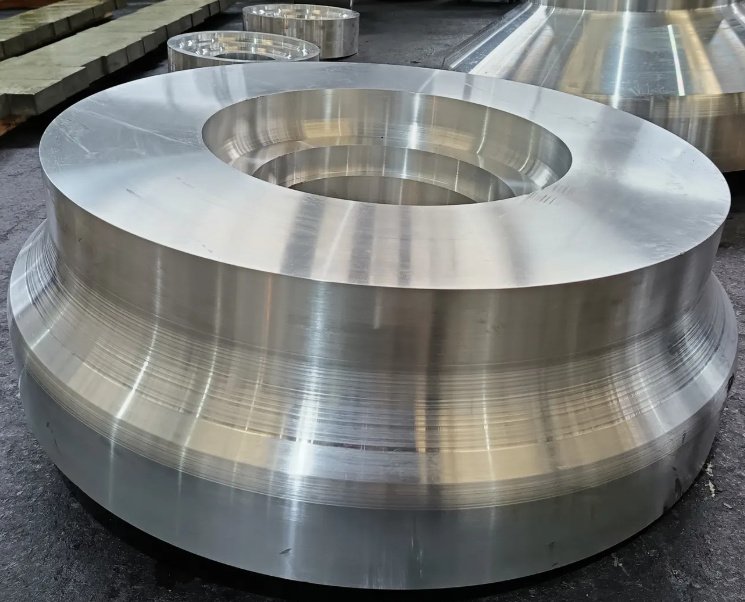
6063 aluminum is one of the most widely specified 6000-series extrusion alloys for architectural profiles,
heat sinks, trim, frames, tubes, railings and precision industrial sections. Known commercially as
Aluminum 6063, it combines good extrudability, attractive surface finish, corrosion resistance
and reliable response to heat treatment. This guide explains when to use Al 6063, how it compares with common
alternatives, and what engineers and buyers should verify before ordering.
The material is an aluminum-magnesium-silicon alloy. Its strengthening phase is primarily Mg2Si,
which enables useful mechanical properties after artificial aging while retaining excellent formability and
anodizing quality. For many applications, al alloy 6063 is chosen not because it is the strongest option, but
because it provides the best balance of extrusion complexity, dimensional stability, surface appearance and cost.
What Is Al 6063?
Al 6063 is a heat-treatable aluminum alloy in the 6xxx family. It is commonly supplied as extrusions, drawn tube,
bar and custom profile shapes. Compared with high-strength 6xxx grades such as 6061, 6082 or 6005A, 6063 usually
has lower strength but better extrudability and superior surface finishing behavior.
In engineering specifications, 6063 is often selected for applications where surface quality and profile
complexity are as important as strength. It is frequently used for thin-wall hollow shapes, decorative
sections, curtain-wall systems, solar panel frames, pneumatic cylinders, LED heat-sink housings and display
structures.
Chemical Composition and Applicable Standards
The composition of al alloy 6063 is controlled to deliver good extrusion speed, consistent aging response and
smooth anodized appearance. Exact limits vary slightly by standard and producer, but typical specification ranges
are shown below.
| Element | Typical Range by Weight | Engineering Role |
|---|---|---|
| Aluminum | Balance | Base metal providing low density, corrosion resistance and conductivity |
| Magnesium | 0.45% - 0.90% | Combines with silicon to form Mg2Si strengthening phase |
| Silicon | 0.20% - 0.60% | Improves heat-treatment response and extrusion performance |
| Iron | Up to about 0.35% | Impurity control; excessive iron can affect appearance and ductility |
| Copper | Up to about 0.10% | Generally kept low to preserve corrosion resistance |
| Manganese | Up to about 0.10% | May influence grain structure and mechanical behavior |
| Chromium | Up to about 0.10% | Minor grain-control effect in some production routes |
| Zinc | Up to about 0.10% | Usually limited for corrosion and finishing consistency |
| Titanium | Up to about 0.10% | Commonly used for grain refinement |
Common reference standards include ASTM B221 for aluminum extruded bars, rods, wire, profiles and tubes;
ASTM B241/B241M for seamless pipe and tube; EN 573 for chemical composition; and EN 755 for extruded products.
Always confirm the required national or customer standard on the purchase order.
Buyer note: specification names that may appear on drawings
Drawings and purchase documents may use terms such as AA 6063, EN AW-6063, UNS A96063, 6063-T5,
6063-T6, 6063-T52 or 6063-T66. These designations are not interchangeable unless the required temper,
mechanical properties, dimensional tolerance and surface finish are also aligned.
Physical and Mechanical Properties of Aluminum 6063
Aluminum 6063 has a density of approximately 2.70 g/cm3, about one-third that of carbon steel.
Its modulus of elasticity is typically around 69 GPa, and its thermal conductivity is commonly reported around
200 W/m·K depending on temper, chemistry and test condition. These values make it suitable for lightweight
structural components and thermal-management profiles.
| Temper | Typical Ultimate Tensile Strength | Typical Yield Strength | Typical Elongation | Common Use |
|---|---|---|---|---|
| 6063-O | About 90 MPa | About 45 MPa | High | Severe forming before aging or decorative forming work |
| 6063-T4 | About 130 - 170 MPa | About 70 - 110 MPa | Good | Forming after solution heat treatment and natural aging |
| 6063-T5 | About 145 - 190 MPa | About 110 - 160 MPa | Moderate to good | General extrusions, frames, rails and architectural profiles |
| 6063-T6 | About 205 - 240 MPa | About 170 - 215 MPa | Lower than T5 in many sections | Applications requiring higher strength than T5 |
The values above are representative and should not replace mill certificates or standard minimums. Actual
properties depend on section thickness, quench rate, aging practice, extrusion ratio and sampling location.
For critical parts, specify minimum tensile requirements and request a certificate of conformance or MTC.
6063-T5 vs 6063-T6: Which Temper Should You Choose?
The two most common tempers for 6063 extrusions are T5 and T6. T5 is cooled from an elevated-temperature
shaping process and then artificially aged. T6 is solution heat treated and artificially aged, often producing
higher strength but sometimes introducing more distortion risk for complex profiles.
| Selection Factor | 6063-T5 | 6063-T6 |
|---|---|---|
| Strength | Moderate; sufficient for many frames and covers | Higher; useful where load capacity is more important |
| Dimensional stability | Often better for long, thin and complex profiles | May require tighter process control after solution treatment |
| Extrusion complexity | Very suitable for hollow or decorative profiles | Possible, but profile geometry and quench uniformity matter more |
| Anodizing appearance | Generally excellent when chemistry and billet quality are controlled | Also good, but surface consistency depends on heat-treatment control |
| Typical buying decision | Choose for appearance, cost efficiency and stable extrusion supply | Choose when the calculated stress margin requires extra strength |
A practical rule is to specify 6063-T5 for decorative, architectural and general extruded profiles, and specify
6063-T6 when the design calculation requires higher yield strength. If the profile is thin-walled, asymmetric
or long, discuss straightness and twist tolerance with the extruder before defaulting to T6.
Aluminum 6063 vs 6061, 6060, 6005A and 6082
Searchers often compare Aluminum 6063 with 6061 because both are heat-treatable 6xxx alloys. The correct choice
depends on whether the part is driven by strength, extrudability, surface finish, machining, welding or cost.
| Alloy | Relative Strength | Extrudability | Anodizing Appearance | Machining | Best Fit |
|---|---|---|---|---|---|
| 6063 | Medium | Excellent | Excellent | Fair to good | Architectural profiles, decorative extrusions, heat sinks and trim |
| 6061 | Higher than 6063 | Good but less suitable for very intricate profiles | Good, but typically not as bright or uniform as 6063 | Good | Machined parts, structural brackets, plates and general engineering |
| 6060 | Similar to or slightly below 6063 | Excellent | Excellent | Fair | European architectural extrusions and complex thin-wall sections |
| 6005A | Higher than 6063 | Good | Good | Good | Structural extrusions, ladders, transport and rail profiles |
| 6082 | High for 6xxx series | Moderate | Moderate to good | Good | High-load structural members and machined components |
In short, 6063 is usually the better extrusion and finishing alloy, while 6061 or 6082 is usually
the better choice when higher mechanical strength is the primary requirement. For profiles that must look clean
after clear anodizing, 6063 often has a strong advantage over 6061.
Engineer perspective: replacing 6061 with 6063
A direct substitution from 6061-T6 to 6063-T5 can reduce yield strength significantly. Before switching,
recalculate stress, deflection, fastener bearing, local buckling and safety factor. If the part is mainly a
cover, handle, frame or heat-sink housing, the substitution may be viable. If it is a loaded bracket, machine
base or lifting component, the lower strength of 6063 may be unacceptable without geometry changes.
Extrusion, Machining and Fabrication Considerations
The major processing advantage of Al 6063 is its outstanding hot extrudability. It can be produced as simple
solid bars, complex hollow profiles, multi-cavity heat sinks and thin-wall decorative sections. For custom
profiles, the extrusion ratio, wall balance, corner radii and tongue ratio strongly influence die life,
productivity and dimensional stability.
Extrusion Design Guidance
- Use uniform wall thickness where possible to reduce distortion, die lines and variable cooling rates.
- Avoid extremely sharp internal corners; generous radii improve metal flow and reduce tearing risk.
- For hollow profiles, review bridge die design, weld seam location and pressure balance.
- Specify straightness, twist, flatness and critical dimensions separately instead of relying only on general tolerances.
- For anodized visible faces, mark cosmetic surfaces on the drawing to help control die lines and handling marks.
Machining Performance
6063 machines reasonably well, but it is not normally selected as the first choice for high-speed precision aluminum machining. Compared with 6061-T6, it can produce longer chips and may feel slightly softer, especially in lower
tempers. Better results are usually achieved with sharp carbide tools, positive rake geometry, effective chip
evacuation and suitable coolant or mist lubrication.
| Operation | Practical Recommendation | Common Risk |
|---|---|---|
| Milling | Use polished or aluminum-specific carbide end mills with high rake angles | Built-up edge, burr formation and poor surface finish |
| Drilling | Use sharp drills, proper feed and chip-breaking peck cycles for deep holes | Chip packing and oversized holes in thin-wall profiles |
| Tapping | Use form taps or sharp cutting taps depending on hole depth and thread load | Thread galling, weak thread engagement and broken taps |
| Saw cutting | Use non-ferrous blades with correct tooth geometry and part support | Burrs, deformation of thin walls and angled cuts |
Welding, Forming and Joining
6063 can be TIG or MIG welded, commonly with 4043 filler. Welding reduces strength in the heat-affected zone,
so welded assemblies should be designed with realistic post-weld strength assumptions. Mechanical fastening,
riveting, adhesive bonding and threaded inserts are also widely used, especially when maintaining anodized
appearance is important.
Surface Finishing, Anodizing and Corrosion Resistance
One of the strongest reasons to choose al alloy 6063 is its finishing quality. With controlled billet chemistry,
good die condition and careful handling, 6063 can produce clean surfaces suitable for clear anodizing, color
anodizing, powder coating, electrophoresis and mechanical brushing.
In atmospheric environments, 6063 has good corrosion resistance because aluminum naturally forms a protective
oxide layer. Anodizing increases oxide thickness and improves wear and corrosion performance. For coastal,
industrial or chemically aggressive locations, specify coating thickness, sealing method and salt-spray or
corrosion-performance requirements rather than relying only on the alloy designation.
| Finish | Typical Purpose | Specification Points to Control |
|---|---|---|
| Clear anodizing | Natural metallic appearance with improved oxide protection | Film thickness, sealing, visible surface direction and color tolerance |
| Black or color anodizing | Decorative and functional finish for consumer and industrial parts | Dye consistency, UV exposure requirement and batch-to-batch color match |
| Powder coating | Durable colored finish for outdoor frames and architectural systems | Pretreatment, coating thickness, gloss, adhesion and weathering grade |
| Brushing or polishing | Directional decorative surface before anodizing or coating | Grain direction, scratch limits and handling protection |
For visible products, surface requirements should be specified as acceptance criteria, not only
as general wording such as “good finish.” Useful criteria include maximum scratch length, viewing distance,
lighting condition, allowable die lines, color range and packaging method.
Real Engineering Issues and Data-Based Outcomes
The most common problems with 6063 extrusions are not alloy failures; they are specification mismatches. A
drawing may call for 6063-T6 while also requiring a very thin asymmetric hollow profile, tight twist tolerance
and flawless clear anodizing. These requirements can conflict unless the die, quench, stretch, aging and handling
process are planned together.
Case Example: Thin-Wall LED Heat-Sink Housing
A 1.4 mm wall 6063-T5 LED housing with external fins was originally rejected for twist greater than 1.5 mm per
meter after anodizing. The engineering review found uneven wall distribution, insufficient support during
cooling and inadequate aging-rack spacing. After increasing two internal support ribs from 1.4 mm to 1.8 mm,
balancing fin thickness and improving stretch control, measured twist was reduced to approximately 0.6 mm per
meter across trial lots. Scrap rate dropped from about 8% to below 2% during pilot production.
Case Example: Clear Anodized Architectural Trim
A clear anodized trim profile showed visible color variation between production batches. Chemistry review showed
that iron and silicon levels varied within allowable limits but affected anodized tone. The buyer added tighter
cosmetic-surface requirements, single-source billet control and lot-based color sample approval. The result was
improved batch consistency and fewer installation-site disputes.
Procurement perspective: what to request before mass production
- Alloy and temper, for example 6063-T5 or 6063-T6, stated on the purchase order.
- Applicable standard such as ASTM B221, EN 755 or customer-specific drawing requirements.
- Mill test certificate with chemistry and mechanical test results.
- Critical dimensions marked clearly, including straightness, twist and flatness requirements.
- Surface finish standard, anodizing thickness, color sample and packaging protection.
- First article inspection report for custom extrusions or CNC-machined profiles.
Applications of Al 6063
Because Al 6063 performs well in extrusion and finishing, it is used across construction, electrical, transport,
consumer goods and industrial equipment. It is especially valuable where a profile must be lightweight, corrosion
resistant, attractive and economical to produce in long lengths.
- Window frames, door frames, curtain-wall mullions and architectural trim
- Solar panel frames, mounting rails and support profiles
- LED housings, electronic enclosures and extruded heat sinks
- Display stands, furniture profiles, handrails and decorative tubes
- Pneumatic cylinder tubes and light-duty industrial guide rails
- Automotive trim, luggage rails and non-critical transport components
- Telescoping tubes, handles, brackets and modular framing systems
For heat sinks, 6063 is popular because it combines good thermal conductivity with the ability to extrude thin
fins. For architectural systems, it is valued for anodizing response and consistent appearance. For machined
parts, it can be used successfully, but 6061 may be preferred when machining productivity and higher strength
dominate the decision.
How to Specify 6063 Aluminum for Purchasing or Engineering
A complete 6063 specification should define the alloy, temper, standard, product form, dimensions, tolerances,
mechanical properties, surface condition and inspection requirements. The phrase “Aluminum 6063 profile” is not
enough for production control.
| Specification Item | Example Requirement | Why It Matters |
|---|---|---|
| Alloy and temper | 6063-T5 or 6063-T6 | Defines strength, ductility and heat-treatment route |
| Standard | ASTM B221 or EN 755 | Sets chemistry, mechanical and dimensional reference rules |
| Product form | Custom extrusion, tube, bar or CNC-machined profile | Determines manufacturing route and inspection plan |
| Critical tolerances | Flatness, straightness, twist, wall thickness and cut length | Prevents assembly problems and rework |
| Finish | Clear anodized 15 µm, sealed, visible face protected | Controls appearance and corrosion performance |
| Inspection documents | MTC, dimensional report, coating report and first article sample | Reduces risk before volume production |
When strength is uncertain, calculate the part using the minimum property values from the applicable standard,
not only typical brochure values. When appearance is critical, approve samples under defined lighting and viewing
conditions. When machining is required after anodizing, clarify whether cut edges, drilled holes and tapped
features need secondary protection.
When 6063 Is the Right Choice—and When It Is Not
6063 is the right choice when the product needs excellent extrusion behavior, clean anodized appearance,
moderate strength, low weight and good corrosion resistance. It is often the best commercial answer for custom
profiles where geometry and finish drive performance.
It may not be the best choice for highly loaded structural parts, heavily machined components where chip control
is critical, or applications requiring maximum 6xxx-series strength. In those cases, compare 6061, 6005A, 6082
or even 7075 depending on corrosion, weldability, cost and strength requirements.
For most extrusion-led projects, Al 6063 offers a practical balance of manufacturability, appearance and
dependable service performance. The key is to specify temper, tolerances and finish clearly enough that
the supplier can manufacture to the real engineering intent—not just to an alloy name.