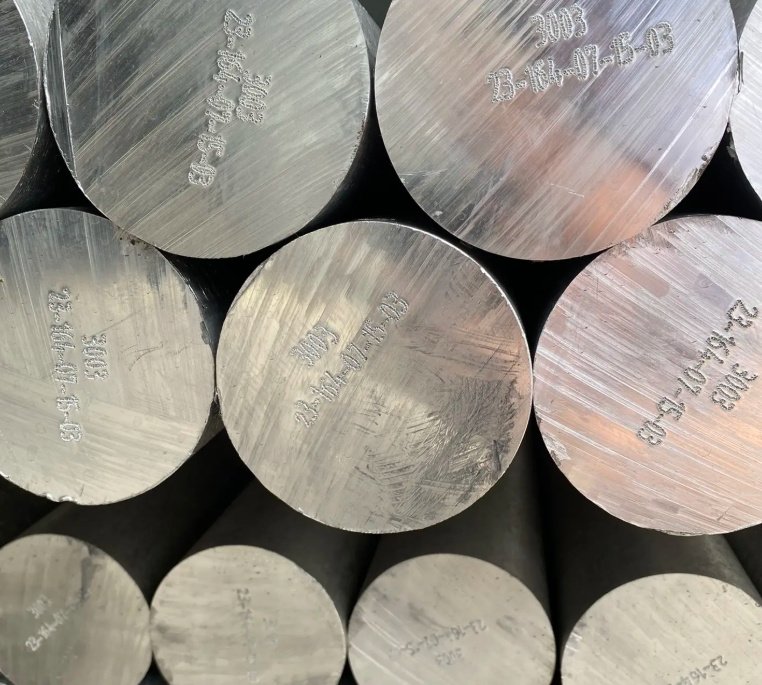
Aluminum 3003 is a non-heat-treatable aluminum-manganese alloy widely used for sheet, coil, plate, tread plate, roofing, heat exchangers, chemical equipment, cooking utensils, tanks and general sheet-metal fabrication. It belongs to the 3xxx series and is commonly specified as AA3003, UNS A93003, EN AW-3003, AlMn1Cu or simply 3003 aluminum.
This guide is written for engineers, buyers and fabricators who need to decide whether Al 3003 is the right material for forming, welding, corrosion resistance, thermal transfer and cost-sensitive production. It includes typical composition, mechanical properties, temper selection, comparisons with 1100, 3004, 5052 and 6061 aluminum, plus practical processing notes.
What Is 3003 Aluminum?
3003 aluminum is commercially pure aluminum strengthened mainly by manganese, with a small copper addition. Compared with 1100 aluminum, Al 3003 provides higher strength while maintaining excellent formability and corrosion resistance. Because it is not heat treatable, its strength is controlled by cold working and temper designation rather than solution heat treatment and aging.
In practical terms, al alloy 3003 is selected when the design needs better strength than 1xxx aluminum, easier forming than 5xxx or 6xxx alloys, good weldability and reliable performance in atmospheric or mildly chemical environments.
3003 Aluminum Chemical Composition
The exact limits depend on the governing standard, such as ASTM B209, ASTM B210, ASTM B221 or EN 573. The table below shows typical composition ranges used for 3003 aluminum sheet and coil.
| Element | Typical Range or Limit | Role in Alloy |
|---|---|---|
| Aluminum, Al | Balance | Base metal for low density, corrosion resistance and formability |
| Manganese, Mn | 1.0% - 1.5% | Main strengthening element; improves strength over 1100 aluminum |
| Copper, Cu | 0.05% - 0.20% | Minor strength contribution |
| Iron, Fe | Up to 0.70% | Controlled impurity; affects ductility and surface quality |
| Silicon, Si | Up to 0.60% | Controlled impurity; can influence formability and finish |
| Zinc, Zn | Up to 0.10% | Controlled residual element |
| Others | Usually limited individually and in total | Quality and standard compliance control |
Key Properties of Al Alloy 3003
The performance of al alloy 3003 depends strongly on temper, thickness, production route and applicable specification. The following values are typical references for engineering screening and should be verified against mill certificates or product standards before final design.
| Property | Typical Value | Engineering Meaning |
|---|---|---|
| Density | About 2.73 g/cm³ | Lightweight compared with carbon steel and stainless steel |
| Melting range | About 643°C - 654°C | Relevant for brazing, welding and high-temperature exposure limits |
| Thermal conductivity | Approximately 160 - 190 W/m·K | Suitable for heat transfer parts, radiator fins and HVAC components |
| Electrical conductivity | Approximately 40% - 50% IACS | Lower than 1xxx aluminum but useful for some conductive sheet applications |
| Corrosion resistance | Very good in atmospheric and many mildly chemical environments | Commonly used outdoors, in tanks, roofing and food-related equipment |
| Heat treatability | Not heat treatable | Strength is achieved by cold work: O, H12, H14, H16, H18, H22 and related tempers |
Mechanical Properties by Temper
Temper selection is one of the most important decisions when specifying 3003 aluminum. Soft tempers are easier to deep draw and bend; strain-hardened tempers provide better strength and dent resistance.
| Temper | Typical Tensile Strength | Typical Yield Strength | Typical Elongation | Common Use |
|---|---|---|---|---|
| 3003-O | 95 - 130 MPa | 35 - 55 MPa | 25% - 35% | Deep drawing, spinning, severe forming |
| 3003-H12 | 120 - 160 MPa | 85 - 125 MPa | 8% - 15% | Moderate forming with improved stiffness |
| 3003-H14 | 140 - 180 MPa | 115 - 150 MPa | 3% - 10% | General sheet metal, panels, tanks, covers |
| 3003-H16 | 160 - 200 MPa | 140 - 170 MPa | 2% - 6% | Higher-strength sheet where forming is limited |
| 3003-H18 | 185 - 220 MPa | 165 MPa or higher | 1% - 4% | Flat components, stiff panels, light-duty structural covers |
3003-H14 is often the default commercial choice because it balances formability, strength, inventory availability and price. For parts with tight bends, large draw ratios or spinning operations, 3003-O or 3003-H22 may reduce cracking risk.
3003 Aluminum vs 1100, 3004, 5052 and 6061
Many searches for Aluminum 3003 involve comparison. The best alloy depends on whether the priority is formability, strength, corrosion resistance, weldability, heat transfer, appearance, cost or stock availability.
| Comparison | 3003 Advantage | Other Alloy Advantage | Best Selection Logic |
|---|---|---|---|
| 3003 vs 1100 | Higher strength and better dent resistance | 1100 has higher purity, better electrical and thermal conductivity, and slightly easier forming | Choose 3003 for general sheet work; choose 1100 for maximum conductivity or extreme formability |
| 3003 vs 3004 | Excellent availability and lower forming loads | 3004 typically offers higher strength due to magnesium addition | Choose 3003 for easy fabrication; choose 3004 for beverage can body stock and higher-strength formed parts |
| 3003 vs 5052 | Lower cost in many sheet markets and easier forming in soft tempers | 5052 has higher strength and better marine corrosion resistance | Choose 3003 for indoor, HVAC, tank and general fabrication; choose 5052 for marine, salt spray or higher load parts |
| 3003 vs 6061 | Better formability, easier sheet bending and no heat-treatment distortion concern | 6061-T6 has much higher strength and is available in structural shapes | Choose 3003 for formed sheet; choose 6061 for machined, extruded or load-bearing structural parts |
A practical rule: if the part is a formed sheet-metal component and the environment is not highly marine or structural, 3003 aluminum is often the most economical engineering answer.
Common Forms and Applications
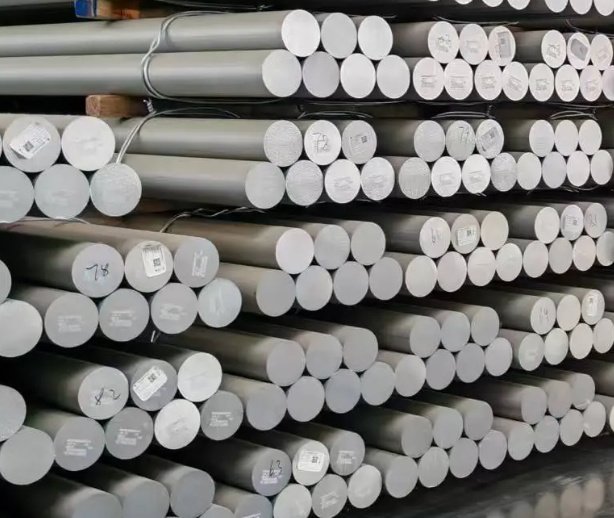
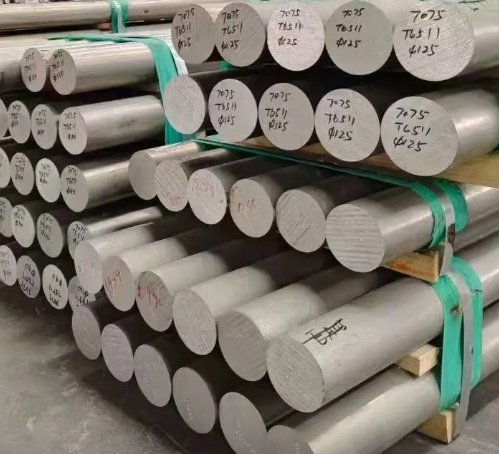
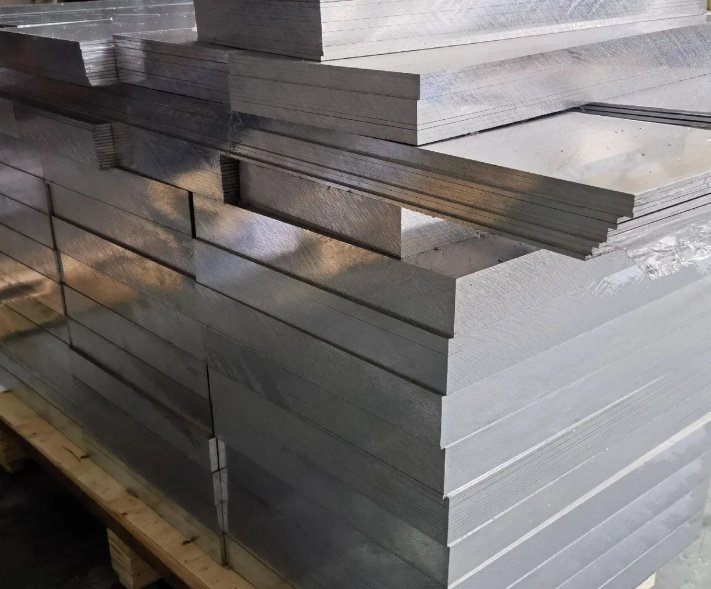
Aluminum 3003 is available in sheet, coil, strip, plate, tread plate, perforated sheet, painted coil and clad material for heat exchanger products. It is also supplied in embossed finishes such as stucco aluminum sheet for insulation jacketing and decorative panels.
- HVAC fins, ducting, heat exchanger parts and evaporator components
- Food processing equipment, cooking utensils, trays and storage vessels
- Chemical tanks, fuel tanks, pressureless containers and light-duty piping components
- Roofing, siding, gutters, downspouts, flashing and building envelope panels
- Trailer panels, truck bodies, tool boxes and tread plate floors
- Signage, nameplates, decorative sheet, insulation jacketing and general fabrication
- Battery casings and non-structural enclosures where formability and corrosion resistance matter
Buyer note: how to specify 3003 aluminum on a purchase order
A clear purchase order should include alloy, temper, product form, thickness, width, length or coil ID/OD, surface finish, tolerance standard, protective film requirement, grain direction if bending is critical, packaging, mill test certificate requirement and any coating or paint specification. Example: “3003-H14 aluminum sheet, ASTM B209, 1.5 mm thickness, 1220 mm x 2440 mm, mill finish, PVC film one side, MTC required.”
Fabrication, Forming and Machining Guidance
3003 aluminum is valued because it performs well in conventional sheet-metal operations. It can be cut, punched, sheared, stamped, roll formed, bent, spun, deep drawn, welded and brazed. However, the best processing route depends on temper and part geometry.
Bending and Forming
For simple 90-degree bends, 3003-H14 is usually workable if the inside bend radius and grain direction are controlled. For sharper bends, hems, deep draws or parts with cosmetic surfaces, 3003-O or H22/H24 tempers may improve yield rate. Bending across the grain generally reduces cracking risk compared with bending parallel to the rolling direction.
Welding
3003 aluminum is readily weldable by GTAW, GMAW and resistance welding. Common filler metals include 1100 and 4043, depending on strength, color match and service condition. Since 3003 is not heat treatable, it does not suffer the same post-weld aging issues as 6061-T6, but cold-worked tempers can soften in the heat-affected zone.
Machining
Machinability is fair rather than excellent. Soft 3003-O can produce built-up edge and gummy chips. For cleaner machining, use sharp tools, adequate rake, proper lubrication and chip control. If extensive aluminum CNC machining is required, 6061 or 2024 may be more efficient, but for light drilling, trimming and slotting, 3003 is widely acceptable.
Surface Finishing
3003 aluminum can be mechanically polished, brushed, painted, powder coated and chemically treated. It can be anodized, although the finish may be less bright or less uniform than high-purity 1xxx or decorative 5xxx alloys. For architectural work, request representative samples before approving production.
Engineering problem: cracking during bending of 3003-H14 sheet
A common issue is edge cracking when 3003-H14 sheet is bent with a radius that is too tight or when the bend line is parallel to the rolling direction. In one typical shop-floor scenario, changing the inside bend radius from approximately 0.5t to 1.0t and rotating the blank so the bend line crossed the grain reduced visible cracking on a formed cover panel. If the part still fails, moving from H14 to H22 or O temper can increase ductility, although it may reduce final stiffness.
Corrosion Resistance and Service Environment
3003 aluminum forms a stable oxide film that protects the base metal in atmospheric environments, freshwater exposure, many food-contact environments and mildly chemical service. It is commonly used in tanks and sheet components where stainless steel would be unnecessary or too expensive.
Limitations should still be considered. 3003 aluminum is not the best choice for continuous seawater exposure, strong alkaline solutions, highly aggressive chemical service or high-stress structural use. In salt spray or marine environments, 5052 aluminum may provide better corrosion resistance. In contact with dissimilar metals such as carbon steel or copper, galvanic corrosion should be controlled with isolation washers, coatings, sealants or appropriate joint design.
Buyer note: quality checks that reduce field failures
For critical formed or welded parts, request material certificates showing alloy and temper, verify thickness tolerance, inspect surface defects before fabrication, confirm protective film adhesion for painted or polished parts, and test a first-article bend or draw before releasing full production. For tanks, confirm weld procedure, leak testing method and compatibility with the stored liquid.
Design Considerations for Engineers
Designers often choose 3003 aluminum to reduce weight while keeping fabrication simple. Compared with mild steel, the density is roughly one-third, but the elastic modulus is also lower, about 69 GPa for aluminum versus about 200 GPa for steel. This means a 3003 panel may need ribs, formed edges, beads, corrugation or greater thickness to achieve equivalent stiffness.
In thermal applications, 3003 aluminum offers useful conductivity and good formability for thin fins or formed channels. In tanks and enclosures, its weldability and corrosion resistance are valuable. In load-bearing brackets, structural frames or threaded components, 6061-T6 or steel may be a better option.
- Use soft temper for severe forming; use H14 or harder tempers for better dent resistance.
- Control grain direction for cosmetic bends and tight radii.
- Account for heat-affected-zone softening when welding strain-hardened material.
- Use coating or electrical isolation in galvanic couples.
- Check actual standard requirements because mechanical values vary by thickness and product form.
Standards and Equivalent Designations
3003 aluminum is covered by several international standards depending on product form and market. Common references include ASTM B209 for sheet and plate, ASTM B210 for drawn seamless tubes, ASTM B221 for extrusions where applicable, EN 573 for composition and EN 485 for sheet, strip and plate.
| System | Designation |
|---|---|
| Aluminum Association | AA3003 |
| UNS | A93003 |
| European | EN AW-3003 |
| Chemical symbol style | AlMn1Cu |
| Common commercial names | 3003 aluminum, Aluminum 3003, Al 3003, al alloy 3003 |
When Should You Choose 3003 Aluminum?
Choose 3003 aluminum when your project needs a balanced combination of moderate strength, high formability, corrosion resistance, weldability, thermal conductivity and broad market availability. It is especially effective for formed sheet products, tanks, covers, panels, HVAC components and cost-sensitive metal fabrication.
Consider an alternative when the application requires high structural strength, heavy machining, marine-grade corrosion resistance, bright decorative anodizing or maximum electrical conductivity. In those cases, 6061, 5052, 5005, 1100 or another alloy may be better aligned with the engineering requirement.
For most non-structural formed sheet applications, Aluminum 3003 remains one of the most practical aluminum choices because it combines proven manufacturing behavior with dependable service performance and competitive material cost.