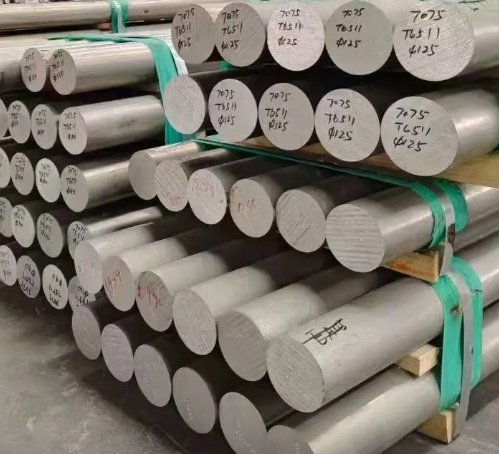
7075 aluminum is a high-strength, heat-treatable aluminum-zinc alloy widely used in aerospace, defense, motorsport, robotics, precision tooling and high-load structural components. When engineers search for Aluminum 7075, they are usually trying to confirm whether the alloy delivers enough strength, machinability and dimensional stability for a demanding part without the weight penalty of steel.
This guide explains the composition, mechanical properties, common tempers, machining behavior, corrosion limits, specification standards and practical selection criteria for Al 7075. It also compares 7075 with 6061, 2024, 7050 and steel so designers, buyers and manufacturing teams can make a more defensible material decision.
What Is 7075 Aluminum?
7075 aluminum is an Al-Zn-Mg-Cu alloy. Zinc is the primary alloying element, with magnesium and copper added to create high strength through precipitation hardening. In many applications, Al 7075 is selected when standard structural aluminum grades such as 6061-T6 cannot meet tensile, yield or fatigue requirements.
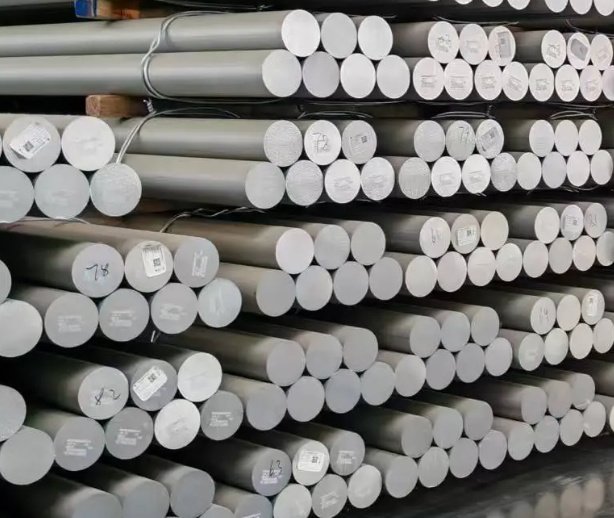
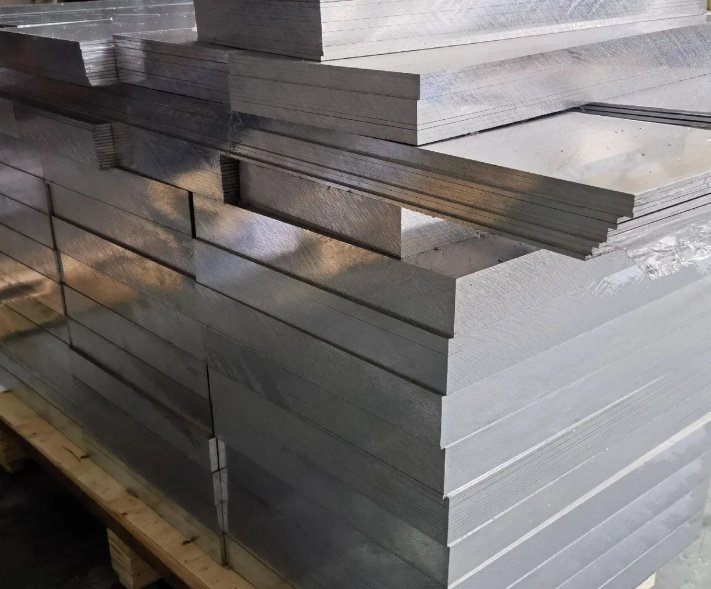
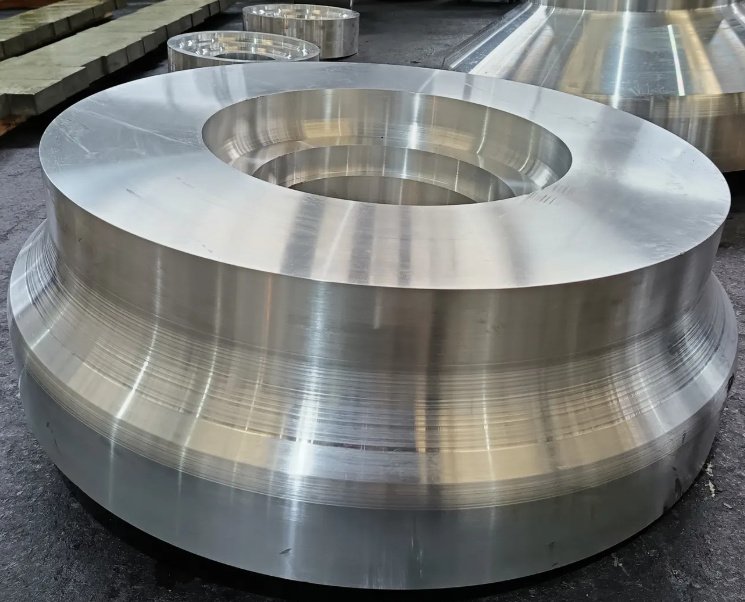
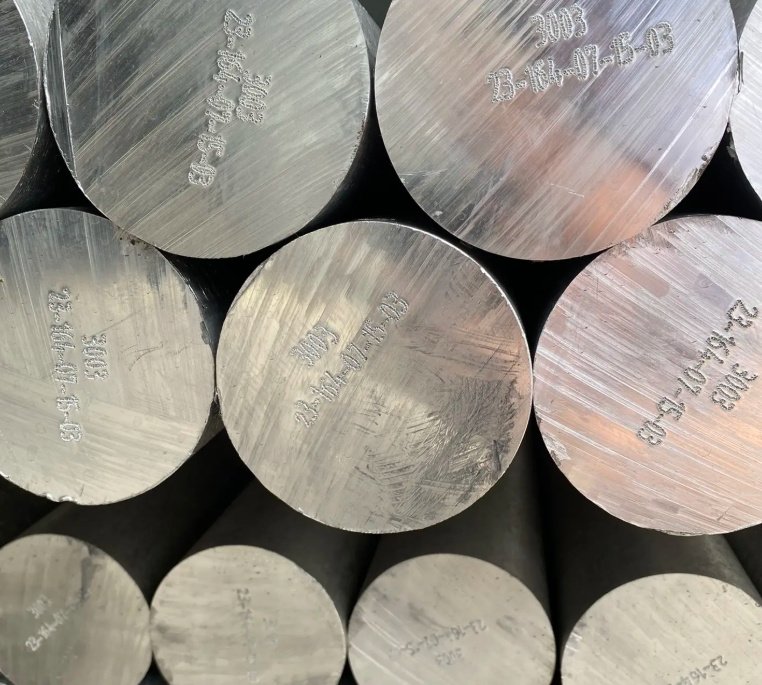
The alloy was developed for aircraft structures and remains one of the most recognized high-strength aluminum grades. It is commonly supplied as plate, sheet, bar, rod, forged stock and extruded shapes. The most familiar temper is 7075-T6 or 7075-T651, while overaged tempers such as T73 and T7351 are chosen where stress-corrosion cracking resistance is more important than peak strength.
Typical Chemical Composition of al alloy 7075
The exact composition depends on the governing standard and mill certificate, but the typical chemical range for al alloy 7075 is shown below. Always verify the actual heat lot chemistry against ASTM, AMS, EN or customer-specific requirements before approving production.
| Element | Typical Range by Weight | Function in Alloy |
|---|---|---|
| Aluminum | Balance | Base metal; low density and good machinability |
| Zinc | 5.1% - 6.1% | Main strengthening element |
| Magnesium | 2.1% - 2.9% | Forms strengthening precipitates with zinc |
| Copper | 1.2% - 2.0% | Improves strength; reduces corrosion resistance compared with some other aluminum alloys |
| Chromium | 0.18% - 0.28% | Improves grain structure and stress-corrosion behavior |
| Iron | Up to 0.50% | Impurity limit |
| Silicon | Up to 0.40% | Impurity limit |
| Manganese | Up to 0.30% | Minor alloying or residual element |
| Titanium | Up to 0.20% | Grain refinement |
Mechanical Properties of 7075 Aluminum
7075 is chosen primarily for its strength-to-weight ratio. Its density is about 2.81 g/cm³, which is roughly one-third that of carbon steel. Depending on temper and product form, 7075-T6 can reach ultimate tensile strengths around 510-570 MPa, making it one of the strongest commercially available aluminum alloys.
| Property | Typical Value | Engineering Relevance |
|---|---|---|
| Density | 2.81 g/cm³ | Low weight for high-strength structures |
| Elastic Modulus | About 71-72 GPa | Similar stiffness to many aluminum alloys; not as stiff as steel |
| Ultimate Tensile Strength, 7075-T6 | About 510-570 MPa | High static strength |
| Yield Strength, 7075-T6 | About 430-505 MPa | Useful for load-bearing machined parts |
| Elongation | About 5% - 11% | Lower ductility than 6061; bending requires caution |
| Hardness | Typically around 150 HB for T6 plate | Good wear resistance compared with softer aluminum grades |
| Thermal Conductivity | About 130 W/m·K | Lower than 6061 but adequate for many machined structures |
| Electrical Conductivity | About 33% IACS | Not primarily selected for electrical performance |
These values are representative, not guaranteed. Final design allowables should come from recognized sources such as MMPDS, AMS specifications, ASTM standards, EN standards, or the material supplier’s certified test report.
7075 Aluminum Tempers: T6, T651, T73 and T7351
Temper selection is one of the most important decisions when specifying 7075. The alloy can be solution heat treated, quenched and artificially aged to produce high strength, but the aging route strongly affects stress-corrosion cracking resistance, toughness and dimensional stability.
| Temper | Description | Best Used For | Key Trade-Off |
|---|---|---|---|
| 7075-O | Annealed condition | Forming and subsequent heat treatment | Low strength |
| 7075-T6 | Solution heat treated and artificially aged | High-strength machined components | Lower stress-corrosion resistance than overaged tempers |
| 7075-T651 | T6 with stress relief by stretching | Precision plate machining and flat components | Excellent strength, improved dimensional stability |
| 7075-T73 | Overaged condition | Aerospace and marine-adjacent parts requiring better SCC resistance | Lower strength than T6 |
| 7075-T7351 | Overaged and stress relieved by stretching | Thick plate, critical machined structures, aerospace components | Strength reduction compared with T651, better stress-corrosion performance |
For many CNC-machined parts, 7075-T651 plate is preferred because it provides high strength and reduced residual stress compared with non-stress-relieved T6 material. For parts exposed to sustained tensile stress and corrosive environments, T73 or T7351 may be a safer engineering choice.
7075 Aluminum vs 6061, 2024, 7050 and Steel
Search intent for 7075 often includes comparison: buyers want to know whether the cost and corrosion trade-offs are justified. The answer depends on whether strength, machinability, weldability, corrosion resistance, toughness or cost is the controlling requirement.
| Material | Strength | Corrosion Resistance | Machinability | Weldability | Typical Reason to Choose It |
|---|---|---|---|---|---|
| 7075-T6 / T651 | Very high | Moderate | Excellent | Poor for fusion welding | High-strength, lightweight machined parts |
| 6061-T6 | Medium | Good | Good | Good | General structures, frames, brackets and welded assemblies |
| 2024-T3 / T351 | High | Moderate to low unless clad or protected | Good | Poor | Fatigue-resistant aircraft parts and sheet structures |
| 7050-T7451 | High | Better SCC resistance than 7075-T6 | Good | Poor | Thick aerospace plate and fracture-critical structures |
| Carbon Steel | High depending on grade | Low unless coated | Variable | Generally good | Low cost, high stiffness and high wear applications |
Compared with 6061-T6, 7075-T6 commonly offers roughly 70% to 90% higher yield strength, but it is more expensive, less corrosion resistant and generally not recommended for welded structures. Compared with steel, 7075 provides major weight savings, but its elastic modulus is much lower; a part may need a larger section to match steel stiffness.
Machining 7075 Aluminum
7075 is considered one of the best aluminum alloys for CNC machining. It forms manageable chips, holds tight tolerances well and can produce excellent surface finishes with sharp carbide tools. Its combination of hardness and machinability makes it suitable for aerospace fittings, high-strength brackets, precision fixtures, molds, drone parts and motorsport components.
Recommended Machining Practices
- Use sharp carbide end mills, drills and inserts designed for non-ferrous materials.
- Use high spindle speeds and appropriate chip loads to avoid rubbing and built-up edge.
- Apply flood coolant, mist coolant or air blast to clear chips and control heat.
- Use climb milling where machine rigidity allows.
- Leave semi-finish stock before final passes on thin-wall or pocketed parts.
- Consider stress-relieved 7075-T651 plate for tight-flatness components.
- Deburr carefully because high-strength aluminum can leave sharp, durable edges.
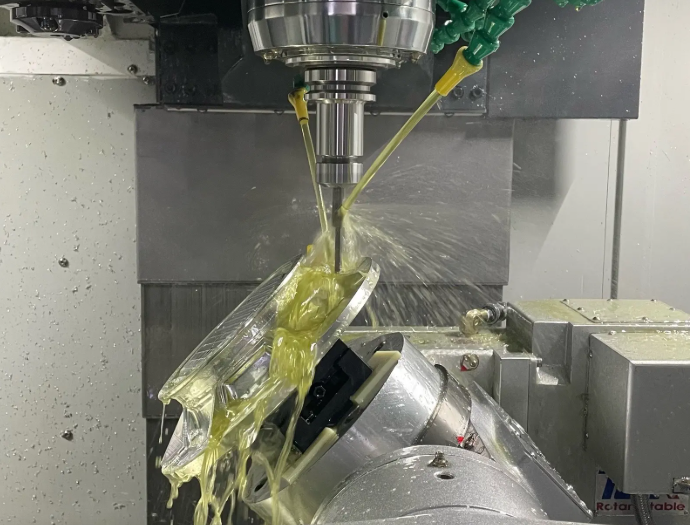
The alloy is not difficult to cut, but residual stress can cause part movement after roughing, especially in deep-pocketed parts, asymmetric geometries and thin webs. A common production strategy is rough machining, stress-relief dwell or intermediate stabilization when needed, then finish machining from stable datums.
Engineering note: reducing distortion in machined 7075 parts
For a 7075-T651 plate component with deep pockets, machine both sides in balanced stages instead of removing most material from one side at once. In practical CNC production, this can reduce post-machining bow by 30% to 60% compared with single-sided aggressive roughing, depending on plate thickness, pocket depth, fixturing and original residual stress. Critical flatness parts should specify stress-relieved material, roughing allowance, inspection temperature and final machining sequence.
Corrosion Resistance and Surface Finishing
7075 has moderate corrosion resistance, but it is not as corrosion resistant as 6061, 5052 or marine-focused aluminum alloys. The copper content that helps strength also reduces natural corrosion performance. In humid, salt spray or galvanic environments, 7075 should be protected with suitable finishing and design measures.
Common Surface Treatments
- Anodizing for improved corrosion resistance and surface hardness.
- Hardcoat anodizing for wear resistance, bearing surfaces and sliding contact.
- Chemical conversion coating for corrosion protection and paint adhesion.
- Primer and paint systems for outdoor or aerospace exposure.
- Shot peening in fatigue-sensitive applications where specified by engineering standards.
When anodizing 7075, color consistency can be less predictable than with 6061 because alloying elements influence the oxide layer. Decorative applications should validate finish appearance with sample coupons from the same material condition.
Buyer note: when to avoid 7075 for corrosion reasons
Avoid unprotected 7075-T6 in continuously wet, chloride-rich or galvanically coupled assemblies unless the design includes coatings, isolation washers, sealants or a more corrosion-resistant temper. If the component must survive marine exposure, compare 7075-T73, 7050-T7451, 6061-T6, 5083 or stainless steel before final purchase approval.
Welding, Forming and Heat Treatment Limits
7075 aluminum is generally not selected for fusion-welded assemblies. Welding can cause hot cracking, loss of mechanical properties in the heat-affected zone and unpredictable performance unless special procedures are qualified. For welded frames and general fabrication, 6061 or 6082 is usually a better choice.
Formability is also limited in the T6 condition. Bending 7075-T6 can lead to cracking, especially at small bend radii or transverse grain orientations. If forming is required, engineers may specify O temper for forming followed by controlled heat treatment, but this requires qualified thermal processing and verification of final properties.
Heat treatment should not be treated as a casual shop operation. Solution treatment, quenching and aging must be controlled to avoid distortion, inadequate strength or reduced corrosion performance.
Typical Applications of Aluminum 7075
7075 is used where high strength, low weight and machinability are more important than weldability or lowest material cost. Typical applications include:
- Aircraft fittings, ribs, spars and structural components
- Defense and aerospace machined parts
- High-performance bicycle and motorsport components
- Drone frames, robotic arms and lightweight automation parts
- Mold tooling, inspection fixtures and precision jigs
- High-load brackets, clevises, links and actuator components
- Sports equipment and climbing hardware where qualified by standards
- Semiconductor and electronics manufacturing fixtures requiring stability and strength
A practical rule is simple: choose 7075 aluminum when the part is machined, weight-sensitive and strength-critical; choose another alloy when welding, severe corrosion resistance or low cost dominates the design.
Standards, Specifications and Product Forms
7075 aluminum may be purchased under different standards depending on region, industry and product form. Aerospace buyers often require AMS or equivalent specifications, while commercial projects may use ASTM or EN standards.
| Category | Examples | Notes |
|---|---|---|
| Plate and sheet | ASTM B209, AMS-QQ-A-250/12, AMS 4045, AMS 4049 | Used for machined components, aircraft structures and precision plates |
| Bar, rod and wire | ASTM B211, AMS 4122, AMS 4124 | Used for turned parts, shafts, pins and fittings |
| Forgings | AMS 4131, AMS 4133 | Used where grain flow and high integrity are required |
| European designation | EN AW-7075, AlZn5.5MgCu | Common in European supply chains |
| UNS designation | A97075 | Unified numbering reference |
For critical components, the purchase order should define alloy, temper, product form, thickness or diameter tolerance, applicable specification, ultrasonic inspection if needed, grain direction marking, certification type and country-of-origin requirements.
Procurement checklist for 7075 aluminum buyers
- Confirm alloy designation: 7075, EN AW-7075 or UNS A97075.
- Specify temper clearly: T6, T651, T73, T7351 or another approved condition.
- Request a mill test certificate showing chemistry and mechanical properties.
- Check whether the job requires aerospace traceability or domestic material rules.
- Confirm flatness, thickness tolerance, grain direction and saw-cut allowance.
- For thick plate, ask whether ultrasonic inspection is required by drawing or customer specification.
- Verify surface condition if the part will be anodized, hardcoated or cosmetically finished.
Real Engineering Example: Replacing 6061-T6 with 7075-T651
Consider a CNC-machined support bracket originally made from 6061-T6. The bracket weighs 1.2 kg and fails the required safety factor because the peak tensile stress near a bolted lug exceeds the allowable yield margin. Replacing the same geometry with 7075-T651 can significantly increase yield capacity without increasing part weight.
| Material | Typical Yield Strength | Relative Weight | Design Result |
|---|---|---|---|
| 6061-T6 | About 240-275 MPa | Baseline | May require thicker lugs or larger section size |
| 7075-T651 | About 430-505 MPa | Nearly the same density class | Can increase yield margin by roughly 70% to 90% for the same geometry |
The result is not automatically a drop-in approval. The engineer must still check fatigue, bearing stress, fastener preload, galvanic corrosion, notch sensitivity, surface finish, fracture toughness and environmental exposure. However, for machined strength-limited parts, 7075-T651 often solves the problem with minimal redesign.
Design Considerations and Failure Risks
Although 7075 is a premium aluminum alloy, incorrect use can lead to cracking, corrosion, distortion or unexpected failure. The most common design risks include sharp internal corners, insufficient edge distance around fasteners, poor corrosion isolation, aggressive machining from non-stress-relieved stock and incorrect temper substitution.
- Use generous fillet radii in high-stress regions to reduce stress concentration.
- Check bearing and tear-out around holes, especially in thin lugs.
- Orient critical loads with grain direction in mind when using plate or bar.
- Protect against galvanic corrosion when contacting carbon fiber, stainless steel or carbon steel.
- Specify T73 or T7351 when stress-corrosion cracking is a controlling risk.
- Do not substitute 7075-T6 for 7075-T7351 without engineering approval.
Engineer note: stiffness is not the same as strength
7075 is much stronger than 6061, but its modulus of elasticity is similar to other aluminum alloys. If a part is limited by deflection rather than yield strength, changing from 6061-T6 to 7075-T6 may not noticeably reduce bending deflection. In that case, the solution may require a larger section, ribs, geometry optimization or a higher-modulus material such as steel, titanium or carbon fiber composite.
When 7075 Aluminum Is the Right Choice
7075 aluminum is the right material when high strength-to-weight ratio, excellent machinability and precision performance are required. It is especially valuable for milled parts, aerospace structures, lightweight mechanical systems and heavily loaded brackets where 6061-T6 does not provide enough margin.
It is not the best choice for welded fabrication, low-cost general structures, highly corrosive unprotected environments or designs controlled mainly by stiffness. For those cases, 6061, 6082, 5052, 5083, 7050, titanium, stainless steel or carbon steel may be more appropriate.
For critical procurement or engineering release, specify alloy, temper, standard, product form and certification requirements clearly. The best results come from matching the correct 7075 temper to the load case, manufacturing route, corrosion exposure and inspection requirements.