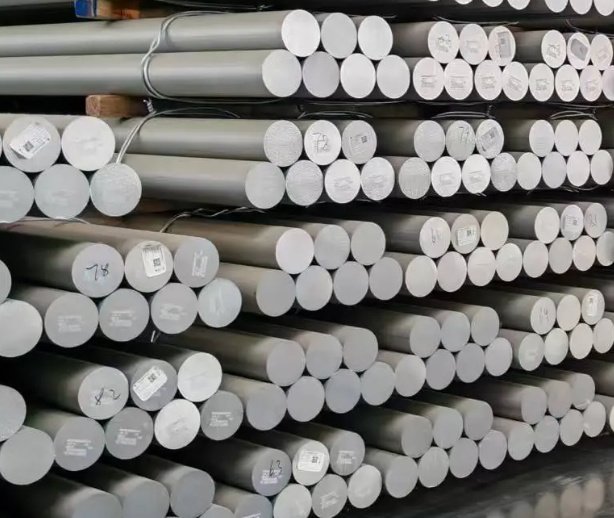
6061 aluminum is one of the most widely specified heat-treatable aluminum alloys for structural, machined, welded and extruded components. Engineers choose it because it balances strength, corrosion resistance, machinability, weldability, availability and cost better than many higher-strength or more specialized aluminum grades.
This guide explains Aluminum 6061 from a practical engineering and procurement perspective: chemical composition, mechanical properties, tempers, comparisons with other alloys, CNC machining behavior, welding considerations, finishing options and common specification standards.
What Is 6061 Aluminum?
6061 is an aluminum-magnesium-silicon alloy in the 6xxx series. The principal strengthening phase is magnesium silicide, which enables precipitation hardening through solution heat treatment and artificial aging. In purchasing documents, drawings and technical databases, it may appear as 6061 aluminum, AA6061, UNS A96061, Al 6061 or al alloy 6061.
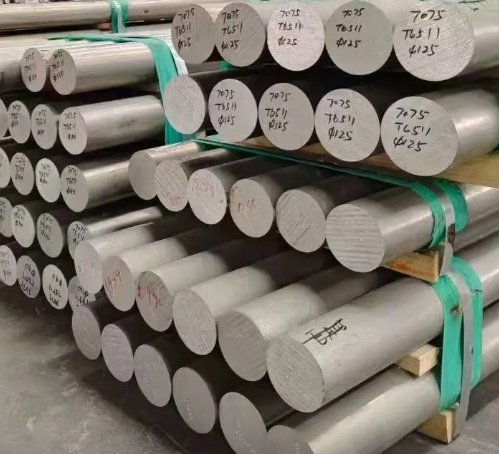
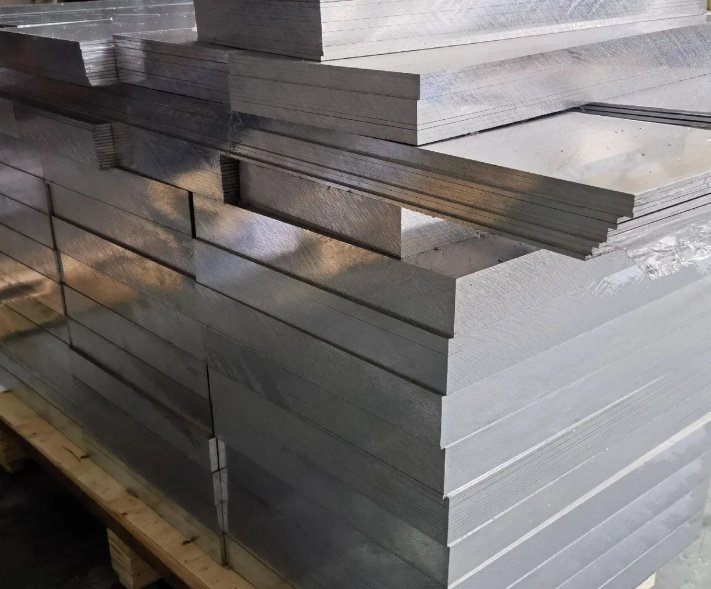
The alloy is commonly supplied as plate, sheet, bar, rod, tube, pipe, structural angle, channel, extrusions and forgings. It is especially common in T6 and T651 tempers, where it provides a strong combination of tensile strength, dimensional stability and machinability.
Chemical Composition of 6061 Aluminum
The nominal composition of 6061 is controlled by recognized standards such as ASTM B209, ASTM B221, ASTM B211 and Aluminum Association designations. Exact limits vary slightly by product form and standard, but the typical composition range is shown below.
| Element | Typical Range by Weight | Function in Alloy |
|---|---|---|
| Aluminum | Balance | Base metal; low density and corrosion resistance |
| Magnesium | 0.8% to 1.2% | Combines with silicon for precipitation hardening |
| Silicon | 0.4% to 0.8% | Forms Mg2Si; improves heat-treat response |
| Iron | 0.0% to 0.7% | Common impurity; affects ductility and finish |
| Copper | 0.15% to 0.40% | Increases strength; may slightly reduce corrosion resistance |
| Chromium | 0.04% to 0.35% | Controls grain structure and improves toughness |
| Zinc | 0.0% to 0.25% | Residual element with limited strengthening effect |
| Titanium | 0.0% to 0.15% | Grain refinement |
| Manganese | 0.0% to 0.15% | Controls microstructure; normally limited in 6061 |
Key Mechanical and Physical Properties
Properties vary by product form, thickness, temper, testing direction and governing standard. For design work, always use certified mill test reports and applicable code allowables. The values below are commonly cited engineering reference ranges for 6061-T6 or 6061-T651 material.
| Property | Typical Value | Engineering Meaning |
|---|---|---|
| Density | 2.70 g/cm3, 0.0975 lb/in3 | About one-third the density of carbon steel |
| Ultimate tensile strength | Approximately 290 to 310 MPa, 42 to 45 ksi | Maximum tensile load before fracture |
| Yield strength | Approximately 240 to 276 MPa, 35 to 40 ksi | Stress level for permanent deformation |
| Elastic modulus | 68.9 GPa, 10,000 ksi | Stiffness; about one-third that of steel |
| Elongation | Typically 8% to 17% | Ductility depends on thickness and form |
| Brinell hardness | Approximately 95 HB | Useful for machining and wear estimates |
| Thermal conductivity | Approximately 167 W/m-K | Good for heat spreading and thermal components |
| Electrical conductivity | Approximately 40% IACS | Moderate conductivity for non-primary electrical uses |
| Melting range | Approximately 582 to 652°C | Important for welding and thermal exposure |
| Coefficient of thermal expansion | Approximately 23.6 µm/m-°C | Higher thermal growth than steel |
The most important design trade-off is that 6061 is lightweight and moderately strong, but not as stiff as steel. For the same geometry, a 6061 part weighs roughly 66% less than carbon steel, while deflecting about 2.9 times more under the same elastic load. Good aluminum design often increases section depth or moment of inertia to recover stiffness while still saving mass.
6061 Aluminum Tempers: T6, T651, O and More
Temper has a major effect on strength, formability, residual stress and machining stability. The correct temper should be specified on drawings, purchase orders and inspection documents.
| Temper | Description | Best Fit |
|---|---|---|
| 6061-O | Annealed condition with low strength and high ductility | Severe forming, bending and drawing before heat treatment |
| 6061-T4 | Solution heat-treated and naturally aged | Moderate strength with better formability than T6 |
| 6061-T6 | Solution heat-treated and artificially aged | General structural, machined and extruded parts |
| 6061-T651 | T6 plate with stress relief by stretching | Precision machining, plates, fixtures and flat components |
| 6061-T6511 | Stress-relieved extruded product | Extruded bars and profiles requiring better stability |
For CNC-machined plate components, 6061-T651 is often preferred over 6061-T6 because stretching reduces internal residual stress. This can reduce warping during pocketing, face milling and asymmetric material removal.
Engineer note: choosing T6 versus T651 for machined parts
If a part is cut from plate and contains deep pockets, thin walls or tight flatness requirements, T651 is usually the safer starting point. For extruded bars, T6511 may be specified where available. If the part is simple, thick and not dimensionally sensitive, standard T6 may be sufficient and easier to source.
6061 Aluminum Compared With Other Aluminum Alloys
Many searches for 6061 are comparison-driven. Buyers and engineers often need to know whether 6061 is stronger than 6063, easier to weld than 7075 or more machinable than 5052. The table below summarizes practical differences.
| Alloy | Strength | Machinability | Weldability | Corrosion Resistance | Typical Selection Reason |
|---|---|---|---|---|---|
| 6061 | Medium-high | Good | Good | Good | Balanced structural alloy for machining, welding and extrusion |
| 6063 | Lower than 6061 | Fair to good | Good | Good to excellent | Architectural extrusions and cosmetic anodized profiles |
| 7075 | Much higher than 6061 | Good | Poor for fusion welding | Moderate | Aerospace, high-strength and fatigue-critical components |
| 5052 | Lower than 6061-T6 | Fair | Excellent | Excellent, especially marine environments | Sheet metal, tanks, marine panels and formed parts |
| 2024 | High | Good | Poor | Lower unless clad or protected | Aerospace structures needing high fatigue strength |
If the design needs high strength above all else, 7075-T6 may outperform 6061-T6. If weldability, corrosion resistance and general manufacturability matter more, al alloy 6061 is often the more economical and robust choice.
Manufacturing Forms: Plate, Sheet, Bar, Tube and Extrusion
6061 is popular partly because it is available in many mill forms. Choosing the correct form can reduce aluminum machining time, material waste, lead time and dimensional risk.
- 6061 plate: used for tooling plates, machine frames, brackets, fixtures, adapter plates and structural components.
- 6061 sheet: used for panels, covers, formed components and lightweight enclosures.
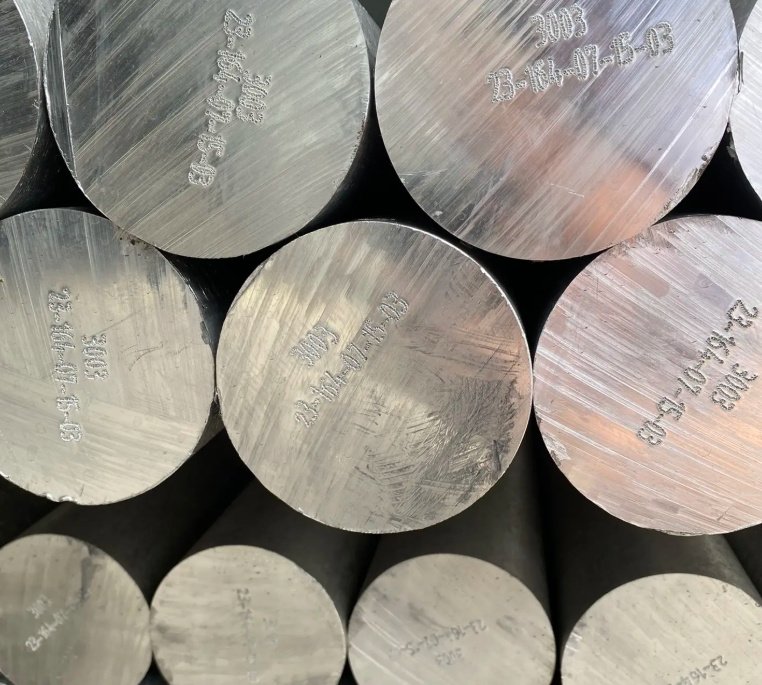
- 6061 round bar and flat bar: used for shafts, spacers, bushings, machined blocks and general-purpose components.
- 6061 tube and pipe: used for frames, handrails, hydraulic components, supports and lightweight structures.
- 6061 extrusions: used when the cross-section can be optimized to reduce mass and machining.
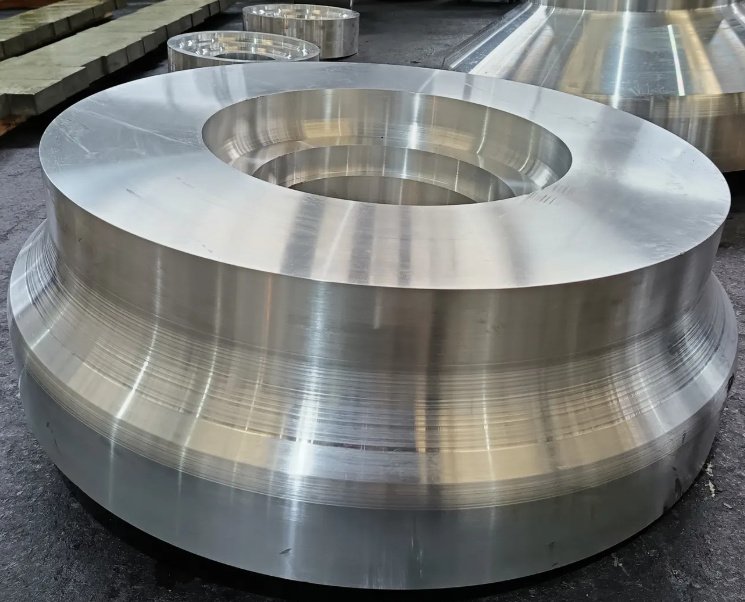
- 6061 forgings: used for parts needing improved grain flow and mechanical performance compared with machined billet.
Buyer note: how product form affects cost
A machined block from oversized plate may be fast to buy but expensive in material removal. An extrusion can reduce machining time and weight, but tooling cost and minimum order quantity may only make sense for production volumes. For prototypes, plate and bar are usually the lowest-risk options; for recurring production, near-net extrusion or forging may reduce total cost.
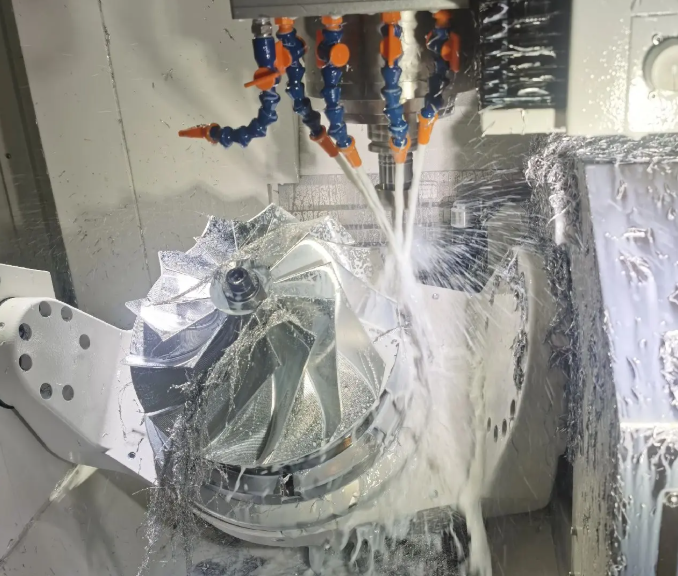
CNC Machining 6061 Aluminum
6061 is one of the easiest aluminum alloys to machine in commercial CNC production. It cuts cleanly, produces manageable chips, accepts high spindle speeds and is compatible with common milling, turning, drilling, tapping, boring and reaming operations.
The alloy is forgiving, but machining results still depend on temper, cutter geometry, workholding, coolant, tool runout and chip evacuation. For tight-tolerance parts, the most common problems are burr formation, wall deflection, chatter, built-up edge and movement caused by residual stress.
Typical machining guidance
- Use sharp carbide tools with polished flutes for high-speed milling.
- Use high rake angles to reduce cutting force and improve surface finish.
- Provide strong chip evacuation, especially in pockets and deep cavities.
- Use mist, flood coolant or minimum quantity lubrication to control built-up edge.
- Leave semi-finishing stock on thin walls, then finish after stress has redistributed.
- For plate parts with flatness requirements, machine both sides in balanced passes.
| Operation | Tooling | Starting Range | Practical Note |
|---|---|---|---|
| Milling | Carbide end mill | 600 to 1,200 SFM or higher on rigid machines | Use chip thinning calculations for high-speed toolpaths |
| Milling | HSS end mill | 200 to 400 SFM | Use lower speeds to manage heat and tool wear |
| Drilling | Carbide or HSS drill | Feed depends on diameter; peck deep holes if needed | Chip packing is a common cause of poor hole finish |
| Tapping | Spiral flute or form tap | Use proper lubricant and thread engagement | Form tapping can improve thread strength in ductile 6061 |
| Turning | Polished carbide insert | High speed with controlled depth of cut | Positive rake inserts reduce built-up edge |
As a practical benchmark, switching from a conservative conventional toolpath to optimized high-efficiency milling on 6061 can reduce cycle time by 20% to 50% in production, provided the machine has adequate spindle speed, coolant delivery and workholding rigidity. Results vary by part geometry and tooling.
Real engineering issue: thin-wall distortion in 6061-T6 plate
A common issue occurs when a bracket is machined from one side of a thick 6061-T6 plate, leaving a thin web. Material removal releases residual stress, causing bow or twist after unclamping. Typical mitigation includes specifying 6061-T651 plate, roughing both sides, using stress-relief pauses between operations, adding temporary support tabs and designing ribs instead of large unsupported thin walls.
Welding and Joining 6061 Aluminum
6061 is weldable by common processes such as GTAW/TIG and GMAW/MIG. It is frequently joined in frames, supports, marine hardware, transport structures and fabricated assemblies. However, welding changes the heat-treated microstructure and can reduce strength in the heat-affected zone.
The heat-affected zone of 6061-T6 may lose a significant portion of its original yield strength after welding. For welded structures, design allowables should account for the reduced strength near the weld, not just the parent metal strength. Post-weld heat treatment may restore strength in some cases, but distortion, part size and cost can make it impractical.
Common filler metals
- ER4043: commonly used for good fluidity, lower crack sensitivity and good general weldability.
- ER5356: used when higher as-welded strength or better color match after anodizing is desired, though application conditions should be checked.
Mechanical fastening, riveting, adhesive bonding and hybrid joining may be better than welding when distortion, cosmetic finish, electrical isolation or dimensional control are critical.
Corrosion Resistance, Anodizing and Surface Finishing
6061 forms a natural aluminum oxide film that provides good atmospheric corrosion resistance. It performs well in many indoor, outdoor and mildly corrosive environments, but it is not the best aluminum choice for severe marine immersion or highly chemical service.
Common surface treatments include mill finish, clear anodizing, dyed anodizing, hardcoat anodizing, chromate conversion coating, powder coating, painting, brushing, bead blasting and polishing. Anodized 6061 is common for machine parts, consumer products, optical equipment, robotic components and structural hardware.
Compared with 6063, 6061 may show slightly less uniform cosmetic anodizing on highly visible architectural parts. For precision machined components where mechanical performance matters more than perfect cosmetic uniformity, 6061 is often preferred.
Design Considerations for Engineers
6061 performs best when the design takes advantage of aluminum’s low density and manufacturability instead of simply copying a steel part geometry. Because modulus is lower than steel, stiffness-driven parts may need deeper ribs, larger section height or closed shapes such as tubes and boxes.
- Stiffness: increase section depth or use ribs rather than simply increasing thickness everywhere.
- Fatigue: avoid sharp internal corners; use generous radii and smooth transitions.
- Threads: use adequate engagement length or threaded inserts for repeated assembly.
- Galvanic corrosion: isolate 6061 from stainless steel, carbon steel or copper in wet environments.
- Thermal growth: allow expansion in long parts, assemblies and precision equipment.
- Surface finish: specify realistic cosmetic requirements, especially for bead blast and anodize.
For bolted aluminum joints, bearing strength, edge distance and thread stripping often control the design before tensile strength does. Inserts such as Helicoil-style wire inserts or key-locking inserts can improve service life in frequently assembled components.
Procurement and Quality Requirements
For reliable sourcing, specify alloy, temper, product form, standard, dimensions, tolerance, finish, inspection requirements and certification needs. A complete callout might read: “6061-T651 aluminum plate per ASTM B209, mill finish, material certification required.”
Important purchase requirements include:
- Alloy and temper: 6061-T6, 6061-T651, 6061-O or other required condition.
- Applicable standard: ASTM, AMS, EN, ISO or customer-specific requirement.
- Product form: plate, sheet, bar, tube, pipe, extrusion or forging.
- Dimensional tolerance: thickness, flatness, straightness, diameter, wall thickness or profile tolerance.
- Certification: mill test report, heat number, chemical analysis and mechanical test data.
- Surface condition: mill finish, PVC masking, anodizing quality, scratch limits or grain direction.
- Traceability: lot control for aerospace, medical, robotics or safety-related parts.
Buyer note: what to verify before ordering 6061 material
Confirm whether the quote is for domestic or imported material, whether the temper is certified, whether the size is saw-cut or precision-ground, and whether flatness tolerance is guaranteed. For machined parts, ask whether the supplier will preserve grain direction and provide certificates matching the heat or lot actually delivered.
Common Applications of 6061 Aluminum
Because 6061 is strong enough for many structural uses and easy to fabricate, it appears across many industries.
- Machine frames, fixtures, tooling plates and automation equipment
- Robotics arms, brackets, end-effectors and sensor mounts
- Aerospace non-critical structures, panels and ground support equipment
- Automotive brackets, suspension components, adapters and lightweight parts
- Marine railings, fittings and general hardware where conditions are not extreme
- Bicycle frames, sporting goods and recreational equipment
- Electronics housings, heat spreaders and instrument enclosures
- Architectural supports, ladders, platforms, ramps and handrails
- Hydraulic manifolds, pneumatic blocks and fluid power components
In many of these applications, 6061 is selected not because it is the strongest aluminum alloy, but because it minimizes total project risk: it is available, predictable, machinable, weldable and compatible with many finishing processes.
Standards and Reference Specifications
6061 aluminum is covered by multiple industrial and aerospace standards. The correct specification depends on product form, industry and jurisdiction.
| Standard | Product Type | Typical Use |
|---|---|---|
| ASTM B209 | Sheet and plate | General industrial and commercial supply |
| ASTM B221 | Extruded bars, rods, wire, profiles and tubes | Extrusions and structural profiles |
| ASTM B211 | Rolled or cold-finished bar, rod and wire | Machined bar stock and precision parts |
| AMS 4027 | 6061-T6 sheet and plate | Aerospace-related procurement |
| AMS 4117 | 6061-T6 bar, rod and wire | Aerospace bar stock applications |
| EN AW-6061 | European designation | International engineering and supply chains |
| UNS A96061 | Unified numbering system | Material identification and cross-reference |
When 6061 Aluminum Is the Right Choice
6061 aluminum is the right choice when a part needs a balanced combination of strength, low weight, corrosion resistance, CNC machinability, weldability, finishing compatibility and broad market availability. It is especially suitable for brackets, frames, plates, fixtures, structural extrusions and general-purpose engineered components.
Consider another alloy if the part requires maximum tensile strength, exceptional marine corrosion resistance, deep forming in sheet metal or premium architectural anodizing appearance. For most general engineering designs, however, 6061 remains one of the most dependable and cost-effective aluminum alloys available.