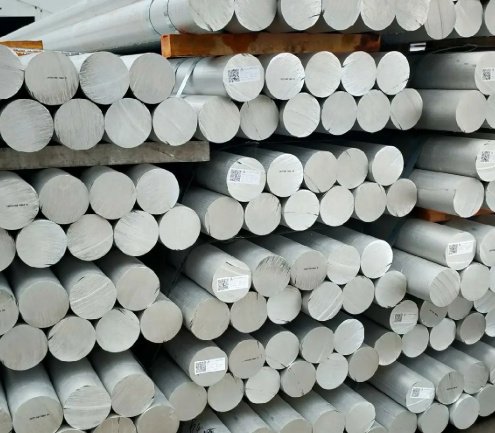
Aluminum A413 is a high-silicon aluminum casting alloy widely used for die cast parts that require excellent fluidity, good pressure tightness, and stable dimensional performance. In engineering and purchasing contexts, A413 Aluminum is often selected for thin-wall castings, complex geometries, hydraulic components, housings, and parts where leak resistance is more critical than maximum ductility.
Compared with general-purpose die casting alloys such as A380, Aluminum A413 offers superior castability and lower shrinkage tendency, but it may provide lower tensile strength and lower elongation depending on casting conditions and heat treatment limitations. This makes alloy selection a practical balance between casting performance, mechanical requirements, machining behavior, surface finishing, and total part cost.
What Is Aluminum A413?
Aluminum A413 is an aluminum-silicon casting alloy commonly associated with high-pressure die casting. Its relatively high silicon content improves molten metal flow, reduces hot cracking risk, and supports the production of thin sections or intricate details. In many specifications, A413 is considered a pressure-tight aluminum alloy, making it suitable for components that must resist air, oil, fuel, or coolant leakage.
The alloy is generally used in as-cast condition because high-pressure die castings often contain entrapped gas, which can limit conventional solution heat treatment. For this reason, design engineers should evaluate Aluminum A413 based on as-cast mechanical performance, casting quality, porosity control, and post-casting machining requirements.
Typical Chemical Composition of A413 Aluminum
The exact composition may vary by standard, foundry practice, and customer specification. However, the defining characteristic of A413 Aluminum is its high silicon level, which provides outstanding fluidity and castability.
| Element | Typical Range | Engineering Function |
|---|---|---|
| Silicon | Approx. 11.0% - 13.0% | Improves fluidity, thin-wall filling, and wear resistance |
| Iron | Controlled limit | Reduces die soldering but excessive levels may reduce ductility |
| Copper | Low to moderate | Can improve strength but may reduce corrosion resistance |
| Magnesium | Low | Influences strength response and microstructure |
| Aluminum | Balance | Base metal providing low density and corrosion resistance |
For procurement, it is important to confirm whether the required material is specified as A413, A413.0, ADC-equivalent alloy, or another regional designation. Similar names do not always guarantee identical impurity limits, mechanical properties, or acceptance criteria.
Key Mechanical and Physical Properties
A413 Aluminum is valued more for casting reliability and leak resistance than for maximum strength. The following values are typical reference ranges and should be verified against the applicable standard, casting process, and test bar condition.
| Property | Typical Value or Range | Practical Meaning |
|---|---|---|
| Density | Approx. 2.66 - 2.70 g/cm³ | Lightweight compared with steel, zinc, and brass |
| Tensile Strength | Approx. 230 - 290 MPa, depending on casting quality | Suitable for housings, covers, brackets, and moderate-load parts |
| Yield Strength | Approx. 130 - 170 MPa | Important for bolted joints, mounting bosses, and structural features |
| Elongation | Usually low to moderate | Less suitable for parts requiring high deformation before fracture |
| Thermal Conductivity | Moderate to good | Useful for pump housings, lighting parts, and heat-dissipating castings |
| Corrosion Resistance | Good in many environments | Can be improved with coating, anodizing limitations considered, or conversion treatment |
In real production, mechanical properties are strongly affected by gate design, melt cleanliness, die temperature, vacuum assistance, porosity, section thickness, and inspection requirements. A well-controlled die casting process can make a larger difference than a nominal alloy change.
Aluminum A413 vs A380 vs A356: Which Alloy Fits Your Part?
Alloy comparison is one of the most common search intents for engineers evaluating Aluminum A413. The table below summarizes practical differences among three widely discussed aluminum casting alloys.
| Alloy | Best Strength | Best Limitation | Common Applications |
|---|---|---|---|
| A413 Aluminum | Excellent fluidity and pressure tightness | Lower ductility than some heat-treatable casting alloys | Pump bodies, compressor parts, hydraulic housings, thin-wall die castings |
| A380 Aluminum | Balanced strength, cost, and die casting performance | May not match A413 for leak-tight thin sections | General die cast housings, brackets, enclosures, automotive parts |
| A356 Aluminum | Good strength and ductility after heat treatment | Usually used in sand casting, permanent mold, or investment casting rather than high-pressure die casting | Structural castings, wheels, aerospace-related cast components, suspension parts |
A413 is often the better choice when the casting has thin walls, complex internal paths, or leak-test requirements. A380 is usually preferred when a broader balance of strength, availability, and cost is needed. A356 is preferred when heat-treated strength and ductility are more important than high-pressure die casting productivity.
Engineering example: leak-tight housing selection
A small hydraulic valve housing with 1.8 mm to 2.5 mm wall sections may be difficult to fill consistently with a less fluid alloy. In this case, Aluminum A413 can reduce cold shuts and improve pressure-tight performance. If a production program rejects 6% of castings due to leakage using a less suitable alloy, switching to A413 with optimized vacuum die casting may reduce leak-related scrap significantly, depending on tool condition and process control.
Advantages of Aluminum A413 in Die Casting
A413 Aluminum provides several practical benefits in high-volume casting environments. Its high silicon content makes it especially useful where thin-wall filling, dimensional repeatability, and reduced shrinkage defects are major concerns.
- Excellent molten metal fluidity: supports thin walls, ribs, fins, and complex cavities.
- Good pressure tightness: suitable for parts that require air decay testing, water immersion testing, or oil leakage control.
- Low shrinkage tendency: helps reduce shrinkage porosity when the die and gating system are properly designed.
- Good dimensional stability: useful for housings, covers, and assemblies with tight fit requirements.
- Efficient production: compatible with high-pressure die casting for repeatable, high-volume manufacturing.
- Good wear behavior: silicon particles can contribute to improved wear resistance in sliding or contact surfaces.
These advantages are most valuable when the component is designed for die casting from the beginning. Draft angles, uniform wall thickness, proper radii, and realistic machining stock can reduce both tooling risk and unit cost.
Limitations and Design Considerations
Aluminum A413 is not the best solution for every casting. Its lower elongation and limited heat treatment flexibility can be disadvantages in impact-loaded or highly structural applications. Engineers should evaluate stress concentration, fatigue loading, threaded features, and assembly loads before specifying the alloy.
- Ductility limitation: not ideal where large plastic deformation or severe impact resistance is required.
- Porosity sensitivity: high-pressure die castings can contain gas porosity, affecting welding, heat treatment, and pressure performance.
- Surface finishing constraints: decorative anodizing may be less predictable due to high silicon content and die casting microstructure.
- Thread strength concerns: tapped holes may require inserts or increased engagement length for repeated assembly.
- Welding difficulty: die cast A413 is generally not preferred for critical welded assemblies.
Design for casting quality is essential. A high-performing alloy cannot compensate for poor gating, sharp corners, isolated heavy sections, or unrealistic leak-test specifications.
Machining Aluminum A413: Practical Guidance
Aluminum A413 can be machined effectively, but its high silicon content makes tool selection and cutting parameters important. Silicon improves wear resistance in the final part, but it can also increase abrasive wear on cutting tools.
For CNC machining, carbide tools are commonly preferred over high-speed steel. Polycrystalline diamond tooling may be justified for high-volume production, especially when tight tolerances, low burr formation, and long tool life are required. Sharp cutting edges, appropriate rake geometry, and controlled chip evacuation help produce consistent surfaces.
| Machining Factor | Recommended Consideration | Reason |
|---|---|---|
| Tool Material | Carbide or PCD for volume production | Resists abrasive wear from silicon particles |
| Coolant | Use flood coolant or mist where suitable | Improves surface finish and dimensional consistency |
| Machining Allowance | Keep stock realistic and consistent | Reduces cycle time and avoids exposing internal porosity |
| Threading | Consider thread forming only after validation; inserts may be needed | Improves assembly durability in repeated fastening |
| Leak-Test Surfaces | Avoid machining too deeply near pressure walls | Prevents opening subsurface porosity |
A common production issue is leakage after machining. A casting may pass visual inspection, but machining can expose porosity near sealing faces, O-ring grooves, or threaded ports. To reduce this risk, specify critical sealing zones early, use adequate machining stock, and align die casting simulation with final CNC datum strategy.
Production example: machining-related leak failure
In a die cast pump cover, leakage appeared after machining a sealing groove from 2.0 mm to 2.8 mm depth. Metallographic review showed that machining had opened subsurface gas porosity. The corrective actions included reducing groove depth, moving the gate to improve feeding, adding local vacuum assistance, and defining a no-porosity zone around the sealing feature. The result was a measurable reduction in leak-test rejects without changing the customer-facing part geometry.
Surface Treatment and Finishing Options
A413 Aluminum can be finished using several industrial methods, but the selected finish should match both function and appearance expectations. Because high silicon die casting alloys may not anodize uniformly for decorative purposes, many buyers prefer powder coating, painting, chromate conversion coating, passivation-type treatments, impregnation, or plating after proper pretreatment.
- Powder coating: suitable for corrosion protection and consistent appearance.
- Painting: useful for housings, covers, and consumer-facing castings.
- Conversion coating: supports corrosion resistance and paint adhesion.
- Vacuum impregnation: can improve sealing performance in porous castings.
- Shot blasting or tumbling: removes flash and improves surface uniformity before coating.
Pressure-tight castings may require impregnation after machining if the acceptance criteria are strict. However, impregnation should be treated as a controlled manufacturing step, not as a substitute for robust die casting quality.
Common Applications of A413 Aluminum
Aluminum A413 is used where casting complexity, leak resistance, and dimensional repeatability are important. Typical applications include:
- Hydraulic pump bodies and valve housings
- Compressor components
- Fuel system and fluid handling parts
- Electrical and electronic enclosures
- Lighting housings and heat-dissipating components
- Automotive and industrial die cast parts
- Thin-wall covers, cases, and structural housings with moderate loads
For safety-critical applications, engineers should confirm load cases, inspection methods, applicable standards, and whether the part requires X-ray inspection, CT scanning, pressure testing, or destructive validation.
Buyer and Engineer Checklist Before Specifying Aluminum A413
Selecting A413 Aluminum should involve more than simply matching an alloy name. The best outcomes come from aligning alloy choice with die casting process capability, machining requirements, inspection standards, and end-use conditions.
- Confirm the exact alloy designation and chemical composition standard.
- Define pressure-tight or leak-test requirements early, including test pressure, medium, and allowable leakage rate.
- Identify critical machined surfaces, sealing grooves, threaded ports, and datum structures.
- Review wall thickness, draft angle, rib design, and radii for die casting feasibility.
- Specify whether vacuum die casting, local squeeze pins, or impregnation are required.
- Clarify surface treatment requirements, corrosion exposure, and cosmetic expectations.
- Ask for process capability data on critical dimensions rather than relying only on nominal tolerances.
- Validate mechanical properties using production-representative castings when the part carries load.
The best use case for Aluminum A413 is a complex die cast component where fill quality, leak resistance, and production repeatability outweigh the need for high elongation or extensive post-casting heat treatment.
Conclusion: When Aluminum A413 Is the Right Choice
Aluminum A413 is a specialized die casting alloy with excellent fluidity, strong pressure-tight potential, and good dimensional stability. It is especially effective for thin-wall and complex castings used in pumps, compressors, housings, and fluid-handling systems.
Compared with A380, A413 Aluminum is often better for leak-resistant and intricate castings. Compared with A356, it is more suited to high-pressure die casting productivity but generally less suitable for heat-treated structural applications. For buyers, engineers, and sourcing teams, the correct decision depends on part geometry, leak testing, machining depth, surface treatment, and the foundry’s ability to control porosity.
When specified with realistic engineering requirements and supported by strong casting process control, Aluminum A413 can deliver reliable performance, efficient production, and competitive total cost for demanding die cast components.