
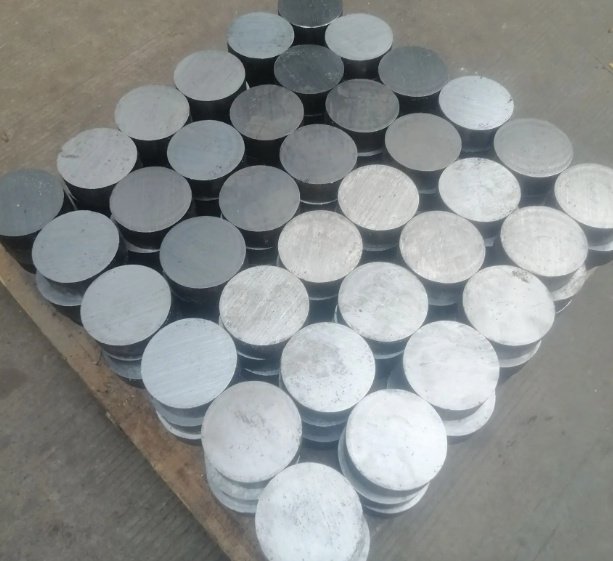
AISI 52100 alloy steel is a high-carbon, chromium-bearing steel widely used for rolling bearings, precision shafts, rollers, wear-resistant bushings, gauges, punches and other components requiring high hardness, rolling contact fatigue resistance and dimensional stability. It is commonly referenced as SAE 52100, UNS G52986, EN 100Cr6, DIN 1.3505 and JIS SUJ2, although exact specification limits should always be verified against the governing standard and mill certificate.
In engineering terms, AISI 52100 is a through-hardened bearing steel designed to develop a hard martensitic structure after quenching and tempering. It is not selected for weldability or corrosion resistance; it is selected when wear resistance, fatigue life and high compressive strength are more important than impact toughness or atmospheric corrosion performance.
What Is AISI 52100 Alloy Steel?
AISI 52100 is a high-carbon chromium alloy steel with approximately 1.0% carbon and 1.3% to 1.6% chromium. The chromium improves hardenability and carbide formation, while the high carbon content enables very high hardness after heat treatment. In the annealed condition, it can be machined and formed to a limited degree; after hardening, it is typically finished by grinding, honing, lapping or hard turning with appropriate tooling.
Typical search intent for this material includes four practical questions: what it is, how hard it gets, how it compares with alternative steels, and how it should be machined or heat treated. This page addresses each of those questions from an engineering and purchasing perspective.
AISI 52100 Chemical Composition
The following composition ranges are typical for AISI/SAE 52100. Actual order requirements may vary depending on ASTM, SAE, ISO, EN or customer-specific specifications.
| Element | Typical Range, wt.% | Engineering Function |
|---|---|---|
| Carbon, C | 0.98 - 1.10 | Enables high hardness, wear resistance and carbide formation |
| Chromium, Cr | 1.30 - 1.60 | Improves hardenability, wear resistance and rolling contact fatigue behavior |
| Manganese, Mn | 0.25 - 0.45 | Supports hardenability and deoxidation |
| Silicon, Si | 0.15 - 0.35 | Contributes to strength and deoxidation |
| Phosphorus, P | 0.025 max | Controlled as an impurity to protect toughness |
| Sulfur, S | 0.025 max | Controlled for cleanliness and fatigue performance |
For bearing-quality applications, steel cleanliness is critical. Low oxygen content, controlled inclusions and vacuum-degassed or bearing-quality melting practices can significantly influence fatigue life.
Mechanical and Physical Properties
Mechanical properties of AISI 52100 vary strongly with heat treatment, section size, quench severity and tempering temperature. The values below are representative engineering ranges, not guaranteed design allowables.
| Condition | Typical Value | Notes |
|---|---|---|
| Annealed hardness | 179 - 241 HB | Common condition for machining and stock removal |
| Hardened hardness | 58 - 66 HRC | Depends on austenitizing, quench, temper and retained austenite |
| Density | Approx. 7.81 g/cm³ | Comparable to other carbon and low-alloy steels |
| Elastic modulus | Approx. 200 - 210 GPa | Typical steel stiffness range |
| Thermal conductivity | Approx. 46 W/m·K | Varies with temperature and microstructure |
| Coefficient of thermal expansion | Approx. 11.9 µm/m·K | Near room-temperature reference range |
For many bearing and wear applications, the target hardness range is 58-66 HRC. Lower tempering temperatures are often used when maximum hardness is required, while higher tempering temperatures improve toughness at the expense of hardness.
Heat Treatment of AISI 52100
AISI 52100 responds well to controlled heat treatment, but it requires careful process discipline because high carbon content increases the risk of distortion, cracking, retained austenite and decarburization.
Annealing
For machinability, 52100 is commonly supplied in the spheroidize-annealed condition. A spheroidized carbide structure reduces tool wear and improves chip control compared with a lamellar pearlitic structure.
Austenitizing and Quenching
Typical austenitizing temperatures are commonly in the range of 815 - 870°C, depending on specification, part geometry and furnace practice. Oil quenching is widely used. Polymer or salt bath quenching may be used in controlled processes, but quench severity must be matched to part size and cracking risk.
Tempering
Tempering is often performed around 150 - 200°C for high hardness bearing applications. Higher tempering temperatures may be selected where toughness or dimensional stability is prioritized over maximum hardness.
| Process Route | Typical Result | Engineering Consideration |
|---|---|---|
| Spheroidize anneal | Improved machinability, lower hardness | Preferred condition for turning, drilling and milling |
| Oil quench plus low-temperature temper | High hardness and wear resistance | Common for bearing races, balls, rollers and precision wear parts |
| Cryogenic treatment after quench | Reduced retained austenite | Useful for tight-tolerance components requiring dimensional stability |
| Double temper | More stable hardness and microstructure | Often used for precision tooling or high-duty service |
Engineering note: distortion control and retained austenite
Precision 52100 components such as bearing rings, measuring tools and thin-wall sleeves can move during quench and even after grinding if retained austenite transforms in service. Practical controls include uniform heating, proper fixturing, oil temperature control, interrupted quenching where appropriate, cryogenic treatment, stress relief and leaving grinding allowance before final finishing. For close-tolerance parts, dimensional change should be verified on representative trial pieces before production release.
AISI 52100 vs Other Steels
AISI 52100 is often compared with 440C stainless steel, 4140 alloy steel, 8620 carburizing steel and D2 tool steel. The best choice depends on whether the primary requirement is rolling fatigue, corrosion resistance, core toughness, case depth, wear resistance or machinability.
| Material | Main Strength | Typical Limitation | Best Fit |
|---|---|---|---|
| AISI 52100 | High hardness, bearing fatigue resistance, wear resistance | not a stainless steel; limited weldability and moderate toughness | Bearings, rollers, races, precision wear parts |
| 440C Stainless | Corrosion resistance plus high hardness | Lower toughness than many non-stainless bearing steels | Stainless bearings, valves, instruments, food or moisture exposure |
| 4140 Alloy Steel | Good toughness, strength and machinability | Lower maximum wear resistance than hardened 52100 | Shafts, gears, bolts, structural machine parts |
| 8620 Carburizing Steel | Tough core with hard case after carburizing | Requires case hardening process; not through-hardened like 52100 | Gears, pins, splines and impact-loaded parts |
| D2 Tool Steel | Very high wear resistance | More difficult machining and lower toughness than many alternatives | Dies, punches, cutting tools and abrasive wear service |
If a part needs bearing-grade rolling contact performance in a clean, lubricated environment, 52100 is usually a stronger candidate than general-purpose alloy steels. If the same part operates in water, salt spray or food-processing washdown conditions, 440C or another stainless bearing alloy may be more appropriate.
Machining AISI 52100 Alloy Steel
Machining performance depends heavily on condition. The most machinable supply condition is spheroidized annealed 52100. Hardened 52100 can be machined by grinding, hard turning, EDM or abrasive processes, but cutting forces, heat generation and tool wear are much higher.
Machining in the Annealed Condition
- Turning: Carbide inserts with suitable chip breakers are commonly used. High-speed steel tools can work for low-volume jobs but wear faster.
- Drilling: Use rigid setups, high-quality coolant and avoid rubbing. Peck drilling helps evacuate chips in deeper holes.
- Milling: Positive-rake carbide tools and stable workholding reduce chatter and edge chipping.
- Grinding allowance: Leave sufficient stock for heat treatment distortion and final size control.
Machining After Hardening
After hardening to bearing-level hardness, conventional machining becomes impractical for many geometries. Finishing routes usually include cylindrical grinding, centerless grinding, surface grinding, honing, lapping or hard turning with CBN tooling. For tight bearing fits, grinding burn control is essential because thermal damage can reduce fatigue life.
| Operation | Preferred Condition | Risk to Manage |
|---|---|---|
| Rough turning | Annealed or spheroidized annealed | Tool wear and chip control |
| Deep drilling | Annealed | Work hardening, heat buildup and hole drift |
| Final bearing surface | Hardened and tempered | Grinding burn, surface tensile stress and waviness |
| Precision finishing | Hardened, stabilized and ground | Dimensional movement after finishing |
Manufacturing note: real shop-floor problem and measurable improvement
A common issue in 52100 bearing sleeves is post-heat-treatment ovality. In one typical production approach, changing from unsupported batch quenching to controlled fixturing plus matched agitation can reduce ovality variation from roughly 0.08 mm to below 0.03 mm on medium-size rings. Results vary with geometry and furnace practice, but the engineering lesson is consistent: heat treatment planning must be part of the machining route, not an afterthought.
Applications of AISI 52100 Steel
AISI 52100 is used where rolling or sliding wear resistance is required under well-lubricated conditions. It is especially common in high-contact-stress applications where surface integrity and cleanliness influence service life.
- Ball bearings, roller bearings and bearing races
- Precision rollers and guide wheels
- High-wear bushings, sleeves and pins
- Measuring tools, gauges and inspection fixtures
- Punches, dies and wear pads for moderate-impact service
- Knife blades and specialty cutting components where corrosion exposure is controlled
- Automotive, aerospace, industrial machinery and power transmission components
For safety-critical rotating components, material cleanliness, hardness profile, microstructure, residual stress, surface finish and lubrication quality should be considered together. Substituting a visually similar steel without qualification can reduce fatigue life even if hardness appears acceptable.
Advantages and Limitations
| Advantages | Limitations |
|---|---|
| Excellent hardness and wear resistance after heat treatment | Poor weldability due to high carbon content |
| Strong rolling contact fatigue performance when clean and properly processed | Low corrosion resistance compared with stainless steels |
| Good dimensional precision after grinding and stabilization | Risk of distortion or cracking during quenching |
| Widely available in bars, tubes, wire, forged forms and bearing components | Lower impact toughness than many medium-carbon alloy steels |
The most common selection error is choosing 52100 solely because it can reach high hardness. Hardness alone does not guarantee adequate toughness, corrosion resistance or dimensional stability. Material selection should be based on the complete service environment.
International Equivalents and Specifications
AISI 52100 has several widely used international equivalents. These are close equivalents, not automatic substitutions. Always compare chemical limits, cleanliness requirements, heat treatment condition and mechanical property requirements before approving a replacement.
| Designation | Standard or Region | Notes |
|---|---|---|
| SAE 52100 | SAE / AISI | Common North American designation |
| UNS G52986 | Unified Numbering System | UNS reference for 52100-type steel |
| 100Cr6 | EN / DIN | European bearing steel equivalent, often associated with 1.3505 |
| 1.3505 | DIN / Werkstoff | German material number for 100Cr6 |
| SUJ2 | JIS | Japanese bearing steel designation |
| GCr15 | GB / China | Common Chinese chromium bearing steel designation |
Buyer note: what to check before ordering 52100 steel
For purchasing, confirm the exact standard, size tolerance, delivery condition, heat number, decarburization limit, ultrasonic testing requirement, cleanliness rating and whether a mill test certificate is required. For bearing or fatigue-critical work, request evidence of melting practice and inclusion control rather than relying only on chemical composition.
Design and Procurement Considerations
When specifying AISI 52100, the drawing or purchase order should define more than the grade name. For consistent production results, include supply condition, required hardness after heat treatment, surface finish, allowable decarburization, straightness, roundness, grain size where applicable and inspection method.
- For engineers: specify functional surfaces, grinding allowance and post-heat-treatment inspection criteria.
- For machinists: confirm annealed hardness before rough machining and plan tool life around abrasive carbides.
- For heat treaters: control atmosphere to minimize decarburization and oxidation.
- For buyers: do not substitute commercial-quality high-carbon steel for bearing-quality 52100 without engineering approval.
Engineer note: when AISI 52100 is not the best choice
AISI 52100 may be the wrong choice when the component must be welded, exposed to corrosive media, absorb heavy shock loads or operate without reliable lubrication. In those cases, consider stainless bearing steels, carburizing steels, nitriding steels, tool steels or medium-carbon alloy steels depending on the failure mode being controlled.
Summary
AISI 52100 alloy steel is one of the most important high-carbon chromium steels for bearing and precision wear applications. Its value comes from high attainable hardness, strong wear resistance and proven rolling contact fatigue performance when produced and heat treated correctly. Compared with 4140, it offers superior wear and bearing performance; compared with 440C, it lacks corrosion resistance; compared with 8620, it is through-hardened rather than case-hardened.
For best results, specify the correct equivalent grade, purchase bearing-quality material when fatigue life matters, machine it in the annealed condition, and control heat treatment carefully to manage retained austenite and distortion control. AISI 52100 performs best when material quality, machining, heat treatment and finishing are treated as one integrated manufacturing process.