
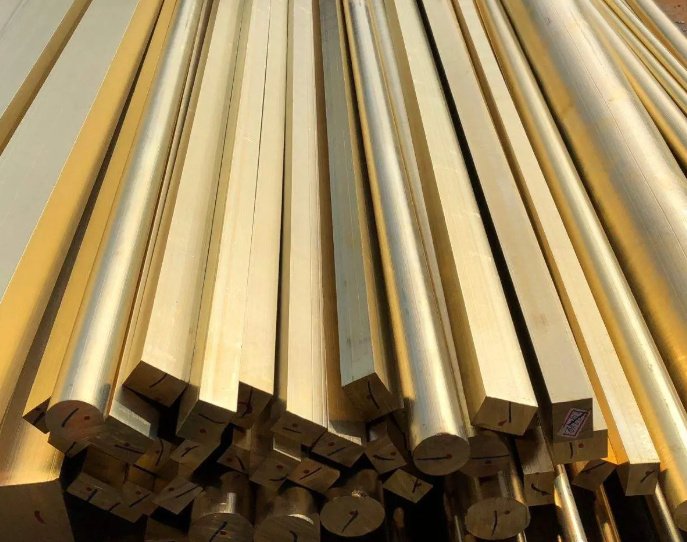
C22000 brass, commonly called Commercial Bronze or 90/10 brass, is a copper-zinc alloy containing about 90% copper and 10% zinc. It is selected when a project needs a warm reddish-gold appearance, good corrosion resistance, excellent cold formability, and better strength than pure copper while retaining high ductility.
For engineers, buyers, and fabricators, C22000 is most often considered for architectural trim, decorative hardware, deep-drawn parts, medallions, plaques, electrical components, condenser-related parts, and formed sheet-metal products. Its value lies in a practical balance: high copper content with modest zinc addition, giving it better tarnish resistance and color stability than higher-zinc yellow brasses.
What Is C22000 Brass?
C22000 is a wrought copper alloy listed under the Unified Numbering System as UNS C22000. In industry, it is also referred to as CDA 220, Commercial Bronze, or 90/10 brass. Although the term “bronze” appears in its common name, C22000 is technically a brass because its main alloying element is zinc rather than tin.
The alloy is widely supplied as sheet, strip, plate, coil, and occasionally custom fabricated forms. It is especially suitable for processes such as blanking, stamping, bending, drawing, embossing, roll forming, and light machining.
| Identifier | Description |
|---|---|
| UNS Number | C22000 |
| CDA Number | 220 |
| Common Name | Commercial Bronze |
| Nominal Copper/Zinc Ratio | 90% Cu / 10% Zn |
| Material Family | Wrought copper-zinc alloy |
C22000 Brass Chemical Composition
C22000 brass has a simple chemistry dominated by copper and zinc. Its high copper level is the reason for its reddish color, excellent formability, and good atmospheric corrosion resistance.
| Element | Typical Range | Function in the Alloy |
|---|---|---|
| Copper, Cu | 89.0% - 91.0% | Provides corrosion resistance, ductility, conductivity, and reddish appearance |
| Zinc, Zn | Balance, approximately 9% - 11% | Improves strength and hardness compared with pure copper |
| Lead, Pb | Maximum about 0.05% | Controlled impurity; C22000 is not a free-machining brass |
| Iron, Fe | Maximum about 0.05% | Controlled impurity |
The composition may vary slightly by product form and specification. For certified procurement, chemical limits should be confirmed against the requested standard, mill certificate, and order requirements.
Mechanical and Physical Properties
C22000 brass is available in multiple tempers, so strength, hardness, and elongation depend strongly on cold work level. Annealed material gives maximum ductility for drawing and forming, while hard tempers provide higher strength and spring-back resistance.
| Property | Typical Value or Range | Engineering Meaning |
|---|---|---|
| Density | Approximately 8.80 g/cm³ | Useful for weight estimation in sheet and strip designs |
| Elastic Modulus | Approximately 110 - 120 GPa | Similar stiffness range to many copper alloys |
| Tensile Strength, Annealed | Approximately 240 - 310 MPa | Suitable for formed decorative and light structural parts |
| Yield Strength, Annealed | Approximately 70 - 110 MPa | Low yield strength supports deep drawing and bending |
| Elongation, Annealed | Often 40% or higher | Indicates excellent ductility |
| Thermal Conductivity | Approximately 180 - 190 W/m·K | Higher than many brasses with more zinc |
| Electrical Conductivity | Approximately 40% - 45% IACS | Useful for moderate electrical and shielding applications |
| Melting Range | Approximately 1020 - 1045°C | Relevant for brazing, soldering, and thermal processing |
In formed-part design, the most important practical advantage is excellent cold formability in annealed and soft tempers. C22000 can tolerate severe drawing operations more readily than many higher-zinc brasses.
Engineer note: why temper matters in C22000 brass selection
A drawing-grade C22000 strip may pass a severe forming operation that a harder temper fails by edge cracking or orange-peel surface deformation. For stamped covers, decorative shells, instrument panels, or nameplates, specify both alloy and temper. A purchase order that only says “C22000 brass sheet” may result in material that meets chemistry but does not meet forming performance.
C22000 Brass vs Other Brass and Copper Alloys
Search intent for C22000 often includes comparison because buyers need to know whether it is better than C26000 cartridge brass, C23000 red brass, C24000 low brass, or C36000 free-cutting brass. The correct choice depends on color, forming severity, corrosion exposure, machining volume, and cost.
| Alloy | Typical Name | Nominal Composition | Main Advantage | When C22000 May Be Better |
|---|---|---|---|---|
| C11000 | Electrolytic tough pitch copper | Nearly pure copper | Highest conductivity among these options | When higher strength and better wear resistance than pure copper are needed |
| C22000 | Commercial Bronze | 90Cu-10Zn | Excellent formability, reddish color, corrosion resistance | Best fit for deep-drawn decorative and formed parts requiring copper-rich appearance |
| C23000 | Red Brass | 85Cu-15Zn | Good corrosion resistance and moderate strength | When a redder color and slightly better ductility are desired |
| C24000 | Low Brass | 80Cu-20Zn | Higher strength than C22000 with good formability | When corrosion resistance, color stability, and deeper forming are prioritized over strength |
| C26000 | Cartridge Brass | 70Cu-30Zn | Strong general-purpose brass with good formability | When a warmer reddish color, better copper-rich corrosion behavior, or easier severe drawing is required |
| C36000 | Free-Cutting Brass | Cu-Zn-Pb brass | Excellent machinability | When lead content must be minimized and the part is primarily stamped or formed rather than screw-machined |
Compared with C26000 cartridge brass, C22000 is usually softer and more ductile in comparable annealed conditions, but C26000 often offers higher strength and lower material cost. Compared with C36000, C22000 is far less machinable but much better suited for forming and low-lead applications.
Corrosion Resistance and Service Environment
C22000 performs well in indoor atmospheres, rural and industrial air, many fresh-water exposures, and decorative service where surface appearance matters. Its relatively low zinc content reduces the risk of dezincification compared with higher-zinc brasses, especially in mildly corrosive environments.
The alloy naturally develops a patina over time. Depending on humidity, pollutants, handling, and cleaning practices, the surface may shift from bright reddish gold to darker brown or bronze tones. Protective lacquers, waxes, or clear coatings are often used for architectural and decorative applications where visual consistency is required.
- Good resistance to atmospheric corrosion
- Better color retention than many yellow brasses
- Good behavior in many non-ammoniacal indoor environments
- Not recommended for strong ammonia exposure or aggressive chemical service without testing
- May require coating for long-term decorative brightness
A key design benefit is low-zinc brass behavior in corrosion-sensitive decorative applications. However, C22000 is not a universal corrosion solution. For marine hardware, acidic water, high chlorides, or high-stress environments, the application should be reviewed against the relevant corrosion data and field exposure requirements.
Real engineering issue: stress corrosion cracking risk
Brass alloys can be susceptible to stress corrosion cracking in ammonia-containing environments when residual forming stresses are high. In a formed decorative cover, cracking may appear weeks or months after installation if the part was heavily cold worked, not stress relieved, and exposed to cleaning chemicals containing ammonia. Practical controls include avoiding ammonia-based cleaners, specifying proper temper, using stress-relief annealing where appropriate, and validating the cleaning process before release.
Machining, Forming, Joining and Finishing
C22000 is primarily a forming alloy, not a high-speed machining alloy. Its machinability rating is commonly considered low compared with free-cutting brass. If a project requires heavy turning, drilling, threading, or automatic screw machining, C36000 or another leaded/free-machining brass is usually more efficient.
For machining C22000, use sharp tools, positive rake geometry, adequate lubrication, rigid workholding, and chip-control planning. The material can produce long, ductile chips rather than short broken chips, so toolpath strategy and operator safety matter.
| Process | Suitability | Practical Guidance |
|---|---|---|
| Deep Drawing | Excellent | Use annealed or soft temper for severe draws |
| Bending | Excellent to good | Observe bend radius recommendations based on temper and thickness |
| Stamping and Blanking | Excellent | Maintain tool sharpness to reduce burr height |
| Machining | Fair to poor compared with C36000 | Use sharp carbide or high-speed steel tools and coolant |
| Soldering | Good | Clean oxide film before joining |
| Brazing | Good | Control heat input to avoid distortion in thin sheet |
| Welding | Limited to fair depending on method | Consider zinc vaporization, distortion, and procedure qualification |
| Polishing and Buffing | Excellent | Capable of attractive decorative finish |
In production planning, the most common mistake is treating C22000 like a free-machining brass. Its machinability rating is much lower than C36000, so it is better for stamped, drawn, and polished parts than for large-volume precision screw-machine components.
Buyer and process planning note: when machining cost changes the alloy decision
If a part needs 80% forming and 20% machining, C22000 may still be economical because it reduces cracking and finishing risk. If the part needs 80% machining and only light forming, C22000 can increase cycle time, tool wear, and chip-handling cost. In that case, compare the finished-part cost of C22000 against C35300, C35600, C36000, or another more machinable copper alloy, while checking lead restrictions and corrosion requirements.
Typical Applications of C22000 Brass
C22000 is used where appearance, formability, and copper-rich corrosion behavior are more important than maximum strength or maximum machinability.
- Architectural panels, trim, moldings, and decorative strips
- Nameplates, plaques, medallions, badges, and emblems
- Deep-drawn shells, covers, caps, and ornamental components
- Instrument parts and dial faces
- Electrical terminals, shielding parts, and contact-related components with moderate conductivity needs
- Consumer goods, craft components, jewelry findings, and decorative hardware
- Radiator and heat-transfer related components where compatible with design requirements
- Coinage, tokens, and similar stamped products in certain specifications
For visible surfaces, specify surface finish expectations clearly. Mill finish, polished finish, brushed finish, lacquered finish, and patinated finish can produce very different visual results even when the base alloy is identical.
Specifications, Product Forms and Procurement Considerations
C22000 brass is commonly purchased as sheet, strip, coil, and plate. Depending on region and supplier capability, it may be ordered to specifications such as ASTM, SAE, EN-equivalent requirements, or customer-specific drawings. Always confirm current standards with the supplier because product form, thickness, temper, tolerance, and test requirements determine compliance.
| Order Item | Why It Matters |
|---|---|
| Alloy designation | Specify UNS C22000 or CDA 220 to avoid substitution |
| Product form | Sheet, strip, coil, plate, or custom blank affects tolerances and process route |
| Temper | Controls formability, springback, hardness, and tensile strength |
| Thickness and width tolerance | Critical for stamping dies, progressive tooling, and assembly fit |
| Surface finish | Important for decorative, architectural, and visible components |
| Grain size | Can affect deep drawing, surface roughening, and orange-peel appearance |
| Certification | Mill test reports verify chemistry and mechanical properties |
| Regulatory requirements | Check RoHS, REACH, low-lead rules, and customer-specific restrictions |
For engineered production, the most reliable approach is to define alloy, temper, thickness tolerance, surface condition, and certification level together. This reduces risk in stamping, drawing, polishing, coating, and final inspection.
Procurement perspective: what to ask before approving a C22000 brass supplier
Ask whether the supplier can provide consistent temper, coil-to-coil mechanical property control, surface protection, traceable mill certificates, and packaging that prevents staining. For decorative parts, also ask for sample panels from production stock rather than only catalog samples, because color and finish variation can influence customer acceptance.
Engineering Example: Reducing Cracking in a Drawn Decorative Part
A common engineering problem is cracking during deep drawing of brass covers or decorative shells. In one representative production scenario, a manufacturer forming a thin decorative cup from a higher-zinc brass experienced edge cracks after the second draw operation. The target part needed a reddish finish, high polishability, and low rejection rate.
| Condition | Higher-Zinc Brass Trial | C22000 Brass Trial |
|---|---|---|
| Primary process | Two-stage deep drawing | Two-stage deep drawing |
| Observed issue | Edge cracking and inconsistent polish quality | Stable draw with improved surface appearance |
| Scrap driver | Cracks after second draw | Mostly cosmetic handling defects |
| Engineering change | Material substitution considered | Annealed C22000 specified with tighter grain-size control |
| Resulting benefit | High rework and sorting burden | Lower cracking risk and more predictable polishing |
The lesson is that C22000 is not chosen only for chemistry. It is often selected because its ductility, copper-rich color, and finishing response solve practical manufacturing problems that may not be visible in a simple material cost comparison.
Advantages and Limitations
| Advantages | Limitations |
|---|---|
| Excellent deep drawing and cold forming capability | Lower machinability than free-cutting brasses |
| Attractive reddish-gold commercial bronze color | Lower strength than many higher-zinc brasses in comparable tempers |
| Good atmospheric corrosion resistance | May tarnish unless protected or maintained |
| Good soldering, brazing, polishing, and finishing behavior | Not ideal for aggressive ammonia, high-chloride, or severe chemical environments without testing |
| Lower lead content than many free-machining brass grades | Can generate long chips during machining |
C22000 brass is a strong candidate when a design requires formability, corrosion resistance, and decorative copper-rich appearance. It is usually not the best choice when the main requirement is high-speed machining, maximum tensile strength, or the lowest raw material cost.
Data Sources and Technical Notes
Property ranges for C22000 brass are commonly referenced from copper alloy producer data, Copper Development Association information, ASTM product specifications, and engineering material databases. Actual values vary by temper, thickness, product form, manufacturing route, and test method.
- Use certified mill test reports for contractual chemical and mechanical property verification.
- Validate forming limits with production tooling because lubrication, blank shape, grain direction, and die radius affect results.
- Confirm corrosion suitability with service-specific testing when chemicals, chlorides, ammonia, or outdoor exposure are present.
- For decorative parts, approve color, polish, grain, and coating requirements using controlled samples.
In short, C22000 brass is best understood as a copper-rich, formable, decorative brass alloy. It provides an effective engineering balance for sheet and strip components where deep drawing, surface finish, and corrosion appearance are more important than free-machining productivity.