
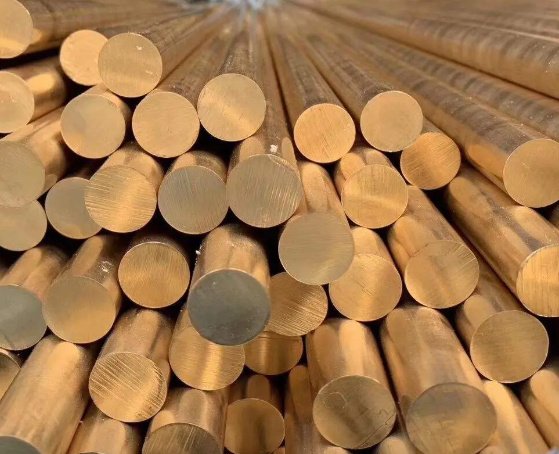
C23000 brass, also known as UNS C23000 or red brass, is a copper-zinc alloy typically used where moderate strength, excellent cold formability, good corrosion resistance, and attractive color are required. It is commonly selected for architectural trim, plumbing components, radiator cores, heat exchanger parts, decorative hardware, electrical parts, and formed industrial components.
For buyers, engineers, and sourcing teams, the key question is not simply “What is C23000 brass?” but whether it is the correct alloy compared with cartridge brass, commercial bronze, naval brass, free-cutting brass, or copper tube alloys. This page explains the material in practical terms, including composition, mechanical properties, corrosion behavior, fabrication limits, machining expectations, and procurement checkpoints.
What Is C23000 Brass?
C23000 brass is an alpha brass containing approximately 85% copper and 15% zinc. Because of its high copper content, it has a reddish-gold appearance and is often called 85/15 red brass. The single-phase alpha structure gives it very good ductility, making it suitable for drawing, bending, spinning, roll forming, stamping, and other cold-working operations.
Compared with brasses that contain more zinc, C23000 generally provides better resistance to atmospheric corrosion, water exposure, and dezincification risk. Compared with pure copper, it offers higher strength and better spring characteristics while retaining useful electrical and thermal conductivity.
C23000 Brass Chemical Composition
The nominal composition of C23000 brass is copper and zinc, with very low permitted levels of lead, iron, and other residual elements. Exact limits can vary by product form and specification, so purchase documents should always reference the applicable ASTM, EN, JIS, or customer standard.
| Element | Typical Range or Limit | Function in the Alloy |
|---|---|---|
| Copper, Cu | 84.0-86.0% | Provides corrosion resistance, ductility, conductivity, and red color |
| Zinc, Zn | Balance | Improves strength and hardness compared with copper |
| Lead, Pb | Usually 0.05% max | Residual only; C23000 is not a leaded free-machining brass |
| Iron, Fe | Usually 0.05% max | Residual element; excessive content may affect surface quality |
Common product forms include strip, sheet, plate, tube, wire, rod, bar, and custom profiles. Applicable standards may include ASTM B36/B36M for brass plate, sheet, strip, and rolled bar; ASTM B134/B134M for seamless brass wire; and other form-specific copper alloy specifications.
Typical Physical and Mechanical Properties
C23000 properties depend strongly on temper, thickness, product form, and processing history. Annealed material is soft and highly formable, while cold-worked tempers provide higher tensile strength and hardness with reduced elongation.
| Property | Typical Value or Range | Engineering Meaning |
|---|---|---|
| Density | About 8.75 g/cm³ | Useful for weight estimation and cost-per-part calculations |
| Electrical conductivity | About 35-40% IACS | Higher than many high-zinc brasses, lower than pure copper |
| Thermal conductivity | Typically around 150-170 W/m·K | Suitable for heat-transfer and radiator-related components |
| Tensile strength, annealed | Approximately 275-340 MPa | Best choice for severe forming and deep drawing |
| Tensile strength, cold worked | Approximately 380-520 MPa depending on temper | Useful for clips, formed hardware, and higher-strength strip parts |
| Elongation | High in annealed temper; lower in hard tempers | Critical for bending, flanging, and drawn shapes |
| Melting range | Approximately 1,000-1,050°C | Important for brazing, soldering, and thermal processing |
For engineering calculations, do not use a generic property value without checking the certified temper. A half-hard strip and a fully annealed sheet can behave very differently in bend radius, springback, fatigue response, and forming load.
C23000 Brass Compared with Other Copper Alloys
C23000 is often compared with C22000, C26000, C27000, C36000, C46400, and C12200. The best alloy depends on whether the priority is formability, corrosion resistance, machinability, color, conductivity, marine exposure, or cost.
| Alloy | Common Name | Main Difference from C23000 | When It May Be Preferred |
|---|---|---|---|
| C22000 | Commercial bronze, 90/10 brass | Higher copper, redder color, better ductility, lower strength | Deep drawing, decorative red color, higher corrosion resistance |
| C23000 | Red brass, 85/15 brass | Balanced corrosion resistance, formability, strength, and color | General formed parts, plumbing, trim, radiator and heat-transfer uses |
| C26000 | Cartridge brass, 70/30 brass | More zinc, higher strength, yellower color, lower corrosion resistance | Ammunition cases, springs, terminals, stamped components |
| C27000 | Yellow brass, 65/35 brass | Higher zinc and lower copper than C23000 | Cost-sensitive decorative or general-purpose brass parts |
| C36000 | Free-cutting brass | Contains lead for excellent machinability but much lower cold formability | Screw machine parts, fittings, bushings, threaded components |
| C46400 | Naval brass | Contains tin for improved seawater resistance | Marine hardware, shafts, fasteners, condenser plates |
| C12200 | Phosphorus-deoxidized copper | Nearly pure copper with higher conductivity and excellent brazability | HVAC tubing, plumbing tube, heat exchangers requiring copper performance |
In practical selection, C23000 is attractive when the part must be formed more severely than yellow brass, resist corrosion better than high-zinc brass, and cost less than high-copper alloys. It is not the best choice when the part is primarily a high-speed turned component, because it is not a free-machining brass.
Corrosion Resistance and Service Environment
C23000 performs well in indoor atmospheres, rural and urban outdoor exposure, fresh water, many mildly alkaline environments, and non-oxidizing conditions. Its high copper content gives it better corrosion resistance than higher-zinc brasses, particularly where dezincification is a concern.
However, no brass should be specified without considering the full environment. Ammonia, amines, mercury compounds, strong oxidizing acids, stagnant chloride-bearing water, and tensile residual stress can increase the risk of stress corrosion cracking or localized attack. For marine immersion or aggressive seawater service, tin-bearing naval brass or copper-nickel alloys may be more appropriate.
Real Engineering Issue: Dezincification Risk in Water Fittings
A typical failure mode for unsuitable high-zinc brass in warm, low-flow water is dezincification, where zinc is selectively leached and a weak porous copper-rich structure remains. Because C23000 contains less zinc than yellow brass and cartridge brass, it generally has improved resistance. In applications where water chemistry is uncertain, engineers should still evaluate pH, chlorides, dissolved oxygen, temperature, flow velocity, and stagnation periods.
For a small formed water-contact component, switching from a 35% zinc brass to C23000 can reduce dezincification susceptibility while preserving cold-forming capability. The result is often fewer leakage failures, better surface stability, and improved service consistency, especially in mildly corrosive potable or process-water environments.
Forming, Fabrication and Machining Guidance
C23000 brass is valued for its cold-working behavior. It can be blanked, punched, drawn, stamped, rolled, embossed, bent, beaded, and spun. Annealed and light cold-worked tempers are commonly selected for parts with tight radii or deep draw ratios, while harder tempers are used when stiffness, spring action, or dent resistance is more important.
Cold Forming
For severe forming, specify annealed or soft temper and verify grain size. Coarse grains can create orange-peel surface texture after stretching, while overly hard material can split during drawing or flanging. Intermediate annealing may be required for multi-stage drawn components.
Machining
C23000 can be drilled, milled, turned, reamed, and tapped, but chip control is not as easy as with leaded C36000 brass. Sharp tools, positive rake geometry, stable fixturing, appropriate feeds, and coolant or lubricant can improve finish and tool life. If the design is dominated by automatic screw machining, C36000 or another machinable brass may be more economical.
Joining
C23000 is generally suitable for soldering, brazing, resistance welding, and some mechanical joining methods. Brazing heat should be controlled to avoid excessive grain growth, distortion, or local softening. After forming and joining, cleaning should remove flux residue to prevent staining or corrosion.
Heat Treatment
C23000 is not strengthened by precipitation hardening. Strength is mainly controlled by cold work and annealing. Stress-relief annealing may be used after heavy forming to reduce residual stress and lower the risk of season cracking in sensitive environments.
Engineer and buyer notes for fabrication planning
When sourcing formed C23000 components, request the alloy, temper, thickness tolerance, grain size if relevant, surface finish, edge condition, and mechanical property certificate. For parts with bends near the minimum radius, ask the supplier to confirm bend orientation relative to rolling direction. For visible architectural parts, specify acceptable discoloration, grain marks, scratches, and polishing requirements before production.
Common Applications of C23000 Brass
C23000 is used where a combination of red brass appearance, corrosion resistance, moderate strength, and formability is valuable. Typical applications include:
- Architectural panels, trim, moldings, nameplates, escutcheons, and decorative hardware
- Plumbing accessories, water-contact formed parts, ferrules, and small fittings
- Radiator cores, heat exchanger components, and heat-transfer fins
- Electrical connectors, terminals, shields, and components needing moderate conductivity
- Stamped industrial parts, clips, eyelets, washers, and drawn shells
- Musical instrument parts, craft components, and ornamental products
- Consumer hardware requiring a reddish brass color and polished surface
For visual applications, the color difference between C23000 and yellow brasses is important. C23000’s higher copper content produces a warmer reddish tone, while C26000 and C27000 appear more yellow. Surface finishing options include polishing, brushing, lacquering, patination, plating, and clear protective coating.
Specification and Procurement Checklist
A clear purchase specification reduces disputes over hardness, flatness, cracking, discoloration, and dimensional variation. At minimum, the buying document should define the alloy, temper, specification, dimensions, and test reports required for the application.
| Procurement Item | Why It Matters |
|---|---|
| Alloy designation | Use UNS C23000 or the exact applicable standard designation to prevent substitution |
| Product form | Sheet, strip, tube, wire, rod, bar, or profile standards may have different requirements |
| Temper | Controls strength, elongation, hardness, springback, and forming performance |
| Thickness and tolerance | Critical for stamping clearance, forming repeatability, weight, and assembly fit |
| Surface finish | Important for decorative parts, plating, soldering, brazing, and coating adhesion |
| Edge condition | Slit edges, deburred edges, or rounded edges affect cracking risk and handling safety |
| Test certificate | Confirms composition, mechanical properties, and compliance with the purchase standard |
| Packaging | Prevents staining, abrasion, moisture damage, and transit deformation |
Purchasing perspective: when C23000 is the economical choice
C23000 is often cost-effective when the part requires better corrosion resistance and color stability than yellow brass but does not require the conductivity of pure copper or the seawater resistance of naval brass. It can also reduce forming scrap compared with harder, higher-zinc brasses in draw-sensitive components. For machined-only parts, however, the lower machining productivity may offset the material advantage.
Design Considerations for Reliable C23000 Brass Parts
Designers should evaluate bend radius, grain direction, forming sequence, edge quality, residual stress, joint method, and service environment. A part that works well in laboratory bending may still fail in production if coil temper varies, tooling clearance is poor, or burrs initiate edge cracking.
Bend Radius and Springback
C23000 has good bendability, especially in soft temper, but harder tempers require larger inside bend radii. Springback increases with strength and reduced thickness. In progressive dies, engineers should validate actual springback with production-grade coil, not only prototype sheet.
Surface and Grain Control
Visible parts should be reviewed for rolling marks, grain direction, scratches, oxidation, and polishing response. Drawn or stretched parts may require controlled grain size to reduce surface roughening. For architectural components, coating compatibility and long-term tarnish behavior should be tested.
Stress Corrosion Prevention
Cold-worked brass under tensile stress can be vulnerable in ammonia-containing atmospheres. Practical controls include stress-relief annealing, avoiding aggressive cleaning chemicals, minimizing residual tensile stress, and isolating the part from ammonia sources such as certain cleaners, adhesives, sealants, and industrial fumes.
Manufacturing problem example with data-driven outcome
A stamped red brass cover with a tight flange radius showed edge splits during production when a harder temper was substituted for an annealed strip. Trial results showed that returning to the specified soft temper and improving the slit-edge deburring reduced visible flange cracking from about 6% of inspected parts to below 1%. The improvement came from matching temper to forming severity and removing edge defects that acted as crack initiators.
When Not to Choose C23000 Brass
C23000 is versatile, but it is not always the optimal copper alloy. Consider another material if the application requires:
- Maximum machinability for high-volume automatic turning, where C36000 may be better
- High seawater resistance, where C46400 naval brass or copper-nickel may be better
- Very high electrical conductivity, where C11000 or C12200 copper may be better
- Lead-free regulatory compliance with specific drinking-water certification, which must be confirmed by the exact standard and jurisdiction
- High strength beyond cold-worked brass capability, where phosphor bronze, beryllium copper, or stainless steel may be considered
- Severe ammonia exposure, where brass stress corrosion cracking risk should be avoided or controlled
Summary: C23000 Brass Selection Guidance
C23000 brass is a high-copper red brass that offers a useful balance of formability, corrosion resistance, moderate strength, thermal conductivity, and attractive color. It is especially suitable for formed, drawn, stamped, decorative, plumbing-related, and heat-transfer components.
Choose C23000 when you need better corrosion resistance and a warmer color than yellow brass, better strength than pure copper, and better cold formability than many higher-zinc brasses. Avoid it when the main requirement is maximum screw-machine productivity, aggressive marine immersion performance, or pure-copper conductivity.
The most reliable specification strategy is to define the alloy as C23000, select the correct temper for forming or strength, reference the relevant product standard, and confirm mechanical properties, surface finish, and certification before production.