
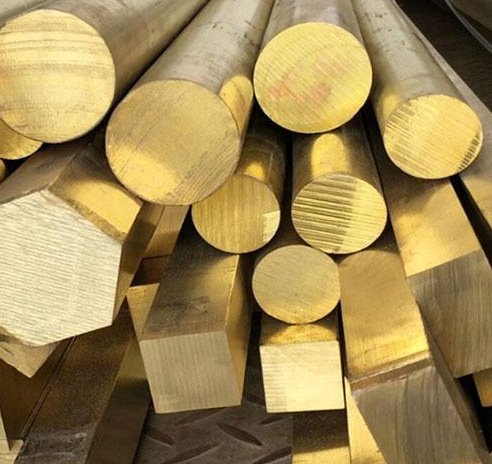
C36000 brass, also known as UNS C36000, CDA 360, free-cutting brass or free-machining brass, is one of the most widely specified copper alloys for high-volume turned parts. It is valued for its exceptional machinability, stable dimensional control, good corrosion resistance in many service environments and reliable availability in rod, bar, wire and shaped profiles.
For engineers, purchasing teams and CNC manufacturers, the main reason to choose C36000 brass is productivity. Its lead-containing microstructure enables short, well-broken chips, low tool wear and fast cycle times, making it a benchmark alloy for screw machine components, fittings, valve parts, fasteners, electrical hardware and precision instruments.
What Is C36000 Brass?
C36000 is a leaded alpha-beta brass primarily composed of copper and zinc, with lead intentionally added to improve machinability. The lead is not fully soluble in the copper-zinc matrix; instead, it exists as finely dispersed particles that act as internal chip breakers and lubricating sites during cutting.
This alloy is often described as the reference material for machinability ratings, commonly assigned a value of 100%. Other copper alloys are frequently compared against C36000 to estimate relative machining difficulty, tool life and production cost.
- Common names: C360 brass, 360 brass, free-cutting brass, free-machining brass, leaded brass
- UNS designation: C36000
- Copper Development Association designation: CDA 360
- Typical product forms: round bar, hex bar, square bar, flat bar, wire, rod and profiles
- Main use case: precision machined components requiring high throughput
C36000 Brass Chemical Composition
The chemical composition of C36000 brass is controlled to balance machinability, strength, ductility and hot working response. The lead content is the main factor that separates C36000 from many lower-lead or lead-free brass grades.
| Element | Typical Range | Function in the Alloy |
|---|---|---|
| Copper, Cu | 60.0% - 63.0% | Provides corrosion resistance, ductility and electrical/thermal conductivity |
| Zinc, Zn | Balance | Increases strength and lowers material cost compared with pure copper |
| Lead, Pb | 2.5% - 3.7% | Improves chip breaking, surface finish and cutting-tool life |
| Iron, Fe | Usually 0.35% max | Controlled impurity; excessive iron may affect machinability and appearance |
Because C36000 contains lead, buyers should verify regulatory requirements for their application, especially for potable water, food-contact parts, medical devices, children’s products and regions with strict RoHS, REACH or low-lead rules.
Mechanical and Physical Properties of C36000 Brass
C36000 brass offers a practical combination of strength, ductility and dimensional stability. Actual values vary by product form, temper, bar diameter, processing route and test specification. The following data are typical reference ranges for engineering comparison.
| Property | Typical Value or Range | Engineering Relevance |
|---|---|---|
| Machinability rating | 100% | Reference standard for free-cutting copper alloys |
| Tensile strength | Approximately 345 - 470 MPa, depending on temper | Suitable for fittings, fasteners, inserts and mechanical hardware |
| Yield strength | Approximately 125 - 310 MPa, depending on temper | Important for threaded parts and press-fit components |
| Elongation | Approximately 10% - 30% | Supports moderate forming, crimping and assembly operations |
| Density | About 8.49 g/cm³ | Used for weight calculation and material cost estimation |
| Thermal conductivity | About 115 W/m·K | Useful for thermal transfer components and heat-spreading hardware |
| Electrical conductivity | About 26% IACS | Acceptable for many connectors and electrical hardware, but lower than pure copper |
| Melting range | Approximately 885 - 900°C | Relevant for hot working, brazing and thermal exposure limits |
In design calculations, engineers should use certified mill test report values or specification minimums rather than only typical published values. This is especially important for safety-related parts, thin-wall threaded components and assemblies exposed to vibration.
Machining C36000 Brass: Cutting Behavior, Speeds and Process Notes
The strongest advantage of C36000 is its machining efficiency. The alloy produces small, discontinuous chips that evacuate easily from drills, taps, automatic lathes and Swiss-type machines. Compared with many unleaded brasses, C36000 usually requires less cutting force and produces a smoother finish at high feed rates.
In production machining, free-cutting brass can reduce cycle time, tool changes and chip-management problems. It is commonly selected when part geometry includes deep holes, fine threads, cross-drilling, knurling, slots, small diameters or tight dimensional repeatability.
| Operation | Typical Performance | Practical Recommendation |
|---|---|---|
| Turning | Excellent chip control and surface finish | Use sharp carbide or high-speed steel tools; positive rake geometry is effective |
| Drilling | Very good hole quality and fast penetration | Use proper pecking for deep holes; monitor drill wander in small diameters |
| Tapping | Excellent thread formation with low torque | Use suitable tapping lubricant; confirm thread strength for thin walls |
| Milling | Good finish and low tool load | Avoid rubbing; maintain chip evacuation to prevent recutting |
| Knurling | Generally good | Check temper and diameter tolerance for consistent pattern depth |
| Deburring | Usually easy | Control sharp edges on miniature components and threaded features |
A common production result is a measurable reduction in machining cost. For example, when a turned fitting is changed from a lower-machinability brass to C36000, shops often see shorter cycle time and improved insert life. The exact gain depends on machine rigidity, coolant strategy, tool geometry, tolerance class and part complexity.
Buyer and engineer note: when machining cost matters more than material price
C36000 brass may not always be the lowest-cost alloy by weight, but it can be the lower-cost option per finished part. For high-volume CNC turning, the important metric is total manufactured cost: bar yield, cycle time, tool consumption, scrap rate, inspection time and secondary deburring. In many precision turned components, faster machining and fewer tool changes can outweigh small differences in raw material price.
C36000 Brass Compared with Other Brass and Copper Alloys
Searchers comparing C36000 usually want to know whether it is better than C26000, C35300, C37700, C46400 or lead-free brass. The right answer depends on machining volume, regulatory limits, forming needs, corrosion exposure and required strength.
| Alloy | Common Name | Main Advantage | Compared with C36000 |
|---|---|---|---|
| C36000 | Free-cutting brass | Best machinability among common brasses | Preferred for high-volume precision turning |
| C26000 | Cartridge brass | Excellent cold formability | Better for deep drawing and forming; less machinable than C36000 |
| C35300 | High-leaded brass | Good machining and thread rolling | Similar machining intent, but composition and availability differ by market |
| C37700 | Forging brass | Excellent hot forgeability | Better for forged valve bodies and shapes; C36000 is better for bar machining |
| C46400 | Naval brass | Improved seawater corrosion resistance | Better marine resistance; harder to machine than C36000 |
| C69300 and other lead-free brasses | Lead-free machinable brass | Compliance with low-lead requirements | Better for regulated water-contact applications; may require adjusted tooling |
If the application requires the lowest machining cost and does not restrict lead, C36000 is often the first material to evaluate. If the part contacts drinking water or must meet a specific low-lead law, a compliant lead-free brass should be reviewed instead.
Common Applications of C36000 Brass
C36000 is used wherever precision machining, repeatable tolerances and reliable thread quality are more important than maximum strength or extreme corrosion resistance. Its combination of machinability and moderate mechanical properties makes it suitable for both industrial and consumer product components.
- Pipe fittings, compression fittings and hose fittings
- Valve stems, valve seats, nozzles and metering components
- Fasteners, nuts, bolts, inserts and threaded bushings
- Electrical connectors, terminals, plug pins and switch components
- Instrument parts, gears, sleeves, spacers and precision shafts
- Automotive hardware, pneumatic components and hydraulic accessories
- Decorative machined parts where good surface finish is required
The alloy is also suitable for many plated or finished components. C36000 can be polished and may accept nickel, chrome, tin, silver or other finishes when proper surface preparation and cleaning processes are used.
Corrosion Resistance, Plating and Environmental Limits
C36000 brass has good resistance to atmospheric corrosion, many oils, fuels and non-aggressive industrial environments. However, it is not the best choice for all corrosive media. Like other brasses, it may be vulnerable to dezincification or stress corrosion cracking under certain chemical, temperature and stress conditions.
Dezincification resistance should be reviewed when parts are exposed to hot water, chlorides, acidic media or stagnant water. For severe marine or dezincification-prone service, alloys specifically designed for that environment may provide better long-term reliability.
| Environment | General Suitability | Engineering Note |
|---|---|---|
| Indoor air and dry service | Good | Often selected for hardware, fittings and instruments |
| Oils and many fuels | Good | Verify compatibility with additives and temperature |
| Fresh water | Application dependent | Lead content and dezincification risk must be checked |
| Seawater or chloride-rich service | Limited | Consider naval brass, bronze or stainless alternatives |
| Ammonia-containing environments | Risk condition | Stress corrosion cracking may occur under tensile stress |
Engineering problem: cracked brass fittings after assembly
A typical field issue is cracking near threads or press-fit areas after installation. The cause may not be machining alone; residual stress, aggressive cleaning chemicals, ammonia exposure, over-tightening and sharp thread roots can combine to create stress corrosion cracking. Practical controls include stress-relief evaluation, controlled assembly torque, radius optimization, chemical compatibility review and inspection of thread geometry.
Standards, Specifications and Material Forms
C36000 brass is commonly supplied to recognized copper alloy standards. Exact standards depend on product form, country, temper and customer specification. Common references include ASTM and SAE standards for copper alloy rods, bars, shapes and forgings.
- ASTM B16: free-cutting brass rod, bar and shapes for screw machine applications
- ASTM B124/B124M: copper and copper alloy forging rod, bar and shapes
- SAE J461 / SAE J463: wrought and cast copper alloy references for chemical and mechanical data
- EN equivalents: often compared with CuZn39Pb3, although equivalency should be verified by specification
C36000 brass bar is frequently ordered as round, hexagonal or square stock. Hex bar is common for fittings and nuts because it reduces milling operations and improves material utilization. Round bar is commonly used for bushings, pins, shafts and turned inserts.
Design and Procurement Considerations
Selecting C36000 should include more than checking the alloy name. Engineers and buyers should confirm temper, tolerance, straightness, surface condition, certification level, regulatory compliance and the machining process planned by the supplier.
For high-volume production, bar tolerance and straightness can directly affect spindle stability, runout, scrap rate and automatic feeding performance. For precision turned parts, inconsistent bar quality may create more cost than the difference between two material quotes.
- Confirm UNS C36000 or CDA 360 designation on the purchase order.
- Specify applicable standard, such as ASTM B16, when required.
- Define product form: round, hex, square, flat, rod or custom profile.
- Check lead restrictions for the final market and application.
- Request mill test reports when mechanical or chemical traceability is needed.
- Review temper and tolerance for CNC bar feeding and thread performance.
- Validate plating, soldering, brazing or post-machining finishing requirements.
Purchasing perspective: questions to ask before ordering C36000 brass
Buyers should ask whether the material is certified to the required standard, whether the supplier can provide lot traceability, what tolerances apply to diameter or across-flats dimensions, and whether the bar is suitable for automatic lathe feeding. If the part is exported, regulatory documentation for lead content may be as important as price and delivery time.
C36000 Brass Advantages and Limitations
C36000 is highly optimized for machinability, but it is not universal. Its advantages are strongest in precision machining, while its limitations are most relevant in regulated, high-corrosion or severe forming applications.
| Advantages | Limitations |
|---|---|
| Excellent machinability and chip control | Contains lead, which may limit use in regulated applications |
| Good surface finish after turning and drilling | Not ideal for severe cold forming compared with cartridge brass |
| Good dimensional repeatability in automatic machining | Limited suitability for seawater or aggressive chloride environments |
| Readily available in common bar forms | May require dezincification review in water-related service |
| Good balance of strength, conductivity and corrosion resistance | Not as electrically conductive as pure copper or high-copper alloys |
When Should You Choose C36000 Brass?
Choose C36000 brass when the project requires high-speed machining, excellent chip control, good thread quality and stable production economics. It is especially suitable for turned components where tooling cost, cycle time and dimensional repeatability determine the final part cost.
Consider an alternative when the application requires lead-free compliance, superior marine corrosion resistance, maximum cold formability or higher electrical conductivity. In those cases, compare C36000 with lead-free brass, naval brass, cartridge brass, bronze or copper alloys before final release.
In practical engineering selection, the best use of UNS C36000 is not simply “brass parts,” but precision parts where free machining creates measurable value: fewer tool changes, stable tolerances, predictable surface finish and efficient high-volume output.
Reference Data Notes
The property ranges and application guidance on this page are intended for material selection and engineering comparison. Final design should be based on the applicable material standard, supplier certification, part drawing, service environment and qualification testing.
- Composition and product-form guidance are commonly associated with ASTM B16 and related copper alloy standards.
- Mechanical properties vary by temper, diameter, processing route and testing method.
- Regulatory acceptance of leaded brass depends on jurisdiction, product category and end-use conditions.
- Machining performance depends on tool material, coolant, machine rigidity, feed, speed and part geometry.