
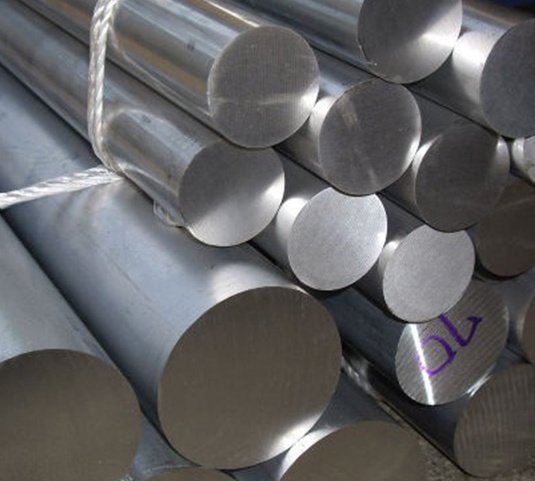
1018 carbon steel is one of the most widely specified low-carbon steels in North American manufacturing. It is commonly used for shafts, pins, rods, spacers, bushings, machine parts, fixtures, and general-purpose components where moderate strength, good dimensional control, and excellent fabrication behavior are required.
In practical terms, 1018 is valued because it offers low-carbon, highly weldable, readily machinable steel performance at a competitive cost. It is available in hot-rolled, cold-drawn, turned-ground-polished, and centerless-ground forms, making it suitable for both rough fabrication and precision machined parts.
What Is 1018 Carbon Steel?
1018 carbon steel is a plain carbon steel grade with approximately 0.18% carbon. In the SAE-AISI designation system, “10” identifies a plain carbon steel family, while “18” indicates the nominal carbon content of about 0.18%.
The grade is also commonly associated with UNS G10180. Depending on product form and purchase specification, 1018 may be supplied to standards such as ASTM A108 for cold-finished carbon steel bars, ASTM A29/A29M for general requirements for steel bars, or SAE-AISI chemistry references.
Compared with 1045 carbon steel, 1018 has lower carbon content, lower achievable hardness, better weldability, and better cold-forming characteristics. Compared with 1008 or 1010 steel, it generally offers slightly higher strength while remaining easy to fabricate.
1018 Carbon Steel Chemical Composition
The exact chemical limits depend on the standard, mill practice, and product form, but 1018 steel is typically defined by low carbon and moderate manganese content. The manganese improves strength and contributes to machinability compared with very low-carbon grades.
| Element | Typical Range | Role in 1018 Steel |
|---|---|---|
| Carbon | 0.15%–0.20% | Controls strength, hardness potential, and weldability |
| Manganese | 0.60%–0.90% | Improves strength and helps with deoxidation |
| Phosphorus | 0.04% max, commonly lower | Residual element; excessive levels may reduce toughness |
| Sulfur | 0.05% max, commonly lower | Residual element; affects machinability and ductility |
| Iron | Balance | Base metal |
Composition should always be verified against the mill test report, purchase order, and applicable ASTM, SAE, or customer specification. Minor chemistry differences can influence machinability, welding response, plating behavior, and consistency in automated production.
Mechanical Properties of 1018 Carbon Steel
Mechanical properties vary significantly depending on whether 1018 is hot rolled, cold drawn, normalized, annealed, or otherwise processed. Cold drawing increases tensile strength, yield strength, surface finish, and dimensional accuracy through work hardening.
| Condition | Tensile Strength | Yield Strength | Elongation | Hardness |
|---|---|---|---|---|
| Hot rolled 1018 | Approximately 400–550 MPa | Approximately 220–370 MPa | Approximately 20%–30% | Typically around 120–160 HB |
| Cold drawn 1018 | Approximately 540–650 MPa | Approximately 370–540 MPa | Approximately 10%–20% | Typically around 160–200 HB |
These ranges are representative values, not guaranteed design minimums. For load-bearing parts, engineers should use certified mechanical test data or the minimum properties listed in the controlling specification.
Because cold-drawn 1018 has improved dimensional tolerance and higher strength than hot-rolled 1018, it is often selected for precision shafts, pins, spacers, threaded parts, and components that require consistent stock size before machining.
Key Advantages and Limitations
Advantages
- Good machinability for a low-carbon steel
- Excellent weldability with common welding processes
- Better surface finish and dimensional accuracy in cold-finished form
- Good ductility for bending, forming, swaging, and upsetting
- Suitable for carburizing and case hardening
- Widely available in rounds, flats, squares, hex bars, plates, and wire products
- Cost-effective for general engineering and production machining
Limitations
- Not a high-strength steel without cold work or design compensation
- Limited through-hardening response due to low carbon content
- Poor corrosion resistance unless coated, plated, painted, oiled, or otherwise protected
- May require stress relief after heavy machining or welding if dimensional stability is critical
- Not ideal for severe wear applications unless carburized, nitrided, or surface treated
In design decisions, 1018 is best understood as a balanced general-purpose grade rather than a specialty alloy. It is easy to source, easy to process, and predictable when purchased with clear requirements.
Machining 1018 Carbon Steel
1018 carbon steel is widely used in CNC machining, screw machining, turning, milling, drilling, tapping, reaming, broaching, and grinding. It machines better than very low-carbon grades because it has enough carbon and manganese to reduce excessive softness and tearing, but it is not as free-machining as 12L14 or 1144 steel.
For many shops, machinability depends more on bar condition than the grade name alone. Cold-drawn 1018 usually provides better size consistency and surface finish than hot-rolled stock, while leaded or resulfurized grades may outperform 1018 in high-volume automatic machining.
Machining Behavior
- Turning: Use sharp tooling, stable workholding, and adequate cutting fluid to control built-up edge.
- Milling: Carbide tools are common for production; high-speed steel can work well for lighter operations.
- Drilling: Peck drilling may help with chip evacuation in deep holes.
- Tapping: Use proper tapping fluid and avoid undersized pilot holes, especially in cold-drawn bar.
- Grinding: 1018 can be ground to close tolerance, but residual stress and heat control should be considered.
Common Machining Issues
Typical problems include stringy chips, built-up edge, burr formation, and surface tearing when feeds, speeds, tool geometry, or coolant are poorly matched. Positive-rake tooling, appropriate chip breakers, and sulfurized cutting oils can improve finish and tool life.
Machining checklist for CNC programmers and production engineers
Specify the product form before setting expectations. Cold-drawn 1018 is usually preferable for precision turned parts, while hot-rolled material may require more stock allowance to remove scale and decarburized surface material.
- Confirm bar straightness for long shaft work.
- Allow for stress movement after asymmetric machining.
- Use test cuts before locking in surface finish requirements.
- Consider stress relieving after rough machining if flatness, roundness, or concentricity is critical.
- For unattended production, compare 1018 with 12L14, 1215, or 1144 if machinability is the primary constraint.
Welding, Forming, and Fabrication
1018 carbon steel is considered highly weldable because of its low carbon content. It can be welded using common processes such as MIG, TIG, stick welding, resistance welding, and oxy-fuel welding when proper procedures are used.
Preheating is generally not required for thin or moderate sections under normal shop conditions, although it may be helpful for thick sections, highly restrained joints, or low-temperature environments. Filler metal selection should match strength, joint design, service conditions, and applicable welding codes.
Welding Considerations
- Clean mill scale, oil, rust, and cutting fluids before welding.
- Use low-hydrogen practice when restraint or section thickness is significant.
- Control heat input to minimize distortion in precision assemblies.
- Consider post-weld stress relief if dimensional stability is required.
- Protect welded assemblies from corrosion with paint, plating, black oxide, oil, or other coatings.
1018 also performs well in cold forming, bending, upsetting, staking, riveting, and crimping operations. Annealed or hot-rolled material is generally easier to form than cold-drawn material, which has higher strength and reduced ductility due to work hardening.
Heat Treatment and Surface Hardening
Because 1018 contains only about 0.18% carbon, it does not through-harden effectively like medium-carbon steels such as 1045 or alloy steels such as 4140. Quenching 1018 may slightly increase hardness, but it will not produce high core hardness.
The most common hardening method is case hardening, especially carburizing or carbonitriding. These processes add carbon to the surface so that the outer layer can be hardened while the core remains relatively tough and ductile.
Common Thermal Processes
- Annealing: Softens material, improves formability, and may improve machinability in some operations.
- Normalizing: Refines grain structure and improves uniformity after hot working.
- Stress relieving: Reduces residual stress after cold drawing, welding, or heavy machining.
- Carburizing: Produces a hard wear-resistant case with a softer core.
- Carbonitriding: Similar to carburizing but often used for shallower cases and improved wear resistance.
Case depth, surface hardness, distortion allowance, and post-heat-treatment grinding stock should be defined before production. For gears, pins, wear sleeves, and sliding components, the hardened case requirement often matters more than the nominal grade alone.
Corrosion Resistance and Surface Finishing
1018 carbon steel has limited corrosion resistance in humid, marine, chemical, or outdoor environments. Without protection, it will oxidize and rust. Surface finishing is therefore an important part of many 1018 steel designs.
Common Finishes for 1018 Steel
- Black oxide with oil for mild corrosion protection and appearance
- Zinc plating for economical corrosion resistance
- Nickel plating for wear resistance and decorative finish
- Phosphate coating for paint adhesion and lubricity
- Powder coating or painting for structural and fabricated parts
- Electroless nickel for uniform coating thickness on complex machined parts
- Oil coating or rust preventative for temporary storage protection
Finish selection should account for tolerance buildup, hydrogen embrittlement risk in plated parts, masking requirements, thread fit, appearance, and exposure environment.
Common Applications of 1018 Carbon Steel
1018 is used across industrial, automotive, agricultural, construction, tooling, and general manufacturing sectors. Its popularity comes from the combination of availability, processability, and adequate strength for many non-critical and moderately loaded components.
- Shafts, axles, and rollers
- Pins, dowels, studs, and spacers
- Bolts, nuts, screws, and threaded rods for moderate-duty service
- Machine keys, stops, guides, and fixture components
- Bushings and sleeves when surface treated or lubricated
- Mounting plates, brackets, and welded fabrications
- Hydraulic fittings and general turned components
- Jigs, gauges, tooling blocks, and shop hardware
- Carburized parts requiring a hard surface and ductile core
Where higher tensile strength, fatigue resistance, or through-hardening is needed, designers often consider 1045, 4140, 8620, or other alloy steels. Where machining speed is more important than weldability, 12L14 or 1215 may be considered.
1018 Carbon Steel vs Similar Grades
Choosing 1018 often requires comparing it with nearby grades. The correct choice depends on strength, weldability, formability, machinability, heat-treatment response, cost, and availability.
| Grade | How It Compares with 1018 | Typical Reason to Choose It |
|---|---|---|
| 1008 / 1010 | Lower carbon, softer, better formability, lower strength | Deep drawing, stamping, severe forming |
| 1020 | Slightly higher carbon, similar general behavior | Moderate strength increase with similar fabrication properties |
| 1045 | Higher carbon, stronger, better through-hardening, less weldable | Shafts, gears, and parts needing higher strength |
| 12L14 | Much better machinability, poor weldability, contains lead | High-speed screw machine parts |
| 1215 | Free-machining, lead-free alternative to 12L14, less weldable than 1018 | Automatic machining where weldability is not required |
| 1144 | Higher strength and excellent machinability, not ideal for welding | Precision shafts and high-strength machined parts |
| 4140 | Alloy steel with much higher strength and hardenability | Heavy-duty shafts, tooling, and fatigue-loaded parts |
Engineer and buyer note: when 1018 is the right specification
1018 is a strong candidate when the part needs moderate strength, dependable weldability, good machining behavior, and broad supply availability. It is often the practical choice for components that do not justify the higher cost or processing complexity of alloy steel.
It may not be the best choice when the drawing requires high core hardness, high fatigue strength, severe wear resistance without surface treatment, or corrosion resistance in aggressive environments.
Purchasing and Specification Tips
For consistent production results, purchasing documents should define more than the grade name. “1018 steel” alone may not communicate product form, surface condition, tolerance, heat condition, test certification, or finishing requirements.
Important Ordering Details
- Standard or specification, such as ASTM A108 for cold-finished bar
- Product form: round bar, flat bar, square bar, hex bar, plate, sheet, wire, or tubing
- Condition: hot rolled, cold drawn, annealed, normalized, stress relieved, TGP, or ground
- Size tolerance, straightness, surface finish, and decarburization limits if applicable
- Mill test report requirements and heat traceability
- Mechanical property requirements if design-critical
- Surface treatment, plating, coating, or rust prevention requirements
- Packaging requirements to prevent rust, dents, and handling damage
For regulated, safety-related, or high-volume programs, material traceability should be built into the purchasing process. Heat number control, certificate review, and incoming inspection can prevent costly mismatches between engineering intent and delivered material.
Buyer checklist for comparing 1018 steel quotes
- Confirm whether the quote is for hot-rolled or cold-finished material.
- Check whether certification is included or priced separately.
- Compare tolerance class, straightness, and surface condition, not only price per pound.
- Ask about domestic, DFARS, RoHS, REACH, or other compliance requirements if relevant.
- Review packaging and rust prevention for ocean freight or long warehouse storage.
- Verify whether cutting, grinding, chamfering, deburring, or coating is included.
Summary: Why 1018 Carbon Steel Remains a Standard Choice
1018 carbon steel remains a standard material because it solves a common engineering need: economical steel with good weldability, good machinability, useful strength, and broad availability. It is not the hardest, strongest, or most corrosion-resistant steel, but it is one of the most practical choices for everyday machined and fabricated components.
When specified correctly, 1018 delivers reliable results in turning, milling, drilling, welding, forming, carburizing, plating, and general assembly. The best outcomes come from matching the grade with the right product form, heat condition, tolerance, surface finish, and inspection requirements.