
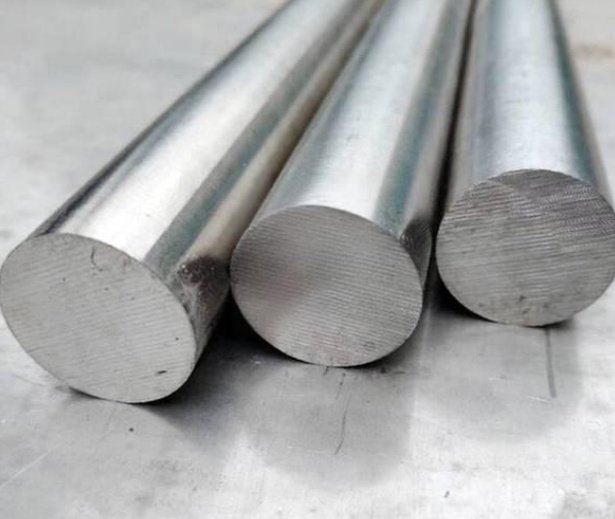
1095 carbon steel is a high-carbon, plain carbon steel known for high hardness, excellent wear resistance, and strong edge retention after heat treatment. It is widely used for knives, blades, springs, shims, saws, scrapers, wear parts, and precision strip products where strength and hardness matter more than corrosion resistance or weldability.
In the AISI/SAE numbering system, 1095 is a “10xx” plain carbon steel, meaning its primary alloying element is carbon with relatively low alloy additions. The “95” indicates a nominal carbon content of about 0.95%. Because it sits close to the high end of the carbon steel range, 1095 can achieve very high Rockwell hardness, but it also demands careful heat treatment to avoid cracking, distortion, decarburization, and excessive brittleness.
What Is 1095 Carbon Steel?
1095 is a high-carbon steel commonly identified as AISI 1095, SAE 1095, or UNS G10950. It is often supplied as annealed bar, cold-rolled strip, spring-temper strip, shim stock, plate, sheet, wire, or precision flat stock.
The steel is considered a hypereutectoid carbon steel because its carbon level is above the eutectoid composition of roughly 0.77% carbon. This gives 1095 the ability to form a high-hardness martensitic structure during quenching, while also allowing iron carbides to contribute to wear resistance and edge stability.
Its main advantage is very high hardness and edge retention compared with lower-carbon steels such as 1045 or 1060. Its main trade-offs are lower toughness, poor corrosion resistance, limited weldability, and sensitivity to quench cracking if the part geometry or heat treatment is not controlled.
1095 Carbon Steel Chemical Composition
The exact chemistry depends on the mill, product form, and governing specification, but 1095 is generally specified within the following ranges. Always confirm the applicable standard and material test report before using these values for design or procurement.
| Element | Typical Range | Function in 1095 Steel |
|---|---|---|
| Carbon, C | 0.90% to 1.03% | Provides hardenability, strength, wear resistance, and edge retention. |
| Manganese, Mn | 0.30% to 0.50% | Improves strength and helps control sulfur-related hot shortness. |
| Phosphorus, P | 0.040% max, often lower | Residual element; excessive levels can reduce toughness. |
| Sulfur, S | 0.050% max, often lower | Residual element; may improve machinability slightly but can reduce ductility. |
| Iron, Fe | Balance | Base metal matrix. |
Unlike alloy steels such as 5160, O1, D2, or 52100, 1095 does not rely on substantial chromium, nickel, molybdenum, or vanadium additions. This makes it simple, responsive to heat treatment, and cost-effective, but also relatively shallow-hardening and non-stainless.
Key Mechanical and Physical Properties
Properties of 1095 vary significantly depending on whether the material is annealed, cold-rolled, spring-tempered, hardened, or tempered. The same chemistry can behave very differently after different processing routes.
| Condition | Typical Hardness | Typical Performance |
|---|---|---|
| Annealed | Approximately 180 to 220 HB | Best condition for machining, forming, blanking, and subsequent hardening. |
| Cold-rolled or cold-worked | Higher than annealed, varies by reduction | Improved strength and surface finish; reduced ductility. |
| Hardened and low-tempered | Often about 58 to 66 HRC | Excellent wear resistance and cutting-edge retention; lower toughness. |
| Spring-tempered | Varies by specification and thickness | High strength with elastic recovery for springs, clips, and shims. |
For engineering purposes, 1095 is often selected for a combination of high tensile strength, fatigue resistance in spring applications, abrasion resistance, and the ability to hold a sharp edge. However, it is not ideal where impact toughness, weldability, or atmospheric corrosion resistance is the primary requirement.
Heat Treatment of 1095 Carbon Steel
1095 can deliver excellent performance, but it requires controlled heat treatment. Improper austenitizing, overheating, uneven heating, delayed tempering, or overly severe quenching can cause cracks, warping, grain coarsening, and inconsistent hardness.
Annealing
Annealing is used to soften 1095 for machining, forming, blanking, and stress reduction. A typical full anneal involves heating to roughly 760°C to 790°C, holding long enough for temperature equalization, and cooling slowly in the furnace. Spheroidize annealing may be preferred when improved machinability and formability are required, especially for strip, wire, and precision parts.
Normalizing
Normalizing is commonly used to refine grain structure and improve uniformity before hardening. Typical normalizing temperatures are approximately 815°C to 870°C, followed by air cooling. Normalizing can help reduce prior processing effects, but the final response depends on section thickness and thermal history.
Hardening
Hardening usually involves heating 1095 to the austenitizing range, commonly around 780°C to 815°C, then quenching. Because 1095 has low alloy content and shallow hardenability, water or brine quenching may be used for some sections to achieve full hardness, while oil quenching is often chosen for thin blades or delicate parts to reduce cracking risk. The correct quench medium depends on part thickness, geometry, hardness target, and distortion tolerance.
Tempering
Tempering should be performed soon after quenching. Low tempering temperatures, such as roughly 150°C to 230°C, are used when maximum edge retention and high hardness are desired. Higher tempering temperatures, such as about 260°C to 480°C, may be used when improved toughness, spring behavior, or reduced brittleness is more important than maximum hardness.
Engineer note: heat-treatment risk factors for 1095 parts
Thin sections heat quickly and can decarburize if furnace atmosphere is not controlled. Sharp corners, holes, keyways, abrupt section changes, and deep scratches increase crack risk during quenching. For critical parts, specify grain size expectations, protective atmosphere or coating, quench method, tempering range, final hardness, flatness, and whether decarburized surface material must be removed after heat treatment.
Machining, Grinding, Cutting, and Fabrication
For most shops, machining is easiest in the annealed or spheroidized condition. Once hardened, 1095 is typically finished by grinding, polishing, lapping, or electrical discharge machining rather than conventional turning or milling.
Machining 1095 in the annealed condition
Annealed 1095 can be turned, milled, drilled, broached, and tapped, but it is less forgiving than low-carbon steels. Its high carbon content increases tool wear, and the material may produce tougher chips than mild steel. Rigid fixturing, sharp tooling, controlled feeds, suitable cutting fluid, and stable workholding help maintain dimensional accuracy and surface finish.
- Use the annealed or spheroidized condition when heavy machining is required.
- Choose carbide tooling for production machining, especially where abrasive wear is a concern.
- Use high-speed steel tools only when speed, depth of cut, and heat are well controlled.
- Avoid leaving deep machining marks on parts that will be quenched, because they can become crack initiation points.
- Plan grinding allowance if decarburization or scale removal is required after heat treatment.
Grinding and finishing hardened 1095
Hardened 1095 should be ground carefully to avoid overheating. Grinding burn can reduce hardness, create tensile surface stresses, and produce microcracks. Use appropriate wheel selection, coolant flow, light passes, and dressing practices. For cutting tools and blades, final edge geometry should balance sharpness, edge stability, and intended use.
Laser cutting, waterjet cutting, and stamping
1095 strip and sheet are commonly blanked, slit, laser cut, waterjet cut, or stamped before hardening. Waterjet cutting minimizes heat-affected zones. Laser cutting is efficient but can leave a heat-affected edge that may need removal or stress relief depending on part performance requirements. Stamping and blanking are normally easier in annealed stock than in full-hard spring-temper material.
Shop note: practical machining approach
For precision parts, rough machine or blank the annealed material, stress relieve if necessary, harden and temper to the specified hardness, then finish grind critical faces, holes, edges, and bearing surfaces. This sequence usually provides better dimensional control than trying to machine 1095 after hardening.
Weldability, Forming, and Corrosion Resistance
Welding is generally not recommended for 1095 carbon steel unless a qualified procedure is used. The high carbon content makes the heat-affected zone prone to hard, brittle microstructures and cracking. If welding cannot be avoided, preheating, low-hydrogen consumables, controlled interpass temperature, slow cooling, and post-weld heat treatment may be necessary.
Forming is highly condition-dependent. Annealed 1095 can be formed more readily than hardened or spring-temper stock, but it still has lower ductility than low-carbon steels. Bending radius, rolling direction, edge quality, surface defects, and final heat treatment must be considered, especially for springs and clips.
1095 is not stainless steel. It will rust when exposed to moisture, salts, acids, and humid environments. Protective oil, black oxide, phosphate coating, paint, wax, bluing, plating, or controlled storage may be required. For knives and blades, routine cleaning and drying are essential to prevent oxidation and staining.
Common Uses of 1095 Carbon Steel
1095 is chosen when high hardness, wear resistance, and spring properties are more important than corrosion resistance. Typical applications include:
- Knife blades, hunting knives, utility blades, and traditional cutting tools
- Industrial blades, slitter knives, scraper blades, and saw components
- Flat springs, clock springs, clips, and retaining components
- Shim stock, feeler gauges, spacers, and precision strip parts
- Wear plates, punches, dies, and small tooling components
- Hand tools, agricultural cutting parts, and impact-limited wear parts
- Custom parts requiring high hardness after quenching and tempering
For knife making, 1095 is popular because it can take a fine edge and reach high hardness with relatively simple equipment. For industrial buyers, its appeal is often cost-effective wear resistance in strip, sheet, and spring forms. For engineering teams, it is useful when the design can accommodate its lower toughness and corrosion limitations.
1095 Carbon Steel vs. Other Steels
Comparing 1095 with related steels helps clarify when it is the right material and when another grade is safer or more economical.
| Steel Grade | Main Difference | When It May Be Preferred |
|---|---|---|
| 1075 | Lower carbon than 1095, generally tougher and less brittle. | Large blades, springs, and parts needing more toughness with slightly less edge retention. |
| 1084 | Slightly lower carbon and often easier to heat treat consistently. | Knife making and small tools where balanced hardness and toughness are needed. |
| 5160 | Chromium-bearing spring steel with better toughness and deeper hardening. | Leaf springs, large choppers, impact tools, and parts needing higher shock resistance. |
| O1 Tool Steel | Oil-hardening tool steel with alloy additions for dimensional stability and wear resistance. | Precision tools, dies, and shop tooling where predictable hardening is important. |
| D2 Tool Steel | High-carbon, high-chromium tool steel with much greater wear resistance. | Dies and long-wear tooling, but with lower toughness and more difficult machining. |
| 420 or 440 Stainless | Stainless grades with chromium for corrosion resistance. | Blades and parts exposed to moisture where rust resistance is more important. |
In simple terms, 1095 is an excellent choice for maximum hardness and edge retention in a simple carbon steel. It is less suitable when the part requires high impact toughness, deep hardening in thick sections, or long-term outdoor corrosion resistance.
How to Specify and Buy 1095 Carbon Steel
When purchasing 1095, specify more than just the grade. Product form, condition, thickness tolerance, surface finish, flatness, edge condition, heat-treatment condition, and certification requirements can all affect performance and cost.
For critical applications, verify carbon range, condition, thickness tolerance, and decarburization limits on the purchase order or engineering drawing. A material test report should confirm chemistry, and heat-treated material should include hardness or mechanical property certification when required.
- Grade: AISI 1095, SAE 1095, or UNS G10950.
- Product form: bar, sheet, plate, strip, shim stock, wire, or flat stock.
- Condition: annealed, spheroidized annealed, cold-rolled, spring-temper, hardened and tempered.
- Dimensions: thickness, width, length, flatness, straightness, and tolerance class.
- Surface: pickled, polished, ground, blue tempered, black oxide, oiled, or mill finish.
- Heat treatment: final hardness range, quench method, tempering temperature, and distortion limits.
- Quality controls: decarburization depth, edge condition, grain size, inclusion level, and traceability.
Buyer note: questions to resolve before ordering 1095
Confirm whether the material will be machined before hardening or purchased already hardened and tempered. Ask whether the supplier controls decarburization, edge camber, coil set, and thickness variation if buying strip or shim stock. For spring applications, request the required temper condition and mechanical properties rather than relying on chemistry alone.
Advantages and Limitations
1095 carbon steel is valuable because it provides high hardness and wear resistance at a relatively low material cost. It is straightforward compared with complex alloy tool steels and performs well in blades, springs, and precision strip applications when properly processed.
Advantages
- High attainable hardness after quenching and tempering
- Excellent edge retention for knives and cutting tools
- Good wear resistance for a plain carbon steel
- Common availability in strip, shim, sheet, bar, and blade stock
- Lower alloy cost than many tool steels and stainless steels
- Responsive to simple heat-treatment cycles when section size is appropriate
Limitations
- Low corrosion resistance compared with stainless steels
- Lower toughness than many medium-carbon and alloy spring steels
- Shallow hardenability, especially in thicker sections
- High risk of distortion or cracking during severe quenching
- Poor weldability due to high carbon content
- Requires careful grinding and heat-treatment control for critical parts
Standards, References, and Engineering Notes
1095 may be supplied under different standards depending on product form and market. Common references include AISI/SAE grade designations, UNS G10950, ASTM specifications for carbon steel bars or strip, and mill-specific data sheets. For technical design work, use current standards and supplier certifications rather than generic web values.
Useful reference categories include:
- ASTM specifications for high-carbon steel strip, bar, wire, or sheet where applicable
- SAE J403 chemical composition guidance for carbon steels
- ASM Handbook resources for heat treatment, failure analysis, and carbon steel metallurgy
- Supplier data sheets for hardness, temper condition, dimensional tolerance, and surface finish
- Material test reports for actual chemistry and traceability
For engineering calculations, do not assume one universal tensile strength or hardness for all 1095 material. The grade name identifies chemistry; final performance depends on thermal processing, section size, surface condition, and manufacturing route.
Bottom Line
1095 carbon steel is a high-carbon plain steel best known for hard blades, springs, shim stock, and wear-resistant parts. It can deliver exceptional hardness and edge retention, but only when heat treatment, machining sequence, quenching, tempering, and finishing are properly controlled. Choose 1095 when high hardness and wear resistance are the priority; consider 1075, 1084, 5160, O1, D2, or stainless grades when toughness, dimensional stability, or corrosion resistance matters more.