
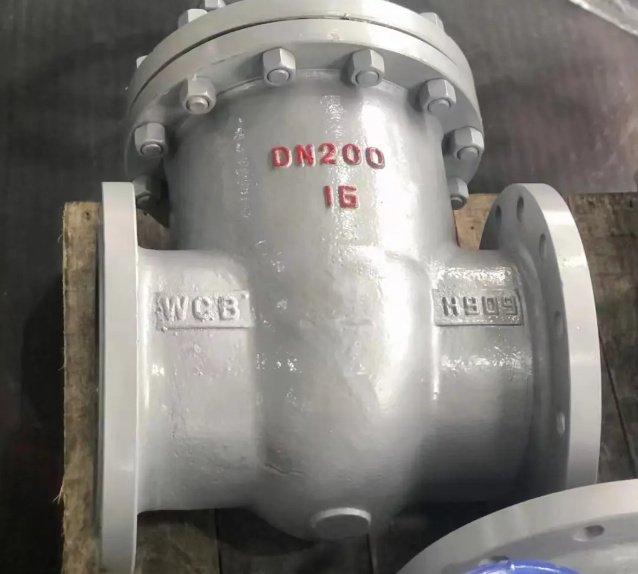
What Is ASTM A216 WCB?
ASTM A216 is the American Society for Testing and Materials standard for weldable carbon steel castings designed for general and high-temperature industrial service. WCB (Wrought Carbon Grade B) is the most widely used grade in the A216 standard, a ferritic-pearlitic carbon steel with balanced strength, ductility, weldability and cost efficiency that makes it the go-to material for most non-cryogenic carbon steel casting applications.
Key Chemical & Mechanical Properties of A216 WCB
To meet ASTM A216 standard requirements, WCB grade castings have strictly controlled chemical composition limits: carbon ≤0.30%, manganese 0.60-1.20%, silicon ≤0.60%, phosphorus ≤0.04%, sulfur ≤0.045%, with residual alloy content kept below 0.5% total.
Standard normalized A216 WCB has consistent mechanical performance: tensile strength of 485-655 MPa, minimum yield strength of 250 MPa, minimum elongation of 22% in 2 inch samples, and hardness ranging from 137 to 187 HB. It is certified for use in ASME Boiler and Pressure Vessel Code (BPVC) compliant equipment for operating temperatures up to 425℃.
A216 WCB vs Common Carbon Steel Casting Grades
When selecting carbon steel casting materials, it is critical to distinguish A216 WCB from similar grades with targeted use cases:
A216 WCB vs WCC: WCC is the higher carbon grade in the ASTM A216 standard, with 0.25-0.30% carbon content (vs maximum 0.30% for WCB) resulting in 10% higher minimum yield strength (275 MPa vs 250 MPa) but 2% lower minimum elongation. WCB is more cost-effective for general service applications, while WCC is preferred for high load-bearing pressure parts that do not require high impact resistance.
A216 WCB vs LCB: LCB is a low-temperature carbon steel grade under ASTM A352, certified for impact resistance at -46℃, compared to -29℃ for normalized A216 WCB. WCB is suitable for operating temperatures between -29℃ and 425℃, while LCB is designed for cryogenic service scenarios. WCB has 15-25% lower raw material and heat treatment costs than LCB for equivalent component sizes.
A216 WCB vs A105: A105 is a forged carbon steel grade for small, simple pressure components, while A216 WCB is a cast grade optimized for large, complex-shaped parts. WCB offers far better formability for irregular geometries with low tooling costs for small batch orders, while A105 has a more uniform internal structure for high-cycle fatigue load applications.
Standard Processing Routes for A216 WCB Castings
A216 WCB components are manufactured following a standardized casting and processing workflow to ensure consistent material performance:
1. Pattern making: Wood, resin or 3D printed patterns are produced based on order volume and dimensional tolerance requirements.
2. Casting: Green sand casting is used for low-precision large parts, resin sand casting for medium-precision components, and investment casting for high-precision small parts with complex geometries.
3. Post-casting treatment: Risers, gating systems and surface burrs are removed via trimming and grinding, followed by shot blasting for surface cleaning.
4. Heat treatment: Normalizing at 870-900℃ with air cooling is the standard process to eliminate casting internal stress and achieve required mechanical properties; quenching and tempering can be applied for higher strength requirements.
5. Finishing and testing: Nondestructive testing (UT, MT, RT) is conducted per application requirements, followed by CNC machining to meet final dimensional tolerances.
A216 WCB Sourcing Guide (Buyer Perspective)
1. Prioritize suppliers with ISO 9001 and ASME B31.3 certification to avoid unqualified heat treatment that leads to low temperature impact resistance failure.
2. For pressure valve and pressure vessel applications, require official Material Test Reports (MTR) with third-party NDT results to reduce quality risks.
3. Compare quotes based on casting process: investment casting for precision parts is 30-50% more expensive than green sand casting, so select the appropriate process matching your tolerance requirements to cut unnecessary costs.
4. For bulk orders over 50 units, request 1-2 pre-production samples for performance testing before mass production to avoid batch losses.
A216 WCB Processing Notes (Engineer Perspective)
1. Preheat components to 150-200℃ before welding when the material thickness exceeds 25mm to avoid cold cracking in the weld heat affected zone.
2. Avoid long-term operation of A216 WCB components at temperatures above 425℃, which will cause carbide precipitation and a significant drop in material toughness.
3. For CNC machining, use carbide cutting tools with a cutting speed of 100-150 m/min for rough machining, and 180-220 m/min for finish machining to achieve Ra 3.2 or better surface roughness.
4. Normalizing heat treatment is mandatory for all pressure-bearing A216 WCB components to eliminate residual casting stress and ensure long service life.
Main Industrial Applications of A216 WCB
Due to its balanced performance and low cost, A216 WCB is widely used across multiple industrial sectors: oil and gas pipeline valves, flanges and fittings, pressure vessel shells and nozzles, pump bodies and impellers for water and wastewater treatment, boiler system components for thermal power plants, and general industrial machinery parts operating within the -29℃ to 425℃ temperature range. It accounts for over 60% of carbon steel casting materials used in global pressure valve manufacturing.